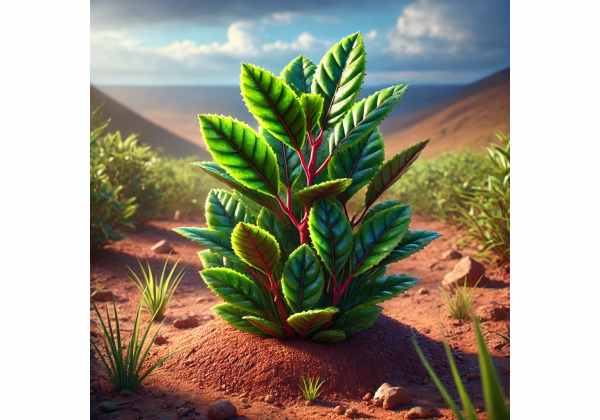
Khat, Catha edulis, is a leafy shrub native to the Horn of Africa and the Arabian Peninsula, where fresh leaves and tender shoots have long been chewed for their stimulant effects. It is often described as a cultural plant before it is described as a medicinal one, and that distinction is important. Khat does produce real short-term effects such as increased alertness, energy, talkativeness, appetite suppression, and a sense of well-being, largely because fresh leaves contain the amphetamine-like alkaloids cathinone and cathine.
A balanced article on khat should therefore avoid two extremes. It should not pretend the plant has no biological activity, and it should not market a psychoactive stimulant as a harmless herb. The strongest modern evidence around khat is about risk: blood pressure elevation, oral and dental problems, dependence, psychiatric complications in vulnerable users, drug interactions, and reproductive concerns. Any discussion of benefits has to be read in that light.
Quick Facts
- Khat can temporarily increase alertness, energy, and sociability, but these effects come from amphetamine-like alkaloids.
- Short-term appetite suppression and reduced fatigue are common user-reported effects, not proven health benefits.
- No medically established safe dose range in mg or g exists for khat as a therapeutic herb.
- Avoid khat completely during pregnancy, while breastfeeding, with heart disease, high blood pressure, psychiatric illness, or when taking stimulant or MAOI medicines.
Table of Contents
- What is khat and what is in it
- Why do people use khat
- Does khat have any real health benefit
- How khat is traditionally used
- How much khat per day
- Khat side effects and interactions
- Who should not use khat
- What the research actually shows
What is khat and what is in it
Khat is an evergreen shrub or small tree in the Celastraceae family. It grows naturally and is widely cultivated in East Africa and southern Arabia, especially in places where fresh transport is possible. Freshness matters because khat’s pharmacology changes after harvest. The plant’s best-known active compounds are cathinone, cathine, and norephedrine. Among these, cathinone is the main stimulant in fresh leaves and is pharmacologically similar to amphetamine. Cathine is also active but weaker, and cathinone gradually breaks down into cathine and norephedrine as leaves age or dry. That is why khat is strongly associated with fresh chewing rather than with dried herbal use.
This chemical profile explains both khat’s reputation and its risks. Cathinone and cathine act as sympathomimetic stimulants. They affect dopamine, norepinephrine, and related signaling pathways, which can produce increased wakefulness, confidence, talkativeness, and mental drive. Those same pathways also help explain raised heart rate, increased blood pressure, insomnia, lower appetite, and, in some susceptible users, agitation or paranoia. Khat is therefore not just a stimulating plant. It is a psychoactive stimulant plant with effects closer to amphetamine-like chemistry than to ordinary herbal tonics.
Researchers also note that khat contains tannins and other plant constituents beyond its stimulant alkaloids. These matter because they likely contribute to gastrointestinal irritation and oral tissue changes. The astringency of the leaves is not just a taste feature. It has biological consequences, especially with repeated chewing over time. This is one reason khat’s health profile is broader than stimulation. It also affects the mouth, stomach, cardiovascular system, mood, and drug handling.
A useful comparison is guarana as a milder stimulant plant. Guarana acts mainly through caffeine, while khat’s main active alkaloids are closer to amphetamine-like compounds. That difference is exactly why khat cannot be discussed as though it were just another energizing botanical. Its chemistry is narrower, stronger, and medically riskier.
Why do people use khat
People use khat because it produces effects that many users experience as desirable, at least in the short term. Reports commonly describe increased alertness, better energy, improved concentration, greater sociability, and a sense of happiness or mild euphoria. Some users also report higher confidence, more verbal fluency, and reduced fatigue. These effects help explain why khat is often used in long social sessions, work-related wakefulness, or settings where staying alert feels valuable.
Appetite suppression is another commonly noted effect. Cathinone appears to act centrally in a way that reduces appetite and can delay gastric emptying. This may be perceived by some users as useful, especially in cultures where long chewing sessions replace meals or reduce interest in food. But appetite suppression should not be confused with a health benefit. In practice, it can contribute to poor nutrition, weight loss, and digestive discomfort in habitual users.
The social side of khat also matters. It is often embedded in community, identity, ritual, conversation, and daily routine. This cultural context is part of why khat cannot be reduced to a simple drug profile. A person may not be seeking just a stimulant effect. They may be seeking social belonging, mental activation, or a familiar daily rhythm. That context helps explain why khat use can persist even when users also recognize unpleasant effects such as low mood afterward, poor sleep, or money and time burdens.
Still, the short-term benefits need to be framed honestly. They are stimulant effects, not therapeutic achievements. Feeling more awake is not the same as improved health. Feeling more sociable is not the same as improved mental well-being. And feeling less hungry is not the same as healthy appetite control. A better comparison is yerba mate as a socially used stimulant beverage, except khat is pharmacologically more intense and far more tightly tied to dependence, cardiovascular strain, and adverse oral and psychiatric effects.
Does khat have any real health benefit
This is the most important question in the article, and the most honest answer is: not in any modern, evidence-based therapeutic sense. Khat has real pharmacological effects, but that is not the same as having meaningful health benefits. The plant can acutely reduce fatigue, increase concentration, suppress appetite, and elevate mood for a few hours, but those effects come with a cost profile strong enough that modern reviews focus much more on harm than on benefit.
Historically, khat has been described in traditional settings as helpful for staying awake, improving work endurance, aiding social interaction, and lifting mood. These are understandable uses for a stimulant plant. But modern medicine does not recognize khat as an accepted treatment for fatigue, depression, attention problems, or weight control. There is no good clinical evidence that khat improves long-term mood, cognition, or health outcomes. In fact, some of the same pathways that produce the desired acute effects are linked with rebound low mood, sleep disturbance, and dependence.
Some readers may ask whether khat could be seen as a natural remedy because it is plant-derived and culturally longstanding. That framing is misleading. The active compounds are not gentle in the way many medicinal herbs are gentle. They are psychoactive sympathomimetic alkaloids. A plant can be traditional and still be unsafe as a health practice. Khat fits that pattern. Its cultural legitimacy does not cancel its cardiovascular, oral, reproductive, and psychiatric concerns.
The right way to phrase khat’s benefits is therefore narrow and careful:
- it can acutely increase wakefulness,
- it can temporarily suppress appetite,
- it can briefly enhance sociability or subjective energy,
- none of these are well-supported reasons to treat khat as a health-promoting herb.
A useful contrast is green tea as a stimulant with a safer evidence base. Green tea also promotes alertness, but its pharmacology, risk profile, and public health meaning are entirely different. Khat is better understood as a culturally normalized stimulant with documented harms than as a botanical health aid.
How khat is traditionally used
Traditionally, khat is used by chewing fresh leaves and tender shoots over extended social sessions. The leaves are typically held and masticated in the mouth so that active compounds are absorbed through the oral mucosa, with additional absorption later through the stomach and small intestine. That route helps explain why the mouth is directly affected by long-term use. Oral tissues are not just a delivery surface. They are part of the burden of exposure.
The emphasis on fresh material is not cultural coincidence. It is pharmacological. Cathinone, the principal stimulant in khat, is unstable and declines after harvest as it breaks down into cathine and norephedrine. This is why khat does not map neatly onto capsules, dried-tea use, or standardized herbal extracts. The traditional preparation is basically the same thing as the highest-potency form.
Khat use is also often highly social. In many communities it is linked with conversation, hospitality, business, study, or religious and cultural routines. This context is important because it partly explains why khat dependence can be more than chemical dependence. Social cues, place, timing, and identity reinforce the behavior. Some users do not think of khat as a drug problem because they experience it as a normal social plant. Public health research, however, repeatedly shows that this cultural embedding does not protect users from physical and psychological harm.
In a modern wellness context, khat should not be translated into a how-to herb. There is no responsible case for recommending it as a daily stimulant routine, focus aid, appetite-control plant, or mood enhancer. Compared with guarana in supplement-style stimulant use, khat has a much more serious pattern of oral, cardiovascular, and dependence-related concerns and a much weaker case for safe self-directed use. That is why describing traditional use is important for understanding the plant, but not for turning it into advice.
How much khat per day
There is no medically established safe dose range for khat as a therapeutic herb. That is the only responsible starting point. Khat is not prescribed as a standardized medicinal plant, and the scientific literature does not provide a validated daily dose intended to produce health benefits with acceptable safety. Reviews discuss fresh-leaf chemistry, cultural chewing patterns, and pharmacokinetics, but those data are not a license to convert khat into a wellness dose.
This matters because dose is one of the plant’s biggest risks. Khat’s effects vary with freshness, leaf quality, chewing duration, absorption through the mouth, and user tolerance. Even the available pharmacokinetic data mainly describe what happens after ingestion in research settings, not what should be recommended for human use. The literature also notes heterogeneity across studies in dosage, duration, and frequency, which is one reason outcome data remain difficult to compare.
So what can be said safely?
- there is no validated medicinal dose,
- there is no clinically accepted low-risk wellness range,
- more frequent or heavier use appears to increase harm,
- self-experimentation is especially unwise for people with cardiovascular, psychiatric, or reproductive concerns.
This is also where the usual herb-writing template breaks down. With many botanicals, a dosage section can offer tea, tincture, or capsule ranges. With khat, offering a numerical use guide would blur the line between education and facilitation. That would not be medically sound. A better comparison is kola nut as another stimulant botanical: even there, dose matters and excess has costs, but khat’s amphetamine-like chemistry makes the risk-benefit problem much sharper.
The most practical takeaway is that the absence of a safe medicinal dose is itself a health fact. It tells readers something important: khat is not a plant that modern evidence has translated into an acceptable self-care tool. It is a psychoactive stimulant with uncertain dosing, variable potency, and meaningful documented harm.
Khat side effects and interactions
Khat’s side effects are not incidental. They are central to understanding the plant. Short-term use can increase heart rate and blood pressure, reduce appetite, disturb sleep, and produce jitteriness or irritability near the end of the stimulant phase. In habitual or heavy use, the list becomes much more serious: constipation, gastritis, oral mucosal changes, xerostomia, low mood, dependence, and in some susceptible users, paranoid or psychotic symptoms.
Cardiovascular effects are especially important. Recent evidence strengthens the association between khat use and higher blood pressure. Earlier reviews and toxicodynamic summaries also describe increased heart rate, vasoconstriction, and links with myocardial infarction and arrhythmia risk. This is why khat is a poor fit for anyone with hypertension, cardiac disease, or stroke risk.
Drug interactions are another underappreciated issue. Reviews report reduced bioavailability of some oral antibiotics and describe concern about interactions with anesthetics. Because khat can raise blood pressure, it may also work against antihypertensive treatment. Since cathinone behaves as a stimulant with monoamine-related effects, concurrent use with MAO inhibitors or other stimulants is especially concerning and may produce additive or synergistic harms.
The oral and dental burden is also well documented. Updated reviews associate khat chewing with keratotic white lesions, mucosal pigmentation, periodontal disease, tooth loss, plasma cell stomatitis, and xerostomia. The evidence linking khat to oral cancer remains weaker than the evidence for mucosal and periodontal injury, but the overall direction is not reassuring. If a person uses khat regularly, oral health should be considered one of the first systems under strain. A useful contrast is clove for temporary oral comfort, which is a very different kind of plant use and risk profile.
Who should not use khat
Several groups should be considered poor candidates for khat, and some should avoid it completely. The strongest no-use group is pregnant people. Recent evidence links khat use during pregnancy with significantly higher odds of low birth weight and congenital anomalies. That finding alone is enough to make khat inappropriate in pregnancy, even before considering its stimulant and vascular effects.
People with high blood pressure, cardiovascular disease, arrhythmias, stroke history, panic symptoms, bipolar disorder, psychosis vulnerability, or significant insomnia should also avoid khat. The plant’s acute stimulant action is exactly what makes these conditions riskier, not better. In susceptible individuals, khat can worsen agitation, destabilize mood, intensify blood pressure problems, and in high doses contribute to psychotic episodes.
Khat is also a poor choice for people taking MAO inhibitors, stimulant medications, some anesthetic-related drugs, oral antibiotics affected by absorption changes, or multiple cardiovascular medicines. Interaction reviews do not suggest a harmless combination profile. They suggest the opposite: a stimulant plant that complicates other treatment plans.
A final group that deserves special mention is children, adolescents, and people trying to recover from substance dependence. Reviews describe psychological dependence, withdrawal symptoms, tolerance, and long-term compulsive patterns. Khat may be culturally normalized in some communities, but that does not make it a low-risk developmental exposure. Compared with green tea as an ordinary stimulant beverage, khat sits in a very different risk class because its primary active constituents are amphetamine-like alkaloids, not caffeine plus polyphenols.
What the research actually shows
The research on khat is broad enough to make strong safety statements, but not broad enough to make therapeutic ones. That is the clearest summary. The best-supported facts are these: khat contains cathinone, cathine, and norephedrine; it has genuine stimulant and sympathomimetic effects; it is culturally entrenched in some regions; and its chronic or heavy use is associated with cardiovascular, oral, reproductive, psychological, and gastrointestinal harms.
The strongest recent evidence keeps pushing the risk side forward. Recent reviews strengthen the association between khat chewing and elevated blood pressure, adverse pregnancy outcomes, and oral disease. These are not isolated anecdotes. They show a consistent pattern across body systems.
What the research does not show is equally important. It does not show that khat is a safe natural focus aid. It does not show that it is a medically useful appetite suppressor. It does not show that traditional use protects against modern adverse outcomes. And it does not provide a clinically validated dose that turns a psychoactive stimulant into a wellness herb.
So the honest bottom line is straightforward. Khat has real short-term psychoactive effects that some users interpret as benefits, but those effects are not enough to make it a health-promoting botanical. On current evidence, khat is better classified as a culturally important stimulant plant with significant health risks than as a medicinal herb for self-care. That balance may not sound dramatic, but it is the most useful thing a reader can know.
References
- Khat, a Cultural Chewing Drug: A Toxicokinetic and Toxicodynamic Summary 2022
- The effects of khat (Catha edulis) use on the genitourinary system: A systematic review and meta-analysis 2024
- Does regular Khat (Catha edulis) chewing in adults increase the risk of hypertension compared to non-use? A systematic review and meta-analysis 2025
- Khat (Catha edulis): health aspects of khat chewing 2007
- Khat (Catha edulis) and its oral health effects: An updated review 2018
Disclaimer
This article is for educational purposes only and is not medical advice. Khat is a psychoactive stimulant plant with meaningful cardiovascular, oral, psychiatric, reproductive, and drug-interaction concerns. It should not be used as a self-treatment for fatigue, mood, appetite control, focus, or weight management. Anyone who is pregnant, breastfeeding, taking medicines, or living with heart disease, high blood pressure, or mental health conditions should avoid self-directed khat use and speak with a qualified healthcare professional.
Please share this article on Facebook, X, or another platform if it may help someone make a safer and better-informed decision.