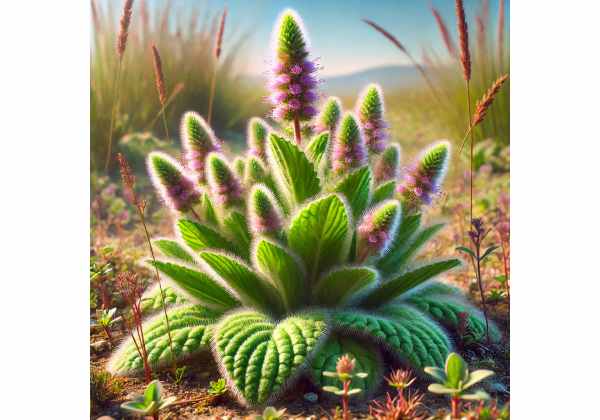
Kinh Gioi, usually identified as Elsholtzia ciliata and often called Vietnamese balm, is an aromatic herb that sits comfortably between kitchen and clinic. In Vietnamese and East Asian traditions, it has been used for colds, mild fever, headache, digestive upset, throat discomfort, and seasonal complaints linked to damp or humid weather. At the table, it is valued for its warm, minty, slightly citrusy fragrance. In research, it has drawn attention for its essential oil, polyphenols, and broad pharmacologic profile.
What makes Kinh Gioi especially interesting is that its benefits seem to come from two different sides of the plant. Its volatile oil helps explain the herb’s sharp aroma, antimicrobial potential, and smooth-muscle effects, while its non-volatile compounds help account for antioxidant and anti-inflammatory actions. That said, this is still not a well-standardized supplement with a clear universal dose. Most of the evidence comes from laboratory and animal work, not large human trials. The smartest way to approach Kinh Gioi is as a traditional aromatic herb with real promise, but with dosage and safety questions that still need careful judgment.
Essential Insights
- Kinh Gioi may help with cold-season discomfort, mild digestive upset, and traditional upper-respiratory support.
- Its essential oil and polyphenols show antimicrobial, antioxidant, and anti-inflammatory potential.
- Traditional tea or decoction use is often described around 3–10 g/day of dried aerial parts, but validated clinical dosing is not established.
- Avoid concentrated essential oil or unsupervised medicinal use during pregnancy, breastfeeding, or if you have unstable blood pressure or cardiac disease.
Table of Contents
- What is Kinh Gioi
- Key ingredients and medicinal properties
- What can Kinh Gioi help with
- How Kinh Gioi is used
- How much per day
- Safety, side effects, and who should avoid it
- What the evidence actually says
What is Kinh Gioi
Kinh Gioi is an aromatic herb from the mint family, Lamiaceae, and is commonly associated with Elsholtzia ciliata. It grows across parts of East and Southeast Asia and has a long history in traditional food and herbal medicine. In Vietnam, it is often used fresh as a leafy aromatic herb, while in Chinese and neighboring herbal traditions it appears in dried medicinal preparations for seasonal discomfort, digestive complaints, and “exterior” conditions such as chills, fever, and mild upper-respiratory symptoms.
Part of the herb’s appeal is sensory. Crush the leaves and you get a bright, penetrating scent that feels part mint, part basil, and part citrus-pepper. That aroma is not just culinary decoration. It reflects a volatile-oil profile that helps explain why the plant has been used in steam, teas, soups, porridge, and fresh herb platters. Kinh Gioi belongs to that group of herbs that people often trust first because they know them as food.
That dual identity matters. Many herbs are either strongly medicinal or plainly culinary. Kinh Gioi lives in the overlap. It can be eaten as a fresh herb, steeped as a tea, or studied as a concentrated essential oil. Those are not equivalent forms. A few leaves in a meal are very different from a distilled essential oil or a concentrated extract tested in a lab.
There is also some naming confusion around the herb in regional use. “Kinh Gioi” in everyday language can sometimes be discussed loosely alongside related aromatic herbs, and some literature reflects older or overlapping naming habits. For a serious article, the most important point is that the evidence base being discussed here is tied to Elsholtzia ciliata, not to every aromatic herb used in the same culinary setting.
Traditionally, Kinh Gioi has been used for:
- Mild colds and chills
- Headache and feverish discomfort
- Sore throat or throat irritation
- Digestive upset, nausea, or loose stools
- Summer heat, humidity-related heaviness, or poor appetite
- General aromatic support in food
These uses do not mean the herb is a cure-all. They show a pattern: Kinh Gioi is mainly a light, aromatic, surface-acting herb rather than a deep tonic. It is the sort of plant people reach for early, when symptoms are still mild or when food and herbal care naturally overlap.
That profile makes Kinh Gioi more practical than flashy. It is not famous because it promises dramatic transformation. It is valued because it fits real life: the first signs of a cold, a heavy stomach after a rich meal, a humid day with low appetite, or a need for a fragrant herb that feels cleansing without being harsh.
Key ingredients and medicinal properties
Kinh Gioi has a more complex chemistry than its pleasant aroma suggests. The plant contains both volatile and non-volatile compounds, and those two groups help explain why it shows such a broad range of activity in modern studies.
The essential oil is what gives the herb its strong fragrance and much of its fast-acting character. Depending on where the plant is grown and when it is harvested, the oil can be dominated by different compounds. In some chemotypes, dehydroelsholtzia ketone and elsholtzia ketone are major markers. In others, carvone, limonene, and related monoterpenes can be more prominent. This is not a small detail. It helps explain why one sample of Kinh Gioi may smell sharper, sweeter, or more lemon-like than another, and why the effects of an essential-oil product may vary across regions and manufacturers.
The non-volatile fraction matters just as much. Studies of different plant parts have identified phenolic acids and flavonoids, with compounds such as rosmarinic acid, chlorogenic acid, and rutin standing out in some extracts. These compounds are often tied to antioxidant and anti-inflammatory activity. That helps explain why Kinh Gioi is being studied not only as an aromatic oil herb, but also as a source of broader protective phytochemicals.
Taken together, its medicinal properties appear to include:
- Antioxidant activity
- Anti-inflammatory activity
- Antimicrobial and antibiofilm activity
- Mild smooth-muscle relaxant effects
- Vasorelaxant and cardiovascular activity in preclinical models
- Traditional carminative and diaphoretic actions
This mix makes Kinh Gioi unusually versatile, but it also means the plant behaves differently depending on the preparation. A hot water infusion will not match an essential oil. A whole-herb extract will not behave exactly like a fresh garnish. When people talk about “Kinh Gioi benefits,” they often blend those forms together and end up overstating what one preparation can really do.
The herb’s chemistry also places it among other strongly aromatic plants that earn their medicinal reputation partly through volatile oils. Readers familiar with thyme’s aromatic compounds will recognize the pattern: the smell is not incidental. It signals a dense mixture of molecules that can influence microbes, smooth muscle tone, and inflammatory pathways.
Another useful insight is that different parts of Kinh Gioi are not equal. Leaf, stem, flower, and whole-herb extracts differ in their phenolic content and antioxidant profile. This matters for quality control. A product made from flowering tops may not match one made from stems and leaves only, even if both use the same plant name on the label.
So what does all of this mean in plain language? Kinh Gioi is not just a fragrant garnish. It is a chemically active herb whose essential oils and polyphenols make its traditional uses scientifically plausible. But it is also a plant where harvest conditions, plant part, and preparation style can meaningfully change the outcome.
What can Kinh Gioi help with
The most believable uses of Kinh Gioi are the traditional ones closest to its aroma and chemistry: mild cold-season symptoms, digestive discomfort, throat irritation, and some low-grade microbial or inflammatory complaints. It is the sort of herb that makes sense at the early, everyday end of illness, not as a replacement for diagnosis or emergency care.
For colds and mild upper-respiratory discomfort, Kinh Gioi is traditionally used because it is warming, aromatic, and lightly dispersing. In practical terms, that often means tea, hot soup, or fresh herb use when there is chilliness, nasal stuffiness, scratchy throat, or a sense of being “blocked up” without serious illness. Modern research supports antimicrobial and anti-inflammatory activity, which helps explain the old use, though human trial data are still limited.
Digestive support is another reasonable use. Aromatic herbs often help most when the problem is heaviness, mild nausea, bloating, poor appetite, or stomach discomfort tied to damp weather, greasy food, or mild infection. Kinh Gioi fits this pattern well. It is not a strong bitter digestive herb, and it is not a laxative. Its value seems to lie more in lightening, warming, and easing mild gastrointestinal stagnation.
There is also growing interest in its oral and antimicrobial relevance. Essential-oil studies suggest activity against bacteria involved in halitosis and biofilm formation. That does not mean Kinh Gioi should be marketed as a substitute for dental care, but it does make its use in aromatic rinses or freshening herbal formulas more understandable.
More exploratory benefits include:
- Anti-inflammatory support in viral-type inflammatory models
- Mild smooth-muscle relaxation
- Cardiovascular or antiarrhythmic effects in preclinical settings
- Antioxidant support from polyphenol-rich extracts
These areas are interesting, but they are not yet reasons for casual self-treatment. In particular, the cardiovascular findings are preclinical and involve essential-oil preparations that are much more potent than culinary herb use. That is a classic point where an herb can look impressive in the lab while still being unsuitable for home experimentation.
For most readers, the most realistic takeaways are these:
- Kinh Gioi may be useful for mild colds, throat discomfort, and humid-weather digestive sluggishness.
- It may offer antimicrobial and antioxidant benefits through both fresh herb and extract forms.
- It is less convincing as a stand-alone remedy for serious infection, chronic inflammation, or heart disease.
This places Kinh Gioi in a familiar category: the aromatic daily-use herb with selective medicinal depth. In that sense, it resembles peppermint for digestive and respiratory comfort, though the flavor, traditional system, and exact chemistry are different.
A balanced view is better than a dramatic one. Kinh Gioi seems genuinely helpful where light aromatic herbs tend to shine. The trouble starts when people try to stretch it into a universal remedy. It is better used for the kinds of problems it has always been trusted for: minor, early, functional complaints where food and herbal care overlap.
How Kinh Gioi is used
Kinh Gioi is used in several forms, and the form matters. Fresh herb, dried tea herb, ethanolic extract, and essential oil all belong to different levels of potency and purpose.
In Vietnamese food, the fresh herb is commonly eaten raw with other aromatic greens, added to soups, served with rice porridge, or paired with egg, fish, and light meat dishes. This is often the gentlest and most practical way to use it. Fresh culinary use usually aims less at a measurable pharmacologic dose and more at warming aroma, digestibility, and daily support.
The dried herb is more common in medicinal use. It can be steeped as a tea or decocted briefly, especially when the goal is mild cold-season support, digestive comfort, or throat relief. This kind of preparation sits between food and medicine. It is stronger than a garnish, but much milder than a concentrated extract.
Extracts are another step up. Alcohol-based extracts concentrate phenolics and other non-volatile compounds, while essential oils concentrate the volatile fraction. These forms are the ones most often used in laboratory studies. They are also the forms most likely to create confusion, because people often assume the effects seen in concentrated extracts will appear in the same way from a casual tea.
Practical use usually falls into four categories:
- Fresh culinary herb, used in meals and herb platters
- Hot infusion or light decoction, used short term for mild symptoms
- Herbal extract, used in research or specialized formulations
- Essential oil, mainly for experimental, aromatic, or professional use
The safest everyday use is still the first or second. Fresh herb in food or a moderate tea is much easier to judge than ingesting essential oil. That distinction is especially important because Kinh Gioi essential oil is biologically active enough to affect blood vessels, smooth muscle, microbes, and possibly cardiac electrical activity in preclinical work.
There is also a seasonal logic to how the herb is used. Kinh Gioi often appears in humid weather, during colds, or when digestion feels dull and heavy. That matches its aromatic, opening character. It is less often thought of as a deep restorative herb for long-term depletion.
For people building a household herbal routine, Kinh Gioi works best as part of a broader aromatic approach. It combines well in food and tea traditions with warming kitchen herbs such as ginger in cold-season teas and cooking. The combination makes practical sense because both herbs are fragrant, digestive-supportive, and often used early in a mild illness rather than later in a more serious one.
The key idea is simple: use the strength that matches the goal. Fresh herb for food and daily aromatic support. Tea for short-term symptom relief. Extracts and essential oils only with greater caution. When people get into trouble with aromatic herbs, it is often because they skip that difference and jump straight from kitchen plant to concentrated chemistry.
How much per day
There is no universally validated clinical dose for Kinh Gioi, and that is the most important thing to say at the start. This herb has a growing evidence base, but most of that research does not translate into a simple consumer dosing rule.
In traditional herbal practice, dried aerial-part use is often described in the range of about 3 to 10 grams per day, usually as a tea or decoction. That gives a rough practical frame for home-style herbal use, but it is not the same as a dose confirmed by modern human trials. It is better understood as a traditional preparation range, not as a fully standardized medical recommendation.
Fresh herb use is even less exact. In food, Kinh Gioi is used by handfuls, sprigs, or garnish-like portions, depending on the dish. This kind of use is usually self-limiting because the flavor is distinct enough that most people naturally stop before the amount becomes excessive.
Where dosing becomes more uncertain is with extracts and essential oil. Laboratory studies often use concentrations such as microliters per milliliter or extract-specific amounts that do not convert cleanly into safe home dosing. This is especially true for essential oil, where potency is far greater than with the whole herb.
A practical way to think about dose is by form:
- Fresh herb in food: culinary amounts only
- Dried herb tea: often described around 3–10 g/day in traditional practice
- Extracts: follow product-specific guidance only, with caution
- Essential oil: not suitable for casual oral self-dosing
Timing depends on the goal. If using Kinh Gioi tea for mild cold-season discomfort, it makes sense early in the day or at the onset of symptoms. If using it for digestion, it is more logical after meals or alongside light food. Fresh culinary use is less time-sensitive and can simply follow appetite and tradition.
Duration matters too. Kinh Gioi is not best viewed as a year-round tonic. It fits better as a short-term or intermittent herb—during a cold, after a heavy meal, through a few damp-weather days, or as part of a seasonal diet. Prolonged daily use of concentrated products makes less sense because the evidence is not strong enough to justify it.
There is also a quality issue hidden inside dosage. One gram of a fragrant, well-dried herb rich in volatile compounds is not the same as one gram of stale, poorly stored material. With aromatic herbs, storage changes potency quickly. Heat, light, and time flatten the oil and make the herb less reliable.
So the most honest dosage message is this: traditional tea use offers a practical range, but essential-oil and extract dosing are not well established for self-care. When in doubt, choose the gentler form, shorter duration, and lower end of use rather than assuming more will work better.
Safety, side effects, and who should avoid it
Kinh Gioi appears relatively low risk when used as a fresh culinary herb or a modest short-term tea, but that should not be confused with blanket safety for every form. Concentrated extracts and essential oil are much more active, and the safety discussion changes once you move into those forms.
The first major caution is essential oil. Research on Elsholtzia ciliata essential oil shows biologic effects on smooth muscle, vascular tone, and cardiac electrical activity in preclinical models. That does not mean the oil is unsafe in all contexts, but it does mean it is not a casual ingestion oil. People sometimes assume that because an herb is edible, the essential oil is equally appropriate by mouth. That is a mistake.
The second caution is product mismatch. Fresh herb, tea, alcohol extract, and essential oil are not interchangeable. Someone who tolerates Kinh Gioi in soup may still react poorly to a concentrated extract. That is why side effects reported with experimental or injected extract forms cannot be dismissed, even if everyday food use seems gentle.
Potential concerns include:
- Stomach irritation from overly strong tea or extract
- Dizziness or vascular effects with concentrated preparations
- Skin or mucosal irritation from essential oil
- Possible interactions in people with cardiac or blood-pressure instability
- Uncertain safety in pregnancy and breastfeeding
- Limited pediatric safety data outside normal culinary use
Pregnant and breastfeeding people should be especially cautious, not because ordinary culinary exposure is clearly dangerous, but because concentrated medicinal use has not been adequately studied. The same logic applies to children. A few leaves in food are one thing. Essential-oil or extract use for medicinal purposes is another.
People with heart rhythm problems, low blood pressure, or those taking cardiovascular drugs should also avoid self-experimentation with concentrated Kinh Gioi products. Preclinical work on cardiac and haemodynamic effects is interesting scientifically, but it is exactly the kind of evidence that calls for restraint, not bold home use.
Allergy is another practical issue. Aromatic herbs in the mint family can occasionally irritate sensitive mouths, throats, or skin, especially in concentrated forms. Start low if using the herb medicinally for the first time.
A good rule is to separate food-level safety from extract-level uncertainty. Fresh herb in a meal behaves like a culinary plant. Essential oil behaves like a concentrated pharmacologic substance. Confusing those two categories leads to most misuse.
This is also why Kinh Gioi is not the best herb for people who want a “more is better” approach. Its charm lies in lightness and aroma, not brute force. Stronger daily dosing does not necessarily bring better results. Often it only increases uncertainty.
For most readers, the safest use is traditional: fresh or lightly dried herb, modest amounts, short duration, and no attempt to treat serious illness or cardiovascular symptoms with a home extract.
What the evidence actually says
Kinh Gioi has a respectable evidence base for a traditional aromatic herb, but it is still much stronger in chemistry, cell studies, and animal models than in human clinical trials. That distinction is important because the plant is easy to overstate.
The strongest evidence supports a few things clearly. First, Elsholtzia ciliata is chemically rich, with essential-oil compounds, flavonoids, phenolic acids, and related metabolites that plausibly explain its traditional uses. Second, extracts and essential oils show repeatable antioxidant, anti-inflammatory, and antimicrobial activity in laboratory settings. Third, the herb’s smooth-muscle and vascular effects are real enough in preclinical work to deserve attention.
What is weaker is the direct human proof. There is not yet a large, clean body of clinical trials telling readers exactly how well Kinh Gioi works for colds, halitosis, digestive complaints, or cardiovascular issues in day-to-day patients. That does not make the herb ineffective. It means the evidence sits in the “promising but not fully translated” category.
This is especially important with essential oil research. Some of the most eye-catching results involve concentrated preparations in controlled settings. Those studies are valuable for understanding mechanism, but they should not be confused with a home-use recommendation.
A fair summary of the evidence looks like this:
- Traditional use is broad and longstanding
- Phytochemistry is well developed
- Antioxidant and anti-inflammatory effects are supported preclinically
- Antimicrobial activity is convincing in vitro
- Smooth-muscle and cardiovascular effects are intriguing but not ready for casual therapeutic use
- Human dosing and long-term safety remain insufficiently defined
That places Kinh Gioi in a category many good herbs occupy: more than folklore, less than fully standardized medicine. In practical herbal life, that can still be enough. A plant does not need a pharmaceutical-level trial record to be useful in food or mild self-care. But it does need honest boundaries.
Those boundaries are what make the herb credible. Kinh Gioi is not a substitute for antibiotics, not a proven antiarrhythmic therapy, and not a universally safe essential oil. It is, however, a meaningful traditional herb with a real biochemical foundation, especially for mild respiratory-digestive support and short-term aromatic use.
That balance is what readers need most. The evidence is strong enough to justify interest and traditional use. It is not strong enough to justify exaggeration. Used in that middle space—curious, informed, and restrained—Kinh Gioi makes very good sense.
References
- Elsholtzia ciliata (Thunb.) Hyland: A Review of Phytochemistry and Pharmacology 2022 (Review)
- Elsholtzia ciliata (Thunb.) Hyl. Extracts from Different Plant Parts: Phenolic Composition, Antioxidant, and Anti-Inflammatory Activities 2020 (Research Article)
- Elsholtzia ciliata Essential Oil Exhibits a Smooth Muscle Relaxant Effect 2023 (Research Article)
- Evaluation of the antibacterial activity of Elsholtzia ciliate essential oil against halitosis-related Fusobacterium nucleatum and Porphyromonas gingivalis 2023 (Research Article)
- Acute and Sub-Chronic Intraperitoneal Toxicity Studies of the Elsholtzia ciliata Herbal Extract in Balb/c Mice 2023 (Toxicology Study)
Disclaimer
This article is for educational purposes only and does not replace medical advice, diagnosis, or treatment. Kinh Gioi is a traditional culinary and medicinal herb, but concentrated extracts and essential oil may act very differently from fresh herb in food. Do not use it to self-treat serious infection, persistent fever, significant chest symptoms, arrhythmia, or ongoing digestive illness. Speak with a qualified healthcare professional before using Kinh Gioi medicinally if you are pregnant, breastfeeding, taking prescription medication, or living with cardiovascular, liver, or chronic gastrointestinal disease.
If this article helped you, please share it on Facebook, X, or your preferred platform so more readers can find careful, evidence-aware herbal information.