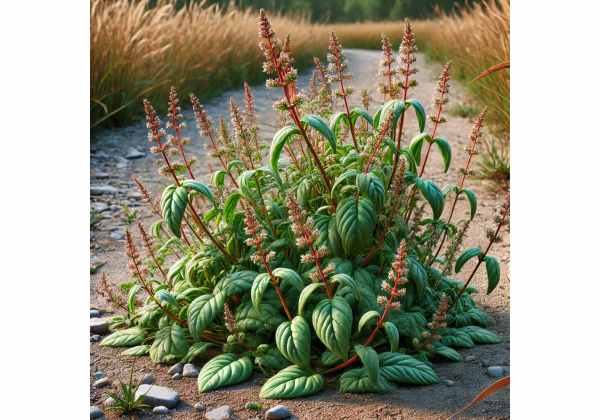
Knotweed, more precisely Polygonum aviculare, is a low-growing annual herb better known in many herbal texts as common knotgrass. It has a long record of traditional use in Europe and parts of Asia for mild urinary complaints, minor mouth and throat irritation, and short-term cold-related discomfort. The flowering aerial parts are the portion most often dried for tea, decoction, or gargle.
What makes this herb interesting is not a single “magic” ingredient, but a pattern of plant compounds that includes flavonoids, phenolic acids, and tannin-like astringent constituents. Together, these help explain why knotweed is often described as mildly anti-inflammatory, gently diuretic, and tissue-toning. At the same time, it is not a cure-all, and it should not be confused with Japanese knotweed, which is a different plant with a different traditional profile.
For most readers, the most useful way to view Polygonum aviculare is as a modest, short-term herbal option for specific minor symptoms, not as a replacement for medical care or prescription treatment.
Essential Insights
- Knotweed is traditionally used to support urinary flushing in mild, short-term complaints.
- Its astringent plant compounds may help soothe minor mouth and throat irritation.
- Typical adult tea use falls around 1.5 to 3 g dried herb per serving, depending on the purpose.
- Avoid oral use during pregnancy, while breastfeeding, and in children under 12 unless a clinician specifically advises it.
Table of Contents
- What Is Knotweed and What Is in It
- What Can Knotweed Help With
- Where Traditional Use Fits Best
- How to Prepare and Use Knotweed
- How Much Knotweed Per Day
- Side Effects and Who Should Avoid It
- What the Research Really Shows
What Is Knotweed and What Is in It
Polygonum aviculare is a sprawling, wiry herb from the buckwheat family. It often grows along paths, compacted soil, field edges, and other disturbed ground, which is one reason many people overlook it as a medicinal plant. In traditional herbal practice, however, the dried flowering aerial parts have been used for generations. That plant part matters: most practical herbal products are made from the cut, dried above-ground portion rather than the root.
The herb’s chemistry helps explain its reputation. Knotweed contains a mix of polyphenols, especially flavonoids and phenolic acids. These include quercetin-related compounds, kaempferol glycosides, and acids such as caffeic, ferulic, chlorogenic, and quinic acid. It also contains astringent compounds that can tighten and tone irritated tissues. In plain language, that combination points toward three broad actions people notice most: antioxidant support, mild anti-inflammatory activity, and a drying or toning effect on mucous membranes.
This is an important distinction. Many herbs are promoted as though one isolated constituent explains everything. Knotweed seems better understood as a whole-herb medicine whose effects come from the overlap of several compound families. The flavonoids likely contribute to its anti-inflammatory and antioxidant profile. The astringent constituents help explain why it has been used as a mouth rinse, throat gargle, and sometimes for loose or irritated tissues. The mild diuretic tradition probably reflects both chemistry and long practical use.
One useful way to think about knotweed is that it sits in the middle ground between a soothing herb and a drying herb. It is not as slimy and demulcent as marshmallow, and it is not as aggressively stimulating as some stronger diuretic or antimicrobial plants. That middle profile makes it a good fit for short-term, low-grade issues rather than severe symptoms.
Because quercetin-type flavonoids are part of this plant’s profile, some readers also find it helpful to compare knotweed’s chemistry with quercetin’s standalone profile. The difference is that knotweed delivers those compounds inside a broader whole-herb matrix rather than as a purified supplement.
Another practical note: common knotweed is not the same as Japanese knotweed. The names sound similar, but the plants are used differently in herbal medicine. That confusion leads many people to expect the wrong benefits, so correct identification is essential from the start.
What Can Knotweed Help With
The most realistic way to talk about knotweed benefits is to focus on narrow, traditional, short-term uses. This herb is best known for three areas: supporting urinary flushing, helping calm minor irritation in the mouth or throat, and offering broad antioxidant and anti-inflammatory support at the laboratory level.
For urinary use, knotweed has traditionally been taken to increase urine flow in mild complaints. That does not mean it “treats a UTI” in the modern medical sense. A better description is that it may support flushing when symptoms are minor and already understood, or when a clinician has ruled out anything serious. In practice, readers often value it when they want a simple herbal tea that encourages fluid movement without reaching immediately for a harsher remedy.
For the mouth and throat, knotweed’s astringent character is especially relevant. Gargles and rinses made from the herb have been used for minor inflammation, scratchiness, or irritated tissues. Astringent herbs do not always feel dramatic, but they can be useful when the goal is to reduce that raw, swollen, “over-wet” feeling in the tissues rather than heavily numb or coat them.
Its broader “health benefits” are better framed as potential supportive actions, not proven disease outcomes. In cell and experimental models, Polygonum aviculare extracts and constituent compounds show antioxidant and anti-inflammatory behavior. That helps explain why folk traditions also mention uses in skin discomfort, hemorrhoidal tendencies, digestive complaints, and wound care. Still, those uses move beyond the strongest traditional indications, so they should be described carefully.
Realistic benefits may include:
- A mild increase in urine output during short-term use.
- Temporary support for irritated mouth or throat tissues.
- A modest whole-herb antioxidant effect from its polyphenols.
- General anti-inflammatory potential suggested by nonhuman research.
What knotweed is unlikely to do is just as important. It is not a fast painkiller. It is not a proven substitute for antibiotics. It is not a kidney stone cure, and it should not be used to delay evaluation of burning urination, fever, flank pain, or visible blood in the urine.
If your main interest is urinary comfort, you may also want to compare how other gentle flushing herbs are used, such as corn silk for urinary comfort. Knotweed fits that same broad conversation, but with a more astringent personality and a narrower evidence base.
The best takeaway is this: knotweed may help with minor, self-limited symptoms, especially when the goal is short-term support. Its benefits become much less reliable when people expect it to solve complex, recurrent, or clearly infectious problems on its own.
Where Traditional Use Fits Best
Traditional use matters most when it is matched to the right kind of problem. Knotweed tends to fit best when symptoms are mild, recent, and not dangerous. In that setting, the herb’s old uses make practical sense. If symptoms are intense, prolonged, or unusual, the traditional framework stops being enough.
A good example is a scratchy throat at the beginning of a cold. A warm knotweed preparation used as a gargle may make sense there because the aim is local relief and tissue support. Another reasonable example is minor mouth irritation, where a rinsing or gargling preparation can be used briefly. The same goes for mild urinary complaints where the goal is to encourage urine flow and hydration for a short period while watching symptoms closely.
This is also where many people misuse the herb. Folk medicine records sometimes mention kidney stones, diarrhea, hemorrhoids, lung complaints, wound care, and metabolic issues. Those reports are historically interesting, but they do not all carry the same level of practical confidence today. A modern reader should separate “reported in tradition” from “smart first-choice self-care option.”
The safest modern fit for knotweed is usually one of these:
- Short-term gargling for minor mouth or throat irritation.
- Short-term tea or decoction use to support urinary flushing.
- Supportive use during a mild cold when throat irritation is part of the picture.
Its traditional astringent nature also explains why some people compare it with other tissue-toning herbs. In that sense, readers sometimes look at witch hazel for topical support as a useful point of comparison. Knotweed is not the same herb, but the underlying idea of “tightening irritated tissues” helps make its traditional uses easier to understand.
Where knotweed does not fit well is equally clear. It is a poor choice for high fever, recurrent urinary infections, strong pelvic pain, kidney-area pain, mouth ulcers that keep returning, or a sore throat severe enough to impair swallowing. Those are situations where the cost of waiting is higher than the potential benefit of experimenting with tea.
One original but practical point is that knotweed’s traditional role often works best when combined with good hydration, rest, and symptom monitoring. In other words, the herb is not doing all the work. It is more like a supportive tool in a broader self-care plan. That may sound less exciting than bold supplement claims, but it is often the more honest and useful way to use a traditional herb.
How to Prepare and Use Knotweed
Most people use Polygonum aviculare as a dried herb, not as a capsule. That suits the plant well because its traditional preparations are simple: tea, decoction, and gargle. Each form makes sense for a slightly different purpose.
Tea is usually the easiest entry point. It is the form most people use for cold-related support or general short-term internal use. A decoction, which is a somewhat stronger water preparation, is often chosen when the herb is being used for urinary flushing or as the base for a rinse. Gargles and mouth rinses are especially logical because they bring the astringent constituents directly to the tissue you want to support.
In practical terms, preparation choice should follow the goal:
- Choose a warm tea when your main aim is internal use during a mild cold.
- Choose a decoction when a label or monograph specifically recommends it for urinary flushing.
- Choose a cooled, freshly prepared rinse or gargle for mouth and throat use.
A few good use habits make a big difference. First, do not over-concentrate the herb under the assumption that stronger is always better. Astringent herbs can become harsh and unpleasant if pushed too far. Second, use short courses, not open-ended daily routines. Knotweed makes more sense as a targeted herb than as a permanent wellness beverage. Third, pay attention to the source. Because this plant commonly grows in roadsides and compacted urban soils, wild harvesting near traffic, sprayed lots, or contaminated ground is a poor idea. This is one of those herbs that looks easy to forage but can pick up exactly the contaminants you do not want in a medicinal tea.
Commercial forms are less standardized than with major supplement herbs. You may see cut herb, loose tea, or combination formulas. Standardized extracts exist in research settings, but they are not the norm for everyday use. That means product quality matters. Look for a seller that names the plant clearly as Polygonum aviculare and identifies the plant part used.
Readers who already use other everyday herbal teas sometimes compare knotweed’s preparation style with dandelion safety and diuretic use. The overlap is mainly practical: both are often made as simple water preparations, but knotweed is the more astringent and narrower-purpose herb.
Finally, keep expectations matched to the method. A tea or gargle can be helpful, but it is still a low-intensity preparation. If symptoms are not improving within the expected short window, the answer is usually not to brew a stronger pot. It is to stop and reassess what is really going on.
How Much Knotweed Per Day
Dosage depends on why you are using knotweed. The best practical ranges come from traditional monograph-style guidance rather than from modern clinical trial dosing, because human trial data are limited. For that reason, adults and adolescents over 12 should stay close to established short-term ranges instead of improvising.
For minor cold-related use as a tea, a common traditional amount is 1.5 to 2 g of the cut herb in about 150 mL of boiling water, taken 3 to 4 times daily. That works out to a total daily amount of about 4.5 to 8 g. This type of use is generally kept to about 1 week.
For urinary flushing in minor complaints, a stronger preparation is typically used: 3 g of the herb in about 200 mL of water as a decoction, taken 2 times daily. That gives a total of about 6 g per day. This use is usually limited to about 2 weeks.
For mouth or throat support, the herb is commonly prepared for rinsing or gargling rather than swallowing. A typical single preparation uses 1.5 g in a glass of water, around 200 to 250 mL, with rinsing or gargling 4 to 5 times daily. Total daily herb use in that context is about 6 to 7.5 g, and it is generally limited to 1 week.
A few practical dosage rules help:
- Match the dose to the purpose instead of using one routine for everything.
- Spread servings through the day rather than taking the full amount at once.
- Drink enough plain water if using knotweed for urinary flushing.
- Stop at the recommended short-term duration unless a clinician tells you otherwise.
Timing also matters. For gargles, between-meal use often makes sense because the herb has more contact time with tissues. For internal urinary use, consistency and hydration matter more than exact clock time. For mild cold support, many people find warm servings most comfortable.
The biggest dosing mistake is treating knotweed like a daily tonic. It is better understood as a short-course herb for a specific reason. If you feel you need it every day for weeks, that usually points to an unresolved issue that deserves a better diagnosis, not a larger tea dose.
Side Effects and Who Should Avoid It
Knotweed’s safety profile is encouraging but incomplete. That is an important distinction. Traditional monograph sources report no established side effects in the available documentation, yet modern clinical safety data are also sparse. In other words, the herb has not raised major alarms at traditional doses, but it also has not been studied deeply enough to justify a “risk-free” label.
The clearest direct reason to avoid it is allergy or hypersensitivity to the herb itself. Beyond that, the main exclusions are based on missing safety data rather than known harm. Oral use is generally not recommended during pregnancy or while breastfeeding because reproductive and developmental safety information is inadequate. Children under 12 are also usually excluded from oral use for the same reason.
Some people should be cautious even if the herb is not formally contraindicated. That includes anyone with significant kidney disease, fluid-balance problems, or a condition where changing urine output is not a small matter. Because interaction research is minimal, it is wise to be conservative if you take prescription diuretics, lithium, or several medicines that depend on stable hydration and kidney handling. The point is not that knotweed is known to interact strongly with these drugs. The point is that the evidence gap argues for extra caution rather than casual use.
Possible issues to watch for during use include:
- Stomach discomfort or nausea from strong preparations.
- Dryness or irritation from over-concentrated gargles.
- Urinary urgency or dehydration if fluid intake is poor.
- Rash or other signs of sensitivity.
Just as important are the symptoms that mean you should not keep self-treating. Seek medical care if urinary symptoms come with fever, back or flank pain, worsening burning, blood in the urine, or symptoms that last beyond a short trial. The same principle applies to the throat and mouth: worsening pain, visible pus, difficulty swallowing, or symptoms lasting beyond the expected window deserve medical evaluation.
People who already use other mild diuretic herbs sometimes assume they can swap them freely. That is not always wise. Even with gentle herbs, the balance between hydration, blood pressure, kidney function, and symptom cause still matters. This is one reason it is helpful to compare broader safety thinking with dandelion safety and diuretic use before stacking multiple draining herbs together.
A simple rule works well here: if the symptom is minor, short-lived, and clearly understood, knotweed may be reasonable. If the symptom is strong, confusing, recurrent, or medically important, knotweed should move to the background while diagnosis comes first.
What the Research Really Shows
The research picture on Polygonum aviculare is promising but not definitive. The strongest support is for traditional use, not for modern disease-treatment claims. That means the herb has a plausible rationale, a history of use, and a growing set of laboratory findings, but still lacks the kind of human trial evidence that would justify broad medical claims.
What researchers do see is consistent enough to be interesting. Knotweed extracts and identified compounds show antioxidant behavior, anti-inflammatory effects, and some antimicrobial or tissue-supporting actions in experimental settings. Mechanistic work suggests effects on pathways linked to oxidative stress and inflammatory signaling. That aligns well with the herb’s long-standing use for irritated tissues and minor inflammatory complaints.
Where the evidence becomes thin is in direct human outcomes. There is very little clinical trial research, and the human study history is too limited to confirm strong efficacy claims. Even when small studies suggest a possible benefit, the methods are often too weak to turn that into firm guidance. This matters because many herbal articles blur the line between “biologically active in a lab” and “clinically proven in people.” Knotweed does not deserve that blur.
Research limits also affect quality control. Different studies use different plant parts, solvents, concentrations, and marker compounds. A hydroethanolic extract used in a laboratory model is not the same thing as a household tea. That does not make tea useless, but it does mean readers should avoid assuming that every experimental finding transfers directly to the cup.
So where does that leave the average user? In a sensible middle position. Knotweed looks like a credible traditional herb for short-term support in narrow situations, especially mild urinary flushing and minor mouth or throat irritation. It also appears chemically rich enough to justify ongoing research into anti-inflammatory and antioxidant activity. What it does not yet justify is hype.
A fair summary is this: knotweed is more than folklore, but less than proven therapy. That may sound modest, yet it is often the most useful conclusion. Herbs are easiest to use well when we respect both their potential and their limits.
References
- The genus Polygonum: An updated comprehensive review of its ethnomedicinal, phytochemical, pharmacological activities, toxicology, and phytopharmaceutical formulation 2024 (Review)
- Hydroethanolic Extract of Polygonum aviculare L. Mediates the Anti-Inflammatory Activity in RAW 264.7 Murine Macrophages Through Induction of Heme Oxygenase-1 and Inhibition of Inducible Nitric Oxide Synthase 2024
- Antioxidant Molecules Isolated from Edible Prostrate Knotweed: Rational Derivatization to Produce More Potent Molecules 2022
- In Vitro Study of Two Edible Polygonoideae Plants: Phenolic Profile, Cytotoxicity, and Modulation of Keap1-Nrf2 Gene Expression 2021
- Assessment report on Polygonum aviculare L., herba 2016 (Assessment Report)
Disclaimer
This article is for educational purposes only and is not a diagnosis or treatment plan. Herbal products can affect symptoms, hydration, and medicine use, and a plant that is reasonable for minor self-care may be inappropriate during pregnancy, for children, or when symptoms suggest infection or another medical condition. Seek professional care for severe, recurrent, or worsening symptoms, and review any herbal plan with a qualified clinician if you take prescription medicines or have kidney, heart, or urinary tract concerns.
If you found this guide useful, please share it on Facebook, X, or your preferred platform so others can find it.