Lamb’s Ear, or Stachys byzantina, is best known as a soft, silvery garden plant, but it has a longer and more practical story than its ornamental looks suggest. In traditional use, it has been prepared as an infusion, decoction, or topical herb for irritated skin, minor inflammatory complaints, and wound-related care. Part of its appeal comes from a rich mix of plant compounds, including phenolic acids, flavonoids, verbascoside, and plant sterols that may help explain its antioxidant, soothing, and antimicrobial actions.
What makes Lamb’s Ear especially interesting is the way its old folk uses overlap with newer laboratory findings. Recent studies suggest it may help calm skin inflammation, support surface healing, and inhibit some microbes in test settings. At the same time, the research is still early and mostly preclinical, so it is not a proven medical treatment. That means the most responsible way to think about Lamb’s Ear is as a promising traditional herb with topical potential, gentle short-term uses, and important safety limits when evidence or product quality is uncertain.
Quick Overview
- Lamb’s Ear is most promising as a topical herb for irritated skin and minor surface inflammation.
- Its best-known compounds include chlorogenic acid, caffeic acid, rutin, apigenin, verbascoside, and beta-sitosterol.
- A cautious traditional tea range is about 1 to 2 g dried aerial parts in 200 mL hot water, once or twice daily for short-term use.
- Pregnant or breastfeeding people, children, and anyone with serious skin infection or deep wounds should avoid self-treating with it.
Table of Contents
- What is Lamb’s Ear?
- Key ingredients and actions
- Does Lamb’s Ear help skin?
- Other traditional uses
- How to use Lamb’s Ear
- How much per day?
- Safety and who should avoid it
- What the evidence actually says
What is Lamb’s Ear?
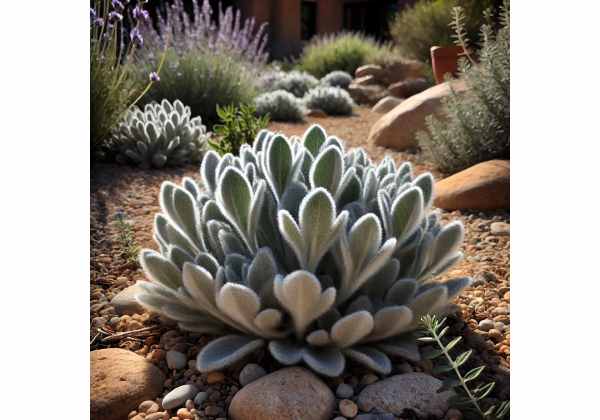
Lamb’s Ear is a perennial herb in the mint family, Lamiaceae. It forms a low, spreading mat of thick, velvety leaves that look and feel almost like felt. That soft surface is the reason gardeners love it, but it is also one reason the plant entered folk practice. The leaves are cushiony, absorbent, and easy to handle, so in some traditions they were used as a practical plant for minor first-aid situations long before modern dressings were widely available.
The plant is native to parts of the Middle East and nearby regions, though it is now grown widely in Europe, North America, and many temperate gardens. In herbal and ethnobotanical literature, Lamb’s Ear appears under the scientific name Stachys byzantina, and older sources may also list closely related naming variants such as Stachys lanata. This matters because herb identity is not just botanical trivia. With a plant used both as an ornamental and a folk remedy, correct identification helps prevent confusion with unrelated fuzzy-leaved plants.
Historically, Lamb’s Ear has been used in a few distinct ways. In Iran, traditional records describe decoctions for infected wounds. Other reports describe infusions used for inflammatory complaints, stomach and lung discomfort, tonsillitis, headache, and abdominal pain. In Brazil, the leaves have also been eaten as a food, often fried. That culinary role is useful context because it shows Lamb’s Ear is not only a medicinal curiosity. Still, edible use does not automatically prove that concentrated extracts or long-term medicinal use are safe.
Another important detail is that Lamb’s Ear belongs to the larger Stachys group, sometimes called woundworts. That nickname comes from a long regional history of using certain Stachys species for wounds, inflamed tissues, and skin problems. But not every member of the genus has the same level of evidence, and not every traditional use applies equally to Lamb’s Ear itself.
Today, the plant sits in an interesting space between folk practice and modern phytochemistry. It looks humble, but it contains a complex mix of phenolic compounds, sterols, and other bioactives that give researchers reason to study it more closely. The safest working view is that Lamb’s Ear is a traditional herb with credible laboratory promise, especially for topical use, but not yet a well-established clinical treatment.
Key ingredients and actions
Lamb’s Ear does not depend on one famous active compound. Its effects appear to come from a layered mix of phenolic acids, flavonoids, glycosides, terpenes, and plant sterols. This kind of chemistry is common in herbs, but with Stachys byzantina the extraction method matters a great deal. A fresh leaf, a water infusion, and an alcohol extract can behave differently because they pull different compounds in different amounts.
Among the most important identified constituents are chlorogenic acid, caffeic acid, ferulic acid, p-coumaric acid, rutin, apigenin, and verbascoside. These are joined by phytosterols such as beta-sitosterol and stigmasterol, along with smaller amounts of compounds such as alpha-tocopherol and various volatile terpenes. Newer extraction work has also found notable levels of chlorogenic acid in leaf extracts, which is useful because chlorogenic acid is often linked with antioxidant and protective effects in other plant systems.
A practical way to understand the chemistry is to group it by function.
- Phenolic acids such as chlorogenic and caffeic acid are often associated with antioxidant action and may help limit oxidative stress in irritated tissue.
- Flavonoids such as rutin and apigenin are commonly discussed for inflammation-modulating and vessel-protective properties.
- Phenylethanoid glycosides such as verbascoside are widely studied for antioxidant and antimicrobial potential.
- Sterols and triterpene-like compounds may contribute to membrane-stabilizing, soothing, and anti-inflammatory effects.
- Volatile compounds such as beta-pinene, limonene, linalool, nerolidol, and beta-caryophyllene may contribute to aroma and some antimicrobial behavior.
One useful insight is that Lamb’s Ear seems more convincing as a topical herb than as a strong internal remedy. Its chemistry makes sense for skin-focused applications because the combination of phenolics, sterols, and antioxidant compounds may work best where the plant can contact the tissue directly. That helps explain why current research interest leans toward skin inflammation, wound support, and cosmetic applications rather than toward major internal therapeutic claims.
Another detail that often gets missed is that product quality depends on plant part, harvest stage, and extraction method. One extract may be richer in chlorogenic acid, while another may contain more fatty acids, sterols, or aromatic compounds. That means two products labeled “Lamb’s Ear extract” can feel very different in practice.
So when people ask what the “main ingredient” is, the better answer is that Lamb’s Ear behaves like a multi-compound herb. Its likely activity comes from synergy rather than a single headline molecule. That is also why the plant is promising and hard to standardize at the same time.
Does Lamb’s Ear help skin?
Skin is where Lamb’s Ear looks most promising. Traditional wound and inflammation use, the plant’s soft leaf texture, and newer preclinical studies all point in the same direction: this is primarily a topical herb. That does not mean it is proven in humans, but it does mean the skin-related claims are more grounded than many of the broader internal claims attached to the plant online.
One reason the plant gained a folk first-aid reputation is physical as well as chemical. The leaves are woolly, absorbent, and gentle on the surface. Historically, that made them useful as a temporary covering or padding for minor skin problems. Modern first-aid supplies are safer and more reliable, especially for open wounds, but the old use helps explain why the plant became associated with skin comfort in the first place.
Chemically, Lamb’s Ear contains compounds that make topical interest plausible. Chlorogenic acid, caffeic acid, rutin, apigenin, and verbascoside all have known antioxidant or inflammation-related activity in broader plant research. Plant sterols such as beta-sitosterol and stigmasterol may also contribute to local soothing effects. In practical terms, that can translate into a calmer feeling on irritated skin, less reactivity, and support for normal tissue recovery.
The most compelling modern data come from animal and laboratory studies. In a recent skin inflammation study, one fraction of Stachys byzantina reduced croton oil ear edema in mice by a large margin, and a 12 percent topical preparation also improved psoriasis-like inflammatory changes in a mouse model. That does not prove a cream or homemade compress will reproduce the same result in people, but it does show that the plant can influence inflammatory responses in living tissue.
Lamb’s Ear also shows in vitro antimicrobial activity, especially against some bacteria rather than fungi. That matters because mild surface support sometimes depends on reducing microbial burden, though this should never be confused with treating a serious skin infection at home.
For real-life use, the most realistic skin goals are:
- calming minor irritation
- supporting comfort on chafed or inflamed areas
- using a rinse or compress after proper cleaning
- adding a short-term topical herb to a simple skin routine
If you are comparing options, a more established everyday skin herb is calendula for superficial irritation and barrier support. Lamb’s Ear belongs in the same general conversation, but with a thinner evidence base and a more clearly experimental edge.
So yes, Lamb’s Ear may help skin, especially in mild, localized, topical use. But it is still best treated as a promising traditional option rather than a proven dermatologic therapy.
Other traditional uses
Beyond skin, Lamb’s Ear has a wider traditional profile, though this is the area where caution matters most. Historical reports mention infusions or decoctions used for lung and stomach complaints, tonsillitis, headache, abdominal pain, and general inflammatory states. Some older sources also mention antipyretic and antispasmodic actions. These uses help explain the plant’s reputation, but they should not be read as confirmation that the herb works reliably for those conditions.
The most practical way to understand these older uses is to group them by pattern rather than by diagnosis.
- Sore throat and oral discomfort: Lamb’s Ear has been used as an infusion in traditions that value mild herbal gargles and mouth rinses.
- Stomach discomfort and abdominal pain: This likely reflects folk use for crampy, irritated, or unsettled digestion rather than treatment of a defined disease.
- Headache and inflammatory discomfort: This probably overlaps with its general anti-inflammatory reputation in the broader Stachys genus.
- Respiratory irritation: Older descriptions of lung use may point to soothing tea traditions rather than strong lung-directed pharmacology.
What keeps these uses from becoming stronger recommendations is the evidence gap. Modern research on Lamb’s Ear itself is much more focused on skin inflammation, antioxidant activity, and extract chemistry than on human digestive, respiratory, or neurologic outcomes. That means a tea for a scratchy throat or mild stomach upset may fit traditional use, but it should be seen as low-confidence, short-term support.
There is also a useful distinction between “edible” and “medicinal.” The fact that Lamb’s Ear leaves are eaten in some places, especially fried, suggests the plant can enter the diet in limited forms. But culinary use does not tell us how a concentrated tincture, repeated infusion, or long-term supplement will behave.
Another point worth making is that traditional use often reflects availability as much as pharmacology. A soft, aromatic, easy-to-grow plant becomes part of local care because people have it on hand. That can produce genuinely useful traditions, but it can also create reputations that outgrow the underlying evidence.
So what should readers take from these older uses? Lamb’s Ear may have gentle broader benefits, especially where inflammation, irritation, or mild discomfort are part of the problem. But outside topical use, it is best approached with modest expectations. For internal complaints, the herb is more interesting than proven, and it should never delay proper evaluation of persistent pain, infection, breathing trouble, or recurring digestive symptoms.
How to use Lamb’s Ear
The best way to use Lamb’s Ear depends on the goal, but in most cases topical use makes the most sense. The plant is versatile enough to be used as a rinse, compress, salve ingredient, or simple leaf application in traditional settings. Even so, a modern, safety-first approach should keep things simple.
A practical overview looks like this:
- Infusion for rinses or compresses
This is one of the easiest and most traditional forms. Dried aerial parts or leaves are steeped in hot water, strained well, and cooled until comfortably warm. The liquid can then be used as a compress for minor surface irritation or as a short-term rinse. - Topical cream, salve, or extract
If a prepared product exists with clear labeling, this is usually the most controlled option. It also avoids the variability of homemade fresh-leaf use. - Fresh leaf for temporary padding
Historically, a clean Lamb’s Ear leaf was sometimes placed over minor irritated spots or used as a temporary soft cover. That old use is understandable because the leaf is thick and absorbent. Still, it is not sterile, so it should not replace proper dressings for open wounds, punctures, or infected skin. - Tea for short internal use
Internal use is more traditional than evidence-based. If someone tries it at all, it should be a mild, short-term tea rather than a concentrated extract. - Food use
In some regions the leaves are cooked or fried. This is best understood as culinary use, not as a medicinal dose strategy.
A few good practices matter more than the exact format:
- choose correctly identified Stachys byzantina
- avoid leaves sprayed with garden chemicals
- strain infusions well so the fine hairs do not irritate the mouth or skin
- use small amounts first
- stop if the plant seems drying, itchy, or unhelpful
For readers interested in traditional “green first-aid” plants, it can help to compare Lamb’s Ear with plantain leaf for minor skin irritation. Plantain has a stronger public reputation in that role, while Lamb’s Ear brings the added physical benefit of a soft, cushioning leaf.
One smart rule is this: use Lamb’s Ear where gentleness and local contact matter. It is not the herb to choose when you want a strong internal effect. It is better suited to short-term, external, supportive care and should stay in that lane unless a knowledgeable clinician guides otherwise.
How much per day?
There is no clinically standardized dose for Lamb’s Ear, which is one of the most important things to understand before using it. Most dosing guidance comes from traditional herbal practice, not from human trials. That means dose should be conservative, the use period should be short, and stronger is not automatically better.
For topical infusion use, a reasonable traditional-style range is:
- 2 to 4 g dried herb per 250 mL hot water
- steep covered for about 10 to 15 minutes
- strain carefully
- use as a rinse or compress 1 to 3 times daily
This is probably the most sensible format for most readers because it matches the plant’s best-supported use pattern.
For mild internal tea use, a cautious range is:
- 1 to 2 g dried aerial parts per 200 mL hot water
- taken once or twice daily
- for a short period such as 3 to 7 days
That lower internal range is intentional. The herb does not have strong clinical dose data, so it is wiser to stay conservative. If the tea feels irritating, too bitter, or unhelpful, that is a good reason to stop rather than increase the amount.
For fresh-leaf use, no true medicinal dose exists. If a clean, intact leaf is used as a temporary surface pad for minor friction or irritation, think of it as a practical topical application rather than a measurable dose.
For commercial extracts, follow the label closely. Lamb’s Ear extracts can vary a lot in strength and composition. One product may emphasize phenolic compounds, while another may contain more fatty acids or sterols. Without standardization, matching one brand to another is difficult.
A few variables change how much is appropriate:
- dried herb versus fresh leaf
- infusion versus alcohol extract
- internal use versus topical use
- sensitivity of the skin or stomach
- reason for use
If your goal is mainly cooling and moisture rather than a woolly herbal compress, aloe vera for topical hydration and soothing is often the simpler option.
The safest dosing principle for Lamb’s Ear is to use the smallest amount that fits the purpose, limit the trial length, and reassess quickly. A herb with limited human evidence should be tested thoughtfully, not pushed hard.
Safety and who should avoid it
Lamb’s Ear has a mild image, but mild image is not the same as proven safety. The biggest safety issue is not that the plant is known to be highly toxic in normal traditional use. It is that good human safety data are limited, especially for concentrated extracts and repeated internal use.
The people who should be most cautious are:
- pregnant or breastfeeding people
- children
- people with known allergy to Lamiaceae plants
- anyone with deep wounds, spreading redness, pus, fever, or serious skin disease
- people taking multiple medicines who want to use concentrated internal extracts
For topical use, the most likely problems are irritation, itching, redness, or a dry reaction. That risk is higher if the skin is already broken, inflamed, or highly reactive. Even though some studies suggest Lamb’s Ear extracts are well tolerated in skin cell models, that is not the same as guaranteeing that a homemade leaf compress will suit every person.
Open wounds deserve special caution. Traditional records mention Lamb’s Ear for infected wounds, but modern wound care is far better equipped for that job. A soft leaf is not sterile, and serious infection needs proper cleaning, assessment, and sometimes antibiotics. The safest modern use is on intact or only mildly irritated skin, not on wounds that look infected or deep.
Internal safety is even less clear. The plant is eaten in some food traditions, which is reassuring to a point, but that does not automatically make tea concentrates or repeated medicinal use safe for everyone. There is also little direct interaction research. Because of that, it is wise to avoid concentrated internal use if you take prescription medicines, have chronic illness, or are already using several herbs.
Patch testing is sensible before broader topical use. Apply a small amount to a limited area and wait a day. If itching, stinging, or rash develops, stop.
If you mainly want a drying, astringent topical rather than a soft, protective herb, witch hazel for topical astringency is a better comparison point, though it can be more drying than Lamb’s Ear.
The bottom line is straightforward: Lamb’s Ear is best used gently, locally, and for short periods. Avoid self-treatment when symptoms are intense, infected, unexplained, or persistent. In those situations, proper medical care matters far more than any herbal experiment.
What the evidence actually says
The evidence for Lamb’s Ear is interesting, specific, and still limited. That is the most honest summary. The plant is not just folklore. It has real phytochemical depth and several encouraging experimental studies. But nearly all of that evidence comes from lab work, animal models, and extract studies rather than from strong human trials.
The strongest theme is skin-focused anti-inflammatory activity. A 2024 study on Stachys byzantina examined topical anti-inflammatory effects in acute and chronic skin inflammation models. One fraction performed especially well in mouse ear edema tests, and the stronger topical preparation improved psoriasis-like changes in a mouse model. That makes skin use the clearest research lead.
There is also credible antioxidant and antimicrobial evidence. A 2023 comparative Stachys study found that S. byzantina had strong antiradical activity alongside high phenolic content and showed noteworthy activity against Staphylococcus aureus. Earlier work also suggested stronger action against Gram-positive bacteria than against fungi. This does not mean Lamb’s Ear is an herbal antibiotic, but it does support its reputation as a helpful surface herb.
A 2025 extraction and characterization study added another useful layer. It found substantial chlorogenic acid in leaf extracts, along with caffeic, ferulic, and related acids, and reported no major cytotoxic effect in HaCaT skin cells up to the tested range. That is encouraging for topical development, though it still does not establish human clinical benefit.
Another 2025 paper pushed interest further into cosmetic territory. It reported enzyme-inhibiting, antioxidant, and antiglycation effects that suggest possible use in skin-ageing and hyperpigmentation products. This is scientifically interesting, but readers should treat it as product-development evidence, not proof that rubbing the plant on the skin will fade spots or reverse ageing.
What is missing is just as important as what exists. There are no strong, widely recognized human clinical trials specific to Lamb’s Ear that define its best dose, ideal preparation, long-term safety, or real-world effectiveness for common conditions. That keeps the plant in the “promising but preliminary” category.
So the practical conclusion is clear. Lamb’s Ear is most credible as a traditional topical herb with experimental support for skin inflammation, oxidative stress control, and mild antimicrobial action. It is much less credible as a proven internal remedy. If you want a topical herb with a broader modern reputation for tissue support, comfrey for skin and soft-tissue care is often discussed more often, though it comes with its own safety limits. Lamb’s Ear deserves interest, but not exaggeration.
References
- Genus Stachys: A Review of Traditional Uses, Phytochemistry and Bioactivity 2020 (Review)
- Stachys Species: Comparative Evaluation of Phenolic Profile and Antimicrobial and Antioxidant Potential 2023 (Preclinical Study)
- Stachys byzantina K. Koch in the Treatment of Skin Inflammation: A Comprehensive Evaluation of Its Therapeutic Properties 2024 (Preclinical Study)
- Ethanolic Extract of Stachys byzantina Leaf: Optimization of Ultrasonic Probe-Assisted Extraction and Characterization 2025 (Preclinical Safety and Phytochemistry Study)
- Stachys byzantina K. Koch (Lamiaceae) as a potential ingredient for delaying skin ageing and treating hyperpigmentation disorders in pharmaceutical products 2025 (Preclinical Study)
Disclaimer
This article is for educational purposes only and does not replace medical advice, diagnosis, or treatment. Lamb’s Ear is not a proven therapy for infections, chronic skin disease, respiratory illness, or digestive disorders. Because human clinical evidence is limited, internal use should be conservative and avoided during pregnancy, breastfeeding, and in children unless a qualified clinician advises otherwise. Seek prompt medical care for deep wounds, spreading redness, pus, fever, trouble breathing, persistent sore throat, or symptoms that worsen instead of improving.
If this article was helpful, please share it on Facebook, X, or another platform you use so more readers can find a careful, evidence-aware guide.