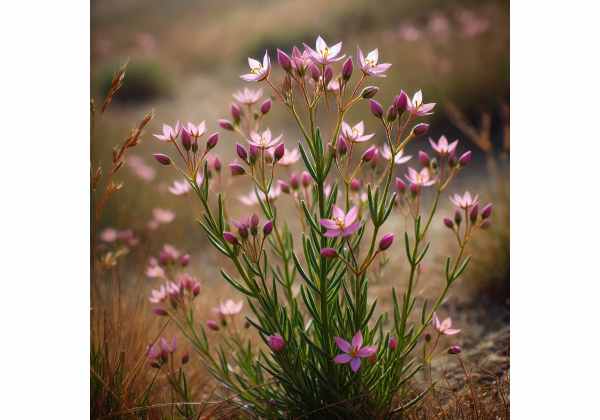
Lemon Centaury, more often described in botanical works as lesser centaury or slender centaury, is a small annual herb from the gentian family with a sharp bitter taste and a long traditional link to digestive care. It is not as widely used as common centaury, yet it belongs to the same medicinal tradition of bitter herbs taken to stimulate appetite, support sluggish digestion, and sharpen digestive tone before meals. Modern phytochemical research adds depth to that traditional reputation by identifying secoiridoid glycosides, xanthones, and related compounds that may help explain its bitter action, antioxidant potential, and laboratory antimicrobial activity.
Still, Lemon Centaury is not a clinically dominant herb. Most of what is known comes from ethnobotanical reports, phytochemical analysis, and in vitro studies rather than large human trials. That makes it more credible as a careful bitter digestive herb than as a broad wellness cure. Used thoughtfully, it may be useful for low appetite and heavy digestion. Used carelessly, especially in irritated stomach conditions, it can be the wrong herb for the job.
Essential Insights
- Lemon Centaury is best understood as a bitter digestive herb that may help stimulate appetite before meals.
- Its main compounds also show antioxidant and antimicrobial activity in laboratory research.
- A cautious range is about 0.5 to 1.5 g dried herb in 150 to 250 mL water, once or twice daily for short-term use.
- Avoid it if you have active peptic ulcer disease, are pregnant or breastfeeding, or plan to use it in children or adolescents.
Table of Contents
- What is Lemon Centaury
- Key ingredients in Lemon Centaury
- What can it realistically help with
- How to use Lemon Centaury
- How much per day
- Safety and who should avoid it
- What the evidence really says
What is Lemon Centaury
Lemon Centaury, or Centaurium pulchellum, is a delicate-looking but chemically assertive herb from the Gentianaceae family. Modern field guides usually call it lesser centaury or slender centaury rather than Lemon Centaury, and that naming detail matters because the plant is often overshadowed by its larger and more widely used relative, Centaurium erythraea. Lemon Centaury is smaller, tends to branch more finely, and is best known for narrow leaves and pale to bright pink star-like flowers. In medicinal terms, though, its most important feature is not its flower color. It is the bitterness.
That bitterness places the species in the long tradition of digestive bitters, sometimes called amara. These are herbs used not because they taste pleasant, but because their bitterness can stimulate appetite and prepare the digestive system for food. Older herbal systems valued such plants for sluggish digestion, post-meal heaviness, low appetite, and a general sense that the stomach was inactive rather than inflamed. Lemon Centaury fits that pattern well.
Historically, Centaurium species have been used for digestive weakness, stomach complaints, fever, and low appetite. Lemon Centaury itself seems to have a narrower and more regional medicinal history. Ethnobotanical records connect it with folk use for fever, jaundice, and digestive disorders in some traditional systems. That is meaningful, but it does not mean the plant has become a standardized modern medicinal staple.
It helps to think of Lemon Centaury as a smaller, less-commercialized cousin of common centaury. The medicinal logic is similar, but the clinical documentation is thinner. This distinction matters because people often assume that all centaury species are interchangeable. In reality, closely related herbs may share broad chemistry and still differ in how confidently they can be recommended.
A useful way to understand the plant is through its place in herbal categories:
- It is a bitter herb first.
- It is a digestive stimulant rather than a soothing herb.
- It is more traditional than clinically validated.
- It is best used with purpose, not casually.
That means Lemon Centaury is not the herb for someone who wants a gentle daily tea or a bland stomach-calming drink. It belongs to the sharper edge of herbal medicine, where taste, timing, and clear indication matter. It is closer in spirit to classical bitter herbs than to pleasant aromatic infusions.
For readers, the best takeaway is this: Lemon Centaury is a real medicinal herb, but a narrow one. Its strongest identity lies in digestive bitter use, not in broad modern health claims. That already makes it more useful, because it keeps the herb in a lane where it can be understood honestly.
Key ingredients in Lemon Centaury
Lemon Centaury appears to derive much of its medicinal character from secoiridoid glycosides and xanthones, with additional contribution from isocoumarins and related secondary metabolites. This chemistry is important because it explains both the herb’s intense bitterness and the broader laboratory interest in its antioxidant and antimicrobial properties.
The most important compound group is the secoiridoid glycosides. These include:
- Gentiopicrin
- Swertiamarin
- Sweroside
These compounds are strongly bitter, and that bitterness is not just a sensory trait. In bitter-herb physiology, taste itself matters. Bitter compounds on the tongue can trigger reflexive responses that increase saliva, gastric juice, and digestive readiness. That is one reason Lemon Centaury is traditionally used before meals rather than after them. The goal is to wake digestion up, not simply to sit in the stomach as another liquid.
Gentiopicrin is especially important because it is one of the best-known bitter principles in centaury-type herbs. Swertiamarin and sweroside also deserve attention because they appear not only to shape bitterness but also to contribute to some of the plant’s measured laboratory activity. In experimental work, these compounds have been associated with antibacterial and antifungal effects when isolated or concentrated.
The second important compound group is xanthones. These include compounds such as:
- Methylbellidifolin
- Demethyleustomin
- Decussatin
Xanthones are a chemically interesting class because they often appear in plants with antioxidant and inflammation-related potential. Their presence in Lemon Centaury helps explain why the herb has drawn more than purely digestive attention. A plant can be bitter and still do more than stimulate appetite. Still, it is wise not to leap from that possibility to bold claims. Xanthones show promise, but they do not automatically transform a niche bitter herb into a proven therapeutic agent.
A third layer includes isocoumarin derivatives and other specialized metabolites. These compounds add complexity to the plant’s overall activity and help explain why the herb continues to attract phytochemical interest despite its modest commercial profile.
In practical terms, the chemistry of Lemon Centaury suggests three major functional themes:
- Bitter digestive stimulation
- Antioxidant support at the experimental level
- Antimicrobial potential in laboratory settings
What it does not suggest is a single miracle molecule or a neat, supplement-style story. Lemon Centaury is a pattern herb. Its effects likely come from the interaction of several compound groups rather than from one dominant branded ingredient.
This matters for readers because whole-herb use is not the same as isolated-compound research. A tea made from the plant does not behave like a purified secoiridoid fraction in a lab. That distinction is easy to lose in herbal writing, yet it is central to realistic expectations.
If you compare it to better-known bitters such as gentian root as a classic digestive bitter, Lemon Centaury has a similar basic logic but a much less developed tradition of formal standardization. Its chemistry is convincing. Its translation into everyday clinical herbalism is less complete.
What can it realistically help with
Lemon Centaury may help in a few modest, well-defined ways, but it should not be stretched into a broad-spectrum remedy. The most realistic benefit area is digestive support through its bitter action. Beyond that, the herb shows interesting laboratory properties, especially antimicrobial and antioxidant ones, though these should not be mistaken for proven clinical outcomes.
Its most realistic uses are:
- Supporting low appetite
- Stimulating sluggish digestion
- Helping with a heavy, inactive feeling after meals
- Offering laboratory-demonstrated antimicrobial potential
- Contributing antioxidant activity in extract studies
The best-supported traditional role is as a digestive bitter. This means the herb may be useful when digestion feels slow, weak, or underactive rather than inflamed. People in this category often describe a lack of hunger, heaviness after food, low digestive energy, or a sense that meals sit too long. Bitters can help by preparing the digestive system before a meal begins. The effect is often subtle but noticeable: more appetite, a quicker gastric response, and less of that flat, stagnant digestive feeling.
This is not the same as soothing an irritated stomach. In fact, it is often the opposite. Lemon Centaury is not well suited to people with strong acid symptoms, burning pain, active reflux, or ulcer irritation. It is a stimulant in digestive terms, and the wrong stimulant can aggravate the wrong stomach.
Its antimicrobial activity is the second most interesting area. In vitro studies suggest the plant and some of its isolated compounds may inhibit selected bacteria and fungi. That supports the idea that Lemon Centaury is chemically active and pharmacologically relevant. But it does not justify using it as a substitute for treatment of infection. Laboratory promise is not the same as clinical proof.
Traditional sources also associate the herb with jaundice, fever, and broader medicinal use. These uses deserve mention because they reflect real ethnobotanical history. Still, they remain exactly that: traditional observations rather than validated modern indications.
A balanced way to read its benefits is this:
- Most realistic: appetite and digestive stimulation
- Plausible but less proven: adjunctive antimicrobial relevance at the research level
- Traditional but not clinically established: fever-related or broader folk uses
This narrower benefit profile is not a weakness. It is what makes the herb credible. A bitter digestive herb does not need to promise more than it can reasonably do.
In practical herbalism, many people who need gentle digestive help are still better served by a softer herb such as dandelion in traditional bitter support or by a more soothing herb depending on the symptom pattern. Lemon Centaury becomes most useful when the reason for using it is specific and appropriate. Low appetite before meals and sluggish digestion are sensible targets. Broad disease treatment is not.
How to use Lemon Centaury
Lemon Centaury should be used as a purposeful bitter, not as a casual tea herb. That distinction shapes everything about preparation, timing, and expectations. Bitter herbs are often best when taken in small, measured amounts shortly before eating. Their goal is to stimulate, not to soothe or hydrate.
The most practical ways to use Lemon Centaury are:
- A light infusion from the dried herb
- A gentler cool maceration
- A carefully identified extract product, if available
- Short-term use before meals
A mild infusion is the easiest starting point. The herb is steeped briefly in hot water, producing a bitter drink that can be taken before food. Some herbal traditions also favor cool-water maceration for bitter plants, especially when a gentler extraction is preferred. Either method can work, as long as the final preparation is clearly bitter without becoming overwhelming.
Taste is more important here than with many herbs. If the cup is so bitter that it causes immediate aversion or nausea, it is probably too strong. A proper digestive bitter should be assertive, not punishing. The purpose is to create a useful physiologic signal, not to force the body through intensity.
Timing is one of the most important details. Lemon Centaury generally makes the most sense:
- About 15 to 30 minutes before meals
- Before heavier meals rather than snacks
- In small amounts rather than large cups
- For short periods rather than indefinitely
Some people with delicate stomachs may tolerate bitters better with food or after the first few bites. That is reasonable. The old rule of “always before meals” works well for some people and poorly for others. The herb should serve the digestive system, not challenge it unnecessarily.
The plant is best viewed as a niche bitter rather than a daily general tonic. That means it is usually not the best first herb for someone who simply wants a healthier routine. Many readers who want digestive support will do better with a more flexible herb such as ginger in everyday digestive use. Lemon Centaury is more specialized.
A practical use checklist looks like this:
- Confirm that the digestive pattern fits bitter use.
- Start with a weak preparation.
- Take it before meals if tolerated.
- Keep the course short.
- Stop if burning, reflux, or nausea worsens.
It is also worth noting that product quality matters. Because C. pulchellum is not as standardized as common centaury, species identification is important. A vague “centaury herb” label may not tell you enough.
Used well, Lemon Centaury is a disciplined herb. It is not the kind of plant that rewards improvisation. It works best when the person using it knows why they are taking a bitter, what result they want, and when to stop.
How much per day
There is no firmly established clinical dose for Lemon Centaury specifically. That means dosage guidance must stay conservative and should be presented as practical extrapolation from general centaury use, not as a proven standard for C. pulchellum itself.
A cautious range is:
- 0.5 to 1.5 g dried herb in 150 to 250 mL water
- Once or twice daily
- Best used before meals
- Best used for short-term courses only
This low range is intentional. Lemon Centaury is a niche bitter, not a bulk herb. The aim is to create enough bitterness to stimulate digestion without pushing into gastric irritation. People sensitive to bitters may start even lower, using a smaller pinch of dried herb or a partial cup.
The right amount depends on several things:
- Your tolerance for bitterness
- Whether the herb is dried or fresh
- Hot infusion versus cool maceration
- Whether your goal is appetite support or general digestive stimulation
- Whether your stomach tends to be sluggish or easily irritated
A practical rule is that the bitterness should feel medicinal but manageable. If the preparation causes immediate nausea, stomach tightening, or dread before drinking it, the dose is no longer helping. Stronger is not better with bitters. In many cases, smaller and more consistent works better than forcing a large amount.
For timing, the most common pattern is:
- Take a small amount before lunch or dinner.
- Observe appetite and digestion.
- Increase only slightly if needed.
- Keep use brief, such as several days to two weeks.
Signs that the dose is too much include:
- Stomach burning
- Nausea
- Reflux
- Cramping
- Loss of appetite because the bitterness feels excessive
If these appear, the herb should be reduced or stopped. That is especially true if the underlying problem may not be digestive sluggishness in the first place.
People who want a gentler daily support herb often do better with something softer such as chamomile in light digestive support. Lemon Centaury is better used when a true bitter stimulus is desired.
The best dose is therefore the smallest amount that improves appetite or digestive readiness without irritating the stomach. With a herb like this, careful underdosing is usually wiser than ambitious dosing.
Safety and who should avoid it
Lemon Centaury is not among the most dangerous herbs, but it is also not one that should be treated casually. Its safety profile is limited by the lack of robust species-specific clinical data, and the general rules that apply to centaury-type bitters still matter.
The clearest caution is active peptic ulcer disease. Bitter herbs can stimulate gastric secretion, and that makes them a poor fit for ulcer pain, active stomach lining irritation, or severe burning reflux. In the wrong digestive pattern, the herb may worsen symptoms rather than relieve them.
People who should avoid Lemon Centaury include:
- Anyone with active peptic ulcer disease
- People with severe reflux or inflamed gastritis
- Pregnant individuals
- Breastfeeding individuals
- Children and adolescents
- Anyone using it instead of evaluation for persistent digestive symptoms
Pregnancy and breastfeeding are both situations where the herb is better avoided because adequate safety data are lacking. Children and adolescents should also not use it routinely for the same reason. This does not prove harm in every case, but it does mean there is not enough evidence to support safe general use.
Possible side effects are usually linked to its bitter action:
- Nausea
- Stomach burning
- Increased reflux
- Abdominal discomfort
- Aversion from excessive bitterness
The absence of strong interaction data should not be mistaken for proof of no interactions. With under-studied herbs, the safer interpretation is often that the mapping is incomplete. People who take multiple prescription drugs, especially for digestive or liver-related conditions, should be cautious with any niche bitter herb.
One of the biggest practical risks is misuse. Lemon Centaury is sometimes imagined as a remedy for “any stomach problem,” but that is not true. It may help a weak, underactive digestive pattern. It may worsen an inflamed one. That is the central safety distinction.
Stop use and seek medical advice if you notice:
- Persistent stomach pain
- Vomiting
- Black stools
- Worsening reflux
- Unexplained weight loss
- Ongoing symptoms despite treatment attempts
Many readers with sensitive digestion will be better served by gentler herbs. If the stomach is already irritable, peppermint for digestive comfort may be easier to tolerate in the right context, though even that has its own cautions.
Lemon Centaury works best for the adult with clear low-appetite or sluggish-digestion symptoms who understands what a bitter is meant to do. Outside that context, the herb quickly becomes less useful and more likely to disappoint.
What the evidence really says
The evidence for Lemon Centaury is enough to make the herb credible, but not enough to make it clinically strong. Most of the support comes from ethnobotanical reports, phytochemical work, and in vitro antimicrobial studies. Human trials focused specifically on Centaurium pulchellum are lacking.
What the evidence supports reasonably well:
- The plant is chemically active
- It contains bitter secoiridoid glycosides associated with digestive stimulation
- It contains xanthones and other secondary metabolites of pharmacologic interest
- Extracts and isolated compounds show antibacterial and antifungal activity in laboratory studies
What the evidence does not yet support strongly:
- Broad clinical claims for infection treatment
- Standardized modern therapeutic indications
- Long-term oral use
- Strong species-specific dosing recommendations
This distinction is important because Lemon Centaury sits in a very common herbal category: the plant that is more convincing in chemistry and tradition than in modern trials. That does not mean it is useless. It means it should be presented honestly.
The broader centaury literature is also instructive. Even for common centaury, which is better known and more widely used, the strongest formal support still tends to fall under traditional use rather than fully established clinical use. That suggests even more caution is appropriate with the smaller, less studied C. pulchellum species.
A fair evidence-based summary looks like this:
- The bitterness is real and likely relevant.
- Traditional digestive use is plausible.
- Laboratory antimicrobial activity is promising.
- Human evidence remains limited.
- The herb is more interesting than proven.
That may sound modest, but modesty is often what preserves trust in herbal writing. Lemon Centaury does not need to be turned into a modern cure-all to matter. It has a legitimate place among classic bitter herbs, especially for readers interested in traditional digestive support and phytochemical depth.
The best modern role for Lemon Centaury is therefore narrow and sensible: short-term, cautious use as a bitter digestive aid in appropriate adults, paired with realistic expectations and strong attention to safety. That is enough to make it worthwhile, and it is also enough to keep it from being oversold.
References
- Assessment report on Centaurium erythraea Rafn. s.l., herba 2015
- Antibacterial and antifungal screening of Centaurium pulchellum crude extracts and main secoiridoid compounds 2010
- Phytochemical studies and antibacterial activity of Centaurium pulchellum Druce 2006
- Xanthones and secoiridoids from hairy root cultures of Centaurium erythraea and C. pulchellum 2002
- Secoiridoids and xanthones in the shoots and roots of Centaurium pulchellum cultured in vitro 2003
Disclaimer
This article is for educational purposes only and is not medical advice, diagnosis, or treatment. Lemon Centaury is a traditional bitter herb with limited modern clinical evidence. It should not replace medical care for persistent abdominal pain, ulcer symptoms, jaundice, infection, unexplained weight loss, or any worsening digestive complaint. Extra caution is essential in pregnancy, while breastfeeding, in children, and in anyone with active peptic ulcer disease or significant reflux.
If this article helped you, please share it on Facebook, X, or your preferred platform so more readers can find careful, evidence-aware herbal guidance.