Lemon scented marigold, or Tagetes lemmonii, is an aromatic marigold species valued more for its fragrance and versatile household use than for any well-established medicinal role. Its leaves and flowers carry a bright, resinous citrus note, and modern food science places it among edible flowers with notable antioxidant compounds and volatile oils. That combination explains why it attracts interest for gentle herbal tea, culinary garnish, and occasional topical or aromatic use. At the same time, it is important to keep expectations realistic: the plant has promising chemistry, but direct human clinical research is very limited, so most claims rest on traditional use, composition studies, and laboratory findings rather than controlled trials. In practical terms, lemon scented marigold is best viewed as a culinary-aromatic herb with possible supportive benefits, not as a primary treatment for disease. Used thoughtfully, it may offer mild digestive comfort, sensory uplift, and antioxidant value, while also requiring the same caution given to other strongly aromatic members of the daisy family.
Quick Overview
- Mild infusions may support post-meal comfort and provide a calming citrus-herbal sensory effect.
- Its flowers and leaves contain volatile terpenes and polyphenols linked with antioxidant and mild antimicrobial activity in laboratory research.
- A conservative starting range is about 1–2 g dried herb, or 1–2 fresh sprigs, per 240 mL hot water.
- Avoid medicinal use if you have an Asteraceae allergy, and use extra caution during pregnancy, breastfeeding, or with concentrated essential-oil products.
Table of Contents
- What lemon scented marigold is and what makes it distinct
- Key ingredients and medicinal properties
- Lemon scented marigold health benefits and what the evidence suggests
- Traditional and modern uses in food, tea, and topical care
- How to prepare lemon scented marigold and how much to use
- Safety, side effects, and who should avoid it
- What current research says and where the gaps remain
What lemon scented marigold is and what makes it distinct
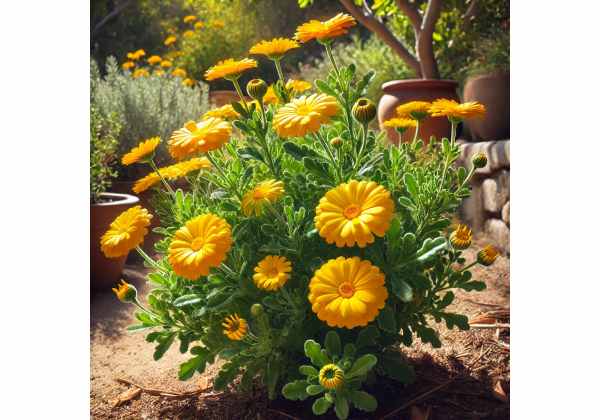
Lemon scented marigold belongs to the Tagetes genus, the same broader group that includes several ornamental and aromatic marigolds. Unlike the dense bedding marigolds many people know from summer gardens, Tagetes lemmonii is better thought of as a shrubby, strongly fragrant plant whose value comes from its aromatic foliage as much as its flowers. The scent is often described as citrusy, resinous, and slightly minty, which helps explain why it is sometimes explored as both an edible flower and a household herb.
One reason this plant attracts attention is that it sits at the meeting point of three categories: ornamental herb, edible flower, and traditional aromatic plant. That makes it easy to overstate. It is not the same as calendula, which belongs to a different genus, and it is not one of the better-studied medicinal herbs with a long clinical record. A more accurate comparison is to other fragrant culinary herbs that bring small, supportive benefits through flavor, aroma, and phytochemicals rather than through standardized drug-like dosing. If you already enjoy the bright scent of lemon verbena, this marigold occupies a similar everyday niche: flavorful, pleasant, and potentially useful, but best handled with moderation and clear expectations.
Food-science papers also suggest that lemon scented marigold is unusually interesting for freshness and storage quality among edible flowers. Fresh flowers have shown high flavonoid and ascorbate content and can hold their quality well during cold storage. That does not prove a medical effect in humans, but it does support the idea that the plant is chemically active enough to matter as more than a decorative garnish. It also supports a practical point: when people use this herb, they are often getting a real mixture of aroma molecules, polyphenols, pigments, and small nutrient compounds rather than just pleasant flavor.
The best way to think about lemon scented marigold, then, is as a low-intensity wellness herb. It may fit into tea blends, light culinary use, and aroma-based home remedies, but it should not be treated like a proven therapy for infection, inflammation, anxiety, or digestive disease. That distinction matters because many herbal disappointments come from using a promising plant for a job the evidence does not support. With lemon scented marigold, the most defensible uses are gentle and practical: occasional infusion, culinary accent, sensory enjoyment, and cautious experimentation rather than aggressive supplementation.
Key ingredients and medicinal properties
The plant’s potential value begins with its volatile chemistry. Reviews of Tagetes species report that T. lemmonii contains a terpene-rich aromatic fraction, with reported major constituents including dihydrotagetone, tagetone isomers, tagetenone isomers, ocimene-type compounds, and small amounts of other aromatic terpenes such as alpha-phellandrene and beta-caryophyllene. These molecules are important because they help explain the plant’s sharp lemony scent, its likely insect-repelling behavior, and some of the mild antimicrobial or antioxidant actions observed in laboratory settings. In plain terms, the fragrance is not cosmetic trivia; it is part of the plant’s pharmacologically relevant profile.
Lemon scented marigold also contains non-volatile compounds that matter when the plant is used as food or tea rather than as essential oil. In edible-flower analyses, T. lemmonii has shown measurable polyphenols, flavonoids, and ascorbate, along with notable radical-scavenging activity. That pattern suggests a plant with real antioxidant capacity, even if the strength of that effect in the body will depend on preparation method, dose, absorption, and the rest of a person’s diet. This is an important distinction. Antioxidant-rich does not automatically mean clinically therapeutic, but it does support a reasonable role in a varied diet or gentle herbal routine.
From a medicinal-properties standpoint, the plant is best described with careful language:
- Aromatic and carminative-leaning: the strong volatile profile suggests a plausible role in easing the heavy, stagnant feeling that some people get after meals.
- Antioxidant: supported by flower-composition studies showing flavonoids, polyphenols, and ascorbate.
- Mildly antimicrobial in principle: many Tagetes volatiles show antimicrobial or protective activity in lab settings, although this does not substitute for medical treatment.
- Potentially soothing or uplifting by aroma: not because it is a proven anxiolytic, but because fragrant herbs can support comfort and appetite through sensory pathways.
A useful comparison is with lemon balm: both are aromatic herbs whose everyday value often comes from a mix of scent, flavor, and mild plant chemistry rather than a single dominant clinical mechanism.
Another important property is variability. The chemistry of aromatic plants can change with growth conditions, harvest time, storage, and whether you use fresh leaves, dried flowers, or concentrated oil. That means a home infusion made from garden-grown lemon scented marigold is not equivalent to a bottled essential oil or to an alcohol extract. For most readers, this matters because the gentlest and most predictable form is the simple culinary-herbal one: fresh or dried plant material in modest amounts. Once you move into concentrated extracts, both benefits and risks become less predictable.
Put together, the medicinal properties of lemon scented marigold are real but modestly evidenced. The plant has a convincing phytochemical basis for antioxidant and aromatic actions, yet it still lacks the kind of human data needed to define strong medical uses. That makes it promising, but not proven.
Lemon scented marigold health benefits and what the evidence suggests
The most credible health benefit of lemon scented marigold is broad antioxidant support. Studies of the flowers place T. lemmonii among edible flowers with meaningful flavonoid, polyphenol, and ascorbate content, and with good radical-scavenging activity. That does not mean a cup of tea will produce dramatic clinical effects, but it does mean the plant can contribute useful bioactive compounds in the same general way other antioxidant-rich herbs and edible flowers do. For someone already eating well, that may translate into small supportive value rather than a headline effect.
A second likely benefit is mild digestive comfort. Aromatic herbs with terpene-rich leaves often work less like drugs and more like gentle digestive companions: they may make a meal feel lighter, encourage saliva and digestive readiness, and reduce the sense of fullness or minor gas after eating. With lemon scented marigold, this is still partly an evidence-based inference rather than a directly proven clinical outcome, but it is one of the most sensible real-world uses. In practice, a modest tea after a rich meal is more plausible than using the plant for chronic digestive disease. If your main goal is stronger evidence for belly discomfort, peppermint for digestion has a more established tradition and evidence base.
People are also drawn to the plant for its aromatic effect on mood and comfort. The bright, resinous citrus scent can feel clarifying and gently uplifting, and many readers will recognize that as a real benefit even without a formal diagnosis attached to it. Still, this should not be overstated as treatment for anxiety or insomnia. Lemon scented marigold may support a calming tea ritual or a refreshing sensory break, but it is better described as a comfort herb than a clinically proven nervine. That distinction protects the plant from exaggerated claims and helps readers use it in ways that actually match the evidence.
Laboratory research on Tagetes species also points toward antimicrobial, insect-repelling, and protective actions. Those findings are scientifically interesting because they support the idea that the plant’s volatile compounds are bioactive. However, they should not be translated too quickly into human health promises. An herb that repels insects or shows activity in a petri dish is not automatically an effective internal remedy for infections, skin disease, or inflammation. The gap between phytochemical promise and human usefulness is exactly where many herb articles become misleading.
So what benefits can a reader reasonably expect? The honest answer is modest ones: pleasant aromatic stimulation, possible post-meal ease, antioxidant contribution as part of food or tea, and perhaps gentle topical or household usefulness when prepared cautiously. That is still valuable. Not every herb needs to behave like a medicine to be worth using. Lemon scented marigold may be most helpful when it is integrated into daily life in small ways rather than taken with high hopes for large therapeutic effects.
Traditional and modern uses in food, tea, and topical care
In everyday use, lemon scented marigold works best as a culinary-aromatic plant. The flowers can be used sparingly as an edible garnish, and the leaves or tender tips can be infused for a fragrant herbal tea. Because the flavor is assertive, most people do better with restraint than abundance. A few petals on fruit, grain salads, or soft cheese are often enough. Likewise, a light infusion usually showcases the plant better than a long, strong brew, which can push the taste toward resinous bitterness. This is one of those herbs where less often creates the better experience.
Tea is probably the easiest and safest way to explore the plant. A warm cup after meals makes sense if your goal is digestive comfort, while a lighter afternoon infusion may suit people who simply enjoy the scent. Lemon scented marigold also blends naturally with softer herbs. Paired with chamomile, it can become rounder and more floral; paired with a little lemon peel or ginger, it feels brighter and more culinary. The key is to let it play a supporting role rather than dominate the blend.
There is also a reasonable place for topical and household use, but only in cautious forms. Fresh plant material may be added to bath sachets, room herb bundles, or simple infused rinses for aroma. Some people experiment with diluted infused oils or salves, yet concentrated essential-oil use deserves much more caution because aromatic Tagetes species can be irritating in sensitive skin. If the goal is skincare, the safest approach is to think of lemon scented marigold as an accent botanical, not as the main active ingredient. Patch testing matters, and broken skin is not the place for first experiments.
Another modern use is as a garden-support herb. While that is not a medical application, it is part of the plant’s broader usefulness. Its strong scent fits well in sensory gardens, patios, and kitchen-garden edges where people want fragrance, pollinator interest, and a plant that feels functional rather than merely decorative. This matters because many readers searching for uses are not looking only for medicinal dosing; they want to know whether the herb deserves space in real life. Lemon scented marigold often does, especially if you appreciate herbs that bridge cooking, fragrance, and light wellness.
What it should not be used for is just as important. It is not a substitute for antibiotics, antacids, prescription anxiolytics, or treatment for allergic skin disease. It is also not a good candidate for unsupervised internal essential-oil use. In practical herbalism, the plant shines when used gently: tea, garnish, aromatic blends, and small supportive rituals. Once you push it toward concentrated, repeated, or highly medicinal use, the evidence becomes thin and the safety picture less certain.
How to prepare lemon scented marigold and how much to use
There is no standardized, evidence-based medicinal dose for lemon scented marigold. That is the most important dosing fact to know. Because human studies are lacking, any practical dosage has to be conservative and framed as culinary-herbal use rather than as a proven therapeutic regimen. The safest starting point is a mild infusion made from food-grade plant material that you know has been grown without inappropriate pesticides or ornamental chemical treatments. Reviews on edible flowers repeatedly stress that safe sourcing and clean handling matter as much as the plant itself.
A practical starting range for tea is:
- Dried herb: about 1–2 g dried leaves and flowers per 240 mL hot water.
- Fresh herb: 1–2 small fresh sprigs, or roughly 1–2 teaspoons chopped fresh material, per 240 mL hot water.
- Steeping time: 5–7 minutes for a lighter cup, up to 10 minutes if you want a stronger aroma.
- Frequency: start with 1 cup daily; if well tolerated, 2–3 cups daily for short-term use is a cautious upper range.
That range is not a clinical prescription. It is a sensible entry point for an aromatic herb whose chemistry is active enough to notice but not well enough studied to justify aggressive dosing.
For culinary use, the amount can be even smaller. A few petals or a pinch of chopped leaf is usually enough for salads, fruit dishes, infused honey, or herb butter. If you are using it for flavor rather than tea, think in terms of garnish quantities, not handfuls. The plant’s aroma can easily dominate milder foods, much the way lemon thyme can overpower a dish if used too heavily.
A few practical rules make dosing safer and more useful:
- Start with a weak preparation the first time.
- Use only the amount you need for aroma and gentle effect.
- Avoid drinking strong infusions on an empty stomach until you know how you respond.
- Do not ingest essential oil unless you are working with a qualified professional and a product specifically formulated for internal use.
- Stop if you notice mouth irritation, nausea, rash, or unusual digestive upset.
Short trials are more informative than indefinite use. Try the herb for several days to one or two weeks in a consistent, modest form, then decide whether it truly helps. This approach respects both the plant and the evidence. It also helps prevent the common mistake of escalating doses simply because a pleasant herb feels natural. Natural does not always mean harmless, and with lesser-studied plants, restraint is a strength.
Safety, side effects, and who should avoid it
The main safety concern around lemon scented marigold is family-related sensitivity. Tagetes belongs to the Asteraceae family, which includes many plants known to trigger allergy or cross-reactivity in susceptible people. Recent reviews of Asteraceae medicinal plants note that sensitizing compounds in this family can provoke both immediate and delayed allergic responses, including skin irritation and, in sensitive individuals, systemic reactions. For that reason, people who already react to ragweed, chamomile, chrysanthemum, arnica, or related daisy-family plants should be especially careful.
Possible side effects from lemon scented marigold are likely to be the ordinary ones seen with strongly aromatic herbs: mouth or stomach irritation if the infusion is too strong, unpleasant bitterness, and skin irritation from concentrated topical preparations. These reactions are more likely with essential oils or heavy extracts than with light tea or culinary use. Even if you tolerate the flowers in food, that does not automatically mean your skin will tolerate a concentrated oil preparation. Patch testing is a sensible minimum before any topical use.
Pregnant and breastfeeding people should be cautious with medicinal internal use, not because a specific danger has been clearly proven for T. lemmonii, but because there is not enough direct safety research to justify routine use beyond normal food amounts. The same cautious logic applies to small children. When the evidence is thin, ordinary culinary exposure is one thing; medicinal dosing is another. If a herb does not have a solid safety record for a given group, the most sensible default is to avoid concentrated use.
Another important safety issue is product quality. Many marigolds are sold as ornamental plants, and ornamental growing practices may involve treatments that are not suitable for teas or garnish use. Only use plant material that was grown specifically for edible or herbal use, or that you cultivated yourself under food-safe conditions. Edible-flower reviews emphasize that contamination, handling, and storage can matter significantly for safety. In other words, the herb can be fine while the supply chain is not.
Who should generally avoid it or use only with professional guidance?
- People with known Asteraceae allergy or past plant-contact dermatitis.
- Pregnant or breastfeeding people considering medicinal amounts.
- Young children, especially for concentrated or topical preparations.
- Anyone planning to use essential oil internally.
- People with very sensitive skin or a history of fragrance reactions.
For most healthy adults, small culinary amounts and light tea appear to be the most reasonable zone of use. The farther you move from food-like use toward concentrated extracts, the more caution you should bring with you.
What current research says and where the gaps remain
Current research gives lemon scented marigold a credible chemical and nutritional profile, but not a clinically mature one. We have useful data on its volatile constituents, some species-specific edible-flower measurements, and broader Tagetes and edible-flower reviews that support antioxidant, aromatic, and mild bioactive potential. We also have enough family-level safety data to justify allergy caution. What we do not have is the kind of human evidence that would let anyone define firm indications, standardized extracts, or reliable therapeutic dosing.
That research gap matters because it shapes how the plant should be presented. It is reasonable to say lemon scented marigold is promising. It is not reasonable to say it is proven for digestive disorders, skin disease, anxiety, immune support, or infection. Most of the excitement around this herb comes from composition and laboratory data, which are useful first steps but not the final word. In herbal medicine, this is a familiar pattern: a plant smells potent, tests well in the lab, and shows tradition behind it, yet still waits for the harder question of whether those properties translate into measurable human benefit.
One of the more interesting modern insights is that edible-flower research is broadening the way people think about herbs. A plant does not have to become a capsule or tincture to matter. It can contribute through food, sensory experience, and low-intensity daily use. Lemon scented marigold fits this model especially well. Its likely best future may not be as a mainstream supplement, but as a carefully characterized edible-aromatic herb with niche value in culinary wellness, functional foods, and gentle home herbalism.
So where does that leave a reader today? In a sensible middle ground. Lemon scented marigold is more than an ornamental flower, because its chemistry and edible-flower data are real. But it is also less than a fully validated medicinal herb, because human evidence remains sparse. The practical bottom line is simple: use it for what it appears to do best. Enjoy its aroma, explore it gently in tea or food, respect family-related allergy risk, and do not expect it to replace better-studied herbs or medical care. That is not a disappointing conclusion. It is the kind of clear boundary that makes herbal use safer and more worthwhile.
References
- Tagetes spp. Essential Oils and Other Extracts: Chemical Characterization and Biological Activity 2018 (Review)
- Phytonutritional Content and Aroma Profile Changes During Postharvest Storage of Edible Flowers 2020 (Food-Science Study)
- Edible Flower Species as a Promising Source of Specialized Metabolites 2022 (Study)
- Edible flowers’ flavor, safety and their utilization as functional ingredients: a review 2024 (Review)
- Allergic Potential of Medicinal Plants From the Asteraceae Family 2025 (Review)
Disclaimer
This article is for educational purposes only and is not a diagnosis, treatment plan, or substitute for medical advice. Lemon scented marigold is not a well-standardized medicinal herb, and the available evidence comes mainly from laboratory, food-science, and review literature rather than strong human clinical trials. If you are pregnant, breastfeeding, managing a chronic condition, taking prescription medicines, or have a known allergy to Asteraceae plants, speak with a qualified healthcare professional before using it medicinally.
If this guide was useful, please share it on Facebook, X, or your preferred platform so more readers can find careful, evidence-aware herbal information.