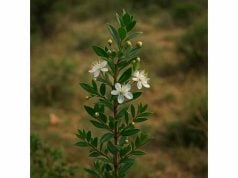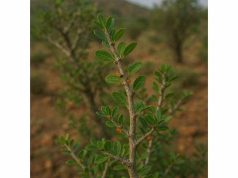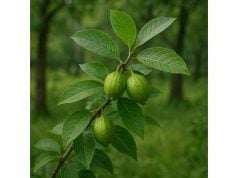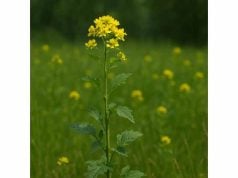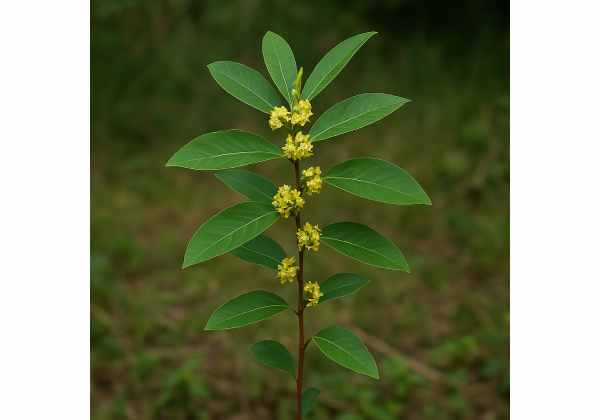
May Chang, botanically known as Litsea cubeba, is a fragrant small tree or shrub native to East and Southeast Asia, where its fruit, leaves, and essential oil have long been valued in traditional practice. Today, it is best known for its bright lemon-like aroma and for an essential oil rich in citral, limonene, and other aromatic compounds that give it a clear, uplifting character. In wellness settings, May Chang is most often discussed for aromatic support, air-freshening, topical cleansing blends, and its promising antimicrobial and anti-inflammatory properties.
Still, this is a plant where the form matters enormously. The whole herb and traditional preparations are one thing; the essential oil is another. Most modern claims about May Chang refer to the oil, not casual culinary or household use. That oil has real pharmacological interest, especially in laboratory and preclinical research, but it also carries real safety limits, particularly around skin irritation and sensitization. The most useful way to understand May Chang is as a potent aromatic botanical with practical topical and diffusion uses, not as a casual internal remedy.
Top Highlights
- May Chang is most promising for aromatic uplift, surface-level antimicrobial support, and short-term soothing use in diluted topical blends.
- Its strongest modern applications come from the essential oil rather than from unspecialized internal herbal use.
- A practical adult topical range is about 0.5% to 1% dilution for leave-on skin use, with up to 2% in short-term body applications.
- Avoid undiluted use, internal self-dosing, and routine use in people with fragrance sensitivity, highly reactive skin, pregnancy, or significant respiratory allergies.
Table of Contents
- What May Chang is and why Litsea cubeba is mostly known for its oil
- Key ingredients and medicinal properties of Litsea cubeba
- Health benefits that make the most sense
- How May Chang is used in aromatherapy, skin care, and traditional practice
- Dosage, dilution, and practical use guidelines
- Safety, skin reactions, who should avoid it, and interactions
- What the research really supports and what it does not
What May Chang is and why Litsea cubeba is mostly known for its oil
May Chang is the common name most often used in aromatherapy and essential oil commerce for Litsea cubeba, an aromatic plant in the Lauraceae family. It grows across parts of China, Taiwan, India, and Southeast Asia, where it has a long record of traditional use. Depending on the region, different parts of the plant have been used for digestive discomfort, cold-weather complaints, pain, and general household medicine. Yet in modern natural-health conversations, May Chang is overwhelmingly associated with one thing: its strongly scented essential oil.
That focus makes sense. The oil, usually distilled from the fruits, is intensely lemony, fresh, and bright. It is sometimes described as sharper and more sparkling than lemon itself, with a cleaner and more penetrating scent profile. This gives it a strong identity in diffuser blends, room sprays, natural cleaning products, and diluted skin-care formulas. It is also why May Chang is often mistaken for a general citrus oil, even though it comes from a different botanical line altogether.
Traditional herbal use is broader than modern aromatherapy use. Historical sources within the wider Litsea tradition describe use for digestive upset, chills, edema, joint discomfort, and minor injuries. But those uses belong to the plant in medicinal context, not necessarily to unsupervised modern essential oil use. That difference matters. An essential oil is not a whole-herb tea, and the safety expectations should never be identical.
Another reason May Chang has become popular is that it occupies a useful middle ground between fragrance and function. It smells pleasing enough for home use, but it also has enough antimicrobial and anti-inflammatory interest to attract scientific attention. That combination has made it relevant to wellness, cosmetic science, food preservation, and botanical research.
From a practical standpoint, May Chang is most often encountered in four forms:
- Essential oil from the fruit
- Fragrance blends and diffuser formulas
- Diluted topical products
- Traditional regional herbal preparations
The first of these dominates modern wellness culture. In fact, for many readers, “May Chang” really means “May Chang essential oil.” That is why it helps to compare it with other citral-rich aromatic herbs such as lemon myrtle, which are also prized more for concentrated aroma chemistry than for casual internal herbal use.
So what is May Chang, really? It is an aromatic medicinal plant with a long traditional background, but its modern relevance comes mostly from the chemistry and uses of its essential oil. That means it deserves both appreciation and restraint. It is useful, interesting, and versatile, but it is not a casual all-purpose remedy.
Key ingredients and medicinal properties of Litsea cubeba
The chemistry of May Chang explains nearly everything about its aroma, its appeal, and its limits. The essential oil of Litsea cubeba is usually dominated by citral, which itself consists mainly of the isomers geranial and neral. In many samples, citral makes up the majority of the oil, while limonene, linalool, geraniol, citronellal, and smaller amounts of other monoterpenes round out the profile. This composition can vary by cultivar, harvest time, geography, and extraction method, but the overall aromatic signature remains distinctly fresh, lemon-like, and penetrating.
Citral is the key to understanding May Chang’s medicinal interest. It contributes heavily to the oil’s antimicrobial, antioxidant, and anti-inflammatory behavior in experimental settings. It is also one reason the oil can irritate sensitive skin. In other words, the same chemistry that makes May Chang useful is also part of what makes it potentially reactive.
A practical way to understand the plant’s properties is to group them into core functions:
- Aromatic and mood-related activity: Its sharp citrus scent is widely used to make indoor environments feel brighter, cleaner, and more awake.
- Antimicrobial potential: Laboratory studies repeatedly show activity against a range of bacteria and fungi, especially in the essential oil.
- Anti-inflammatory potential: Preclinical work suggests that components of the oil may help modulate inflammatory pathways.
- Antioxidant activity: The oil and some other plant fractions show free-radical scavenging and oxidative-stress-related activity in test systems.
- Topical cleansing potential: Because of its fragrance and antimicrobial profile, May Chang is often included in diluted skin and hygiene blends.
It is important, though, to keep scale in mind. Laboratory antimicrobial activity does not mean an essential oil should be used like an antibiotic. Likewise, evidence of anti-inflammatory signaling in a model system does not mean the oil should be treated as a safe internal anti-inflammatory supplement.
May Chang also contains non-volatile compounds in leaves and branches, but most modern practical interest still centers on the essential oil. That is why composition papers and commercial products focus so heavily on fruit oil chemistry. In some ways, May Chang behaves more like a functional aromatic ingredient than a conventional tonic herb.
This makes it easier to place alongside other essential oils discussed for cleansing and antimicrobial use. The overlap is real, but the personality is different. Tea tree tends to be camphoraceous, medicinal, and strongly topical. May Chang is brighter, more citrus-like, and often more appealing in atmospheric and cosmetic blends. Yet both need dilution and both deserve respect.
The overall medicinal picture is clear. Litsea cubeba is chemically active, especially through its volatile oil. Its main constituents justify interest in antimicrobial, antioxidant, and inflammation-related effects. But this is a plant whose usefulness lies as much in how it is formulated and applied as in what its raw chemistry can do in isolation.
Health benefits that make the most sense
May Chang has attracted a broad range of claims, from mood support to digestive help to antimicrobial action. The most responsible way to discuss benefits is to separate plausible, practical uses from the more speculative claims that depend mostly on lab data.
The first benefit that makes the most sense is aromatic uplift. This is not a disease claim, but it is a real reason people use the oil. May Chang’s scent is often described as clear, cheerful, and mentally refreshing. Inhaled in diffuser blends or room sprays, it may help a space feel less stale and more energizing. One small psychophysiological study also suggests that inhalation of Litsea cubeba oil can affect brainwave patterns and may be associated with more positive mood states compared with less pleasant control oils. That is not proof of treatment for anxiety or depression, but it does support the idea that its aroma has meaningful perceptual effects.
A second plausible benefit is topical antimicrobial support. Essential oil research consistently shows that May Chang oil can inhibit certain bacteria and fungi in laboratory conditions. This helps explain why it appears in diluted products aimed at cleansing, deodorizing, or supporting blemish-prone skin. It does not mean it should replace medical treatment for infections, but it does make sense as a supportive ingredient in carefully diluted external formulas.
A third credible area is inflammation-related support in topical or preclinical contexts. May Chang oil and related extracts show promise in studies looking at inflammatory signaling and oxidative stress. In real life, this translates into cautious interest in soothing massage blends, aromatic compresses, and certain skincare formulations. The key word is cautious. Evidence is encouraging, but not yet strong enough to justify bold medical claims.
Traditional use also suggests some digestive and cold-weather applications. The broader Litsea literature describes the plant in relation to stomachache, diarrhea, indigestion, and chills. These uses are historically important, but modern consumer essential oil use should not leap from traditional record to internal self-dosing.
The benefits that make the most sense, then, are these:
- A freshening, uplifting aromatic effect
- Supportive topical cleansing value
- Preliminary anti-inflammatory and antioxidant potential
- Limited traditional digestive relevance in whole-plant contexts
The least justified claims are the familiar exaggerated ones:
- That May Chang treats major infections on its own
- That it can be ingested casually for broad internal health benefits
- That a few drops in a diffuser meaningfully change chronic disease
- That natural fragrance automatically means harmless use
This balanced view is important because May Chang is easy to oversell. Its scent creates a strong first impression, and its lab data are genuinely interesting. But the best-supported uses remain practical and modest. In that sense, it behaves more like aromatic herbs used for atmosphere, mood, and gentle topical support than like a clinically established internal medicine.
May Chang is valuable because it is useful, not because it is magical. That is a better standard for almost any botanical.
How May Chang is used in aromatherapy, skin care, and traditional practice
In modern wellness practice, May Chang is used far more often as an essential oil than as a whole herb. That shapes almost every practical recommendation. The oil is bright, strongly aromatic, and relatively easy to blend, which has made it popular in diffusion, topical care, and natural household products.
Aromatherapy is the most obvious use. In a diffuser, May Chang can make a room feel cleaner, sharper, and more alert. Many people use it in the morning, during work, or in spaces that feel heavy or stagnant. It blends especially well with lavender, bergamot-like citrus notes, tea tree, and woods. Because its scent is so assertive, it is usually best used in moderate amounts rather than as the only oil in a blend.
Topical use comes next, but this is where caution becomes more important. Diluted May Chang oil may appear in formulas aimed at oily skin, body odor, dull indoor air, or localized massage. Some people also use it in products designed for blemish-prone skin because of its antimicrobial profile. Yet it is not a gentle universal skin oil. Its citral content means it can be irritating if overused, applied undiluted, or combined with too many other stimulating ingredients.
A few practical topical forms include:
- Diluted roller blends for short-term aromatic use
- Body oils at low concentration
- Diluted spot formulas in professionally designed products
- Natural deodorizing sprays for clothing or rooms
- Cleansing blends for diffusers or household use
Traditional use of Litsea cubeba is broader than this. Ethnopharmacological accounts describe fruit and other plant parts being used for gastrointestinal complaints, colds, pain, and swelling. Those traditions matter, but they should not be translated too quickly into modern essential-oil self-treatment. Whole plant use, decoctions, and region-specific herbal methods are not interchangeable with concentrated oil use.
Internal use is where the biggest modern mistake happens. Because May Chang smells food-like and citrus-like, some people assume it is gentle enough to ingest casually. That is not a safe assumption. Essential oils are concentrated plant chemicals, not flavored waters. Without professional guidance, internal self-dosing is difficult to justify.
For most readers, the practical uses of May Chang can be organized like this:
- Diffusion for mood and air freshness
- Very low-dose topical use in well-diluted blends
- Cosmetic or cleansing products where it is one ingredient among several
- Traditional-use interest best approached through trained herbal systems, not internet improvisation
This is also why it fits naturally beside other strong aromatic oils used for atmosphere and external purposes. These oils can be useful and pleasant, but they are not neutral. Their intensity is part of both their appeal and their risk.
May Chang is most rewarding when used with intention. A few drops in the right place, at the right dilution, often go much further than aggressive experimentation.
Dosage, dilution, and practical use guidelines
May Chang dosage should be discussed mainly in terms of dilution and exposure time, because the essential oil is the form most people actually use. Unlike teas or capsules with long-established public dosing conventions, May Chang works best when the dose is treated as an aromatic or topical exposure rather than a swallowable supplement amount.
For diffusion, a practical adult range is about 3 to 6 drops in a room diffuser for a session of 15 to 30 minutes. Smaller rooms need less, and sensitive people often do better at the lower end. The goal is a clean aromatic presence, not saturation. If the room feels sharp in the throat or the scent becomes headache-inducing, that is already too much.
For topical use, dilution matters even more. A reasonable framework is:
- 0.5% to 1% for leave-on facial or sensitive-skin products
- 1% to 2% for short-term adult body applications
- Avoid undiluted use on skin, especially on the face, neck, or damaged tissue
In practical mixing terms, a 1% dilution means about 1 drop of essential oil per 5 mL of carrier, or roughly 6 drops per 30 mL, depending on drop size. Exact drop counts vary, which is why finished products from reputable formulators are often safer and more consistent than homemade improvisation.
For inhalation beyond diffusion, such as a personal inhaler or scent strip, the same “less is more” rule applies. Short, intermittent exposure is better than continuous saturation. This is especially true around children, pets, or people with strong fragrance sensitivity.
Internal dosage is the hardest area to discuss because there is no established, broadly accepted self-care dose for May Chang essential oil that can be recommended safely to the public. Traditional herbal use of Litsea cubeba does not provide a license for casual oil ingestion, and the modern evidence base does not justify routine unsupervised internal use.
A practical use sequence might look like this:
- Start with aromatic use before topical use.
- Patch test any diluted skin preparation first.
- Use the lowest effective dilution.
- Reassess after a few days rather than escalating automatically.
- Stop if redness, itching, tightness, or headaches develop.
Duration matters too. May Chang is not usually a “daily for months” oil. It fits better into short-term or situational use: a week or two in a diffuser blend, several days in a diluted body oil, or occasional support in a seasonal room spray. Long, repetitive exposure increases the chance of irritation or sensitization.
The best dosing principle for May Chang is restraint. A brighter aroma does not mean a higher benefit, and a stronger topical concentration does not mean a better outcome. With this oil, careful dilution is not a technical detail. It is the foundation of safe use.
Safety, skin reactions, who should avoid it, and interactions
May Chang is one of those essential oils that can feel deceptively friendly because it smells so clean and citrus-like. But pleasant aroma is not the same as low reactivity. In safety discussions, the most important concerns are skin irritation, eye irritation, and sensitization.
The essential oil is best treated as a possible skin irritant and a weak to moderate sensitizer, especially when used undiluted or too frequently. Citral-rich oils are well known for this kind of problem. Repeated exposure, high concentrations, damaged skin, or careless use in leave-on formulas all increase the chance of trouble. The most common reactions are:
- Redness
- Burning or stinging
- Itching
- Tightness
- Delayed fragrance sensitivity
- Worsening irritation when combined with other strong oils
This is why patch testing matters. Even a well-diluted formula can be a poor fit for someone with very reactive skin, chronic dermatitis, or multiple fragrance allergies.
Eye exposure is another obvious risk. Like many essential oils, May Chang should be kept well away from the eyes, mucous membranes, and broken skin unless part of a professionally designed preparation. Diffusion can also bother people with asthma, migraine, or strong odor sensitivity, especially in poorly ventilated spaces.
Who should be especially cautious?
- People with fragrance allergies or a history of contact dermatitis
- Those with very sensitive or inflamed skin
- Pregnant or breastfeeding individuals, especially with concentrated or repeated use
- Young children, unless a qualified professional directs use
- People with asthma or inhalation-triggered sensitivity
- Anyone considering internal use without formal guidance
Drug interactions are not the defining issue with May Chang in the way they are with some internal herbal extracts, but caution still makes sense with any concentrated botanical used on compromised skin or near active medicated products. The larger concern is formulation risk rather than classic oral drug interaction.
May Chang is also not the right oil for every wellness style. People sometimes choose it because they want a natural citrus-like option, then discover it feels sharper and less forgiving than expected. That does not make it a bad oil. It simply means it belongs in the “active aromatic” category rather than the “universally gentle” category.
A useful comparison is with other functional essential oils used for cleansing and skin-focused purposes. Like tea tree, May Chang can be helpful in the right blend. Like tea tree, it becomes much less pleasant when used too strongly or too casually.
The safest overall rule is simple: use May Chang as an accent, not as a flood. Keep it diluted, intermittent, and purposeful. Stop promptly if the body tells you the oil is too much. Essential oils work best when the user respects the line between botanical support and chemical overload.
What the research really supports and what it does not
The research on Litsea cubeba is encouraging, but it is also a good example of why botanical enthusiasm needs boundaries. There is strong interest in the essential oil’s chemistry, its antimicrobial behavior, its antioxidant properties, and its potential usefulness in food preservation, cosmetics, and certain therapeutic contexts. These are real lines of inquiry, not empty folklore.
The strongest evidence supports a few core ideas. First, May Chang essential oil has a fairly consistent chemical identity centered on citral and related aromatic compounds. Second, that chemistry is associated with broad antimicrobial and antioxidant activity in laboratory models. Third, the oil has plausible relevance for fragrance, topical care, preservation, and mood-related aromatherapy. None of that is trivial.
Where the evidence becomes weaker is in the leap from promising mechanism to human therapy. Many of the most exciting findings come from petri dishes, food systems, or animal models. Those studies are valuable because they show what the oil might be able to do under controlled conditions. But they do not automatically prove that May Chang can safely or reliably treat human illness in day-to-day use.
For example, promising antibacterial activity against organisms relevant to acne or food spoilage does not mean a person should apply concentrated oil to the skin as treatment. Positive mood or brainwave findings during inhalation do not mean the oil is a clinically proven mood therapy. Safety findings showing irritation and sensitization risk do not mean the oil is dangerous for everyone, but they do remind us that potency has a cost.
The most honest summary of the evidence looks like this:
- Well supported: strong aromatic identity, citral-rich chemistry, lab antimicrobial activity, antioxidant potential, relevance for fragrance and topical-product development
- Reasonably plausible: short-term diffuser use for atmosphere and uplift, careful diluted use in cleansing or cosmetic formulas
- Still preliminary: therapeutic use for inflammatory conditions, mood disorders, internal digestive support, or broader medical treatment
- Not supported enough for casual claims: internal self-dosing of the essential oil, disease-treatment claims based mainly on lab results
This is actually a useful place for a plant to be. May Chang does not need to be a miracle remedy to matter. It already has clear value as a fragrant, biologically active oil with real practical uses. The limits are just as important as the strengths.
So what does the research really support? It supports May Chang as a serious aromatic botanical with antimicrobial and anti-inflammatory promise, most credible in external, environmental, and product-formulation contexts. What it does not support is the habit of treating every interesting essential oil as a safe internal cure. In that sense, May Chang rewards disciplined use far more than imaginative marketing.
References
- Litsea cubeba essential oil: Extraction, chemical composition, antioxidant and antimicrobial properties, and applications in the food industry 2024 (Review)
- Safety and efficacy of a feed additive consisting of an essential oil from the fruits of Litsea cubeba (Lour.) Pers. (litsea berry oil) for use in all animal species (FEFANA asbl) 2021 (Safety Assessment)
- Ethnopharmacological Properties and Medicinal Uses of Litsea cubeba 2019 (Review)
- Effects of Thai Local Ingredient Odorants, Litsea cubeba and Garlic Essential Oils, on Brainwaves and Moods 2021 (Human Experimental Study)
- Antibacterial Activity of the Essential Oil From Litsea cubeba Against Cutibacterium acnes and the Investigations of Its Potential Mechanism by Gas Chromatography-Mass Spectrometry Metabolomics 2022 (Preclinical Study)
Disclaimer
This article is for educational purposes only and is not medical advice. May Chang is best approached as a concentrated aromatic botanical, especially when used as an essential oil. It should not be ingested casually, applied undiluted to skin, or used in place of medical treatment for infection, inflammatory disease, or ongoing respiratory symptoms. People who are pregnant, breastfeeding, highly fragrance-sensitive, managing chronic skin disease, or caring for young children should use extra caution and seek qualified guidance before regular use.
If this article helped you, please share it on Facebook, X, or another platform you prefer so more readers can find practical, evidence-aware guidance on May Chang.