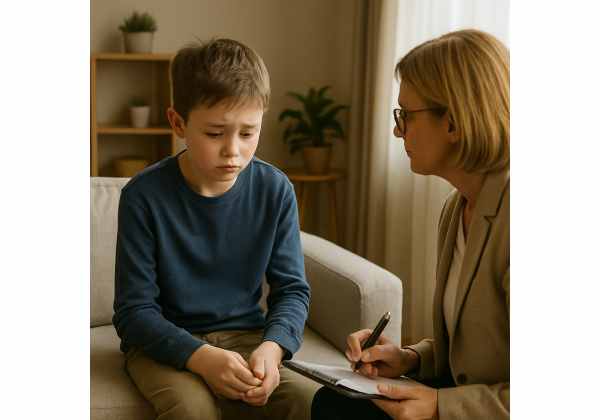
Anxiety can be a normal part of childhood, but it becomes clinically important when fear, worry, avoidance, or physical tension is persistent, hard to control, and disruptive to daily life. A child who is anxious may not always say, “I feel worried.” They may complain of stomach pain, refuse school, freeze in social situations, become irritable, cling to a parent, or seem unusually cautious.
“Juvenile anxiety disorder” is not usually one single formal diagnosis. It is a broad way to describe anxiety disorders that begin in childhood or adolescence, including separation anxiety disorder, social anxiety disorder, generalized anxiety disorder, specific phobias, panic disorder, agoraphobia, and selective mutism. Understanding the difference between ordinary developmental fears and an anxiety disorder matters because anxiety can affect school attendance, friendships, sleep, family routines, and emotional development.
What families often notice first
- Anxiety in children often appears as avoidance, reassurance-seeking, irritability, sleep trouble, stomachaches, headaches, or sudden distress before school, social events, separation, or specific situations.
- It is commonly confused with shyness, defiance, ADHD, autism-related overwhelm, trauma reactions, depression, physical illness, or “just a phase.”
- The key distinction is impairment: symptoms become more concerning when they are persistent, out of proportion to the situation, and interfere with school, home life, friendships, or normal development.
- Some children hide their worries, so adults may notice missed opportunities, withdrawal, perfectionism, or repeated physical complaints before the child describes fear.
- Professional evaluation matters when anxiety is severe, worsening, causing avoidance, linked with panic-like symptoms, or accompanied by self-harm, suicidal thoughts, hallucinations, confusion, or major changes in eating, sleep, or behavior.
Table of Contents
- What Juvenile Anxiety Disorder Means
- Main Types of Childhood Anxiety
- Symptoms and Signs by Age
- Common Confusions and Diagnostic Context
- Causes and Risk Factors
- Effects and Complications
- When Professional Evaluation Matters
What Juvenile Anxiety Disorder Means
Juvenile anxiety disorder means clinically significant anxiety in a child or adolescent, not ordinary nervousness before a test, a new school, or a stressful event. The concern is not that a child feels fear; it is that fear or worry becomes persistent, excessive, difficult to control, and disruptive.
Children naturally pass through fear-based stages. Infants may become distressed when separated from caregivers. Preschool children may fear darkness, monsters, storms, or animals. School-age children may worry about performance, rules, injury, or being accepted by peers. Adolescents may become more sensitive to social judgment, appearance, academic pressure, identity, independence, and the future. These fears are not automatically disorders.
An anxiety disorder is more likely when the child’s reaction is stronger than expected for their age, lasts longer than expected, and narrows their life. A child may stop sleeping alone, repeatedly miss school, avoid speaking, withdraw from friends, resist normal activities, or need constant reassurance to get through the day. In younger children, anxiety may look more behavioral than verbal: crying, tantrums, freezing, clinging, stomachaches, or refusal. In teenagers, it may look like avoidance, irritability, perfectionism, panic-like episodes, or exhaustion from trying to appear “fine.”
A useful way to understand juvenile anxiety is through three connected parts:
- Fear or worry: the child expects danger, embarrassment, harm, separation, failure, illness, or loss of control.
- Body alarm: the child may feel a racing heart, nausea, sweating, trembling, dizziness, chest tightness, shortness of breath, headaches, or muscle tension.
- Avoidance or safety behavior: the child tries to escape, delay, check, ask for reassurance, stay close to a caregiver, avoid attention, or refuse certain places or tasks.
These responses can become self-reinforcing. Avoidance may reduce distress in the moment, but it can also make the feared situation feel even more dangerous over time. This is one reason anxiety disorders can become more entrenched if they are not recognized.
Evaluation usually looks at symptoms, duration, impairment, developmental stage, family context, school functioning, physical health, and co-occurring mental health concerns. Screening tools can help organize information, but they do not replace a full clinical assessment. A broader description of mental health screening across ages can help clarify why children, teens, adults, and older adults may be assessed differently.
Main Types of Childhood Anxiety
Childhood anxiety is a category, not one uniform condition. The specific pattern matters because a child who fears separation, a teenager who fears social judgment, and a child with sudden panic episodes may all be anxious, but their symptoms cluster differently.
Separation anxiety disorder
Separation anxiety disorder involves developmentally inappropriate fear about being away from a parent, caregiver, home, or attachment figure. A young child may cry intensely at drop-off, but the disorder is more likely when the fear is persistent, extreme, and interferes with school, sleep, peer activities, or family routines. Children may worry that a parent will be harmed, refuse sleepovers, resist school, or complain of physical symptoms before separation.
Social anxiety disorder
Social anxiety disorder centers on fear of being judged, embarrassed, rejected, watched, or humiliated. In children, this may appear as freezing, refusing to speak, avoiding group work, skipping presentations, avoiding lunchrooms, or staying near adults instead of peers. The child may want friends but feel unable to tolerate the possibility of scrutiny. For more detail on assessment pathways, social anxiety screening is often discussed separately from general anxiety screening.
Generalized anxiety disorder
Generalized anxiety disorder involves frequent, excessive worry across many areas, such as school performance, family safety, health, world events, mistakes, punctuality, or the future. Children with this pattern may ask repeated reassurance questions, become distressed by uncertainty, overprepare, struggle to relax, or seem tense much of the time. They may be described as responsible, perfectionistic, or “old for their age,” which can delay recognition.
Specific phobias
A specific phobia is an intense fear of a particular object or situation, such as dogs, insects, vomiting, needles, storms, elevators, heights, blood, or medical procedures. The fear is usually immediate and may lead to strong avoidance. A child with a dog phobia may refuse to visit relatives who own pets; a teenager with a needle phobia may become extremely distressed before medical appointments.
Panic disorder and agoraphobia
Panic attacks are sudden surges of intense fear with body symptoms such as palpitations, shaking, sweating, dizziness, chest discomfort, nausea, shortness of breath, numbness, or fear of losing control. Panic disorder involves recurrent, unexpected panic attacks and ongoing worry about having more attacks. Agoraphobia involves fear of places where escape may feel difficult or help may feel unavailable, such as public transport, crowds, open spaces, or being outside alone.
Selective mutism
Selective mutism is an anxiety-related condition in which a child consistently does not speak in certain social settings, such as school, despite speaking in other settings, such as at home. It is not simply stubbornness or lack of language knowledge. The silence is usually linked to intense social anxiety and can significantly affect learning and social participation.
Symptoms and Signs by Age
Juvenile anxiety often changes shape as children grow. The same underlying fear response can look like clinginess in a young child, stomachaches in a school-age child, and avoidance or irritability in a teenager.
Common emotional and cognitive symptoms
Anxious children may describe fear, worry, dread, nervousness, embarrassment, or a sense that something bad will happen. Some worry about realistic topics, but the intensity or frequency is out of proportion. Others have worries that shift from one topic to another.
Common mental signs include:
- repeated “what if” questions
- needing frequent reassurance
- fear of making mistakes
- difficulty tolerating uncertainty
- perfectionism or overchecking
- fear of being watched or judged
- worry about illness, safety, separation, or harm
- difficulty concentrating because the mind is occupied by threat
- expecting the worst even when reassurance has already been given
Some children do not clearly identify worry as worry. They may say they feel “weird,” “sick,” “tired,” “bad,” or “not right.” Younger children may show fear through behavior before they can explain the thought behind it.
Physical signs
Anxiety activates the body’s threat system. In children, physical complaints are common and may be the most visible sign. These symptoms are real to the child, even when they are anxiety-related.
Physical signs may include:
- stomachaches, nausea, or vomiting before feared events
- headaches
- muscle tension or body aches
- sweating, trembling, or shaking
- racing heart or chest tightness
- dizziness or lightheadedness
- shortness of breath
- fatigue from chronic tension
- sleep trouble, nightmares, or bedtime distress
- frequent bathroom trips before school or activities
Physical symptoms deserve careful attention because medical conditions can sometimes resemble anxiety. Anxiety can also coexist with asthma, migraine, gastrointestinal conditions, thyroid disease, sleep problems, medication effects, or other health concerns.
Behavioral signs
Behavioral signs often show how anxiety is shaping the child’s world. A child may avoid, delay, escape, freeze, or rely heavily on adults to manage distress.
Examples include:
- refusing school or repeatedly asking to leave school early
- avoiding parties, sports, clubs, presentations, or sleepovers
- clinging to a caregiver beyond what is typical for age
- crying, tantrums, or shutdowns before certain situations
- asking the same reassurance questions repeatedly
- avoiding eye contact or speaking very little outside the home
- refusing to sleep alone
- needing rituals, checking, or repeated preparation to feel safe
- becoming irritable when pushed toward a feared situation
In adolescents, anxiety may be hidden behind avoidance that looks like disinterest. A teenager may stop applying for opportunities, avoid driving, skip classes, withdraw from friends, or spend long periods online because in-person situations feel overwhelming.
Common Confusions and Diagnostic Context
Juvenile anxiety is often missed because it can look like other problems. A careful diagnostic picture considers anxiety symptoms, developmental expectations, physical health, school reports, family observations, and whether another condition better explains the child’s behavior.
Screening is not the same as diagnosis. Screening tools may identify symptoms that deserve follow-up, while diagnosis requires a broader clinical judgment about duration, impairment, context, and alternative explanations. This distinction is important in child mental health because a child’s behavior may look different across home, school, and peer settings. A fuller explanation of screening versus diagnosis can be useful when a checklist result is positive but the next step is unclear.
Anxiety screening may include child self-report, parent report, teacher input, clinical interview, and questions about school attendance, sleep, physical symptoms, avoidance, trauma exposure, depression, substance use in older teens, and safety. Some screening tools focus broadly on anxiety, while others focus on specific patterns such as panic, social anxiety, or separation fears. For general assessment context, anxiety screening explains how symptom questionnaires fit into a larger evaluation.
| What it may look like | Why it can be confused with anxiety | Clues that need careful evaluation |
|---|---|---|
| ADHD | Restlessness, poor concentration, avoidance of schoolwork, emotional outbursts | Attention problems may occur even when the child is not worried; anxiety-related focus problems often worsen around feared tasks |
| Autism-related overwhelm | Avoidance, shutdowns, distress in social or sensory settings | Social communication differences, sensory sensitivities, routines, and developmental history may point beyond anxiety alone |
| Depression | Withdrawal, irritability, sleep changes, school decline | Persistent low mood, loss of interest, hopelessness, or self-critical thinking may suggest depression with or without anxiety |
| Trauma reactions | Hypervigilance, avoidance, nightmares, irritability, startle response | Symptoms may connect to a frightening or unsafe experience, even if the child does not volunteer the history at first |
| Medical conditions | Palpitations, dizziness, stomach pain, sweating, fatigue, shortness of breath | Symptoms that are new, severe, exertional, fainting-related, neurologic, or medically unexplained need medical review |
ADHD and anxiety commonly overlap. Anxiety can make a child appear distracted because worry occupies attention; ADHD can create real performance problems that then increase anxiety. The distinction is not always obvious, which is why anxiety and ADHD differences are often assessed through history across multiple settings.
Trauma can also resemble anxiety. A child who has experienced frightening, unsafe, humiliating, or unpredictable events may avoid reminders, scan for danger, have sleep disruption, become irritable, or struggle with attention. The overlap between PTSD and anxiety disorder is especially important when symptoms began after a specific event or pattern of adversity.
Panic symptoms can raise particular concern because they feel medical. Chest tightness, dizziness, shaking, and shortness of breath may occur during panic, but similar symptoms can also occur with asthma, heart rhythm problems, low blood sugar, substance use, medication effects, or other medical issues. Distinguishing a panic attack from an anxiety disorder can help clarify whether episodes are isolated, recurrent, expected, unexpected, or part of a broader pattern.
Causes and Risk Factors
Juvenile anxiety disorders usually arise from multiple interacting factors rather than one single cause. Biology, temperament, learning, environment, family stress, peer experiences, and developmental timing can all shape risk.
Temperament and biology
Some children are temperamentally more cautious, sensitive to threat, slow to warm up, or behaviorally inhibited. This does not mean they will definitely develop an anxiety disorder. Many cautious children function well. Risk rises when temperament combines with other pressures, such as high stress, limited opportunities to build confidence, bullying, family conflict, or repeated avoidance.
Anxiety also tends to run in families. This reflects both genetic vulnerability and shared environment. A child may inherit a more reactive stress system, observe anxious responses in adults, or live in circumstances where caution is repeatedly reinforced. Family history is a risk factor, not a verdict.
Learning and avoidance
Children learn from experience. A frightening event with a dog may increase dog fear. Embarrassment during a presentation may increase social fear. Panic-like sensations during exercise may lead a child to fear body sensations. Avoidance then reduces fear in the short term, which can make avoidance more likely the next time.
Reassurance-seeking can work the same way. A child may feel calmer after asking, “Are you sure nothing bad will happen?” But if the child needs the same reassurance repeatedly and cannot internalize it, the cycle can maintain anxiety.
Family and caregiving context
Family relationships do not “cause” anxiety in a simple or blame-based way. Still, the family environment can affect how anxiety develops and persists. High conflict, unpredictability, parental distress, overprotection, criticism, harsh responses, or major disruption can increase vulnerability in some children. So can early separation, loss, child maltreatment, or chronic family stress.
At the same time, anxious child behavior can shape family responses. A parent may become more protective because the child is genuinely distressed. A family may stop normal activities to avoid meltdowns. These responses are understandable, but over time the child’s world can shrink.
School, peers, and social stress
School can be a major setting for anxiety because it combines performance, rules, separation, peer comparison, social judgment, transitions, noise, and uncertainty. Bullying, exclusion, harsh criticism, academic pressure, learning difficulties, frequent school changes, or fear of making mistakes can all contribute.
Adolescents may be especially vulnerable to social evaluation. Friendships, dating, appearance, online comparison, identity, and public performance can become central concerns. Social media may add opportunities for connection, but it can also intensify comparison, embarrassment fears, and rumination for some young people.
Health, neurodevelopment, and adversity
Chronic illness, pain, sleep disorders, neurodevelopmental differences, sensory sensitivities, and learning problems may increase anxiety risk. A child who repeatedly feels out of control in their body, misunderstood in the classroom, or overwhelmed by sensory input may become more vigilant and avoidant.
Adverse childhood experiences, including abuse, neglect, household instability, exposure to violence, or caregiver mental illness, are associated with higher risk for many emotional and behavioral difficulties. Anxiety is one possible outcome, but not the only one. Context matters, and the same child may have anxiety, depression, trauma symptoms, learning needs, or physical health concerns at the same time.
Medical causes should not be overlooked when symptoms are sudden, intense, or mainly physical. Conditions that can resemble anxiety include thyroid disease, asthma, arrhythmias, hypoglycemia, migraine, medication effects, substance use in adolescents, anemia, sleep disorders, and other health problems. A separate discussion of medical conditions that mimic anxiety and depression may be relevant when symptoms do not fit a typical anxiety pattern.
Effects and Complications
Juvenile anxiety can affect much more than mood. When persistent, it can interfere with school, friendships, sleep, family routines, physical well-being, self-confidence, and later mental health.
School and learning
Anxiety can reduce school attendance and participation. A child may miss school because of stomachaches, panic-like symptoms, separation fear, bullying, social anxiety, perfectionism, or fear of being called on. Even when present, the child may avoid asking questions, participating in group work, taking tests, using the bathroom, eating in the cafeteria, or attending assemblies.
Anxiety can also affect attention and memory. Worry uses mental bandwidth. A child may know the material at home but freeze during a test or presentation. A perfectionistic student may spend too long on assignments, avoid submitting work, or become distressed by minor mistakes. Over time, anxiety can be mistaken for low motivation, poor effort, or defiance.
Friendships and social development
Children learn social skills through practice. Anxiety can reduce that practice. A socially anxious child may avoid invitations, speak very little, stay close to adults, or appear uninterested even when they want connection. Peers may misread this as aloofness. The child may then feel more isolated, which can reinforce the belief that social situations are unsafe.
In adolescence, anxiety can affect dating, group belonging, extracurricular activities, leadership opportunities, and identity development. Avoidance can become especially costly when peers are gaining independence and social confidence.
Family routines
Anxiety often reorganizes family life. Bedtime may take hours. Mornings may revolve around school refusal. Parents may avoid errands, travel, visitors, restaurants, medical appointments, or family events to prevent distress. Siblings may feel frustrated or overlooked. Caregivers may disagree about whether the child is anxious, stubborn, sick, or being overprotected.
These patterns do not mean the family is doing something wrong. They show how powerful anxiety can become when it repeatedly controls daily decisions.
Sleep and physical strain
Anxiety and sleep problems commonly reinforce each other. Worry can delay sleep, cause repeated checking, increase nightmares, or make the child afraid to sleep alone. Poor sleep can then increase irritability, emotional reactivity, concentration problems, and physical complaints the next day.
Chronic anxiety can also produce fatigue, muscle tension, headaches, stomach pain, appetite changes, nausea, or frequent visits to the school nurse. The child may begin to fear the body symptoms themselves, especially if they are intense or unpredictable.
Longer-term complications
Childhood anxiety can persist into adolescence or adulthood, especially when severe, broad, and impairing. It may increase risk for later depression, other anxiety disorders, substance misuse in some adolescents, academic underachievement, social isolation, and reduced quality of life. It can also coexist with obsessive-compulsive symptoms, eating disorder symptoms, trauma-related symptoms, ADHD, autism, or mood disorders.
Obsessions and compulsions deserve special attention because they can look like anxiety but follow a different pattern. A child may have intrusive thoughts and repetitive behaviors meant to reduce distress, such as checking, washing, counting, confessing, or repeating. The difference between OCD and anxiety can matter when repetitive thoughts or rituals are central.
The presence of anxiety does not mean a child’s future is fixed. It does mean the symptoms should be taken seriously when they are narrowing the child’s life or causing significant distress.
When Professional Evaluation Matters
Professional evaluation matters when anxiety is persistent, impairing, severe, confusing, or accompanied by safety concerns. The goal of evaluation is to understand what is happening, what else may be contributing, and how much the symptoms are affecting the child’s life.
A non-urgent evaluation may be appropriate when a child or teenager:
- avoids school, social events, sleepovers, medical visits, or normal activities because of fear
- has frequent stomachaches, headaches, nausea, dizziness, or panic-like symptoms linked to worry or avoidance
- needs repeated reassurance but remains distressed
- has sleep disruption related to fear or worry
- becomes highly distressed by separation, mistakes, uncertainty, or social attention
- has anxiety that interferes with learning, friendships, family routines, or independence
- shows symptoms that last weeks to months rather than appearing only during a brief stressor
- has anxiety along with depression, irritability, trauma symptoms, obsessive thoughts, compulsive behaviors, eating changes, or substance use
Urgent professional evaluation is important when anxiety-like symptoms appear with immediate safety risks or major changes in mental state. This includes suicidal thoughts, self-harm, threats to harm others, hallucinations, delusions, severe confusion, extreme agitation, fainting, chest pain with exertion, breathing difficulty, sudden neurologic symptoms, or a child who cannot be kept safe. A more focused discussion of urgent mental health or neurological symptoms may help families understand when emergency evaluation is considered.
Evaluation is also important when adults disagree about what they are seeing. A child may seem fine at school but fall apart at home, or appear quiet at school while teachers miss the extent of internal distress. Some children mask anxiety until they are exhausted. Others express anxiety through anger, refusal, or shutdowns, which can be misunderstood as deliberate misbehavior.
The most useful diagnostic picture usually includes more than one source of information. A child’s own words matter. So do caregiver observations, school patterns, physical symptoms, developmental history, sleep, family stressors, medical history, and any sudden changes in functioning. If a screening result is positive, it should be interpreted as a signal for follow-up, not as a complete diagnosis by itself. For families wondering what a broader appointment may involve, what happens during a mental health evaluation offers additional context.
References
- Anxiety and Depression in Children 2025 (Government Health Information)
- Anxiety in Children and Adolescents: Screening 2022 (Recommendation Statement)
- Anxiety Disorders in Children and Adolescents 2022 (Review)
- Adolescent Mental and Behavioral Health, 2023 2024 (Data Brief)
- Anxiety disorders in children and adolescents: A summary and overview of the literature 2023 (Review)
- A Systematic Review and Meta-Analysis of Impairment and Quality of Life in Children and Adolescents with Anxiety Disorders 2024 (Systematic Review and Meta-Analysis)
Disclaimer
This article is for general educational purposes only and is not a substitute for professional medical advice, diagnosis, or treatment. If a child’s anxiety is severe, worsening, impairing daily life, or accompanied by self-harm thoughts, suicidal thoughts, confusion, hallucinations, chest pain, breathing difficulty, or other urgent symptoms, seek prompt professional evaluation.
Thank you for taking time to read about this sensitive topic; sharing the article may help another family recognize when a child’s anxiety deserves careful attention.