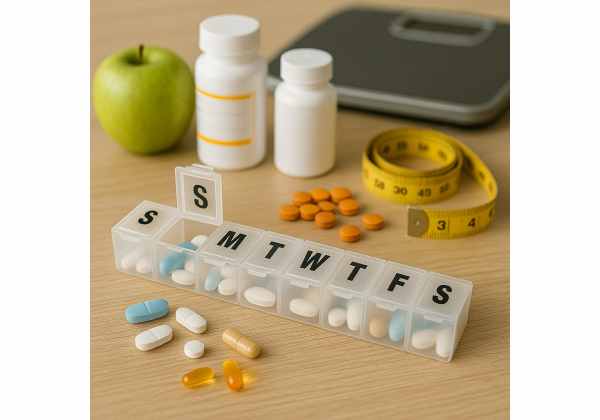
Weight-loss medication can make the process easier, but it does not replace the basic work of eating in a sustainable calorie range, moving regularly, protecting muscle, and building habits that hold up when motivation fades. That is why results vary so much from person to person. The medication may reduce hunger, cravings, or food noise, yet the long-term outcome still depends on how well the rest of the plan fits real life.
The most useful way to think about combining medication with diet and exercise is this: medication can improve the odds, but the structure around it determines how much progress you keep. The sections below explain what realistic results look like, how to set up food and training so the medication actually helps, why progress can slow, and what maintenance usually requires after the initial loss.
Table of Contents
- Why medication still needs a lifestyle base
- What realistic results look like
- Building an eating plan that works
- Using exercise to improve results
- Why progress can slow
- How maintenance actually works
- When the plan needs medical review
Why medication still needs a lifestyle base
Weight-loss medications work best when they are treated as part of a full plan, not as a substitute for one. That is true whether the medication mainly lowers appetite, helps with fullness, reduces reward-driven eating, or changes absorption of calories. The medicine can make the plan easier to follow, but it does not automatically build better meals, set protein intake, preserve muscle, improve fitness, or create a maintenance routine.
This matters because people often expect medication to “do the deficit for them.” Sometimes it partly does, especially early on, but appetite reduction alone does not guarantee a balanced intake. Some people undereat protein, skip meals during the day, feel too nauseated to eat well, then overeat later when hunger rebounds. Others eat less overall but still rely on highly processed, low-satiety foods that make adherence harder over time. In both cases, weight loss may happen at first, but energy, recovery, and long-term consistency can suffer.
Diet and exercise also shape the quality of the weight lost. The goal is not just a lower number on the scale. It is better body composition, stronger health markers, better mobility, and a plan you can keep living with. That usually means:
- enough protein to protect lean mass
- regular meals or planned meal timing that reduce rebound hunger
- a food pattern built around satiety, not just smaller portions
- strength training and general movement so weight loss is not mostly a reduction in muscle and daily energy output
Another reason lifestyle still matters is maintenance. Most people do not stop needing structure once the first 5, 10, or 15 percent is gone. The body often becomes more efficient after weight loss, appetite can rise again, and old eating patterns can return faster than expected. Medication may help buffer that, but it does not eliminate it. In practical terms, the people who do best long term are often the ones who start maintenance habits early, while the medication is still helping: protein-forward meals, regular walking, strength work, sleep routines, and some form of ongoing self-monitoring.
A good medication plan is not medication versus lifestyle. It is medication making lifestyle changes easier to carry out with less friction, less hunger, and better adherence.
What realistic results look like
Realistic expectations matter because they shape adherence. People who expect dramatic, linear progress often feel discouraged when normal slowdowns happen. In reality, the pattern is usually uneven. Early weeks may be dominated by dose escalation, side effects, water shifts, or simple learning. Then comes a more productive middle phase. After that, weight loss often slows again as the body gets lighter and the calorie deficit narrows.
Depending on the medication, dose, starting weight, adherence, side effects, and how well diet and activity are set up, results can range from modest to substantial. Some people lose a clinically meaningful amount with older or less potent medications. Others see double-digit percentage losses with newer medicines. But averages can be misleading. What matters more is whether the trend is improving health and whether the plan is sustainable.
A useful benchmark is that even a 5 percent loss can be meaningful. It can improve blood sugar, blood pressure, mobility, and confidence. Around 10 percent is often even more noticeable in daily life. Higher losses are possible, but they are not automatic and they are not required for the treatment to be worthwhile. Readers who need help recalibrating expectations usually benefit from a clearer view of realistic weight loss goals and how medication timelines actually unfold.
| Pattern | What is often realistic | How to interpret it |
|---|---|---|
| First few weeks | Small scale changes or inconsistent drops | Too early to judge, especially during dose titration |
| First few months | Steadier downward trend if adherence is solid | This is often the most productive phase |
| Middle phase | Meaningful loss with slower week-to-week changes | Normal slowdown, not automatic failure |
| Near goal or after larger losses | Smaller losses, more fluctuations, longer plateaus | The deficit has usually shrunk and maintenance pressure is rising |
| After stopping medication | Higher risk of regain without a strong plan | Maintenance needs to be intentional, not assumed |
The other important expectation is that the scale is not the only outcome. A good response can include looser clothes, a smaller waist, better blood sugar, easier walking, less snacking, lower food noise, and improved blood pressure even before the total loss feels dramatic. That is especially true when strength training is part of the plan and body composition improves faster than scale weight suggests.
Finally, there is no prize for the fastest drop if it leaves you exhausted, underfed, constipated, or unable to maintain the result. Sustainable treatment usually looks calmer than people expect: decent meals, consistent movement, regular check-ins, and fewer swings between strict control and rebound eating.
Building an eating plan that works
The best eating plan to pair with medication is usually not the most restrictive one. It is the one that keeps appetite manageable, protein adequate, digestion tolerable, and total calories low enough to lose weight without creating a rebound problem later.
For many people, the biggest mistake is assuming that “less hunger” means “no need to plan food.” That often backfires. When appetite is blunted, it becomes easier to undereat early and then make poorer choices later when energy crashes or nausea settles. A better approach is to give meals a simple structure even when you are not very hungry.
A practical setup looks like this:
- anchor meals around protein first
- add produce or other high-fiber foods for fullness
- keep portions modest enough to avoid gastrointestinal discomfort
- use easy, repeatable meals instead of relying on willpower
- drink enough fluids, especially if appetite is low
Many people do well with smaller meals rather than very large ones, especially on GLP-1-based medications. Greasy meals, large restaurant portions, fast eating, and drinking large amounts with meals can make side effects worse. On harder days, bland foods and simpler combinations may work better than forcing a “perfect” meal. For readers who want a more detailed food framework, a meal plan for GLP-1 medications can make the day feel more manageable, and specific protein-per-meal targets help prevent low-protein drift.
Protein deserves special attention because rapid weight loss without enough protein can make muscle retention harder. That can leave people weaker, hungrier, and less metabolically active over time. The goal is not bodybuilder-level eating. It is simply making sure each meal contains enough protein to support fullness and lean mass. This becomes even more important when total food intake is reduced.
Fiber matters too, but it has to be handled carefully if side effects are present. High-fiber foods can improve fullness and help long-term adherence, but suddenly piling on huge salads, large bran servings, or multiple fiber supplements during nausea and bloating can make things worse. Most people do better with a gradual increase, steady hydration, and attention to tolerance.
The final piece is food quality without perfectionism. Medication can reduce cravings enough to make better choices easier, but people still need a plan for weekends, takeout, travel, and stress. That is where simple rules help: protein before treats, produce at most meals, one dessert chosen on purpose instead of grazing, and keeping tempting high-calorie “extras” from quietly rebuilding the calorie gap.
The best medication-friendly diet is not dramatic. It is structured, tolerable, protein-aware, and repeatable.
Using exercise to improve results
Exercise does not need to be extreme to make medication work better. Its biggest value is not just extra calorie burn. It improves body composition, protects lean mass, helps appetite regulation in some people, supports mood, and makes maintenance more realistic once the easiest phase of weight loss is over.
Strength training is the highest-priority exercise for many people using weight-loss medication. When body weight drops quickly, some muscle loss is common unless there is a reason for the body to keep it. Resistance training provides that reason. It also helps preserve strength, function, and resting energy expenditure. That is why many clinicians now view strength work as a core part of medical weight loss, not just an optional add-on.
This does not require an advanced gym routine. Two to four well-planned sessions per week can do a lot, especially if they cover the major movement patterns: squatting or leg work, pushing, pulling, hinging, and core stability. Beginners often do best with a simpler plan they can repeat consistently rather than a high-volume split they abandon after two weeks.
Cardio still matters, but mainly as support. Walking, cycling, swimming, elliptical work, and other sustainable cardio can help create a bigger calorie gap, improve heart health, and increase overall activity tolerance. The mistake is using cardio alone while ignoring strength work and daily movement. Readers who need a clearer weekly target can use guidance on how much cardio per week for weight loss, while those thinking beyond the diet phase should understand why strength training for weight maintenance matters so much after the scale slows down.
Daily movement may be the most overlooked piece. Medications can reduce intake, but dieting sometimes reduces spontaneous movement too. People sit more, fidget less, and subconsciously “save energy.” That can shrink the expected deficit. A simple step goal, walking breaks, or a short walk after meals can help prevent that quiet slowdown.
Exercise also needs to match how you feel on the medication. During periods of nausea, dehydration, or dose increases, hard training may need to back off temporarily. That is not failure. It is smart adjustment. The long-term goal is a routine you can keep even when life is messy.
A good hierarchy looks like this:
- keep strength training in the week
- keep daily movement high
- add cardio at a level you can recover from
- avoid the trap of using exercise to “earn” food or punish yourself
When medication, protein, and exercise are aligned, the result is usually not just more weight loss. It is better-quality weight loss and a much stronger chance of keeping it.
Why progress can slow
A slowdown does not automatically mean the medication stopped working. More often, it means the plan needs adjustment. The most common reason is simple math: as body weight falls, energy needs fall too. The calorie deficit that worked at the beginning is smaller later, even if the routine feels the same.
There are also several medication-specific reasons progress can disappoint. Dose escalation can take time. Side effects can disrupt meal quality. Adherence can weaken when cost, travel, or refill problems get in the way. Some people feel less food noise but slowly drift back into calorie-dense choices because the early excitement wore off. Others become less active without noticing it.
A plateau can also be partly a tracking problem rather than a physiology problem. Portions grow. Weekend intake rises. Liquid calories return. Restaurant meals become more frequent. The medication is still helping, but the calorie gap has narrowed too much to show on the scale. That is why people stalled on treatment often need a closer look at a weight loss plateau on GLP-1 medications and the small extras described in hidden calories that stall weight loss.
Another overlooked factor is underfueling. This seems contradictory, but it is common. Someone eats too little for days, feels tired and deprived, skips workouts, moves less, then rebounds into overeating at night or on weekends. The average intake ends up higher than expected, and adherence feels chaotic. A steadier plan often works better than a more aggressive one.
Water retention can confuse the picture too. Strength training, sodium changes, constipation, menstrual-cycle shifts, poor sleep, and stress can all mask fat loss for days or even weeks. That is why trend weight, waist measurements, and clothing fit matter.
When progress slows, a useful checklist is:
- review actual intake, not intended intake
- check protein and meal structure
- assess steps and training consistency
- review sleep and stress
- ask whether side effects are reducing food quality or recovery
- look at trends over several weeks, not a few bad days
Some plateaus do require a medical change, such as a dose adjustment, switching drugs, or reviewing other medications that promote weight gain. But many do not. Many are simply the point where the easy part ended and the next stage requires more precision.
How maintenance actually works
Maintenance is where medication-plus-lifestyle plans either become durable or start to unravel. The key shift is psychological as much as nutritional: the goal is no longer to see the scale drop every week. The goal is to hold the result inside a manageable range with as little friction as possible.
Many people make maintenance harder by removing everything at once. They stop the medication, stop tracking, loosen meal structure, reduce exercise, and treat stable weight as permission to “eat normally” again without defining what normal means. That usually recreates the exact environment that led to regain in the first place.
A better maintenance plan has guardrails. It does not need to feel obsessive, but it should be specific. People who do well often decide in advance:
- what weight range is acceptable
- how often they will weigh or measure
- what habits stay non-negotiable
- what action they will take if regain starts
For many, those non-negotiables are protein at meals, regular breakfast or consistent meal timing, step goals, strength training, and a modest check-in routine. If medication is continued, maintenance may feel easier, but the habits still matter. If medication is reduced or stopped, those habits become even more important. Readers preparing for that transition usually benefit from a dedicated plan for weight loss maintenance after medication and a practical way to set a maintenance calorie range rather than guessing.
Maintenance also requires accepting normal fluctuation. Day-to-day weight changes do not mean fat gain. Sodium, glycogen, digestion, menstrual-cycle shifts, travel, and harder workouts can all move the scale. That is why a range works better than a single target number.
The exercise side of maintenance is usually underestimated. During active loss, medication may do a lot of the heavy lifting on appetite. During maintenance, movement becomes more important for energy balance and appetite control. Strength training also helps preserve the smaller body you worked for by protecting lean mass and function.
One more reality is worth stating clearly: some people need long-term medication, just as some people need long-term blood pressure or cholesterol treatment. That is not failure. Obesity is often chronic and relapsing. For others, medication can be temporary, but only if a durable food and activity system has replaced the old one. The correct approach depends on response, side effects, cost, risk, and clinician guidance.
Maintenance is not the absence of a plan. It is a calmer, more repeatable version of one.
When the plan needs medical review
Sometimes the issue is not discipline or patience. The plan really does need clinician input. That is especially true if side effects are making it hard to eat enough protein, stay hydrated, exercise, or function normally. Persistent vomiting, severe reflux, faintness, marked weakness, or ongoing inability to meet basic nutrition goals should not be brushed off as “part of the process.”
Medical review also makes sense when weight loss is much faster than intended and strength is dropping, when there has been little or no response after a reasonable trial at an effective dose, or when the medication seems to improve appetite but binge episodes, emotional eating, or chaotic weekends still dominate the pattern. In those cases, the missing piece may be dose adjustment, a different medication, better nutrition structure, behavioral support, or review of other medicines that affect appetite and weight.
A few situations deserve quicker attention:
- severe or persistent abdominal pain
- ongoing dehydration
- inability to tolerate fluids
- signs of malnutrition or significant hair shedding during rapid loss
- major mood changes
- pregnancy planning or a new pregnancy
- a major drop in exercise tolerance or functional strength
It is also worth speaking with your clinician before deciding to stop a medication that has been working. Many people assume maintenance will simply continue on its own once the goal weight appears. Often it will not. A smarter conversation is about transition: whether to continue, reduce, pause, or stop, and what food, activity, and monitoring changes should happen at the same time.
The strongest long-term plans are not heroic. They are monitored, adjusted, and honest about what is and is not working. Medication can improve the odds substantially, but the safest and most durable results usually come from treating weight management as an ongoing care plan rather than a temporary sprint.
References
- WHO guideline on the use of glucagon-like peptide-1 (GLP-1) therapies for the treatment of obesity in adults 2025 (Guideline)
- Obesity Management in Adults: A Review 2023 (Review)
- Pharmacotherapy for adults with overweight and obesity: a systematic review and network meta-analysis of randomised controlled trials 2024 (Systematic Review)
- Effect of Continued Weekly Subcutaneous Semaglutide vs Placebo on Weight Loss Maintenance in Adults With Overweight or Obesity: The STEP 4 Randomized Clinical Trial 2021 (RCT)
- Continued Treatment With Tirzepatide for Maintenance of Weight Reduction in Adults With Obesity: The SURMOUNT-4 Randomized Clinical Trial 2024 (RCT)
Disclaimer
This article is for general educational purposes only. Weight-loss medications, diet changes, and exercise plans should be individualized, especially if you have side effects, diabetes, digestive symptoms, pregnancy concerns, or other medical conditions. It is not a substitute for professional medical advice, diagnosis, or treatment.
If you found this helpful, please share it on Facebook, X, or any other platform you prefer.