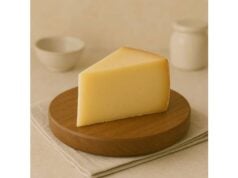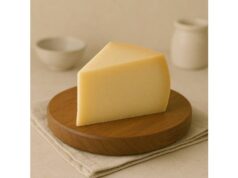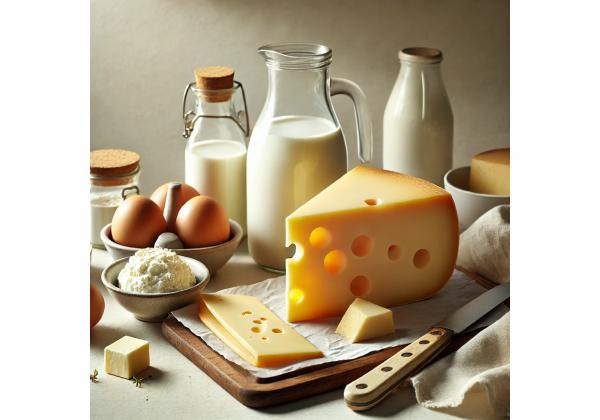
Maasdam is the Netherlands’ answer to Swiss-style cheese: glossy, pale-gold slices laced with round “eyes,” a supple, elastic bite, and a nutty sweetness that finishes with caramel and fresh-butter notes. Created in the late 20th century to mature faster than classic Emmental, Maasdam uses warm-curd cooking and Propionibacterium cultures that generate carbon dioxide during ripening—the gas forms the signature holes while enzymes soften texture and deepen flavor. It melts evenly without oiling off, layers beautifully in sandwiches, and turns luxurious when shaved over vegetables and grains. Nutritionally, Maasdam concentrates complete protein, calcium, and phosphorus with very little carbohydrate. As with most natural cheeses, the levers to watch are sodium and saturated fat, which are easy to manage with portion control and smart pairings. This guide gives you the essentials: what defines authentic Maasdam, a precise per-100 g nutrition profile (with % Daily Values), what the evidence says about cheese and cardiometabolic health, who should limit or avoid it, how to buy and store for peak quality, practical cooking moves that protect nutrients, and sensible portions with clear comparisons.
Top Highlights
- Typical serving 25–35 g, 3–4 times weekly, adds ~7–9 g protein and ~200–280 mg calcium per serving.
- Swiss-type fermentation lowers lactose; many with lactose intolerance tolerate modest portions with meals.
- Main cautions are saturated fat (~17–19 g/100 g) and sodium (~600–800 mg/100 g); keep portions small and pair with unsalted, fiber-rich foods.
- Avoid unpasteurized Maasdam if you are pregnant, immunocompromised, or over 65 unless it is thoroughly heated until steaming.
Table of Contents
- Maasdam at a Glance: Origin, Style, and Taste
- Maasdam Nutrition Profile (per 100 g)
- Evidence-Based Health Benefits
- Risks, Allergies and Interactions
- Selecting, Quality, Sustainability and Storage
- Preparation, Cooking and Nutrient Retention
- Portions, Comparisons and FAQs
Maasdam at a Glance: Origin, Style, and Taste
What it is. Maasdam is a Dutch, semi-hard, eye-forming cheese inspired by Emmental but designed to ripen more quickly. It is crafted from pasteurized cow’s milk, set with rennet, cooked and washed to create a pliant curd, then pressed and brined. During warm-room ripening, Propionibacterium freudenreichii metabolizes lactate into carbon dioxide (forming the eyes), propionic acid (nutty sweetness), and acetic acid (gentle tang). The result is a springy, sliceable paste with glossy, round holes ranging from pea- to cherry-size and a thin, natural or coated rind.
Flavor and texture. Expect a nutty, lightly sweet aroma with hints of toasted cereal and fresh butter. Young wheels (4–8 weeks) are mild and milky; at 8–16 weeks, sweetness and nuttiness grow, the texture turns silkier, and the “eyes” become more pronounced. Unlike some Swiss-types that skew drier and crumbly when old, Maasdam aims for supple elasticity and easy melting across its core ripeness window.
Culinary roles.
- Melting: Excellent for grilled cheese, croques, burgers, and gratins—smooth melt, minimal greasing.
- Boards: Thin slices with apples or pears, toasted nuts, and pickled vegetables highlight its sweetness.
- Everyday cooking: Shave over roasted broccoli, stir through warm barley, or fold into omelets and frittatas.
- Sandwiches: Classic Dutch-style on whole-grain bread with mustard, tomato, and crisp lettuce.
What makes the holes. The “eyes” are not just visual; they signal successful warm-room fermentation. If a wheel has very small or uneven eyes, it may have ripened cooler or faster; flavor can still be excellent, just subtler.
Buying cues. Look for a clean, pale-gold paste with round, shiny eyes; avoid cracks radiating from holes (a sign of mechanical weakness or over-ripening). Aroma should be sweet-nutty, never sour or ammoniacal. If you prefer milder cheese, choose smaller eyes and a younger wheel; for more sweetness and aroma, pick larger, well-formed eyes from a mid-ripeness wheel.
Maasdam Nutrition Profile (per 100 g)
Values below reflect typical, commercially available Maasdam. Natural variation occurs with milk composition, cooking/washing steps, and ripening time. Percent Daily Values (%DV) use FDA DVs for a 2,000 kcal diet.
Macros and Electrolytes
| Nutrient | Amount (per 100 g) | %DV |
|---|---|---|
| Energy | ~360–380 kcal | — |
| Protein | ~26–27 g | 52–54% |
| Total Fat | ~28–30 g | 36–38% |
| Saturated Fat | ~17–19 g | 85–95% |
| Carbohydrate (total) | ~0.1–1.0 g | 0% |
| Total Sugars | ~0.1–0.6 g | — |
| Dietary Fiber | 0 g | 0% |
| Sodium | ~600–800 mg | 26–35% |
| Water | ~40–42 g | — |
Fats and Fatty Acids
| Component | Amount | Notes |
|---|---|---|
| Saturated Fat | ~17–19 g | Main driver of %DV; portion control is the lever. |
| Monounsaturated Fat | ~8–9 g | Predominantly oleic acid. |
| Polyunsaturated Fat | ~0.4–0.8 g | Small fraction of total. |
| Cholesterol | ~85–95 mg | Count within daily totals. |
| Trans Fat (ruminant, natural) | trace | Not industrial trans fats. |
Protein and Amino Acids
Maasdam provides complete dairy protein with a strong essential amino acid profile. Typical essentials per 100 g (approximate): leucine ~2.2–2.4 g, lysine ~2.1 g, valine ~1.6 g, isoleucine ~1.5 g, threonine ~1.2 g. A 30 g serving delivers ~7–9 g complete protein—useful for distributing protein across meals.
Vitamins
| Vitamin | Amount (per 100 g) | %DV |
|---|---|---|
| Vitamin A (RAE) | ~220–300 µg | 24–33% |
| Vitamin B2 (Riboflavin) | ~0.30–0.35 mg | 23–27% |
| Vitamin B12 | ~1.0–1.5 µg | 42–63% |
| Vitamin D | trace–low | — |
| Niacin (as equivalents) | ~0.1–0.3 mg | 1–2% |
Minerals
| Mineral | Amount (per 100 g) | %DV |
|---|---|---|
| Calcium | ~700–850 mg | 54–65% |
| Phosphorus | ~500–600 mg | 40–48% |
| Zinc | ~3.0–3.5 mg | 27–32% |
| Selenium | ~15–22 µg | 27–40% |
| Potassium | ~90–140 mg | 2–3% |
| Iodine | variable | — |
Allergens and Intolerance Markers
- Milk proteins (casein, whey): present—unsuitable for dairy protein allergy.
- Lactose: very low after warm-room fermentation and aging; many with lactose intolerance tolerate small portions, particularly with meals.
- Biogenic amines: generally lower than in long-aged washed-rind cheeses, but present; sensitive individuals should test tolerance.
Footnote on additives and fortification: Traditional Maasdam contains milk, cultures (including propionic bacteria), rennet, and salt. Fortification is uncommon. Wax or protective coatings may be used on rinds; remove before eating.
Practical takeaway: In a 25–35 g serving, expect ~7–9 g protein, ~8–11 g total fat (~4–7 g saturated), ~200–280 mg calcium, and ~150–280 mg sodium. Its sweetness and meltability let small amounts deliver big flavor.
Evidence-Based Health Benefits
1) Fermented dairy and heart health: largely neutral to modestly favorable at moderate intakes. Multiple contemporary syntheses of prospective cohorts report that total cheese intake is not associated with higher cardiovascular risk, and some show small inverse associations at moderate portions. Mechanisms likely include the dairy matrix—calcium, milk-fat structure, and fermentation by-products—which may blunt how saturated fat influences lipids compared with isolated fats. For real-world eating, this means a few modest servings of Maasdam per week can fit into heart-conscious patterns when balanced with unsaturated fats and plenty of plants.
2) Bone and muscle support via calcium, phosphorus, and complete protein. Maasdam concentrates calcium and phosphorus, the raw materials for bone mineralization, alongside complete protein to support muscle repair. Adding 25–35 g to lunches or vegetable-forward dinners helps close calcium gaps without large volumes of milk, a practical win for adults who prefer savory foods.
3) Low lactose after ripening improves tolerance for many. Warm-room fermentation consumes lactose, and aging reduces it further; residual amounts are typically very low. Many individuals with lactose intolerance report good tolerance for Swiss-type cheeses such as Maasdam, especially when eaten with other foods. Tolerance is personal—start small (10–15 g) and increase as comfortable.
4) Satiety and diet quality through flavor concentration. Maasdam brings nutty sweetness and umami that make small portions satisfying. Finely shaving or grating can reduce the grams needed while preserving perceived cheesiness. When you lean on vegetables, whole grains, and legumes for the bulk of a meal, a little Maasdam can provide culinary “glue” without pushing calories or sodium too high.
5) Potential synergy for micronutrient absorption. The fat in cheese improves the absorption of fat-soluble compounds (e.g., carotenoids) from vegetables. Tossing roasted carrots or peppers with a touch of Maasdam and olive oil can heighten both flavor and nutrient uptake.
Reality check. Cheese is not a shortcut to health; benefits show up in the context of balanced, plant-rich eating patterns, regular movement, and adequate sleep. If you monitor sodium or LDL cholesterol, portion size and frequency remain the key tools.
Risks, Allergies and Interactions
Milk protein allergy (IgE-mediated). Maasdam contains casein and whey proteins and is unsafe for those with confirmed dairy protein allergy. Cross-reactivity across ruminant milks is common—work with an allergist for individualized guidance.
Lactose intolerance. Residual lactose is typically very low, yet not zero. Many people tolerate 10–30 g in mixed meals. If highly sensitive, trial smaller amounts with other foods, avoid empty-stomach tastings, and monitor symptoms.
Sodium and blood pressure. Maasdam’s sodium typically falls around 600–800 mg per 100 g. To stay within daily sodium goals, keep portions modest and build plates from unsalted staples (beans, greens, whole grains), using acid (lemon, vinegar) and herbs to brighten flavors rather than extra salt.
Saturated fat and LDL cholesterol. With ~17–19 g saturated fat per 100 g, Maasdam can quickly consume a day’s allowance. Emphasize 25–35 g servings and balance the rest of the day with unsaturated fats (olive oil, nuts, fish) and high-fiber foods.
Food safety and Listeria. Soft and semi-soft cheeses can pose risks if produced or handled improperly. High-risk groups—pregnant individuals, older adults, and those who are immunocompromised—should avoid unpasteurized Maasdam unless it is heated until steaming. Even with pasteurized cheese, maintain cold-chain discipline: refrigerate at ≤4 °C (≤40 °F), use clean utensils, and observe “use by” dates.
Biogenic amines (histamine, tyramine). Swiss-type cheeses accumulate some amines during ripening (typically less than long-aged washed-rinds). Individuals with histamine intolerance or those on MAO inhibitors should moderate intake and monitor symptoms.
Medication and condition notes.
- Potassium-restricted diets: Maasdam is modest in potassium; include it in daily budgeting.
- Sodium-restricted regimens: Choose smaller portions, less frequent servings, and salt-free sides.
- Migraine sensitivity: If aged cheeses trigger headaches, test carefully or choose fresh cheeses.
Selecting, Quality, Sustainability and Storage
How to choose a good wedge
- Pasteurization and origin: Most retail Maasdam is pasteurized. If you are in a high-risk group, stick with pasteurized products from reputable dairies.
- Eyes and paste: Look for glossy, round holes and a smooth paste without cracks. Uneven, dull eyes or dryness suggest suboptimal ripening or storage.
- Aroma: Sweet-nutty and clean. Avoid sour or ammonia notes.
- Rind/coating: Many wheels are waxed or film-wrapped; remove before eating. Natural-rind wedges should be clean and intact.
Reading labels
- Ingredients should list milk, cultures (including propionic bacteria), rennet, salt.
- Sodium may appear as sodium (mg) or salt (g)—convert salt to sodium by ×0.4.
- If vegetarian rennet matters, look for microbial rennet on the label or producer site.
Sustainability and food-waste savvy
- Buy smaller wedges you can finish in 2–3 weeks after opening.
- Store and serve properly (see below) to preserve flavor and reduce waste.
- Build meals that are plant-forward (beans, grains, vegetables) and use Maasdam as the accent—better for both health and environmental footprint.
Storage for peak quality
- Temperature: Keep at ≤4 °C (≤40 °F) in the fridge.
- Wrapping: Rewrap cut faces in parchment or cheese paper, then place in a loose plastic bag or lidded box to balance airflow and humidity.
- Serving window: After opening, flavor peaks for 10–14 days and remains good up to 2–3 weeks with proper wrapping.
- Serving temperature: Bring to room temp for 30–40 minutes before eating so texture softens and aromas bloom.
- Freezing: Not ideal—freezing can make it crumbly and mute flavor. If necessary for cooking, grate first, freeze thin layers, and use from frozen.
Sustainably delicious pairings
- Apples, pears, grapes, and lightly pickled vegetables highlight sweetness and cut richness.
- Whole-grain breads, walnuts or hazelnuts, and mustard or sharp chutney provide balance without extra salt.
Preparation, Cooking and Nutrient Retention
Guiding principles
- Use less, distribute more. Fine shavings or micro-grated Maasdam deliver broad coverage so you can reduce grams used while maintaining flavor.
- Gentle heat for clean melt. Add near the end of cooking or melt over medium heat to prevent oiling off and preserve a silky texture.
- Balance with acid and greens. Lemon, vinegar, mustard, and fresh herbs brighten dishes so smaller portions feel satisfying.
Techniques that work
- Silky gratin topper: Mix 10–15 g grated Maasdam per serving into whole-grain breadcrumbs and scatter over roasted broccoli or cauliflower; broil briefly to crisp.
- Stovetop melt for sandwiches: Layer 20–25 g thin slices and warm covered over low heat to melt gently; add raw onion or pickles for bite instead of extra salt.
- Quick pasta glaze: Off heat, toss hot whole-grain pasta or farro with 15–25 g grated Maasdam, a splash of cooking water, and olive oil; finish with pepper and lemon zest.
- Vegetable omelet: Fold 15 g grated Maasdam into an herb omelet, pairing with sautéed greens to bulk up fiber and potassium.
- Warm grain bowls: Stir 10–20 g through hot barley or quinoa with roasted peppers and chickpeas, finishing with red-wine vinegar.
Nutrient-savvy tactics
- Add late, off heat to protect delicate flavors and minimize fat separation.
- Pair with potassium-rich foods (beans, tomatoes, leafy greens) to counterbalance sodium.
- Taste before salting; Maasdam brings inherent salinity.
Common mistakes
- Overheating: High heat for long periods can cause oiling off.
- Chunking instead of shaving: Larger pieces mean more grams for the same perceived flavor.
- Under-seasoning with acid: Without acid, you may chase flavor with extra cheese or salt.
Three fast frameworks
- Dutch-style toastie: Whole-grain bread + mustard + tomato + 25 g Maasdam; press in a skillet with a lid until melted.
- Roasted carrot and barley salad: Cumin-roasted carrots tossed with warm barley, parsley, lemon; finish with 15 g shaved Maasdam and toasted hazelnuts.
- Mushroom skillet: Sauté mushrooms with thyme; off heat, fold in 10–15 g grated Maasdam and a dash of sherry vinegar.
Portions, Comparisons and FAQs
What is a reasonable portion and how often?
For most adults, 25–35 g (about 1–1½ thin slices) 3–4 times per week fits well—especially when the rest of the plate is unsalted and plant-forward. If you are managing sodium or LDL cholesterol, scale to 15–25 g and reduce frequency.
How does Maasdam compare with similar cheeses?
- Versus Emmental/Swiss: Maasdam is designed to ripen faster, often tasting slightly sweeter and creamier at a younger age; nutrition per 100 g is similar.
- Versus Gouda: Young Gouda is denser and less holey with a butterscotch note; aged Gouda is firmer and saltier. Maasdam melts more elastically.
- Versus cheddar: Cheddar is sharper and usually saltier per gram; Maasdam is sweeter, more elastic, and often a touch lower in sodium.
- Versus Jarlsberg: Very similar style and flavor family; Jarlsberg can be slightly nuttier depending on age.
- Versus mozzarella (part-skim): Mozzarella is lower in fat and sodium but far milder; Maasdam delivers more flavor per gram, so you can often use less.
Is Maasdam lactose-free?
Not entirely, but residual lactose is typically very low after propionic fermentation and aging. Many with lactose intolerance tolerate small portions—especially with mixed meals. Start with 10–15 g and adjust.
Is the rind edible?
Protective wax or film coatings are not edible; remove before eating. Natural rinds (if present) are safe but may be firm and bland—most people trim them.
Can I find vegetarian Maasdam?
Some producers use microbial rennet; others use animal rennet. Check labels if this matters to you.
Best budget and storage tips
- Buy smaller wedges you can finish in 2–3 weeks.
- Grate and freeze only for cooked dishes; otherwise, store wrapped in a cheese box for best texture.
- Use herbs, citrus, and pickles to amplify flavor so smaller portions satisfy.
References
- FoodData Central (Accessed 2025)
- Cheese consumption and multiple health outcomes: an umbrella review and updated meta-analysis of prospective studies (2023) (Systematic Review)
- Milk and dairy products – a scoping review for Nordic Nutrition Recommendations 2023 (2024) (Systematic Review)
- How Listeria Spread: Soft Cheeses and Raw Milk (2025) (Guidance)
- Propionibacterium freudenreichii: physiology, metabolism and applications in dairy products (2019) (Review)
Medical Disclaimer
This guide is for general information only and is not a substitute for professional medical advice, diagnosis, or treatment. Your nutrition and safety needs are personal. If you are pregnant or immunocompromised, have food allergies or intolerances, manage chronic conditions (such as hypertension or high cholesterol), or take prescription medications, consult a qualified healthcare professional for tailored guidance before changing your diet.
If you found this article helpful, please consider sharing it on Facebook, X (formerly Twitter), or any platform you prefer. Your support helps us continue producing accurate, practical nutrition content.