Puffball mushrooms are a fascinating group of fungi prized by cooks and foragers for their delicate, clean flavor and marshmallow-soft texture when young. The best-known edible is the giant puffball (Calvatia gigantea, also listed as Langermannia gigantea), but several smaller Lycoperdon and Calvatia species are also enjoyed worldwide. When harvested at the right moment—before any internal spore development—puffballs slice into pristine white slabs that sear beautifully, take breading like a cutlet, and soak up aromatics without turning watery. Nutrition-wise, they fit into vegetable-forward meals: very low in calories and fat, a modest source of protein and fiber, and naturally rich in B vitamins, copper, selenium, potassium, and fermentable polysaccharides. Yet puffballs demand care. Correct identification and kitchen handling matter more than for supermarket mushrooms: interior color must be pure white and uniform; anything mottled, yellowing, or showing an outline of gills is discarded. This guide walks you through benefits, nutrition, buying or foraging criteria, storage, the safest ways to cook, and practical serving ideas—so you can enjoy puffballs confidently and often.
Top Highlights
- Low calorie and sodium; provides B vitamins, copper, selenium, potassium, and fermentable fibers per 100 g.
- Best eaten young when interior is pure white; quick dry-heat cooking preserves delicate flavor and antioxidants.
- Typical cooked serving: 100–150 g (3–5 oz), up to 2–3 times weekly in varied meals.
- Safety: never eat raw or once spores begin forming; avoid inhaling spore clouds from mature puffballs.
- People with mushroom allergy, severe FODMAP sensitivity, or on potassium-restricted diets should limit or avoid.
Table of Contents
- Detailed Overview
- Nutrition Profile
- Evidence-Based Health Benefits
- Risks, Allergies and Interactions
- Selecting, Quality, Sustainability and Storage
- Preparation, Cooking and Nutrient Retention
- Portions, Comparisons and FAQs
Detailed Overview
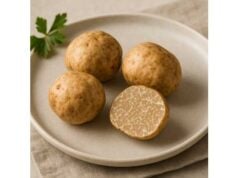
Puffball mushrooms are a descriptive group rather than a single species. Edible examples include the giant puffball (Calvatia gigantea)—large, smooth, and often soccer-ball sized—and small to mid-sized Lycoperdon species such as L. perlatum (common puffball). Unlike gilled mushrooms, puffballs produce their spores inside a uniform interior mass that begins stark white and firm, then turns yellow-olive, brown, and powdery as spores mature. That life stage determines edibility: only the young, pure-white stage is considered suitable for food.
Culinary character: At their best, puffballs taste mild and gently earthy, with a custardy bite when sautéed and a springy tenderness when grilled or pan-seared. The giant puffball’s broad, even slices make a natural “canvas”—you can bread and fry them like milanese, grill slabs as a base for caponata, or cube and brown them for ragù or stir-fries. Smaller puffballs usually get halved or quartered and cooked quickly so they keep shape. Because flavor is subtle, they shine with alliums, herbs, citrus, and umami boosters (miso, soy, Parmesan, anchovy, tomato paste).
Textural science: Fresh puffballs are mostly water (≈90–92%). Their cell walls hold chitin and beta-glucans that soften with heat. Browning depends on managing moisture—pat surfaces dry and use a wide, hot pan. Once surface water evaporates, Maillard reactions deliver nutty aromatics that complement their gentle taste.
Nutrition snapshot: Per 100 g, expect ~25–35 kcal; protein 2.5–4.0 g; carbohydrate 4–6 g (≈1–2 g fiber); fat 0.3–0.5 g; sodium typically ≤10 mg; potassium 300–450 mg. Micronutrient contributions vary by species and habitat but commonly include riboflavin, niacin, pantothenic acid, copper, selenium, and phosphorus. Like other culinary fungi, puffballs contain ergosterol that can convert to vitamin D₂ after UV exposure.
Context for home cooks and foragers: In stores, giant puffballs are rare; most people encounter them via farmers’ markets or responsible foraging. Because several dangerous mushrooms can mimic “white balls” at the button stage, your number-one rule is to slice every specimen vertically from top to base. Edible puffballs show a homogeneous, pure-white interior with no structures. If you see developing gills, a cap outline, or any coloring inside, reject it. When unsure, don’t eat it.
Bottom line: Puffballs are a seasonal treat with simple requirements—pick them young, cook them through, and pair them with bright flavors.
Nutrition Profile
How to read these tables
Values below are per 100 g edible portion (young, edible puffball; raw unless noted). Ranges reflect species differences, maturity, and growing conditions. % Daily Values (%DV) use common adult reference intakes.
Macros and Electrolytes (per 100 g)
| Nutrient | Amount | %DV |
|---|---|---|
| Energy | 25–35 kcal | — |
| Water | 90–92 g | — |
| Protein | 2.5–4.0 g | 5–8% |
| Total carbohydrate | 4.0–6.0 g | 1–2% |
| Dietary fiber | 1.0–2.0 g | 4–7% |
| Total sugars | 1.5–2.5 g | — |
| Total fat | 0.3–0.5 g | 0–1% |
| Saturated fat | ~0.1 g | 0% |
| Sodium | 5–10 mg | 0% |
| Potassium | 300–450 mg | 6–10% |
Notes: Puffballs are naturally low in sodium and saturated fat, helping lower overall meal energy density.
Vitamins (per 100 g)
| Vitamin | Amount | %DV |
|---|---|---|
| Riboflavin (Vitamin B2) | 0.25–0.45 mg | 19–35% |
| Niacin (Vitamin B3) | 3.0–5.5 mg | 19–34% |
| Pantothenic acid (Vitamin B5) | 1.0–1.8 mg | 20–36% |
| Folate (Vitamin B9) | 15–35 µg | 4–9% |
| Vitamin D₂ (UV-exposed) | 1–10 µg | 5–50% |
Vitamin D₂ appears when mushrooms are exposed to UV light; labeled “vitamin D” mushrooms or short home UV/sun exposure can raise levels. Cooking and storage modestly affect final content, so capture pan juices and serve promptly.
Minerals (per 100 g)
| Mineral | Amount | %DV |
|---|---|---|
| Copper | 0.20–0.40 mg | 22–44% |
| Selenium | 5–12 µg | 9–22% |
| Phosphorus | 85–130 mg | 7–10% |
| Iron | 0.4–1.0 mg | 2–6% |
| Zinc | 0.5–1.0 mg | 5–9% |
| Magnesium | 8–16 mg | 2–4% |
| Manganese | 0.05–0.20 mg | 2–9% |
Fats and Fatty Acids
| Lipid | Amount |
|---|---|
| Total fat | 0.3–0.5 g |
| Predominant fatty acids | linoleic (n-6), palmitic; traces of alpha-linolenic (n-3) |
Protein and Amino Acids
| Metric | Value |
|---|---|
| Protein | 2.5–4.0 g |
| Highlights | Rich in glutamic acid and alanine; complements grain and legume proteins in mixed meals |
Bioactives / Phytonutrients
- Beta-glucans and other non-starch polysaccharides: fermentable fibers that support a balanced gut microbiome.
- Ergosterol: UV-convertible precursor to vitamin D₂.
- Phenolic compounds and small peptides: contribute to antioxidant capacity; dry-heat cooking can preserve or enhance measured activity.
Allergens and Intolerance Markers
- True mushroom allergy is uncommon but possible.
- Chitin can be hard to digest; cooking softens texture and improves tolerance.
Contaminants / Residues
- Wild mushrooms can bioaccumulate trace metals depending on soil history. Reasonable portions of properly identified, clean specimens are considered low risk; avoid harvests from roadsides, industrial sites, or contaminated soils. Trim dirty surfaces; cook thoroughly.
Glycemic and Acid–Base Metrics
- Glycemic load is negligible due to low available carbohydrate.
- Mushrooms are generally alkaline-forming after digestion.
Fortification and additives: Fresh puffballs are unfortified and additive-free. Prepared products (pickled, marinated) may include salt, acids, or oils; check labels if sodium is a concern.
Evidence-Based Health Benefits
Nutrient density with minimal calories. Puffballs deliver B vitamins (B2, B3, B5), copper, selenium, and potassium in a light, versatile package. For people targeting nutrient-dense, lower-calorie meals, swapping part of meat or refined starch for mushrooms can reduce energy intake without sacrificing satisfaction.
Fiber for the microbiome. Mushroom cell walls contain beta-glucans and other non-starch polysaccharides that reach the colon intact. There, gut microbes ferment them into short-chain fatty acids linked to a more resilient intestinal barrier and immune balance. Many people notice fewer digestive complaints when mushrooms are cooked well and eaten with mixed meals rather than alone.
Savory satisfaction that supports healthier patterns. Puffballs bring umami and chew with almost no saturated fat. Using browned puffball cubes in pasta sauces, stews, or tacos helps lower overall calorie density and nudges meals toward more vegetables and whole grains, reinforcing weight-management goals over time.
Vitamin D potential after UV exposure. Like other culinary fungi, puffballs can generate vitamin D₂ when exposed to UV light. Purchasing labeled “vitamin D” mushrooms, or briefly exposing slices to midday sun/UV-B before cooking, can help close vitamin D gaps—useful for people who prefer food-first approaches.
Antioxidant activity and cooking choices. In comparative studies across edible mushrooms, grilling and microwaving often maintain or increase measured antioxidant capacity versus boiling or deep-frying. High-heat browning also creates Maillard reaction compounds that contribute to flavor and antioxidant assays. Serving the pan juices captures water-soluble nutrients.
Practical, food-as-habit perspective. The most reliable “benefit” isn’t a single compound; it’s that puffballs help you build meals around whole foods. When you routinely sauté mushrooms with greens, beans, and grains or use them to replace part of processed meats, you shift your dietary pattern in a health-protective direction.
What not to expect. Puffballs aren’t a cure-all. Evidence supports their role as part of balanced eating—nutritious, satisfying, and helpful for culinary variety—rather than as a standalone therapy.
Risks, Allergies and Interactions
Identification is non-negotiable. Several dangerous mushrooms, notably deadly Amanita species, can look like “white balls” when immature. Before any puffball is considered edible, slice it vertically from top to base. A safe puffball is uniformly white inside with a marshmallow-like texture and no internal structures. If you see a cap, stem, or gill-like pattern—discard the specimen. If the interior is yellowing, olive, brown, purple-brown, or powdery, spores have begun forming; do not eat.
Allergy and intolerance. True mushroom allergy is rare, but it occurs. Symptoms range from oral itching to hives or respiratory issues in sensitized individuals. More often, people experience digestive discomfort from chitin and other structural fibers—especially if undercooked. Thorough cooking, modest portions (100–150 g cooked), and pairing with other foods improve tolerance.
Spore inhalation is harmful. Mature puffballs release dense spore clouds when disturbed. Inhaling large amounts can trigger an inflammatory lung reaction known as lycoperdonosis (a form of hypersensitivity pneumonitis). Avoid handling overripe puffballs; never kick or crush them, and keep children and pets away from spore clouds.
Raw consumption is discouraged. Raw puffballs can be tough and indigestible. Cook fully to soften fibers, improve flavor, and reduce potential microbial risk from handling.
Heavy metal considerations for wild harvests. Like many wild fungi, puffballs can accumulate trace metals from contaminated soils. Choose clean habitats away from roads and industrial areas. Trim and clean carefully, and moderate frequency if foraging frequently from the same site.
Medication interactions. Culinary amounts have no established drug interactions. People on immunosuppressive therapy should avoid concentrated mushroom extracts unless medically supervised.
Special populations.
- Pregnancy and breastfeeding: eat only correctly identified, thoroughly cooked puffballs from trustworthy sources.
- Children: serve small, soft pieces; watch for choking risk and tolerance.
- Potassium-restricted diets: count portions within your care plan, as mushrooms contribute potassium.
When to discard. Any specimen with questionable ID, off odors (sour, fishy), slimy surfaces, or discoloration inside should be thrown out. When in doubt, skip it.
Selecting, Quality, Sustainability and Storage
Choosing edible-quality puffballs (for markets or responsible foraging)
- Interior test: Always slice top-to-base. The interior must be pure white and uniform—no marbling, no yellowing, no gill outlines.
- Surface: Firm, smooth to slightly velvety; free of bruises, cracks exposing brown tissue, or soft spots.
- Aroma: Clean, gently mushroomy; avoid sour, acrid, or fishy scents.
- Size cues: Giant puffballs vary from grapefruit to soccer ball size; smaller Lycoperdon species are typically walnut to egg-sized. Edibility depends on interior whiteness, not size alone.
Smart storage
- Refrigeration: Keep unwashed pieces loosely wrapped (paper or breathable cloth) at 1–4 °C. Avoid sealed plastic; condensation causes slime.
- Shelf life: 3–5 days when pristine; cook sooner if moisture beads on the surface or texture softens.
- Cleaning: Brush or wipe just before cooking. Puffballs absorb water easily; if rinsed, dry thoroughly.
Batch-prep to reduce waste
- Slice into 1–1.5 cm slabs, lightly season, and roast on a hot sheet pan. Cool rapidly, refrigerate up to 3 days, or freeze after cooking. Reheat in a hot pan to re-crisp.
- Dice trimmings for quick sautés, fritters, or to fortify soups and sauces.
Sustainability notes
- Wild puffballs are ephemeral but abundant in season. Harvest lightly, leave mature sporing specimens to propagate, and follow local regulations.
- Use the whole mushroom. If you only need slabs for cutlets, dice the rest for a pasta or freeze after cooking to prevent waste.
Quality troubleshooting
- Watery browning: Slices were too wet or pan too crowded. Pat dry; cook in batches on high heat.
- Rubbery bite: Undercooked. Puffballs need enough heat to set proteins and soften chitin.
- Bitter or off-taste: Specimen too mature or beginning to spoil. Discard and source fresher mushrooms.
Preparation, Cooking and Nutrient Retention
General principles for puffballs
- Cook thoroughly; never eat raw.
- Aim for quick, high-heat methods (grilling, broiling, searing, microwaving) to preserve delicate flavor and measured antioxidant capacity.
- Dry the surface before heating; salt late to avoid premature water release.
- Capture pan juices to retain water-soluble nutrients.
How to prep a giant puffball
- Trim away any dirty outer skin if tough or stained (on very fresh specimens, the skin can be left on).
- Slice through the center from top to base. Confirm the interior is pure white and uniform. Any yellowing, mottling, or structures = discard.
- Cut into 1–1.5 cm slabs for “cutlets,” or 2–3 cm cubes for sautés and stews.
- Pat surfaces very dry.
Crispy puffball cutlets (serves 2–3)
- Season: Whisk 1 egg with a splash of milk, salt, and pepper. In a second dish, combine breadcrumbs with grated Parmesan, garlic powder, and lemon zest.
- Coat: Dip slabs in egg, then crumbs.
- Cook: Shallow-fry in a thin film of hot oil 2–3 minutes per side until deeply golden; drain on a rack.
- Finish: Squeeze with lemon and shower with parsley. Serve with a tomato-caper salad.
Browned puffball ragù (plant-forward)
- Sauté diced onion and carrot in olive oil. Add 350–400 g puffball cubes; cook hard until moisture evaporates and edges brown. Stir in tomato paste, a splash of soy sauce or miso, thyme, and black pepper. Deglaze with dry sherry or broth; simmer briefly. Toss with whole-grain pasta or spoon over polenta.
Grilled slabs with herbs
- Brush slabs lightly with olive oil. Grill over medium-high heat 3–4 minutes per side until marked and tender. Finish with lemon juice, chili flakes, and shaved Pecorino.
Retention tips
- Grill or microwave to maintain antioxidant measures relative to boiling or deep-frying.
- Roast hot and fast (220 °C) to minimize drip loss and build flavor.
- If simmering (soups), serve the broth to capture dissolved nutrients.
- UV vitamin D practice: Briefly expose sliced mushrooms to midday sun/UV-B before cooking; store protected from light and use within weeks to limit losses.
Flavor pairings to amplify mildness
- Bright: lemon, capers, sherry vinegar.
- Herbal: thyme, rosemary, sage, parsley.
- Umami: miso, soy sauce, anchovy, Parmesan, mushroom stock.
- Heat: black pepper, chili flakes, smoked paprika.
Portions, Comparisons and FAQs
Practical portions and frequency
- Typical cooked serving: 100–150 g (3–5 oz).
- How often: 1–3 times per week fits well for most adults within varied diets.
- Kids: Serve small, tender pieces; monitor for tolerance.
How do puffballs compare to other edible mushrooms?
- Versus button/cremini: puffballs are milder, with a looser, custardy texture; they brown well when sliced thick.
- Versus shiitake/oyster: puffballs are less aromatic but take on seasonings readily; all are low in calories and useful for B vitamins and minerals.
- Vitamin D potential: driven by UV exposure more than species. Labeled “vitamin D” mushrooms—or DIY sun exposure—can raise D₂ content.
- For freezers and meal prep: like most mushrooms, puffballs freeze best after cooking to preserve texture.
Frequently asked questions
Can I eat puffballs once the interior is yellow or olive?
No. Color change indicates spore development. At that stage, discard; mature puffballs are not edible and may cause illness.
Is it necessary to peel a giant puffball?
Not always. If the outer skin is thin, clean, and tender, you can leave it on. If it’s tough, dirty, or stained, trim it off for better texture and safety.
Are spores dangerous to breathe?
Yes in large quantities. Avoid disturbing mature puffballs; don’t allow children or pets to play with sporing mushrooms.
Do puffballs provide complete protein?
No. Combine with grains, legumes, nuts, or seeds across the day for complementary amino acids.
Can I dehydrate puffballs?
They’re mostly water and can dry down, but texture and flavor are usually better when cooked fresh or cooked-then-frozen. If drying, slice evenly and use in soups where they can rehydrate in broth.
What oil and heat should I use?
Use a high-heat tolerant oil (light olive, avocado, refined peanut) and preheat the pan until a droplet of water skitters. Add mushrooms in a single layer and avoid moving them until browned.
Any quick meal ideas?
- Puffball “milanese” over arugula with lemon.
- Browned cubes folded into risotto with peas and mint.
- Grilled slabs on garlic toast with salsa verde and shaved cheese.
- Stir-fried with ginger, scallions, and soy; spoon over rice with a jammy egg.
References
- Mushrooms: a food-based solution to vitamin D deficiency to include in dietary guidelines 2024 (Systematic Review)
- Impact of optimised cooking on the antioxidant activity in edible mushrooms 2017
- Heavy Metals and Associated Risks of Wild Edible Mushrooms 2024 (Systematic Review)
- Respiratory Illness Associated with Inhalation of Mushroom Spores — Wisconsin, 1994 1994
- Puffballs | Yard and Garden – Iowa State University 2005
Medical Disclaimer
This guide is educational and does not replace personalized medical advice, diagnosis, or treatment. Always consult a qualified healthcare professional about allergies, medication interactions, and dietary changes—especially if you are pregnant or breastfeeding, managing a chronic condition, or considering significant shifts in your eating pattern. If you suspect a mushroom-related illness or experience symptoms after eating or handling mushrooms, seek medical care immediately.
If this article helped, please consider sharing it on Facebook, X (formerly Twitter), or your preferred platform. Your support helps us continue creating clear, practical nutrition content.