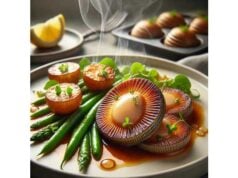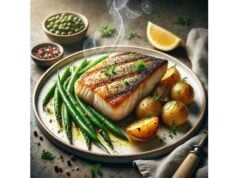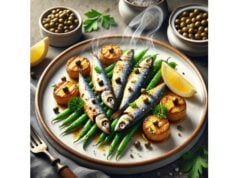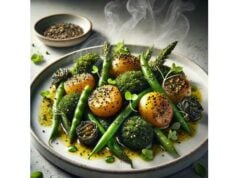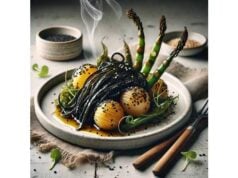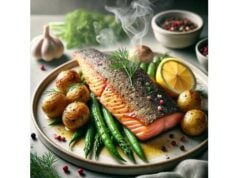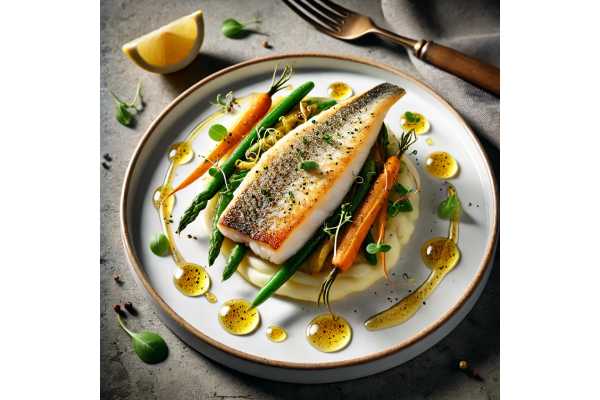
Whiting is the everyday name for several lean, mild-tasting white fish sold worldwide—most commonly European whiting (Merlangius merlangus) and Pacific whiting (often labeled hake, Merluccius productus). Cooks prize its delicate, flaky flesh that turns silky and sweet with quick heat. It takes on flavor easily, so it shines in pan-sears, oven bakes, chowders, and light, lemony sauces. Nutritionally, whiting offers high-quality protein with very little fat and virtually no carbohydrates. It contributes useful minerals like selenium and phosphorus, B vitamins for energy metabolism, and a modest amount of long-chain omega-3s (EPA and DHA). Because it’s lean and lightly flavored, whiting works for families, for budget-friendly menus, and for people seeking seafood’s benefits without the richness of salmon or mackerel. This guide brings together the essentials—nutrition tables per 100 g, research-backed health angles, safety and allergy notes, smart buying and storage, kitchen techniques that protect nutrients, and practical portion advice.
At a Glance
- A 100 g raw serving delivers about 18–19 g complete protein, ~1–1.3 g total fat, and very low calories.
- Typical portion: 90–150 g cooked (3–5 oz) once or twice per week within a varied seafood rotation.
- All fish can trigger allergies; if serving raw-style, use parasite-control freezing or cook to 63 °C (145 °F).
- People who are pregnant or feeding young children should choose lower-mercury fish; whiting is generally listed among “Best Choices.”
Table of Contents
- What Makes Whiting Stand Out
- Whiting Nutrition (per 100 g)
- Evidence-Based Benefits of Whiting
- Risks, Allergies and Interactions
- Selecting, Sustainability and Storage
- Cooking Whiting and Retaining Nutrients
- Portions, Comparisons and FAQs
What Makes Whiting Stand Out
Whiting is a “lean white fish” category staple: affordable, available year-round (fresh or frozen), and exceptionally versatile. In markets, it may appear as whole fish, skin-on fillets, skinless fillets, or boned loins. The flesh is pale, fine-flaked, and tender, with a mild sweetness and a clean finish—closer in taste to cod or pollock than to rich, oily species. That neutrality is a culinary advantage: whiting is a flavor carrier for lemon, parsley, dill, chives, capers, white wine, and gentle spices like white pepper, paprika, and coriander. It browns fast in a skillet, steams or poaches in minutes, and holds its shape in soups and chowders without becoming woolly if you avoid overcooking.
From a nutrition point of view, whiting is protein-forward with minimal fat and virtually no carbohydrate. A typical 100 g raw portion provides roughly 18–19 g complete protein and about 1–1.3 g total fat—translating to low calories per serving. You also get selenium (an antioxidant trace mineral), phosphorus (supporting bone and cellular energy), vitamin B12 (neurological and red blood cell health), and potassium (fluid balance). While whiting is not a top-tier omega-3 source compared with salmon or sardines, it contributes a modest amount of EPA and DHA and, importantly, displaces higher-saturated-fat proteins when used as your plate’s anchor.
Species labeling can be confusing. In Europe, “whiting” commonly means Merlangius merlangus. In North America, “whiting” may refer to Pacific whiting/hake (Merluccius productus). Both are lean, mild, and interchangeable in most recipes. This guide focuses on mixed-species whiting sold as fillets in retail channels. If you’re buying whole fish, ask your fishmonger to confirm the species and origin; this helps with sustainability, mercury expectations, and culinary planning (size affects texture and cooking time).
In family meals, whiting is a dependable entry fish for children or fish-averse adults. Its subtle flavor takes well to crispy coatings (a light dusting of flour or cornmeal) and bright toppings (herb salsa, lemon-butter, yogurt-dill). Its quick-cooking nature makes it a weeknight ally. For health-focused cooks, it creates a high-protein, low-calorie foundation you can pair with fiber-rich vegetables and whole grains to build a satisfying plate.
Finally, cost and sustainability matter. Whiting is often priced competitively and widely available in high-quality frozen packs. Choosing products with clear species and origin labeling supports responsible fisheries or farms and helps you make informed decisions for your household’s health and budget.
Whiting Nutrition (per 100 g)
Scope and units: Values below reflect raw whiting (mixed species) per 100 g. Energy is in kcal; macronutrients in g; vitamins and minerals in mg or µg. %DV uses current adult Daily Values. Natural variation occurs by species, season, feed, and cut.
Macros and Electrolytes
| Component | Amount (per 100 g) | %DV |
|---|---|---|
| Energy | ~83–90 kcal | — |
| Protein | 18.3–19.0 g | 36–38% |
| Total fat | 1.2–1.3 g | 2% |
| Saturated fat | ~0.23 g | 1% |
| Carbohydrate | 0 g | 0% |
| Sodium | ~66 mg | 3% |
| Potassium | ~250–300 mg | 5–6% |
| Water | ~80 g | — |
| Cholesterol | ~62 mg | — |
Notes: Lean profile with a high protein-to-calorie ratio; essentially carbohydrate-free.
Fats and Fatty Acids (indicative)
| Component | Amount (per 100 g) | %DV |
|---|---|---|
| Monounsaturated fatty acids (total) | ~0.28 g | — |
| Polyunsaturated fatty acids (total) | ~0.42 g | — |
| Long-chain omega-3s (EPA + DHA) | ~0.20–0.25 g | — |
| EPA (eicosapentaenoic acid) | ~0.09 g | — |
| DHA (docosahexaenoic acid) | ~0.12–0.13 g | — |
Notes: Whiting’s omega-3 content is modest but useful within a mixed-seafood pattern. DHA typically exceeds EPA in lean white fish.
Protein and Amino Acids (selected)
| Amino acid | Amount (per 100 g) |
|---|---|
| Leucine | ~1.49 g |
| Lysine | ~1.68 g |
| Valine | ~0.94 g |
| Methionine | ~0.54 g |
| Histidine | ~0.54 g |
Notes: Whiting provides all essential amino acids in favorable proportions for muscle repair and maintenance.
Vitamins
| Vitamin | Amount (per 100 g) | %DV |
|---|---|---|
| Vitamin B12 (cobalamin) | ~2.3 µg | 96% |
| Vitamin D (cholecalciferol) | ~1.3 µg | 6% |
| Niacin (vitamin B3) | ~1.4–1.5 mg | 9% |
| Vitamin B6 (pyridoxine) | ~0.15 mg | 9% |
| Thiamin (vitamin B1) | ~0.06 mg | 5% |
| Riboflavin (vitamin B2) | ~0.04 mg | 3% |
| Choline | ~65 mg | 12% |
Minerals
| Mineral | Amount (per 100 g) | %DV |
|---|---|---|
| Selenium | ~32 µg | 58% |
| Phosphorus | ~222 mg | 18% |
| Magnesium | ~21 mg | 5% |
| Potassium | ~250–300 mg | 5–6% |
| Calcium | ~48 mg | 4% |
| Iron | ~0.34 mg | 2% |
| Zinc | ~0.88 mg | 8% |
Allergens & Intolerance Markers
- Fin-fish allergen: Whiting may trigger reactions in those allergic to fish proteins.
- Histamine risk: Any fish held warm can accumulate histamine; strict refrigeration is essential.
Contaminants/Residues (context)
- Mercury: Whiting generally appears among “lower mercury” fish lists and is categorized as a frequent “Best Choice” for sensitive groups. Levels vary by species and water body; rotate seafood choices and follow national guidance.
- Other residues: Responsible fisheries and processors monitor contaminants; choose transparent suppliers.
Footnotes
- %DV used: Protein 50 g; Total Fat 78 g; Saturated Fat 20 g; Carbohydrate 275 g; Sodium 2,300 mg; Potassium 4,700 mg; Calcium 1,300 mg; Magnesium 420 mg; Iron 18 mg; Zinc 11 mg; Phosphorus 1,250 mg; Selenium 55 µg; Thiamin 1.2 mg; Riboflavin 1.3 mg; Niacin 16 mg; Vitamin B6 1.7 mg; Vitamin B12 2.4 µg; Vitamin D 20 µg; Choline 550 mg.
- Values reflect composite food composition data for raw whiting/hake; EPA and DHA shown as typical ranges.
Evidence-Based Benefits of Whiting
1) High-protein, low-calorie foundation for balanced meals.
With about 18–19 g of complete protein per 100 g and only ~83–90 kcal, whiting offers one of the most favorable protein-to-calorie ratios among commonly available fish. That helps preserve lean mass during weight management, supports post-exercise recovery, and boosts satiety when paired with high-fiber sides (vegetables, legumes, whole grains). Unlike some land proteins, it contributes very little saturated fat, allowing you to keep the overall meal lighter without sacrificing fullness.
2) Supports heart-smart eating patterns.
Heart-health guidance emphasizes eating seafood regularly, particularly fish that contribute long-chain omega-3s (EPA and DHA). While whiting isn’t an omega-3 powerhouse, it still delivers a modest dose—about 0.2–0.25 g EPA+DHA per 100 g—enough to contribute when you rotate species across the week. The big win often comes from substitution: choosing fish like whiting in place of higher-saturated-fat meats improves the meal’s fat profile, which can positively affect cardiometabolic risk over time as part of an overall healthy pattern.
3) Rich in selenium and vitamin B12.
A 100 g portion typically provides more than half the Daily Value for selenium, essential for antioxidant enzymes (e.g., glutathione peroxidase) that help protect cell membranes from oxidative stress. Vitamin B12 is critical for red blood cell formation and neurological function; whiting’s contribution helps cover needs, particularly for people who limit red meat.
4) Gentle flavor and texture for broader acceptance.
Dietary recommendations only help if families can follow them. Whiting’s mild taste often suits children and adults who are cautious about “fishy” flavors. Its fine flake and quick cook time make it practical for weeknights and adaptable to many cuisines—Mediterranean (lemon, olive oil, herbs), Nordic (dill, mustard), or Latin (citrus, cilantro).
5) Practical omega-3 strategy through rotation.
Think of whiting as your “lean day” fish. Across a week, combine one higher-omega-3 fish (salmon, sardines, trout, mackerel) with one or two lean white fish meals (whiting, cod, pollock). The rotation keeps costs in check, broadens nutrient exposure (trace minerals, different fat profiles), and prevents menu fatigue. This approach is especially helpful for households building a consistent seafood habit.
6) Digestible, low-carbohydrate option.
Whiting contains essentially no carbohydrate, making it suitable for diabetes-friendly meal planning as long as sauces and sides are chosen wisely. Its gentle texture is also easy to chew and digest for many older adults, provided bones are removed and cooking is precise.
How to capture the benefits:
Plan two seafood meals weekly. Use whiting for quick, lean dinners (pan-seared fillets with lemon-caper butter; parchment-baked with tomatoes and olives). On another day, choose a higher-omega-3 fish. Serve both with vegetables and whole grains to amplify potassium and fiber.
Risks, Allergies and Interactions
Fish allergy
Fish is a major food allergen. Reactions to whiting can include hives, wheezing, vomiting, and, rarely, anaphylaxis. People with a diagnosed fin-fish allergy should avoid whiting unless an allergist confirms tolerance. Cross-contact at fish counters and restaurants is common—communicate clearly and consider non-fish options when dining out if your allergy is severe.
Parasites and raw or lightly cured preparations
Marine fish can carry parasites (e.g., Anisakis). Cooking to an internal temperature of 63 °C (145 °F) until the flesh is opaque and flakes easily kills parasites. If serving raw-style (sushi, crudo, ceviche) or cold-smoked, use fish frozen under validated time–temperature protocols for parasite destruction (for example, −20 °C for 7 days, or alternative deep-freeze conditions). Home freezers often don’t maintain these temperatures reliably; buying previously frozen, sushi-intended fish from reputable suppliers is safer.
Histamine (scombroid) risk
Improper storage at warm temperatures can allow bacteria to produce histamine in fish. While whiting isn’t among the classic highest-risk species, any fish can cause problems if mishandled. Buy from vendors who hold fish on ample ice, bring it home cold, and refrigerate promptly at 0–2 °C.
Mercury and other contaminants
Whiting is typically listed among lower-mercury “Best Choices,” making it suitable for frequent inclusion. That said, levels vary by species and water body. Sensitive groups—people who are pregnant or breastfeeding and young children—should follow national guidance on serving sizes and weekly totals and diversify seafood choices across the month.
Medication and nutrient interactions
- Anticoagulants: Normal amounts of omega-3s from food are compatible with anticoagulant therapy. High-dose fish-oil supplements—not food—are more relevant to bleeding risk and should be managed with a clinician.
- Gout/hyperuricemia: Fish contains purines. People with gout should manage total purine intake and portion sizes according to medical advice.
- Thyroid conditions: Whiting has modest iodine compared with some marine fish; consistency in iodine intake is more important than avoidance for those on thyroid medications unless otherwise directed.
Food handling basics at home
- Keep fish cold from store to fridge (use an ice pack).
- Refrigerate at 0–2 °C and cook within 24 hours, or freeze promptly at −18 °C or colder.
- Thaw in the refrigerator or under cold running water in a sealed bag; cook within 24 hours of thawing.
- Prevent cross-contamination by using separate boards/knives for raw fish and ready-to-eat foods.
Who should limit or avoid
- Individuals with confirmed fin-fish allergy.
- Those who are pregnant or breastfeeding and families with young children should follow official weekly limits and choose lower-mercury species most often (whiting generally fits well).
- Anyone without access to validated freezing who plans raw-style service—choose cooked preparations instead.
Selecting, Sustainability and Storage
Selecting high-quality whiting at the market
- Look: Fillets should be moist and translucent with a fine, even grain. Avoid drying, browning, or gaping at the edges.
- Smell: Clean and marine, never sour or ammonia-like.
- Feel: Flesh should spring back gently when pressed.
- Skin-on cues: If skin is present, it should be taut and shiny; scales should lie flat.
- Cut for purpose: For pan-searing, choose even-thickness fillets so they cook uniformly. For soups or chowders, slightly thicker pieces hold texture better.
- Labeling: Prefer packages that clearly state species (e.g., “whiting—Merlangius merlangus” or “Pacific whiting/hake—Merluccius productus”), country of origin, catch or farm method, and whether previously frozen.
Sustainability snapshot
Whiting and hake species are managed regionally; many stocks are stable under science-based quotas, and responsible fisheries are common in the North Atlantic and Northeast Pacific. When possible, consult regional seafood guides or certification programs for the latest assessments. As a consumer, rotate species across the month, favor transparent labeling, and choose producers that disclose harvest methods and chain of custody.
Storage and handling at home
- Refrigeration: Store at 0–2 °C on a shallow tray with crushed ice or well-chilled packs so meltwater drains away. Plan to cook within 24 hours.
- Freezing: For best quality, pat fillets dry, wrap tightly (plastic wrap plus freezer bag) or vacuum-seal, and freeze at −18 °C or colder. Use within 2–3 months for optimal texture. Label with species and date.
- Thawing: Thaw overnight in the refrigerator. For same-day thaw, place sealed fillets under cold running water; dry thoroughly before cooking to encourage browning.
- Pre-portioning: Divide a bulk purchase into meal-sized packs before freezing to avoid thaw–refreeze cycles and reduce food waste.
Smart shopping to reduce waste and cost
- Purchase close to your planned cooking day.
- Choose frozen fillets for flexibility—modern blast-frozen products can deliver excellent quality and consistent portion sizes.
- Save trimmings for fish cakes or broth; if using bones/heads from whole fish, simmer gently with aromatics for a light stock (cool rapidly and refrigerate).
Cooking Whiting and Retaining Nutrients
Whiting cooks quickly; your goal is moist flakes and a just-opaque center. Overcooking squeezes out moisture and can diminish water-soluble B vitamins. Because the fish is lean, add flavor and a touch of fat with technique rather than heavy sauces.
Everyday methods that work (and why)
- Pan-sear, then finish with acid: Heat a stainless or cast-iron skillet over medium-high. Film with a teaspoon of oil per fillet. Sear 2–3 minutes until golden, flip for 1–2 minutes, then finish with lemon juice, capers, and a pat of butter off heat. Browning builds flavor via Maillard reactions; the brief butter finish adds gloss without heavy calories.
- Roast on a citrus bed: Lay fillets on lemon or orange slices. Drizzle with 1 tsp olive oil per fillet and season lightly. Roast at 200–220 °C for 8–10 minutes (thickness-dependent) to 63 °C. The citrus buffers heat, perfumes the flesh, and reduces sticking.
- En papillote (parchment): Place fillets with cherry tomatoes, sliced fennel, herbs, and a teaspoon of olive oil in a parchment packet. Bake 10–12 minutes. Steam inside the pouch preserves moisture and water-soluble vitamins; pour the juices over the fish to “recapture” nutrients.
- Poach in court-bouillon: Simmer water with aromatics (onion, bay, peppercorns, parsley stems) and a splash of white wine. Poach just below a boil for 5–7 minutes. Gentle heat protects texture; reserve the liquid for a sauce or grain to retain soluble nutrients.
- Chowder or stew without heaviness: Add whiting chunks to a simmering broth near the end, cooking 3–5 minutes. Use olive oil and milk alternatives (or a small amount of cream) to keep saturated fat low while delivering comfort.
Technique tips to maximize nutrient retention
- Pull the fish as soon as it reaches 63 °C (145 °F) or when flakes separate with gentle pressure. Rest 1 minute; carryover heat finishes the center.
- Keep breading light (if any). A dusting of flour improves browning without overshadowing flavor or adding excessive calories.
- Serve the cooking liquids (from parchment, poaching, or stewing) to capture water-soluble B vitamins and minerals.
- Pair with potassium-rich, high-fiber sides—roasted greens, tomatoes, beans, or whole grains—to balance sodium and improve meal quality.
Flavor pairings that flatter whiting
- Bright: lemon, capers, parsley, dill, chives
- Aromatic: leeks, fennel, shallots, garlic
- Gentle spice: white pepper, sweet paprika, coriander
- Texture accents: toasted almonds, pine nuts, or breadcrumbs with olive oil and herbs
Quick recipe: Weeknight Lemon-Caper Whiting
- Pat fillets dry; season with ~¼ tsp salt per 450 g fish.
- Sear in a hot skillet with 1 tsp neutral oil per fillet, 2–3 minutes. Flip and cook 1–2 minutes more.
- Off heat, add 1 tbsp capers, juice of ½ lemon, and 1 tbsp chopped parsley; swirl with 1 tsp butter.
- Serve immediately with steamed potatoes and green beans.
Grilling note: Oil grates and fish lightly; preheat well. Grill skin-side down most of the time and finish briefly flesh-side to avoid overcooking.
Portions, Comparisons and FAQs
How much should I eat?
For most adults, two seafood meals per week is a practical goal. For whiting, a typical cooked portion is 90–150 g (3–5 oz). If you also enjoy higher-omega-3 fish, plan one lean fish meal (whiting, cod, pollock) and one richer fish meal (salmon, trout, sardines) weekly. Sensitive groups should follow national guidance on serving sizes and weekly totals.
How does whiting compare with cod, pollock, and salmon?
- Versus cod: Both are lean with similar calories. Texture and flavor are alike; whiting often has a slightly finer flake and cooks a touch faster.
- Versus pollock: Pollock is also lean and mild, commonly used in fish sticks. Whiting fillets can feel a bit more tender; nutrition is comparable.
- Versus salmon: Salmon delivers far more omega-3s (often 1.5–2.5 g EPA+DHA per 100 g) and more fat-soluble vitamin D. Whiting is much lower in calories and saturated fat. A weekly rotation balances both goals—omega-3 intake and calorie control.
- Versus tilapia: Tilapia is very lean but typically lower in omega-3s than whiting. For budget-friendly menus, alternating the two works well.
Is whiting suitable for diabetes-friendly or low-carbohydrate eating?
Yes. Whiting has essentially no carbohydrate. Pair with non-starchy vegetables, pulses, or whole grains. Watch saucing (added sugars) and breading if tight carb control is needed.
Can I serve whiting to children?
Absolutely. Its mild flavor and tender texture often appeal to kids. Remove pin bones carefully, cook thoroughly to opaque and flaky, and serve in bite-size pieces—tacos, fish cakes, or simple fillets with lemon and vegetables.
What about pregnancy and breastfeeding?
Choose a variety of lower-mercury fish and keep portions within official weekly advice. Whiting generally appears on lower-mercury “Best Choices” lists, making it a good option. If eating raw-style dishes, ensure validated freezing for parasite control or choose fully cooked preparations.
Any common cooking mistakes to avoid?
Overcooking dries lean fish quickly. Use medium-high heat for searing, gentle heat for poaching/steaming, and pull the fish the moment it turns opaque and flakes. Avoid heavy batters that mask flavor and add unnecessary calories; a light crust adds texture with restraint.
Budget and availability tips
Frozen fillets—especially individually quick frozen (IQF)—offer excellent value and convenience. Thaw properly, dry well, and cook hot and fast for best browning. If you find well-priced whole fish, ask the fishmonger to gut and fillet; keep bones for stock if you’re comfortable handling them safely.
Bottom line
Whiting is a lean, adaptable fish that makes meeting seafood goals easier. Use it as a protein anchor for fresh, plant-forward plates, rotate with a richer fish for omega-3 coverage, and handle it cold and quickly for top flavor and safety.
References
- Nutrition Facts for Raw Whiting 2025
- Advice about Eating Fish 2024 (Guideline)
- About Anisakiasis 2024
- Fish and Omega-3 Fatty Acids 2024
Disclaimer
This guide offers general nutrition, culinary, and safety information for whiting and related white fish sold under that name. It is not a substitute for individual medical advice, diagnosis, or treatment. Consult a qualified health professional about allergies, pregnancy and breastfeeding nutrition, medication interactions, or specific dietary needs. Follow national seafood guidance on portions and frequency, use validated freezing or thorough cooking for raw-style dishes, and keep fish properly chilled from purchase to plate.
If this article helped, please consider sharing it on Facebook, X (formerly Twitter), or your preferred platform. Your support helps us continue producing clear, reliable food and nutrition resources.