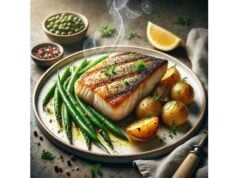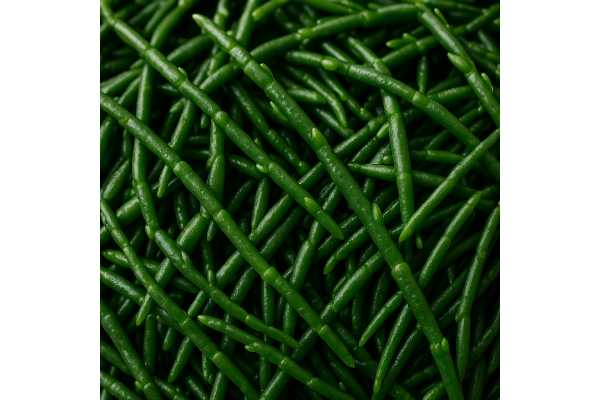
Samphire is a coastal vegetable prized for its snap, briny bite, and bright green color. Two plants share the name: marsh samphire (also called glasswort or Salicornia) and rock samphire (Crithmum maritimum). Both grow near the sea, soak up minerals, and bring a natural saltiness that chefs love in seafood plates, salads, and quick sautés. Beyond flavor, samphire offers meaningful amounts of minerals like magnesium and calcium, a modest fiber lift per serving, and very few calories. Its sodium content varies widely by species and growing conditions, so a little goes a long way. You can enjoy samphire fresh, blanched, sautéed, pickled, or blended into sauces where its savory, sea-spray character stands in for some added salt. If you’re choosing more sustainable foods, samphire’s halophyte nature allows cultivation with brackish water and on marginal lands, supporting resilient agriculture without competing for prime freshwater resources.
Quick Overview
- Naturally salty vegetable with notable magnesium and calcium plus low calories per 100 g.
- Typical serving is 50–75 g cooked, 1–2 times weekly, to keep sodium intake in check.
- Rinse and briefly blanch to reduce surface salt while keeping crunch and color.
- High sodium and variable iodine mean people with hypertension or thyroid disease should moderate or seek medical advice.
Table of Contents
- Detailed Overview
- Nutrition Profile
- Evidence-Based Health Benefits
- Risks, Allergies and Interactions
- Selecting, Quality, Sustainability and Storage
- Preparation, Cooking and Nutrient Retention
- Portions, Comparisons and FAQs
Detailed Overview
What is samphire? In everyday cooking, “samphire” most often refers to marsh samphire (glasswort; Salicornia europaea and related Salicornia species). It grows in tidal flats and salt marshes, forming crisp, segmented stems with a vivid green hue in season. Rock samphire (Crithmum maritimum), sometimes called sea fennel, is a distinct plant that clings to rocky coasts and offers a more herbal, citrusy aroma with feathery leaves. Both are edible sea vegetables, but they differ in texture, aroma, and nutrient makeup.
Flavor and culinary profile. Salicornia tastes like the shoreline—salty, clean, and faintly nutty—with a juicy snap that stands up to quick heat. Crithmum leans aromatic, with hints of parsley, celery leaf, and lemon zest. Both pair naturally with shellfish, white fish, tomatoes, citrus, new potatoes, and soft herbs. Because they’re naturally salty, samphire can help you reduce discretionary salt in a dish while still delivering savory satisfaction.
Seasonality and forms. Fresh samphire appears in late spring through summer in many coastal markets. You’ll also find pickled samphire, blanched-and-frozen spears, and dehydrated or powdered forms used as a seasoning. Rock samphire is increasingly cultivated for sustainability and consistency; marsh samphire can be wild-harvested or farmed in saline systems.
Why people choose it.
- Taste and texture: a crisp, briny accent that brightens seafood and salads.
- Nutrition: low energy density with meaningful minerals and a bit of fiber.
- Culinary utility: functions as a “salt-plus” ingredient—mineral richness and umami beyond sodium alone.
- Sustainability potential: halophyte crops can grow with brackish water, easing pressure on freshwater agriculture.
How it differs from other sea vegetables. Unlike seaweeds (kelp, nori, wakame), samphire is a flowering plant that grows near the sea, not a marine algae. It tends to be milder in iodine than kelp but richer in sodium than most garden vegetables. Nutrient levels vary widely by species, soil salinity, and post-harvest handling (e.g., soaking, blanching).
Quick buying and storage cues. Choose crisp, glossy, bright green stalks (marsh) or perky, aromatic fronds (rock). Avoid limp, yellowing, or slimy pieces. Keep refrigerated in a breathable bag with a damp paper towel and use within 2–3 days for peak snap. If you’re reducing sodium, plan to rinse and blanch briefly before cooking.
Nutrition Profile
How to read this section. Values are per 100 g edible portion. Percent Daily Value (%DV) uses standard adult DVs: energy qualitative; sodium 2,300 mg; potassium 4,700 mg; calcium 1,300 mg; iron 18 mg; magnesium 420 mg; phosphorus 1,250 mg; zinc 11 mg; vitamin C 90 mg; vitamin A 900 µg RAE. Actual needs vary by age and life stage.
Marsh samphire (glasswort; Salicornia europaea) — per 100 g
| Category | Amount | %DV |
|---|---|---|
| Energy | 36 kcal | — |
| Water | 87.2 g | — |
| Protein | 0.86 g | — |
| Total fat | 0.49 g | — |
| Carbohydrate | 5.82 g | — |
| Dietary fiber | 2.63 g | — |
| Sodium | 1,064 mg | 46% |
| Potassium | 193 mg | 4% |
| Calcium | 117 mg | 9% |
| Magnesium | 121 mg | 29% |
| Phosphorus | 24 mg | 2% |
| Iron | 2.11 mg | 12% |
| Zinc | 0.23 mg | 2% |
| Vitamin C | 11 mg | 12% |
| Vitamin A (RAE) | 142 µg | 16% |
| Beta-carotene | 1,702 µg | — |
Rock samphire (Crithmum maritimum) — per 100 g
| Category | Amount | %DV |
|---|---|---|
| Energy | 26 kcal | — |
| Water | 88.9 g | — |
| Protein | 0.31 g | — |
| Total fat | 0.39 g | — |
| Carbohydrate | 2.48 g | — |
| Dietary fiber | 5.70 g | — |
| Sodium | 368 mg | 16% |
| Potassium | 313 mg | 7% |
| Calcium | 225 mg | 17% |
| Magnesium | 46 mg | 11% |
| Phosphorus | 22 mg | 2% |
| Iron | 2.29 mg | 13% |
| Zinc | 0.26 mg | 2% |
| Vitamin C | 10 mg | 11% |
| Vitamin A (RAE) | 74 µg | 8% |
Notes that help you interpret the numbers
- Sodium swings with habitat, irrigation, and processing. Rinsing and blanching reduce surface salt; cultivated rock samphire often reads lower than wild marsh samphire.
- Magnesium and calcium are standouts in Salicornia, while fiber and calcium pop in rock samphire.
- Iodine is not consistently reported for samphire; it’s usually much lower than in kelp but can still contribute to intake.
- Micronutrient variability is high across geographies and species; use these tables as orientation, then rely on brand-specific or regional labelling where available.
Bioactives and aroma compounds (brief)
- Rock samphire contains aromatic oils with limonene and related terpenes responsible for its lemon-herbal scent.
- Salicornia species provide phenolic compounds and free amino acids that may add umami and enhance salt perception.
Allergen and additive flags
- No major allergens are intrinsic to samphire. Pickled products may contain vinegar, sulfites, or added salt—check labels if sensitive.
Evidence-Based Health Benefits
1) Helps lower added salt without losing savor
Cooks use samphire’s naturally salty, mineral-rich taste to reduce added sodium chloride in dishes. Because samphire’s salty impression comes from sodium plus other minerals and amino acids, replacing part of the table salt in a recipe with chopped samphire (or samphire powder in seasonings) can maintain brininess with less added salt. In sensory studies on Salicornia extracts, products reached comparable saltiness at lower sodium levels than control samples using salt alone—useful for people aiming to trim discretionary salt.
2) Mineral support in a small volume
A modest 75 g serving of marsh samphire contributes about 22% DV of magnesium and 7% DV of calcium (based on the per-100 g table), with almost no calories. Rock samphire leans to calcium and potassium. These minerals assist muscle and nerve function, fluid balance, and bone maintenance. Pairing samphire with low-sodium staples (new potatoes, steamed greens, grilled white fish) delivers flavor plus meaningful micronutrients.
3) Naturally low in energy, friendly to weight management
Per 100 g, samphire provides 26–36 kcal, primarily from water and fiber. It adds volume and snap to plates, which can increase satisfaction by boosting meal bulk without many calories—handy when structuring meals for energy control.
4) Phytonutrient and antioxidant potential
Rock samphire’s essential oils and polyphenols, and Salicornia’s phenolics and carotenoids, show antioxidant activity in vitro. While test-tube findings don’t equal disease risk reduction on their own, they support samphire’s role as a varied plant food in a Mediterranean-style pattern rich in vegetables, herbs, olive oil, legumes, and seafood.
5) Culinary replacement for salty condiments
Finely chopped blanched samphire stirred into dressings, yogurt sauces, or compound butter can replace part of the salt and add texture, color, and trace minerals—an approach that scales from home kitchens to food service. Dried Salicornia powder or flakes can also sub for a portion of table salt in rubs.
What this does not mean
Samphire is not a cure or medical treatment. Benefits rely on how you use it—as a flavorful vegetable that helps you nudge recipes toward less added salt and more plant diversity. If you already consume a high-sodium diet, simply adding samphire won’t reduce risk unless it replaces some salted ingredients or you adjust the total salt used.
Risks, Allergies and Interactions
Sodium load
Marsh samphire can contribute ~15–50% of the daily sodium limit per 100 g, depending on origin. If you have hypertension, heart failure, chronic kidney disease, or salt-sensitive blood pressure, keep portions small and rinse/blanch before cooking. Pair samphire with unsalted foods, and skip extra salt.
Iodine considerations
Samphire’s iodine content is variable and not always labeled. Although generally lower than seaweeds like kelp, it can still add to daily iodine intake. Adults typically aim for ~150 µg/day; the tolerable upper intake level (UL) for adults is 1,100 µg/day. People with thyroid disorders (especially those instructed to follow low-iodine diets before radioactive iodine procedures) should avoid or strictly limit sea vegetables unless cleared by their clinician.
Gastrointestinal tolerance
Samphire is fibrous and may cause mild bloating if you eat a large amount when you’re not used to high-fiber greens. Introduce it in modest servings (50–75 g cooked) and chew well.
Interactions and special populations
- Thyroid disease or medications: Because of variable iodine and sodium, discuss sea vegetables with your healthcare team.
- Pregnancy and lactation: Moderate portions are generally fine in a balanced diet, but avoid excessive intake of salty or preserved sea vegetables and ensure overall iodine stays within recommended ranges.
- Low-sodium diets: If prescribed a strict sodium limit, use samphire sparingly and prepare with two-step desalting (soak and blanch).
- Allergy: Primary allergies are uncommon; reactions are more likely to pickling agents (e.g., sulfites).
Food safety
Buy from reputable sources to reduce the chance of contamination with pollutants from industrial estuaries. Rinse thoroughly to remove sand and surface salt. For pickled products, review labels for additives you may be avoiding.
Selecting, Quality, Sustainability and Storage
How to choose
- Marsh samphire (Salicornia): Look for firm, crisp, bright green segmented stalks with no slime or blackening at the joints. Avoid woody, reddening stems late in the season unless you plan to pickle.
- Rock samphire (Crithmum): Choose vibrant, aromatic fronds; they should smell fresh, citrusy-herbal rather than musty.
Labels and sourcing tips
- Prefer cultivated or sustainably harvested samphire. As demand grows, producers use saline aquaculture and coastal greenhouses, reducing pressure on fragile marsh ecosystems.
- If sodium is a concern, cultivated rock samphire or products labeled “rinsed/blanched” often run lower.
Sustainability snapshot
- Halophyte crops like samphire can thrive on brackish water and saline soils, supporting agriculture in water-stressed regions. They can be integrated into coastal farming systems and used as salt-smart flavorings that help diners cut back on mined or industrial salt.
Storage
- Refrigerate unwashed samphire in a breathable bag with a damp paper towel for 2–3 days.
- For longer keeping, blanch 30–60 seconds, shock in ice water, drain very well, and freeze in a thin layer before packing.
- Pickling extends shelf life for months; keep jars refrigerated if the recipe is a quick pickle.
Quality troubleshooting
- Rubbery texture: Overcooked. Next time, blanch briefly or sauté 2–3 minutes max.
- Too salty: Rinse, soak 10–15 minutes in cold water, then blanch.
- Stringy joints: Trim woodier sections; choose younger stems.
Preparation, Cooking and Nutrient Retention
Pre-cooking desalting (best practice)
- Rinse under cool water to remove sand and surface salt.
- Soak 10–15 minutes in cold water if very briny.
- Blanch in rapidly boiling unsalted water for 30–60 seconds (you should see color brighten).
- Shock in ice water, drain thoroughly, and pat dry.
These steps cut sodium without sacrificing the snap that makes samphire enjoyable. They also reduce any residual grit and help fix color.
Everyday cooking methods
- Quick sauté: Heat a pan with a little olive oil; add blanched samphire and cook 1–2 minutes. Finish with lemon and cracked pepper.
- Steam: 2–3 minutes over simmering water; toss with butter or a lemony vinaigrette.
- Roast (toss-in): Scatter blanched samphire onto a sheet tray for the final 5 minutes of roasting fish or potatoes.
- Pickle: Pack blanched samphire in a hot brine of vinegar, water, aromatics, and a touch of sugar. Chill 24 hours.
- Blend: Whirl with yogurt, lemon, garlic, and herbs for a green sauce that seasons and adds body with less salt.
Pairings that balance sodium
- Starches: new potatoes, farro, polenta.
- Vegetables: cherry tomatoes, asparagus, spring peas.
- Proteins: white fish, scallops, shrimp, grilled chicken, soft-boiled eggs.
- Acids and aromatics: lemon, orange, capers (sparingly), dill, parsley, chives.
- Fats: olive oil, cultured butter; both improve fat-soluble carotenoid absorption.
Nutrient retention pointers
- Keep heat brief: vitamins like vitamin C are heat-sensitive; short cooking preserves more.
- Use minimal water and avoid extended simmering to reduce mineral leaching; reserve a splash of the blanching water for sauces if you want to carry mineral taste back into the dish.
- Cut just before cooking to limit oxidation of aromatic oils in rock samphire.
Two smart, lower-sodium templates
- Citrus samphire salad: Blanched samphire, shaved fennel, orange segments, toasted almonds, olive oil, black pepper. No added salt needed.
- Green fish pan sauce: Deglaze with white wine and lemon; whisk in a spoon of Greek yogurt and a handful of finely chopped blanched samphire for a bright, briny finish.
Portions, Comparisons and FAQs
Practical portions and frequency
- Standard serving: 50–75 g cooked (about ¾–1 cup loosely packed blanched samphire).
- How often? 1–2 times per week fits most balanced menus, especially if you’re also eating other salty foods. If you’re on a low-sodium plan, scale to 30–50 g per occasion and apply full desalting.
How samphire compares
- Versus seaweed (e.g., wakame, kelp): Samphire is a plant from the salt marsh, not a marine algae. Sodium often runs high in samphire, but iodine is typically lower than kelp. Seaweeds bring different fibers and distinctive umami; samphire brings crunch and fresh vegetal notes.
- Versus celery or asparagus: Samphire is crisper and far saltier, with more magnesium and calcium per 100 g than typical celery, though celery is generally lower in sodium.
- Marsh vs rock samphire: Marsh (Salicornia) tends to be saltier and juicier; rock (Crithmum) is more aromatic, usually lower in sodium per 100 g, and can offer more fiber.
Frequently asked questions
Is samphire keto, paleo, or gluten-free?
Yes—it’s a non-starchy vegetable without gluten. Sodium content, not carbs, is the main planning point.
Can I eat it raw?
You can nibble fresh, tender tips raw, but most people prefer a quick blanch to dial back salt and soften the bite.
What if I’m pregnant?
Moderate amounts prepared hygienically are generally fine. Avoid overly salty preserved products and keep total iodine and sodium within recommended ranges.
Does pickling destroy nutrients?
Heat-sensitive vitamins may drop, but minerals are stable. Pickled samphire is a condiment—use small amounts for flavor.
Can I dehydrate or powder samphire at home?
Yes. Dry at low temperature after blanching, then grind. Use as a seasoning salt alternative, starting with small pinches—the flavor is concentrated.
How do restaurants keep the color so bright?
They blanch in well-salted (or plain) boiling water for under a minute, shock in ice, then reheat to order. The shock locks in green chlorophyll and snap.
References
- Can samphire be the new salt? Understanding the potential of samphire harvested from the UK coastline 2024 (Systematic Review and Experimental Study)
- Sea Fennel (Crithmum maritimum L.) as an Emerging Crop for the Mediterranean Basin: From Botany to Food Applications 2023 (Systematic Review)
- Overview on Tolerable Upper Intake Levels as derived by the Scientific Committee on Food (SCF) and the EFSA Panel on Dietetic Products, Nutrition and Allergies (NDA) 2025 (Guidance Summary)
- Iodine – Health Professional Fact Sheet 2024 (Guideline)
- Salicornia emericii; Syn: Salicornia europaea 2018 (Open Database)
Disclaimer
The information in this article is for educational purposes and is not a substitute for personalized medical advice, diagnosis, or treatment. Nutrient needs and tolerances vary by individual. If you have hypertension, kidney disease, thyroid conditions, or have been advised to follow a low-iodine or low-sodium diet, consult a qualified health professional before adding samphire or other sea vegetables to your meals.
If you found this guide useful, please consider sharing it with friends or colleagues on Facebook, X (formerly Twitter), or any platform you prefer. Your support helps us continue creating high-quality, evidence-informed nutrition content.