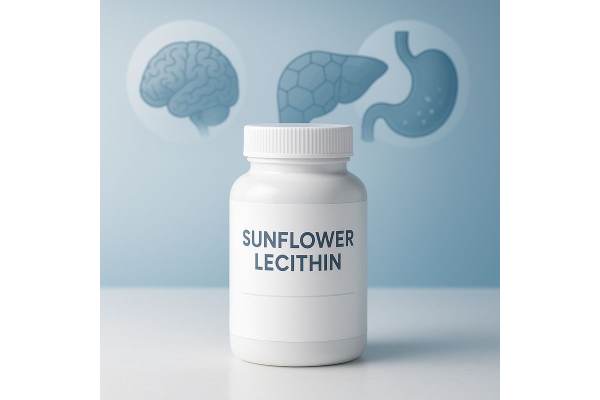
Sunflower lecithin has quietly become one of the most versatile ingredients in modern nutrition. It is prized as a hypoallergenic alternative to soy lecithin, a rich source of phospholipids such as phosphatidylcholine, and a natural emulsifier that helps oil and water mix. You will find it in everything from chocolate and baked goods to softgel capsules and “liposomal” supplements.
Beyond food technology, many people now take sunflower lecithin as a daily supplement. It is commonly used to support breastfeeding comfort, to improve mixability of high fat or high nutrient formulas, and, more recently, for potential benefits in metabolic, liver, and cognitive health. At the same time, it is easy to take more than you need, and long term high-dose data are still limited. This guide walks you through what sunflower lecithin is, how it may help, realistic dosage ranges, safety questions, and the quality of the current evidence so that you can make informed, cautious decisions.
Key Insights for Sunflower Lecithin Users
- Sunflower lecithin is a soy-free phospholipid source and emulsifier that provides phosphatidylcholine and related compounds used in cell membranes and bile formation.
- Human and animal studies suggest neutral to modest benefits on post-meal glucose, triglycerides, and certain aspects of cognition when lecithin is incorporated into meals or fortified oils, but findings are mixed.
- Typical adult supplemental intakes fall around 1,200–4,800 mg sunflower lecithin per day with food; breastfeeding protocols and some trials sometimes use 4,800–10,000 mg per day short term.
- Main safety concerns include digestive upset, fishy body odor at higher choline intakes, and uncertainty about long term effects of high-dose lecithin on mood and cardiovascular risk markers.
- High-dose sunflower lecithin should be avoided or carefully supervised in people who are pregnant, have serious liver or kidney disease, significant mood disorders, or are taking complex medication regimens.
Table of Contents
- What is sunflower lecithin and how is it different?
- Sunflower lecithin benefits and how it works in the body
- Practical ways to use sunflower lecithin every day
- Sunflower lecithin dosage guidelines for different goals
- Sunflower lecithin side effects and who should avoid it
- Common mistakes with sunflower lecithin and how to avoid them
- What current research really says about sunflower lecithin
What is sunflower lecithin and how is it different?
Lecithin is a mixture of phospholipids and triglycerides that occurs naturally in egg yolks, soybeans, sunflower seeds, and many other foods. Sunflower lecithin is specifically extracted from sunflower seeds, usually by mechanical pressing followed by gentle processing, rather than with harsh organic solvents. This makes it attractive for people who want a non-soy, often non-genetically modified (non-GMO) option.
In its supplement form, sunflower lecithin typically contains:
- Phosphatidylcholine (PC)
- Phosphatidylinositol (PI)
- Phosphatidylethanolamine (PE)
- Smaller amounts of other phospholipids and neutral fats
These phospholipids are the structural “bricks” of cell membranes and are involved in cell signaling, bile formation, and lipoprotein metabolism. Phosphatidylcholine is also a major dietary source of choline, an essential nutrient used to produce acetylcholine (a neurotransmitter), support methylation reactions, and maintain liver function.
Compared with soy lecithin, sunflower lecithin:
- Is free of soy protein, which is important for individuals with soy allergy or strong soy avoidance.
- Often comes from non-GMO crops, which some consumers prefer.
- Has a somewhat different phospholipid profile, although functionally the two are similar in many applications.
You will encounter sunflower lecithin in several forms:
- Powder or granules – easy to stir into smoothies, yogurt, or oatmeal.
- Liquid – used in food manufacturing and some home recipes.
- Capsules or softgels – convenient for people who do not enjoy the taste or texture.
- Built into “liposomal” supplements – where phospholipids are used to encapsulate nutrients.
As a food additive, lecithin has a long history of use as an emulsifier in chocolate, baked goods, and spreads to improve texture and stability. As a supplement, the focus shifts from food structure to possible health effects, which depend heavily on dose, context, and individual health status.
Sunflower lecithin benefits and how it works in the body
Sunflower lecithin is not a single targeted drug. It is a mixture of structural lipids that can influence several systems at once. The potential benefits below are based on mechanisms, animal work, and a growing number of human trials on lecithin or phospholipid blends. Findings are promising in some areas and neutral in others, so it is important to keep expectations realistic.
1. Support for lipid digestion and bile flow
Phospholipids in lecithin mix with bile acids in the intestine to form micelles that carry dietary fats and fat-soluble vitamins. By improving micelle formation, sunflower lecithin may:
- Help stabilize high fat meals and nutrient formulas.
- Reduce separation in homemade nutritional shakes and fortified drinks.
- Theoretically support bile flow and fat absorption, although direct human data are limited.
2. Post-meal metabolic effects
When phospholipid-rich ingredients are added to carbohydrate-heavy meals, several human studies show:
- Lower post-meal glucose and insulin spikes compared with similar meals using standard fats.
- Reduced rise in triglycerides and potentially improved release of gut hormones that regulate appetite.
These effects have been observed with sunflower lecithin as part of structured meals. They do not mean sunflower lecithin by itself treats diabetes or high cholesterol, but they suggest that replacing some dietary fat with polar lipids may gently improve how the body handles a meal.
3. Breastfeeding comfort and milk flow
Lecithin is widely used in lactation support to help reduce recurrent plugged milk ducts. The idea is that emulsifying properties of lecithin make milk less prone to thick “clumps,” helping it flow more smoothly through ducts. Clinical reports and guideline documents describe reduced frequency of plugged ducts for many users, though strictly controlled trials are still lacking. It is best viewed as an adjunct alongside good latching, effective emptying, and professional lactation support.
4. Cognitive and nervous system support
Because phosphatidylcholine provides choline for acetylcholine synthesis and membrane repair, lecithin has been studied in cognitive health. Results are mixed:
- In some animal models, sunflower lecithin enriched oils have improved memory, reduced inflammation, and supported antioxidant defenses in the brain.
- Human studies of lecithin for dementia or memory loss have generally been neutral, and no strong evidence supports using lecithin alone as a cognitive treatment.
At nutritional doses, sunflower lecithin is better thought of as one contributor to overall choline intake and cell membrane health, not a stand-alone nootropic.
5. Dry eye and tear film support
Phospholipids are important in the lipid layer of the tear film. A recent human trial tested sunflower lecithin for dry eye related to meibomian gland dysfunction. While supplementation was well tolerated, it did not outperform placebo on key outcomes. This suggests sunflower lecithin alone is unlikely to be a major therapy for dry eye, but it appears reasonably safe in moderate doses.
Overall, sunflower lecithin seems most useful as:
- A safe emulsifier and phospholipid source in foods and formulas.
- A supportive nutrient in breastfeeding and possibly in some eye and metabolic contexts.
It should not be considered a cure for chronic disease, and benefits will usually be modest and context-dependent.
Practical ways to use sunflower lecithin every day
If you decide to include sunflower lecithin in your routine, it is helpful to match the form and method of use to your specific goals. The same ingredient can look quite different in the kitchen, in a supplement plan, and in a breastfeeding support strategy.
1. As a food ingredient and emulsifier
In the kitchen, sunflower lecithin can:
- Help blend oil into smoothies or protein shakes without separating.
- Improve the texture of homemade chocolate, fudge, and nut butters.
- Stabilize salad dressings or sauces so they stay creamy in the refrigerator.
Practical tips:
- Start with about 1 teaspoon (roughly 3–4 g) granules or powder in a recipe serving two to three people.
- Blend thoroughly; lecithin mixes best when you add it to the liquid phase before combining with oil.
- Adjust the amount according to texture; more is not always better, and higher doses contribute calories.
2. As a general wellness supplement
People who want a non-soy phospholipid supplement often choose capsules or granules of sunflower lecithin. Common reasons include:
- Supporting overall choline intake on mostly plant-based diets.
- Providing phospholipids for liver and cell membrane health.
- Adding emulsification capacity when taking high fat fish oil or vitamin D supplements.
In these situations:
- Capsule users often take 1,200–2,400 mg per day, usually once or twice daily with meals.
- Powder users may take 3–7 g per day mixed into food or beverages.
Because products vary, it is important to check the label to see how much phosphatidylcholine and choline are provided per dose, not only the total lecithin weight.
3. For breastfeeding and recurrent plugged ducts
Lecithin is frequently recommended as part of a broader plan to reduce recurrent clogged ducts. Typical practice patterns include:
- Using capsules or powder that together provide about 3,600–4,800 mg lecithin per day, sometimes more under professional supervision.
- Dividing the dose across meals to reduce digestive discomfort.
- Combining supplementation with strategies such as effective latching, frequent emptying, and gentle breast massage.
Because robust trial data are limited, these protocols should be viewed as expert opinion and real-world experience rather than definitive evidence. Parents should ideally work with a lactation consultant or clinician who can tailor dosing and duration.
4. As part of targeted therapeutic plans
Emerging research is exploring sunflower lecithin in:
- Formulations for cardiometabolic health, where it is combined with specific fats and fibers.
- Eye formulas for dry eye disease.
- Fortified oils aimed at cognitive function, where lecithin is paired with vitamins and other nutrients.
These uses rely on carefully designed products and doses tested in controlled settings. If you are considering such approaches for a medical condition, it is better to use products and protocols evaluated in studies, under guidance from a health professional, rather than improvising high doses on your own.
In all cases, the safest pattern is to use the smallest amount that achieves your practical purpose, and to treat sunflower lecithin as one component of a broader diet and lifestyle plan rather than a stand-alone fix.
Sunflower lecithin dosage guidelines for different goals
There is no single official therapeutic dose for sunflower lecithin. Instead, different contexts use different rough ranges, which must be interpreted alongside general choline intake guidelines and individual health factors. The numbers below describe typical practice, not personal recommendations.
1. Understanding what the numbers mean
When you see “1,200 mg sunflower lecithin” on a label, that refers to the weight of the lecithin mixture, not pure phosphatidylcholine or choline. Depending on formulation:
- Phospholipids may make up around 20–60 percent of that weight.
- Choline itself is only a fraction of phosphatidylcholine’s weight.
This means that even a 4,800 mg daily intake of sunflower lecithin usually provides well under the established upper intake level for choline, though exact values depend on the product.
2. Common supplemental ranges for adults
For generally healthy adults:
- Low to moderate intake:
- Around 1,200–2,400 mg sunflower lecithin per day, often in one or two doses with food.
- This is typical of many over-the-counter products marketed for general wellness.
- Higher supplemental intake:
- Around 3,600–4,800 mg per day has been used in specific contexts such as breastfeeding support and in some clinical trials for dry eye or other conditions.
- These doses are usually administered for defined periods (for example, several weeks to a few months) rather than indefinitely.
At these levels, most studies report good tolerability, with digestive upset being the most common complaint when it occurs.
3. Breastfeeding and plugged duct protocols
For recurrent plugged ducts, common patterns described in practice include:
- Capsules providing 1,200 mg sunflower or soy lecithin taken three to four times per day (total 3,600–4,800 mg daily).
- Powder doses of about 5–10 g per day, often mixed into a smoothie or soft food once daily.
Often, higher doses are used until plugs stop recurring, followed by a gradual taper. Because breastfeeding involves both the parent and child, any high-dose regimen should be reviewed with a clinician familiar with lactation medicine.
4. Cognitive, metabolic, and eye health trials
Research trials examining sunflower lecithin in cognitive and metabolic contexts have used a wide range of doses, from moderate daily intakes in fortified oils to around 4,800 mg per day in capsule form for several months. These studies help define upper bounds of short-term tolerability but do not automatically set safe long term doses for everyone.
For dry eye related to meibomian gland dysfunction, one randomized trial used 4,800 mg sunflower lecithin daily for ninety days. The supplement was well tolerated but did not clearly outperform placebo on main outcome measures.
5. Children, pregnancy, and older adults
Dosing is more conservative in sensitive groups:
- Children: lecithin appears in many foods, but targeted high-dose supplementation should only occur under pediatric supervision.
- Pregnancy and breastfeeding: food-level lecithin is generally considered acceptable, but high-dose supplements should be discussed with a healthcare provider who can weigh benefits and uncertainties.
- Older adults with multiple conditions or medicines: start low, increase slowly if needed, and monitor for digestive changes, mood shifts, or unusual symptoms.
In all cases, it is wise to:
- Check total choline and phospholipid intake from diet and supplements.
- Prefer moderate doses for long term use.
- Reserve higher doses for clearly defined short-term goals under professional guidance.
Sunflower lecithin side effects and who should avoid it
At food additive levels, lecithins have a long record of safe use. At supplemental doses, sunflower lecithin is still generally well tolerated, but certain side effects and cautions are worth understanding, especially at the higher end of intake ranges.
1. Common, usually mild side effects
Most reported issues are digestive and tend to appear when doses are increased quickly:
- Nausea or queasiness
- Soft stools or diarrhea
- Abdominal discomfort or cramping
- A sense of heaviness after taking large doses without food
These reactions often improve if you:
- Take lecithin with meals rather than on an empty stomach.
- Split the daily dose into two or three smaller portions.
- Reduce the dose and increase more gradually.
2. Fishy body odor and choline metabolism
Very high choline intake from any source can, in some individuals, lead to:
- Fishy body odor or breath
- Slightly unpleasant sweat smell
This is related to how the body and gut microbes metabolize choline into compounds such as trimethylamine and its oxide. While typical sunflower lecithin dosing for most adults stays below this threshold, people who are very sensitive or who combine multiple choline-rich supplements may notice odor changes sooner.
3. Cardiometabolic considerations
Because lecithin can increase circulating choline metabolites, researchers have been interested in whether chronic high intake might influence cardiovascular risk markers. The current evidence is mixed:
- Some studies show neutral or modestly favorable effects on lipids when lecithin is used in structured diets.
- Others raise theoretical concerns about certain metabolites in very high consumers.
For people with established cardiovascular disease, chronic kidney disease, or a strong family history of premature heart disease, the safest approach is to keep lecithin intake within modest ranges and discuss any high-dose plans with a clinician who can monitor lipids and other markers.
4. Mood and neurological concerns at high doses
There are reports and theoretical discussions suggesting that excessive choline intake could, in some susceptible individuals, contribute to low mood or changes in mental state. The data are not conclusive, but they are strong enough to justify caution if you:
- Have a history of major depression or bipolar disorder.
- Notice a clear temporal link between starting high-dose lecithin and a change in mood or sleep.
In such cases, reducing or stopping the supplement and consulting a mental health or medical professional is prudent.
5. Who should avoid or use sunflower lecithin only with supervision
It is best to avoid high-dose sunflower lecithin or use it only under medical supervision if you:
- Are pregnant or planning pregnancy and considering doses above normal food intake.
- Have significant liver disease or advanced chronic kidney disease.
- Have a diagnosed mood disorder or seizure disorder.
- Are taking complex drug regimens where additional supplements may shift absorption or liver metabolism.
Anyone with a known allergy to sunflower or to other seed proteins should be cautious, although most refined lecithin products contain very little protein.
In summary, sunflower lecithin appears safe for most people when used at modest supplemental doses. Problems are more likely when doses are high, combined with other choline-rich products, or used in people with complex health conditions without professional monitoring.
Common mistakes with sunflower lecithin and how to avoid them
Many of the problems people encounter with sunflower lecithin come not from the ingredient itself, but from how it is used. Avoiding a few common pitfalls can make it safer and more effective.
1. Treating it as a cure rather than a support
One frequent mistake is expecting sunflower lecithin to:
- Cure mastitis or serious breast infections on its own.
- Reverse dementia, major depression, or complex metabolic disease.
- Fix dry eye disease without attention to eyelid hygiene, environment, or other treatments.
Sunflower lecithin is better viewed as one tool in a broader plan. For example, in breastfeeding it may help reduce recurrent plugged ducts, but it does not replace good positioning, thorough emptying, or appropriate medical care if infection is present.
2. Ignoring the difference between food levels and supplement levels
Some people assume that because lecithin in chocolate or bread is safe, swallowing large spoonfuls of pure lecithin must be equally harmless. This ignores the large difference in dose:
- Foods typically supply a few hundred milligrams of lecithin per serving.
- Supplements can add several grams on top of dietary intake.
Jumping straight to large supplemental doses without assessing overall choline and phospholipid intake increases the risk of digestive upset and potential long term uncertainties.
3. Not checking product labels carefully
Sunflower lecithin products vary widely in:
- Total lecithin per serving.
- Phosphatidylcholine content as a percentage.
- Presence of added ingredients such as carriers, sweeteners, or flavorings.
Mistakes happen when someone:
- Assumes all capsules contain the same amount.
- Doubles up on different products (for example, a liposomal vitamin plus a separate lecithin capsule) without checking choline totals.
- Uses a product designed as a food ingredient as if it were a concentrated supplement.
It is wise to review labels and, if possible, calculate approximate daily choline intake from food and supplements together.
4. Taking high doses for too long without reassessment
Another pattern is staying on high-dose lecithin for months or years without reviewing whether it is still needed. This can occur when:
- A temporary breastfeeding issue resolves, but the original dose is never reduced.
- A specific trial-like dose for dry eye or another condition is continued indefinitely without clear benefit.
- New health conditions or medicines are introduced, but the old supplement plan remains unchanged.
Setting a reminder to reassess every few months with a clinician can help align dose and duration with actual ongoing needs.
5. Overlooking non-supplement strategies
Finally, lecithin is sometimes used as a first line strategy when non-supplement approaches might be safer and equally or more effective. Examples include:
- Adjusting meal composition and timing for blood sugar control.
- Improving sleep and physical activity for cognitive health.
- Optimizing latch, feeding frequency, and breast care in lactation.
Sunflower lecithin can be a useful adjunct, but it works best when layered on top of solid lifestyle and medical foundations rather than used as a shortcut around them.
What current research really says about sunflower lecithin
Research on sunflower lecithin sits at the intersection of food science, clinical nutrition, and pharmacology. Understanding its strength and limits can keep claims in perspective.
1. Metabolic and cardiometabolic outcomes
Clinical studies that compare phospholipid-rich fats to standard oils in meals have found that sunflower lecithin can:
- Lower post-meal glucose and insulin responses compared with similar meals using conventional fats.
- Reduce the rise in triglycerides after eating in some protocols.
- Influence gut hormone responses related to appetite.
These effects generally occur in the context of controlled test meals and may contribute to better metabolic handling of carbohydrates and fats. However, they do not necessarily translate into long term reductions in diabetes or cardiovascular events, which would require much larger and longer trials.
2. Dry eye and meibomian gland function
A recent randomized, controlled study gave adults with dry eye disease related to meibomian gland dysfunction 4,800 mg of sunflower lecithin daily for three months. Both the lecithin and placebo groups improved on symptom scores and clinical measures, but the differences between groups were not statistically significant. The main takeaway is that the supplement was well tolerated at that dose, yet did not show clear therapeutic advantage over placebo under the conditions tested.
3. Cognitive and brain health models
In animal models, sunflower lecithin combined with specific vitamins in fortified oils has:
- Improved learning and memory performance.
- Reduced markers of oxidative stress and inflammation in brain tissue.
- Modulated pathways involved in neurotransmission and cell survival.
These findings support the biological plausibility of sunflower lecithin contributing to brain health as part of a nutrient blend. However, animal models do not guarantee similar effects in humans. Human trials of lecithin and related phospholipids in cognitive disorders so far have produced mixed or modest results.
4. Breastfeeding and plugged ducts
For breastfeeding, lecithin is widely recommended in practice to help prevent recurrent plugged ducts. Summaries of clinical experience and lactation guidance documents support its safety at moderate doses and report many cases of symptom improvement. At the same time, formal randomized trials are lacking, and expert sources emphasize that lecithin should be combined with attention to milk transfer, latch, and underlying causes of inflammation rather than used in isolation.
5. Overall safety evaluations
Food safety assessments that consider lecithins as additives in a wide range of foods have generally concluded that:
- Lecithins do not pose a safety concern at current use levels for the general population beyond infancy.
- Intakes from normal diets, even with processed foods, stay well within conservative safety thresholds for choline and phospholipids for most people.
Supplement users add an extra layer of intake beyond baseline diet. When daily amounts remain in the low to moderate gram range and are taken with food, serious adverse events appear rare in published work. Caution is still advised for long term high-dose use, in sensitive populations, and when lecithin is combined with multiple other choline-rich supplements.
In summary, research supports sunflower lecithin as:
- A safe and effective emulsifier and structural nutrient in foods.
- A potentially helpful adjunct in certain metabolic and breastfeeding contexts.
It is less convincing as a stand-alone treatment for chronic disease, and more studies are needed to clarify its long term effects at supplemental doses in diverse populations.
References
- Oat polar lipids and sunflower lecithin similarly improve cardiometabolic risk markers and appetite controlling hormone responses after breakfast and a subsequent lunch. A randomized crossover study in healthy adults 2024 (Randomized Crossover Study)
- Effect of Sunflower Lecithin Supplementation on Meibomian Gland Function in Adults With Dry Eye Disease 2025 (Randomized Clinical Trial)
- Sunflower Oil Fortified with Vitamins D and A and Sunflower Lecithin Ameliorated Scopolamine-Induced Cognitive Dysfunction in Mice and Exploration of the Underlying Protective Pathways 2025 (Animal Study)
- Lecithin – Drugs and Lactation Database (LactMed®) – NCBI Bookshelf 2025 (Clinical Database Summary)
- Management of Mastitis 2025 (Clinical Patient Education Resource)
Disclaimer
This article is for general information only and does not provide individual medical, nutritional, or lactation advice. Sunflower lecithin is a concentrated source of phospholipids and choline, and its effects can vary based on dose, health status, and other medicines or supplements. You should not start, stop, or change any medication, breastfeeding plan, or treatment based solely on this information. Always consult a qualified healthcare professional, such as a physician, pharmacist, or lactation consultant, before using sunflower lecithin to address a specific health concern, particularly if you are pregnant, breastfeeding, managing chronic illness, or taking prescription drugs.
If you experience concerning symptoms such as persistent pain, fever, mood changes, breathing difficulty, or signs of an allergic reaction while using sunflower lecithin, stop the supplement and seek prompt medical evaluation. In emergencies, contact local emergency services immediately.
If you found this guide useful, you are warmly invited to share it on Facebook, X (formerly Twitter), or any platform you prefer, and to follow our work on social media. Your support in sharing this content helps our team continue producing careful, evidence-informed articles on nutrition, supplements, and health.