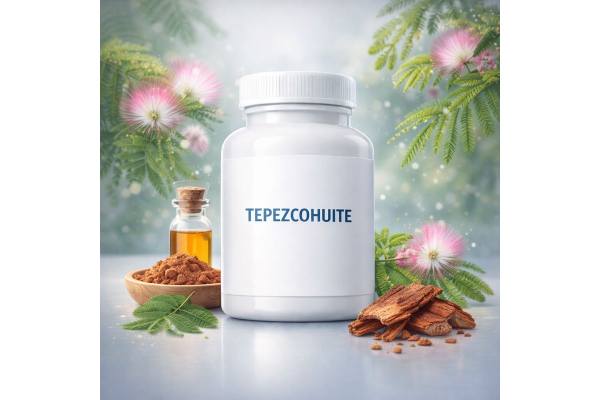
Tepezcohuite is the common name for the inner bark of Mimosa tenuiflora, a small tree native to Mexico and parts of Central and South America. Traditionally used to treat burns, wounds, and various skin conditions, it has become popular worldwide in creams, soaps, and serums marketed for skin repair and anti-aging. People are drawn to tepezcohuite because it combines a long history of traditional use with modern laboratory findings that suggest antioxidant, anti-inflammatory, and regenerative properties. At the same time, human clinical research is still limited, and many claims come from small trials, animal studies, or in-vitro work rather than large, long-term studies.
This guide walks you through what tepezcohuite is, how it appears to work, the main benefits and uses people seek, practical advice on choosing and using products, the current evidence base, and important safety considerations. Use it as a starting point for informed conversations with your dermatologist, pharmacist, or other qualified health professional.
Tepezcohuite Quick Overview
- Tepezcohuite bark extracts show antioxidant and anti-inflammatory activity that may support wound repair and skin barrier function.
- Topical products are mainly used for minor burns, scars, acne-prone skin, and cosmetic skin rejuvenation.
- Typical cosmetic products use about 1–10% tepezcohuite extract; always follow the specific product directions.
- People with very sensitive skin, legume allergies, or serious skin disease should avoid using tepezcohuite without medical supervision.
Table of Contents
- What is tepezcohuite and how does it work?
- Tepezcohuite benefits for skin and beyond
- How to use tepezcohuite safely at home
- Tepezcohuite dosage, strengths, and product types
- Side effects, risks, and who should avoid tepezcohuite
- What the research says and where gaps remain
What is tepezcohuite and how does it work?
Tepezcohuite refers to preparations made from the inner bark of Mimosa tenuiflora (also known as Mimosa hostilis), a thorny tree from the Fabaceae (legume) family. In Mexican and Brazilian traditional medicine, powdered bark has long been used on burns, ulcers, and other skin injuries. Today, manufacturers typically prepare standardized extracts that are incorporated into creams, gels, soaps, and sprays for cosmetic and dermatologic use.
Chemically, the bark contains tannins, flavonoids, saponins, and other phenolic compounds. Laboratory studies suggest these molecules can neutralize free radicals, modulate inflammatory pathways, and support collagen production and re-epithelialization (the regrowth of skin cells over a wound). These mechanisms are consistent with the traditional use of tepezcohuite for wound care and skin repair, but most of this evidence comes from in-vitro and animal models rather than large human trials.
A small randomized trial using a tepezcohuite-containing hydrogel on venous leg ulcers found improved healing outcomes compared with standard care alone, suggesting that the bark extract may support tissue repair when formulated appropriately and used under medical supervision. Other clinical observations are scattered and often involve combinations of ingredients, making it difficult to isolate the exact contribution of tepezcohuite itself.
It is also important to distinguish topical from internal use. Most of the available evidence and traditional practice relates to skin application. Oral supplements of tepezcohuite are far less studied, and there is no established safe systemic dose. For this reason, discussion of “dosage” focuses mainly on topical strengths and frequency of use rather than milligram-based oral regimens.
Overall, current data suggest tepezcohuite may act as a supportive agent for skin health through antioxidant, anti-inflammatory, and possibly antimicrobial effects, but it should be viewed as an adjunct, not a replacement, for evidence-based medical treatment of serious conditions.
Tepezcohuite benefits for skin and beyond
Most interest in tepezcohuite centers on its potential skin benefits. Traditional use and modern marketing both highlight its role in wound healing, burn care, and cosmetic rejuvenation. In experimental models, bark extracts have shown the ability to reduce inflammatory markers, limit oxidative stress, and support collagen organization in damaged tissue. These findings align with reports of improved healing in certain chronic wounds when tepezcohuite-containing formulations are used as part of a broader care plan.
For everyday skin care, many people turn to tepezcohuite creams, gels, or soaps for issues such as dryness, minor irritation, or the appearance of scars and stretch marks. The high tannin content may temporarily tighten the skin surface, while flavonoids and related compounds may help protect against environmental stressors. Some users report that products with tepezcohuite leave their skin feeling smoother or more resilient, though these observations are largely anecdotal.
Acne-prone skin is another common target. Because tepezcohuite extracts may have mild antimicrobial and anti-inflammatory effects, some formulations aim to calm redness, reduce the appearance of post-inflammatory marks, or support the skin barrier in people using acne treatments that dry or irritate the skin. Evidence here is preliminary; there are no large comparative trials against standard acne therapies, so tepezcohuite should be regarded as a complementary option rather than a primary treatment.
Outside of dermatology, tepezcohuite has been explored for potential analgesic and anti-inflammatory actions in pain models, as well as for broader antimicrobial properties. These findings are interesting but not yet translated into clear, clinically validated uses. Internal uses, including teas, capsules, or powders, remain poorly characterized in humans, and safety data are limited.
In summary, the most plausible and practical benefits of tepezcohuite today relate to topical support for:
- Minor burns and superficial wounds under professional guidance
- Chronic or hard-to-heal lesions as part of a broader treatment strategy
- Cosmetic concerns such as skin texture, fine lines, and post-inflammatory marks
Even for these uses, expectations should remain realistic: tepezcohuite may support normal healing processes and skin comfort but is unlikely to deliver dramatic results on its own.
How to use tepezcohuite safely at home
Most people encounter tepezcohuite in over-the-counter skin products rather than as raw bark. Common forms include creams, ointments, gels, serums, soaps, and cleansing bars. Each format has its own advantages, and the right choice depends on your skin type and goals.
For general skin comfort and barrier support, a tepezcohuite cream or lotion can be applied once or twice daily to clean, dry skin. People with dry or mature skin may prefer richer creams, while those with combination or oily skin might do better with light gels or serums. Because different products use different extract strengths and supporting ingredients, following the manufacturer’s directions is essential.
If you want to test tepezcohuite on a small area first, a simple routine might look like this:
- Cleanse the area gently with lukewarm water and a mild, fragrance-free cleanser.
- Pat dry and wait a few minutes for any residual moisture to evaporate.
- Apply a thin layer of the tepezcohuite product to a limited patch of skin (for example, the inner forearm).
- Observe for 24–48 hours for redness, itching, burning, or rash. If irritation occurs, wash the area and discontinue use.
- If your patch test is uneventful, start using the product on the intended area once daily, gradually increasing to twice daily if well tolerated.
Tepezcohuite soaps and cleansers are often marketed for daily use. Because soaps can strip natural oils, consider limiting use to once daily or alternating with a gentle non-medicated cleanser, especially if you have dry or sensitive skin.
For minor, superficial skin issues such as small scrapes or mild irritation, some people apply tepezcohuite creams after cleaning the area. However, you should not self-treat deep burns, infected wounds, or large areas of damaged skin with over-the-counter tepezcohuite products. Those conditions require professional medical evaluation and, in many cases, prescription-based care.
Finally, avoid combining tepezcohuite with strong exfoliants, high-strength retinoids, or other potentially irritating treatments on the same area unless supervised by a dermatologist. Layering multiple active ingredients can increase the risk of irritation, especially on the face or thin areas like the neck.
Tepezcohuite dosage, strengths, and product types
Unlike vitamins or standardized pharmaceuticals, there is no universally agreed-upon “dose” of tepezcohuite. Most modern research and traditional practice involve topical application, and published clinical protocols usually describe the percentage of extract in a formulation rather than a fixed milligram amount per kilogram of body weight.
In cosmetic and dermatologic products, tepezcohuite extract concentrations commonly fall in the range of about 1–10%. Lower strengths (around 1–2%) are more typical in everyday creams and lotions designed for long-term use on larger skin areas, such as the face and hands. Higher strengths (for example, 5–10%) may be reserved for targeted gels or medical-grade products used on localized lesions under professional supervision.
Because composition can vary between manufacturers, the label might specify “tepezcohuite bark extract,” “Mimosa tenuiflora extract,” or a proprietary extract name. Some formulations combine tepezcohuite with other active agents such as aloe vera, panthenol, allantoin, or hyaluronic acid to address moisture, irritation, and barrier repair from multiple angles.
A practical way to think about “dosage” for topical tepezcohuite is in terms of:
- Frequency: Many products are used once or twice daily. Start on the lower end (once daily) and increase only if clearly tolerated.
- Amount: Apply a thin, even layer that covers the area without leaving heavy residue. Using more does not necessarily improve results and may increase the risk of irritation.
- Duration: Cosmetic use may continue for weeks to months. However, if you are treating a specific issue (such as a minor wound), you should reassess regularly and seek medical advice if the skin does not improve as expected within a reasonable timeframe.
Oral forms of tepezcohuite (capsules, powders, teas) are far less studied. There is no recognized safe or effective internal dose, and quality control can be variable. Given the lack of solid human safety data for internal use, it is prudent to avoid ingesting tepezcohuite products unless they are part of a regulated, medically supervised protocol in your country.
In all cases, the safest approach is to treat the directions on your specific product as the primary “dose,” adjust slowly based on how your skin responds, and involve a health professional when using tepezcohuite for any medical condition rather than purely cosmetic reasons.
Side effects, risks, and who should avoid tepezcohuite
For most healthy adults using modern topical products as directed, tepezcohuite appears to be reasonably well tolerated. However, “natural” does not mean risk-free, and several safety points deserve attention.
The most common side effects are local skin reactions:
- Redness or flushing
- Itching or burning sensations
- Dryness, tightness, or peeling
- Contact dermatitis (rash) in sensitive individuals
These reactions may be caused by tepezcohuite itself, by other ingredients in the formulation (such as preservatives or fragrances), or by the combination with other active agents in your routine. Patch testing a new product on a small area before widespread use is a simple and useful precaution.
Because tepezcohuite comes from a legume tree, people with known allergies to legumes or to other plants in the Fabaceae family may have an increased risk of allergy. While serious allergic reactions appear to be rare in the literature, they are theoretically possible. Any signs of swelling, hives, difficulty breathing, or severe burning should be treated as a medical emergency.
Tepezcohuite should not be used as a substitute for appropriate medical care in serious conditions, including:
- Moderate to severe burns
- Infected, deep, or rapidly worsening wounds
- Chronic ulcers in people with diabetes or cardiovascular disease, unless a wound-care specialist recommends a specific product
- Suspicious skin lesions that could represent skin cancer
Certain groups should be especially cautious:
- Pregnant or breastfeeding individuals: There is insufficient human safety data for either topical or oral use. Avoid unless your doctor specifically approves a given product.
- Infants and young children: Their skin barrier is thinner and more permeable, making them more susceptible to irritation and systemic absorption. Use only under pediatric guidance.
- People with very sensitive or reactive skin (e.g., rosacea, severe eczema): Start gently, if at all, and involve a dermatologist before using new active ingredients.
- Anyone taking multiple medications or living with complex health conditions: Always check with a health professional before using herbal products, even topically.
Finally, internal use (capsules, teas, powders) should be approached with extreme caution due to limited data on long-term safety, potential interactions, and consistent product quality. If you are considering taking tepezcohuite by mouth for any reason, it is essential to discuss this with a qualified clinician rather than self-experiment.
What the research says and where gaps remain
The modern evidence base for tepezcohuite is best described as promising but incomplete. A small randomized clinical trial in people with venous leg ulcers found that a hydrogel containing a standardized Mimosa tenuiflora bark extract improved healing compared with standard care alone. This suggests that, in a controlled context, tepezcohuite can contribute meaningfully to wound management.
Beyond this, several experimental studies on bark extracts have shown antioxidant and anti-inflammatory effects in cell cultures and animal models. These include reductions in inflammatory mediators, protection against oxidative damage, and modulation of pain pathways. Such findings help explain why traditional healers observed benefits on painful, inflamed, or damaged skin.
Wider reviews of medicinal plants for wound healing also list Mimosa tenuiflora among species with documented activity in human or animal studies, highlighting its tannin-rich profile and possible role in collagen organization and re-epithelialization. Meanwhile, broader reviews of the Mimosa genus emphasize the diversity of bioactive compounds across different species and encourage further pharmacological research.
However, several important limitations remain:
- Human trials are few, with small sample sizes and varied methodologies.
- Many formulations studied include multiple actives, making it hard to isolate the exact effect of tepezcohuite.
- Long-term safety data in humans, especially for daily cosmetic use over many years, are limited.
- There is almost no robust research on internal (oral) use in people.
For these reasons, tepezcohuite is best viewed as a potentially helpful supportive ingredient, particularly in topical products for skin comfort and minor wound care, rather than a stand-alone treatment. If you are dealing with a medical condition, especially a chronic or serious one, you should consider tepezcohuite only as one small piece of a comprehensive, clinician-guided plan.
As research evolves, we may see better-designed clinical trials clarifying which formulations, concentrations, and patient groups benefit most. Until then, careful, conservative use and open communication with health professionals offer the safest path forward.
References
- A randomised comparative trial on the use of a hydrogel with tepescohuite extract (Mimosa tenuiflora cortex extract-2G) in the treatment of venous leg ulcers, 2011 (RCT).
- Antinociceptive and anti-inflammatory activities of the ethanolic extract, fractions and flavones isolated from Mimosa tenuiflora (Willd.) Poir (Leguminosae), 2016 (Experimental).
- Anti-inflammatory and antioxidant activities of the hydroethanol extract and fractions of the bark of Mimosa tenuiflora (Willd.) Poir, 2016 (Experimental study).
- Therapeutic Effects of Medicinal Plants on Cutaneous Wound Healing in Humans: A Systematic Review, 2018 (Systematic Review).
- Phytochemistry and Diverse Pharmacology of Genus Mimosa: A Review, 2022 (Review).
Disclaimer
The information in this article is for general educational purposes only and is not a substitute for personal medical advice, diagnosis, or treatment. Tepezcohuite products are not approved to diagnose, treat, cure, or prevent any disease, and evidence for many uses remains limited. Always speak with a qualified health professional before starting, stopping, or changing any herbal remedy, supplement, or medication, especially if you are pregnant, breastfeeding, have a chronic health condition, or take prescription drugs. Never delay or disregard professional medical advice because of something you have read online.
If you found this guide helpful, please consider sharing it with others on Facebook, X (formerly Twitter), or any platform you prefer, and follow our work on social media. Your support by sharing our articles helps our team continue producing accurate, in-depth health content for readers like you.