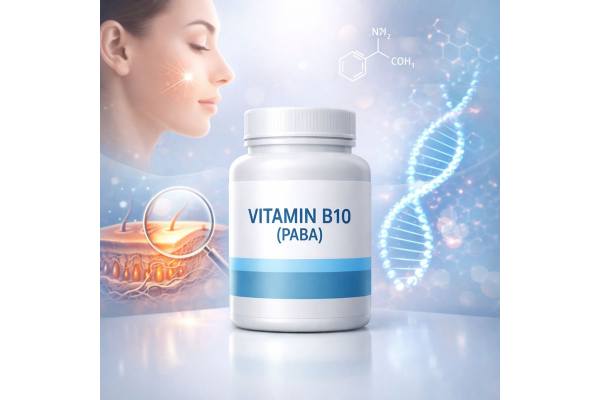
Vitamin B10 is better known as para-aminobenzoic acid (PABA)—a compound with a long history in skincare and a smaller, more specialized role in oral medicine. You will still see it called “vitamin B10,” but it is not considered a true vitamin for humans, because we do not require it in the diet to prevent a defined deficiency. That nuance matters: many claims online (hair color reversal, “skin rejuvenation,” detox support) are not equally supported, and the safest way to think about PABA is as a targeted ingredient with specific tradeoffs.
Today, PABA shows up most often in discussions about sunscreen sensitivity and in prescription contexts such as potassium aminobenzoate used for certain fibrotic conditions. This guide explains what PABA is, what benefits are realistic, how it is used topically versus orally, what dosing ranges are actually used in practice, and the side effects and interactions you should plan for.
Key Insights for Vitamin B10 and PABA
- Oral potassium aminobenzoate is used in some fibrotic conditions, but evidence strength varies and results can be modest.
- PABA and related UV filters can trigger allergic contact dermatitis or photoallergic reactions in sensitive people.
- Typical adult prescription dosing for potassium aminobenzoate is 12 g/day in 4–6 divided doses with meals.
- High oral doses can cause significant GI upset and rare serious reactions, so self-prescribing is a poor idea.
- People with a history of severe sunscreen allergy, liver disease, or those taking sulfonamide antibiotics should avoid unsupervised use.
Table of Contents
- What is vitamin B10 and is it really a vitamin?
- What benefits are realistic and what is mostly marketing?
- Topical PABA vs oral potassium aminobenzoate: what gets used today?
- How much vitamin B10 should you take and how to dose it?
- Side effects, interactions, and who should avoid it
- What research says and how to choose safer alternatives
What is vitamin B10 and is it really a vitamin?
Para-aminobenzoic acid (PABA) is an organic compound best known for two roles: its historical use in UVB-filtering sunscreens, and its relationship to folate biology in bacteria. Those points are the root of the “vitamin B10” nickname—and also the reason the name can be misleading.
In bacteria, PABA is a building block used to make folate-like molecules that support growth. Humans, however, do not use PABA as a required dietary vitamin in the way we use folate (vitamin B9) or niacin (vitamin B3). That is why major medical references describe PABA as not a true vitamin for humans. In practical terms, this means there is no standard “recommended daily allowance” designed to prevent a deficiency disease, and routine supplementation is rarely necessary.
So why does it keep showing up in supplement aisles? A few reasons:
- Marketing momentum: “B vitamin” language signals energy, skin, and hair support, even when the science is thin.
- Legacy sunscreen history: PABA was one of the early sunscreen actives. Over time it became associated with “skin health,” even though its main function was simply absorbing UVB.
- Prescription-adjacent use: A related drug form, potassium aminobenzoate, has been used medically for certain fibrotic conditions. This can create the impression that over-the-counter PABA is broadly therapeutic, which is not accurate.
If you are trying to make a clear decision, treat “Vitamin B10” as a label, not a guarantee of nutritional necessity. The more important question is: are you considering PABA for (1) a skin-related use, (2) a medically supervised oral use, or (3) a general wellness claim? Each category has a different risk profile, different evidence quality, and different dosing logic.
What benefits are realistic and what is mostly marketing?
PABA is often promoted for hair, skin, and “anti-aging,” but the benefits that hold up best are narrow and context-specific. The most useful way to evaluate PABA is to separate mechanism-based plausibility from proven clinical outcomes.
Benefits that can be realistic in the right context:
- A role in photoprotection history (topical use): PABA can absorb UVB radiation, which is why it was used in sunscreen products. That said, modern sunscreen formulations often avoid PABA because of irritation, staining, and sensitization concerns. “Works as a UVB filter” is not the same as “best choice today.”
- Medical use in fibrotic conditions (prescription potassium aminobenzoate): Potassium aminobenzoate has been used for conditions characterized by abnormal fibrosis. In real life, this is not a casual supplement scenario; it is a high-dose, divided-dose regimen with tolerability challenges. Some clinical guidelines and consensus documents discuss it as an option with limited or variable evidence, rather than a high-confidence first-line therapy.
- Supportive, not standalone, strategy: In scenarios where fibrosis management is being attempted, potassium aminobenzoate is generally considered one piece of a broader plan. The benefit you should expect—if any—is typically incremental and slow, not rapid or dramatic.
Claims that are commonly overstated:
- “Reverses gray hair”: This is one of the most persistent claims. Even if individual anecdotes exist, hair pigmentation changes are biologically complex (melanocyte activity, genetics, oxidative stress, nutrient status), and PABA does not have reliable, modern evidence showing consistent repigmentation.
- “Fixes skin aging” or “repairs collagen”: PABA’s sunscreen role can reduce UV-related damage when used as an effective UV filter, but that is different from reversing established photoaging or reliably improving wrinkles.
- “Boosts energy like other B vitamins”: Since PABA is not a required human vitamin and is not a core coenzyme like many B vitamins, “energy boosting” claims are usually a category mistake.
A practical way to judge whether PABA is worth considering is to ask:
- What outcome am I targeting that is measurable (symptoms, function, clinician-defined endpoints)?
- Is there a safer, better-studied alternative that fits the same goal?
- Am I willing to accept the main risks—especially skin sensitization topically and GI burden or rare serious reactions orally?
For most people, PABA’s “advantages” are not broad wellness perks. They are niche benefits tied to specific uses, and the decision often comes down to tolerance and safety rather than hype.
Topical PABA vs oral potassium aminobenzoate: what gets used today?
Vitamin B10 discussions get confusing because PABA shows up in two very different worlds: topical UV filtering and oral prescription therapy. These uses are not interchangeable, and the safety considerations are completely different.
Topical PABA and related UV filters
Historically, PABA was included in sunscreens as a UVB absorber. Modern dermatology literature discussing sunscreen reactions highlights that certain chemical UV filters, including PABA and PABA esters, can be associated with allergic contact dermatitis and photoallergic dermatitis in susceptible individuals. In real terms, that means a sunscreen can cause:
- itching, redness, and scaling where the product was applied
- a rash pattern that follows sun exposure (photoallergy)
- worsening reactions with repeated use
This is why many people who have had “sunscreen allergy” are advised to choose alternative formulations, often mineral-based filters or carefully selected chemical filters with lower sensitization risk. If you have ever had a clear sunscreen rash, PABA-containing products (or closely related filters) are the last place to experiment.
Oral potassium aminobenzoate (a prescription-style use)
Oral therapy is typically discussed as potassium aminobenzoate rather than plain PABA. It has been used for certain fibrotic conditions, and consensus documents and guidelines may mention it among oral options—often with the caveat that evidence can be limited and that recommendation strength may be weak compared with more established treatments.
What matters most for a reader considering oral use is the lived reality of the regimen:
- Doses are often very high (grams, not milligrams).
- Dosing is split across the day to reduce GI upset and maintain levels.
- The burden of adherence is significant, which affects real-world outcomes.
How to choose between topical and oral conversations
If your interest is skin-related, focus on:
- product tolerability
- allergy history
- photoprotection strategy (broad-spectrum protection, reapplication behavior, and sun avoidance basics)
If your interest is oral, focus on:
- the specific diagnosis (what is being treated and why)
- whether potassium aminobenzoate is appropriate in that condition
- monitoring for side effects and interactions
- whether the expected benefit justifies the dose burden
In short, “Vitamin B10” can mean “a controversial sunscreen ingredient” or “a high-dose oral therapy discussed in fibrosis contexts.” Treating those as the same thing leads to dosing mistakes and avoidable reactions.
How much vitamin B10 should you take and how to dose it?
There is no universal “daily requirement” for PABA in humans, so dosing is usually driven by specific use cases, not nutrition maintenance. The biggest dosing trap is assuming that over-the-counter supplement habits translate to prescription-like uses. They do not.
Prescription-style dosing: potassium aminobenzoate (adults)
Clinical drug references describe adult dosing for fibrotic conditions at 12 g per day, divided into 4–6 doses, and taken with meals or snacks to improve tolerance. This is a high dose, and it helps explain why many people struggle with adherence. If someone tells you they are “taking vitamin B10,” ask whether they mean a few hundred milligrams of PABA or a multi-gram potassium aminobenzoate regimen—because the safety and expectations are completely different.
Prescription-style dosing: children
When potassium aminobenzoate is used in pediatrics, dosing may be weight-based and clinician-determined. This is another reason self-prescribing is inappropriate; the margin for error is too wide.
Over-the-counter supplement dosing (common reality)
Many PABA supplements are sold in milligram amounts. These low doses are not equivalent to the gram-level regimens used in fibrosis contexts. If your goal is a medical condition where potassium aminobenzoate is sometimes used, an over-the-counter PABA capsule is unlikely to replicate that approach in dose, formulation, or monitoring.
A practical dosing approach if you are considering use at all:
- Clarify your goal. Skin photoprotection, fibrosis treatment, or general wellness are different decisions.
- Start with the lowest reasonable dose if a clinician has agreed PABA is appropriate, and increase only if tolerated and medically justified.
- Split doses when total daily intake increases, because GI tolerance often limits use.
- Take with food when oral dosing is used, especially at higher amounts.
- Set a time horizon. If a regimen is meant to influence fibrosis, judge it over months with clinician-defined endpoints, not days.
When dosing should be clinician-led
If you are considering gram-level dosing, have complex medical conditions, take multiple medications, or have a history of drug allergies, do not experiment alone. PABA-related compounds can cause meaningful side effects, and some interactions are not intuitive.
The safest summary is simple: for most people, there is no compelling reason to take PABA daily. When it is used medically (as potassium aminobenzoate), the dosing is high, structured, and should be supervised.
Side effects, interactions, and who should avoid it
PABA’s safety profile depends heavily on form and dose. Topical exposure tends to raise allergy concerns, while oral high-dose therapy raises tolerability and rare serious reaction concerns.
Topical side effects and risks
In sunscreen and cosmetic contexts, the most relevant risks are:
- Allergic contact dermatitis: redness, itching, scaling, or eczema-like rash at application sites
- Photoallergic reactions: rash triggered or worsened by sunlight after applying the product
If you have had repeated rashes from sunscreens, PABA and related UV filters are a common category to consider avoiding. In practical terms, this often means choosing carefully selected products and considering patch testing if reactions are recurrent or severe.
Oral side effects (more common at higher doses)
Drug references for oral potassium aminobenzoate describe GI side effects as common pain points, including:
- nausea
- loss of appetite
- stomach upset
These issues are why dosing is often divided and taken with meals. If GI effects are significant, people may stop early, which limits any potential benefit.
Less common but higher-stakes concerns
Like many bioactive compounds, rare serious reactions are possible. These may include significant hypersensitivity reactions or organ-related adverse effects in susceptible individuals. If you develop severe symptoms—persistent vomiting, jaundice, profound fatigue, unusual bruising, or signs of allergic reaction—stop and seek medical care promptly.
Key interactions and practical cautions
- Sulfonamide antibiotics: PABA is biologically related to pathways targeted by sulfonamide antibiotics in bacteria. Because of this relationship, PABA-containing compounds are commonly flagged in interaction discussions. If you are taking sulfonamide antibiotics, avoid self-prescribing PABA and discuss it with your clinician.
- Medication complexity: If you are on multiple prescriptions, especially those with narrow therapeutic windows or liver metabolism considerations, add PABA only with guidance.
- Allergy-prone individuals: If you have a history of strong drug allergies, recurrent dermatitis, or photoallergy, treat PABA exposure cautiously.
Who should avoid Vitamin B10 and PABA unless supervised
- People with a history of severe sunscreen allergy or photoallergic dermatitis
- Those with liver disease or unexplained liver enzyme elevations
- People taking sulfonamide antibiotics or with complex medication regimens
- Anyone who is pregnant or breastfeeding, unless a clinician specifically recommends it
- Children, unless prescribed and monitored by a clinician
A sensible safety mindset is to treat PABA as “optional and specific,” not as a harmless vitamin. If you are unsure whether your goal justifies the risk, choose a better-studied alternative first.
What research says and how to choose safer alternatives
The evidence for PABA depends on which question you are asking. “Is PABA a helpful daily supplement?” is a different question than “Is potassium aminobenzoate sometimes used for fibrosis?” or “Can PABA-containing sunscreens trigger allergy?” When you sort the questions, the evidence becomes easier to interpret.
What research and clinical documents support most clearly
- PABA is not a true vitamin for humans: Major medical references describe it as a natural substance used in products like sunscreens and clarify that it is not a required vitamin in the classical sense.
- Sunscreen sensitivity is real and ingredient-specific: Dermatology reviews of sunscreen reactions discuss allergic and photoallergic dermatitis and identify certain UV filters, including PABA and related compounds, as potential sensitizers. This supports a practical takeaway: if you react to sunscreens, ingredient selection matters as much as SPF.
- Oral potassium aminobenzoate is discussed in fibrosis contexts, but not as a high-certainty solution: Urology guidelines and consensus statements may list it among oral options for conditions such as Peyronie’s disease, often alongside other therapies with variable evidence strength. This does not mean it never helps; it means expectations should be measured and decisions individualized.
What remains uncertain or situation-dependent
- Magnitude of benefit in fibrosis: Even when potassium aminobenzoate is used, response varies by person, disease stage, and concurrent therapies. Outcomes that matter (pain, function, curvature, tissue pliability, quality of life) do not always move together.
- General wellness claims: Many supplement claims (hair repigmentation, “anti-aging,” broad energy support) do not have the kind of modern, consistent clinical evidence that would justify routine use for most people.
How to choose safer alternatives based on your goal
If your goal is photoprotection:
- Prioritize broad-spectrum protection, adequate application amount, and reapplication habits.
- If you have sensitive skin or allergy history, consider formulations less associated with sensitization and seek clinical guidance if reactions persist.
If your goal is a fibrotic condition:
- Start with an evaluation that confirms diagnosis and stage.
- Use therapies with stronger evidence first when appropriate.
- If potassium aminobenzoate is considered, treat it as a clinician-guided trial with clear endpoints and a plan for side effect monitoring.
If your goal is hair and skin “optimization”:
- Consider nutrient basics with clearer human vitamin status (iron, vitamin D, B12 when relevant, zinc when deficient).
- Focus on proven lifestyle levers: UV avoidance strategies, smoking cessation, adequate protein, and sleep quality.
The most helpful conclusion is not “PABA is good” or “PABA is bad.” It is this: PABA is a specialized compound with a history of use and a real allergy footprint. If you use it, do so for a narrow reason, with realistic expectations, and with safety in the foreground.
References
- Para-aminobenzoic acid: MedlinePlus Medical Encyclopedia 2023
- Topical Sunscreens: A Narrative Review for Contact Sensitivity, Potential Allergens, Clinical Evaluation, and Management for their Optimal Use in Clinical Practice 2024 (Review)
- Aminobenzoate potassium (oral route) – Side effects & dosage – Mayo Clinic 2025
- EAU Guidelines on Sexual and Reproductive Health 2024 (Guideline)
- Diagnosis and Management of Peyronie’s Disease: A Clinical Consensus Statement and Recommendations from the Korean Society for Sexual Medicine and Andrology 2025 (Consensus Statement)
Disclaimer
This article is for educational purposes only and does not provide medical advice, diagnosis, or treatment. Para-aminobenzoic acid (PABA) is not a required vitamin for humans, and its risks and benefits depend on the product form and dose. Do not self-prescribe high-dose oral PABA or potassium aminobenzoate for medical conditions, and seek professional guidance if you have a history of sunscreen allergy, liver disease, or you take prescription medications such as sulfonamide antibiotics. If you develop severe rash, trouble breathing, persistent vomiting, jaundice, or other serious symptoms, stop use and seek urgent medical care.
If you found this guide helpful, please share it on Facebook, X (formerly Twitter), or any platform you prefer, and follow us on social media. Your support through sharing helps our team continue producing high-quality, trustworthy health content.