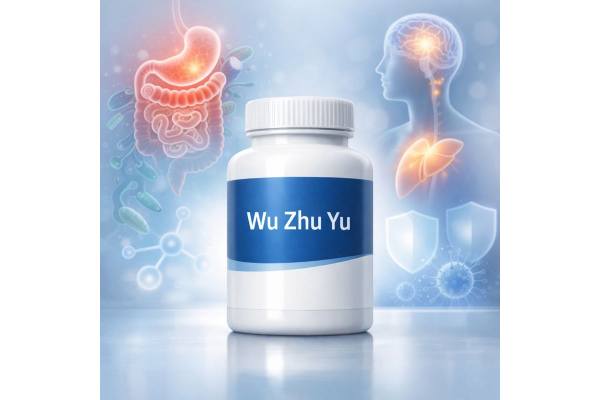
Wu Zhu Yu is the traditional name for the dried, nearly ripe fruit of Tetradium ruticarpum (often still labeled Evodia rutaecarpa). In classical herbal practice it is known for a distinctive “warming” profile: sharp, aromatic, and intensely bitter—used when cold patterns show up as nausea, retching, crampy abdominal pain, and loose stools that worsen with cold food or cold weather. Modern lab work has focused on its alkaloids (such as evodiamine and rutaecarpine), which help explain why Wu Zhu Yu can influence gut motility, pain signaling, and vascular tone.
Because it is potent and mildly toxic at higher doses, this is not an herb for casual, daily “wellness” use. The best results come from using the right form, a conservative dose, and a clear goal—while respecting interactions and who should avoid it.
Essential Insights for Wu Zhu Yu
- May help calm nausea and counterflow (retching) when symptoms fit a “cold stomach” pattern.
- Often used for cold-type abdominal pain and diarrhea, especially when warmth reliably improves symptoms.
- Typical adult range is about 2–5 g/day of dried fruit in decoction; higher ranges should be clinician-guided.
- Can irritate the stomach and may stress the heart or liver at excessive doses or in unsuitable individuals.
- Avoid during pregnancy, with significant heart rhythm issues, or if you have active liver disease unless supervised.
Table of Contents
- What is Wu Zhu Yu?
- What does Wu Zhu Yu do in the body?
- How do people use Wu Zhu Yu?
- How much Wu Zhu Yu should you take?
- Side effects and who should avoid it
- How strong is the evidence?
What is Wu Zhu Yu?
Wu Zhu Yu refers to the dried, nearly ripe fruit of Tetradium ruticarpum (Rutaceae). You may also see older names on labels—Evodia rutaecarpa or “Evodia fruit”—because the herb’s historical and commercial naming has lagged behind botanical updates. In traditional East Asian practice, Wu Zhu Yu is categorized as a “hot” (warming) herb with a strong, pungent-bitter character. That matters because its classic uses are not based only on a symptom (like “nausea”), but on a pattern: nausea that tends to feel better with warmth, worse with cold drinks, and accompanied by cold hands and feet, watery stools, or a dull, cramping belly ache.
From a chemistry perspective, Wu Zhu Yu is best known for alkaloids—especially evodiamine, rutaecarpine, and dehydroevodiamine—along with limonoids, volatile oils, and other constituents. These compounds help explain why the herb can feel “strong” even at small doses: it has noticeable effects on the gastrointestinal tract, pain pathways, and vascular signaling in preclinical models.
A practical point for buyers: “Wu Zhu Yu” products vary widely. Some are whole-fruit slices intended for decoction (simmering). Others are powders or concentrated extracts. Since the active compounds are not evenly distributed across all parts of the fruit and can be altered by processing, two products with the same front-label name can behave differently.
Finally, potency goes both ways. Traditional texts describe Wu Zhu Yu as effective but harsh if misused, and modern research has reinforced the idea that it can be mildly toxic at high or inappropriate doses. The safest mindset is to treat it like a targeted tool—not a daily tonic.
What does Wu Zhu Yu do in the body?
Wu Zhu Yu’s reputation centers on three clusters of effects: calming counterflow (nausea and retching), warming and easing cold-type pain, and supporting “yang” functions that relate to circulation and digestive resilience. Translating that into modern terms, its constituents appear to influence gut motility, sensory signaling, inflammation chemistry, and vascular tone.
For nausea and retching, the most useful way to think about Wu Zhu Yu is “direction and tone.” In traditional terms, it helps the stomach’s “qi” descend rather than rebel upward. Practically, that maps onto a pattern where nausea is linked to cold, weakness, or spasm-like discomfort rather than infectious gastroenteritis or food poisoning. When the stomach is irritated and hypersensitive, small amounts of a warming aromatic herb can shift sensation and motility—although it can also worsen symptoms if the person is already heat-sensitive or inflamed.
For pain, Wu Zhu Yu is often described as dispersing cold and relieving constraint. People who respond best typically describe pain that is dull, crampy, and improved by heat (hot water bottle, warm meals, warm showers). This includes some headache presentations where cold exposure, tight shoulders, and nausea travel together. In these cases, the “advantage” is not just analgesia; it is pattern-matching—using warmth and directional support rather than only blocking pain.
For circulation and cardiovascular signaling, the conversation needs extra caution. Certain alkaloids in Wu Zhu Yu have been studied for their vascular and cardiac actions in preclinical settings. That can sound appealing (“supports circulation”), but it also explains why overdosing or using it in the wrong person may trigger palpitations, blood pressure shifts, or rhythm vulnerability. In other words, the same class of activity can be beneficial in one context and risky in another.
A final property worth noting is processing. Traditional preparation methods (including washing or processing with other herbs) are used to reduce harshness and improve tolerability. Modern studies of toxicity-reduction strategies have echoed that the way Wu Zhu Yu is prepared can meaningfully change how the body reacts to it.
How do people use Wu Zhu Yu?
Most people encounter Wu Zhu Yu in one of three ways: as part of a formula prescribed by a trained clinician, as a simple decoction ingredient, or as a capsule/powder extract. The best option depends on your goal and how sensitive you are to strong, warming herbs.
1) Formula use (most common in practice)
Wu Zhu Yu is traditionally paired with other herbs that buffer harshness and steer it toward specific outcomes (for example, warming the middle, stopping vomiting, or addressing cold-type headache patterns). The “advantage” of formula use is that it reduces the risk of taking an overly hot, irritating herb in isolation. It also helps tailor the outcome: nausea-focused formulas often differ from diarrhea-focused or headache-focused ones.
2) Decoction (simmered tea)
Decoction is the classic method for raw fruit material. It matters because whole-herb decoction extracts a different profile than alcohol tinctures or high-concentration powders. For people using Wu Zhu Yu for cold-type nausea or abdominal pain, a decoction is often more controllable: you can start low, observe response, and stop quickly if it feels wrong.
A practical approach:
- Use measured grams, not a “pinch.”
- Simmer gently and keep the first trial dose modest.
- Pair with food if you are prone to stomach irritation (unless a clinician has directed otherwise).
3) Capsules, powders, and extracts
These are convenient but easy to overdo. If a label says “10:1 extract, 500 mg,” that could correspond to roughly 5 g of crude herb—already near the upper end of common traditional daily ranges. Look for products that specify extraction ratio, serving size, and ideally some marker of identity testing.
When it fits best
Wu Zhu Yu tends to make the most sense when:
- Symptoms improve with warmth and worsen with cold.
- Nausea is linked with cold belly discomfort, low appetite, or loose stools.
- You want short-term, targeted use rather than continuous supplementation.
If you have heart rhythm issues, heat signs (acid reflux with burning, red face, thirst, constipation), or you are pregnant, this is not a self-experiment herb.
How much Wu Zhu Yu should you take?
Dosing Wu Zhu Yu well is less about pushing higher amounts and more about matching the smallest effective dose to the right pattern. Because the herb is strong and can be irritating, conservative dosing is a genuine advantage.
Typical adult daily range (traditional crude herb)
Many traditional references and modern summaries describe a common range around 2–5 g per day of dried fruit when used internally, usually divided into one to two doses in decoction or included within a multi-herb formula. Some traditions list higher ranges, but those are generally under professional supervision and often paired with protective or harmonizing herbs.
How to start (self-directed, conservative approach)
If you and your clinician agree Wu Zhu Yu is appropriate, a cautious ramp can look like:
- Start at the low end (for example, 1–2 g/day crude herb equivalent) for 1–3 days.
- Increase only if you see a clear benefit and no stomach burning, agitation, palpitations, or headache worsening.
- Stop promptly if you feel “overheated,” jittery, nauseated in a new way, or unusually restless.
Extract dosing (crude-herb equivalents matter)
Extract labels are where people get into trouble. Use this rule of thumb:
- Crude-equivalent = extract amount × extraction ratio.
Example: 300 mg of a 10:1 extract ≈ 3,000 mg (3 g) crude equivalent.
If the product does not state an extraction ratio or standardization, you cannot reliably compare it to traditional gram dosing.
Timing and duration
Wu Zhu Yu is often used short-term:
- For acute cold-type nausea: days, not months.
- For recurrent patterns (such as cold-triggered headache/nausea): often in cycles or as-needed within a broader plan.
Avoid treating it like a daily stimulant or metabolism supplement. Long-term use increases the odds of irritation and makes it harder to notice early adverse signs.
Quality and identity checks
Choose products with clear botanical identity (Tetradium ruticarpum), part used (fruit), and testing for contaminants. Because dosage is narrow and the herb is potent, quality control matters more than it does for gentle food-like supplements.
Side effects and who should avoid it
Wu Zhu Yu’s side effects are usually dose-related and pattern-related: the wrong person can feel worse even at modest doses, while the right person may feel better quickly at low doses. The most common problems involve the stomach, nervous system sensations, and the cardiovascular system.
Common side effects
- Stomach irritation: burning, nausea that feels sharper rather than calmer, reflux flare, or abdominal discomfort.
- Overheating sensations: dry mouth, agitation, facial flushing, or feeling “wired.”
- Headache shift: some people feel a temporary worsening if the herb is too hot for their pattern.
- Sleep disruption: particularly if taken late in the day or at excessive dose.
Higher-risk concerns (take seriously)
- Palpitations or rhythm sensitivity: Wu Zhu Yu’s alkaloids can influence cardiac signaling. If you notice pounding heartbeat, skipped beats, chest tightness, or unusual shortness of breath, stop and seek medical advice.
- Liver strain and toxicity risk: preclinical and safety-focused research suggests overdose and poor fit can raise toxicity concerns. This is one reason processing and conservative dosing matter.
- Kidney stress at high dose: toxicity work has raised concern when doses greatly exceed typical clinical ranges.
Who should avoid Wu Zhu Yu (unless specifically supervised)
- Pregnant or trying to conceive: traditional and safety sources caution against use due to uterine and toxicity concerns.
- Breastfeeding: avoid unless a clinician experienced with the herb advises otherwise.
- Known heart rhythm disorders or significant cardiac disease.
- Active liver disease or unexplained elevated liver enzymes.
- Heat-sign patterns: burning reflux, persistent thirst, constipation, mouth sores, or a “hot” inflammatory presentation.
Medication interaction cautions
Because Wu Zhu Yu contains compounds that can influence metabolic enzymes and transporters in the liver, treat it as interaction-relevant—especially if you take:
- Drugs with narrow therapeutic windows (where small level changes matter).
- Stimulants, antiarrhythmics, or multiple blood pressure medications.
- High-dose acetaminophen products or frequent acetaminophen use, given mechanistic concerns around liver metabolism pathways.
If you take prescription medications, the safest path is clinician-guided use with a clear plan and a short trial window.
How strong is the evidence?
Wu Zhu Yu sits in a familiar place for many traditional botanicals: long history of patterned use, strong preclinical pharmacology, and a smaller (but growing) body of modern safety and mechanism research—while high-quality, condition-specific clinical trials remain limited.
What the evidence supports best
- Mechanistic plausibility: Alkaloids and other constituents have well-described biological activity in lab and animal models, including effects on inflammation signaling, pain perception pathways, and gastrointestinal function. This supports the traditional “antiemetic, analgesic, warming” narrative without proving it works for every symptom in real-world humans.
- Safety signals: Modern research has not treated Wu Zhu Yu as benign. Safety-oriented studies emphasize that overdose and poor pattern fit can create cardiac, liver, or kidney risks. This is clinically useful evidence because it guides how to use the herb more responsibly.
Where evidence is weaker
- Clear, standardized dosing for specific diagnoses: Many products vary in potency, and many traditional uses rely on formulas rather than single-herb dosing. That makes it harder to translate “works in a formula for a pattern” into “take X mg for condition Y.”
- Long-term outcomes: Wu Zhu Yu is generally used short-term. There is less clarity about long-term supplementation safety, especially with concentrated extracts.
How to judge a Wu Zhu Yu claim
Use these checkpoints:
- Does the claim match traditional pattern use? If not, be skeptical. “Metabolism booster” marketing is rarely aligned with its core profile and can push unsafe dosing.
- Is the dose reasonable in crude-herb equivalents? If a label implies crude-equivalents far above the typical 2–5 g/day range, risk rises quickly.
- Is it a single herb or a formula? Many classic outcomes rely on the balancing effect of companion herbs.
- Does the claim ignore contraindications? Any responsible discussion should mention pregnancy avoidance and cardiotoxicity risk with misuse.
A useful way to think about Wu Zhu Yu is that it can be high-value when correctly targeted, but it is not a general-purpose supplement. If you want the benefits with fewer downsides, consider professional guidance, a short trial, and careful attention to how your body responds in the first 48–72 hours.
References
- Traditional Chinese medicine Euodiae Fructus: botany, traditional use, phytochemistry, pharmacology, toxicity and quality control 2023 (Systematic Review)
- Euodiae Fructus: a review of botany, application, processing, phytochemistry, quality control, pharmacology, and toxicology 2025 (Review)
- Potential cardiotoxicity induced by Euodiae Fructus: In vivo and in vitro experiments and untargeted metabolomics research 2022 (Preclinical Safety Study)
- Toxicity evaluation of processing Evodiae fructus based on intestinal microbiota 2024 (Safety Study)
- Exploring the biological tissue toxicity and related toxic components of Euodiae Fructus through the multi-tissue spectrum-toxicity relationship 2025 (Safety Study)
Disclaimer
This article is for educational purposes only and does not provide medical advice, diagnosis, or treatment. Wu Zhu Yu (Euodiae Fructus) is a potent traditional herb with known toxicity concerns when misused, and it may interact with medications or worsen certain health conditions. Do not use it during pregnancy or as a substitute for professional care. If you have a medical condition, take prescription drugs, or develop symptoms such as palpitations, chest discomfort, severe stomach irritation, or signs of an allergic reaction, stop use and seek medical guidance promptly. Always consult a qualified healthcare professional before starting any new supplement, especially one with narrow dosing margins.
If you found this guide helpful, please consider sharing it on Facebook, X (formerly Twitter), or any platform you prefer, and follow us on social media. Your support through sharing helps our team continue creating practical, high-quality health content.