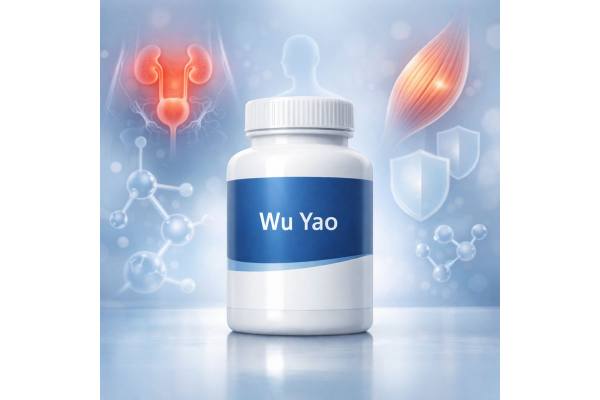
Wu Yao is the traditional name for Radix Linderae—the aromatic root tuber of Lindera aggregata (family Lauraceae). In classical use, it is valued for one core theme: restoring smooth “flow” when cold and tension tighten the body. People most often reach for Wu Yao when discomfort feels crampy, gripping, or wandering—especially in the lower abdomen—along with patterns like frequent urination, cold-type menstrual pain, or bloating that eases with warmth.
Modern research adds context to that traditional picture. Wu Yao contains volatile oils, sesquiterpenoids, and alkaloids that are being studied for anti-inflammatory, analgesic, and smooth-muscle effects. The advantage is versatility: it can be used as a tea or decoction, as granules, or as a standardized extract—if you match the form to your goal and dose carefully. Because it is bioactive and aromatic, quality and interaction awareness matter. This guide explains what Wu Yao is, what it is realistically used for, how to take it, and when to avoid it.
Key Insights for Wu Yao
- May support comfort in crampy lower-abdominal pain patterns and cold-sensitive digestive tension.
- Often used for urinary frequency and “cold” bladder discomfort when combined appropriately.
- Typical decoction amount: 3–9 g/day dried root, simmered and taken in 1–2 servings.
- Can interact with certain medications through liver enzyme effects; review drugs first.
- Avoid if pregnant or breastfeeding, or if you have active reflux or ulcers that worsen with warming aromatics.
Table of Contents
- What is Wu Yao?
- What are Wu Yao’s most common uses?
- What compounds give Wu Yao its effects?
- How to choose a Wu Yao product
- How to use Wu Yao in practice
- How much Wu Yao per day?
- Side effects, interactions, and who should avoid
What is Wu Yao?
Wu Yao (乌药) refers to Radix Linderae, the dried root tuber of Lindera aggregata. It is an intensely aromatic herb with a warm nature in traditional use. If you have ever smelled freshly peeled ginger or a spicy laurel-like leaf, Wu Yao lives in that same “warming aroma” neighborhood—sharp, penetrating, and fast-moving.
In traditional East Asian herbal practice, Wu Yao is described as moving “qi” (functional energy) and relieving pain, especially when cold constriction is part of the story. Translating that into modern language: Wu Yao is typically chosen when discomfort feels like spasm, tightness, or a stuck sensation that improves with warmth or gentle movement. That is why it shows up in discussions of:
- Lower abdominal cramping or pressure
- Cold-type menstrual pain
- Groin or hernia-type discomfort patterns (non-emergency situations)
- Urinary frequency or discomfort associated with “cold” sensitivity
It also helps to know what Wu Yao is not, because name overlap and “common name marketing” can cause confusion:
- Wu Yao vs. schisandra: Wu Yao is Lindera aggregata root. Schisandra is Wu Wei Zi, a completely different plant and effect profile.
- Wu Yao vs. culinary “lindera” products: Some products use related Lindera species or different plant parts. For consistent results, you want the correct species and the correct part (root tuber).
- Wu Yao vs. a “warming tea blend”: Many formulas include warming aromatics. A blend may be soothing, but the Wu Yao content may be minimal or unclear.
A practical expectation matters: Wu Yao is not a one-ingredient solution for severe pelvic pain, urinary infection, kidney stones, appendicitis, or endometriosis flares. Those conditions can mimic “cramping” and “cold discomfort” but require medical evaluation. Wu Yao is best viewed as a supportive tool for patterns of mild-to-moderate discomfort that recur, feel tension-based, and respond to warmth.
What are Wu Yao’s most common uses?
Wu Yao’s most common uses make sense when you group them by the type of discomfort people are trying to change. The theme is not “treat a disease,” but “shift a pattern”—especially one that feels tight, cold, and crampy.
1) Lower abdominal cramping and cold-type pain
This is the classic lane. People describe a gripping sensation below the navel, sometimes radiating into the groin or low back, often worse in cold weather or after cold foods. A realistic goal is improved comfort and less frequent “spasm-like” episodes, not total elimination of all pain causes. If the pain is new, severe, or accompanied by fever, vomiting, or bleeding, treat that as urgent rather than self-treating.
2) Menstrual discomfort when cold sensitivity is present
Wu Yao is often discussed for dysmenorrhea patterns that improve with warmth: heating pad helps, cold drinks worsen cramps, and the lower abdomen feels tense. In practice, it is rarely used alone; it is paired with other herbs that address circulation, muscle relaxation, or underlying deficiency patterns. For a supplement user, that matters: a standalone Wu Yao product may feel helpful for “tightness,” but formula context often determines how complete the result feels.
3) Urinary frequency and “cold bladder” discomfort
Some people experience frequent urination without infection signs, paired with a feeling of cold in the lower abdomen or a tendency to wake to urinate when chilled. Traditional use frames Wu Yao as warming and moving, which can be supportive when cold sensitivity is part of the picture. It is not a substitute for evaluation if you have burning, fever, blood in urine, flank pain, or new urinary symptoms.
4) Digestive tension and bloating that improves with warmth
Wu Yao is aromatic and warming, which can be useful for bloating, fullness, or mild nausea that feels better with warm foods and worse with cold or greasy meals. Think of it as a “reset” herb for a stomach that tightens under stress or cold exposure.
Advantages compared with similar warming herbs
Wu Yao is often chosen when the goal is to combine:
- Warming comfort with movement (less “heavy heat,” more “mobilizing warmth”)
- Lower abdomen and urinary emphasis
- A sharper aromatic profile that some people feel quickly
The most useful mindset is targeted: pick one primary goal (cramps, urinary frequency pattern, or cold-bloating), test for 2–3 weeks, and adjust based on response and tolerance.
What compounds give Wu Yao its effects?
Wu Yao’s character comes from a mix of aromatic volatile oils and deeper, less “smell-forward” compounds. This matters because product type changes which compounds you actually get: a quick steeped tea emphasizes aroma, while a longer decoction and standardized extracts pull more of the heavier constituents.
Volatile oils: the fast aromatic layer
Wu Yao contains essential oil components that contribute to its strong scent and warming feel. Aromatic compounds often influence digestion and smooth muscle tone through sensory pathways—taste, smell, and gut nerve signaling. Practically, this is why Wu Yao is often taken warm and why people sometimes notice a “settling” effect soon after drinking it.
Sesquiterpenoids: the research spotlight
Modern reviews of Lindera aggregata highlight a large family of sesquiterpenoids (including lindenane-type compounds). These have been studied in preclinical research for anti-inflammatory, analgesic, and other bioactivities. For readers, the useful takeaway is not memorizing chemical names; it is understanding that Wu Yao is not just an aromatic comfort tea. It has constituents that can meaningfully interact with biology, which supports both its potential benefits and its interaction cautions.
Alkaloids and related compounds
Wu Yao also contains alkaloid-type compounds, including those used as quality markers in some standards. Alkaloids often have distinct physiological effects even at low concentrations, which again reinforces the “dose and quality matter” theme.
Smooth muscle and “spasm” logic
Many traditional uses point toward smooth-muscle patterns: uterine cramping, intestinal gripping, urinary urgency sensations. While human data for specific symptom relief is limited, the combination of aromatic effects, anti-inflammatory signaling, and plausible smooth-muscle modulation is coherent with those traditional targets.
Why processing and extraction change results
Two people can “take Wu Yao” and have different experiences because:
- Tea vs. decoction changes extraction depth.
- Granules are concentrated and can deliver a stronger dose per sip.
- Standardized extracts may emphasize particular compound families.
If you are sensitive to stimulants or strong aromatics, whole-herb tea at a lower dose often feels smoother. If your goal is consistent, repeatable effects, granules or a clearly labeled extract usually make dosing more predictable.
How to choose a Wu Yao product
Quality control is not a minor detail for Wu Yao. Because it is aromatic and chemically complex, poor-quality sourcing can mean weak results, and misidentification can mean you are not taking Wu Yao at all. A good buying approach focuses on identity, extraction transparency, and practical usability.
1) Confirm the correct identity on the label
Look for all three elements:
- Common name: Wu Yao
- Herbal name: Radix Linderae
- Botanical name: Lindera aggregata
If the product lists only “lindera” without species, treat it as ambiguous. Also confirm the plant part is root (or root tuber), not leaf.
2) Choose a format that matches your goal
- Dried root slices or chunks: best if you want a traditional decoction and flexible dosing.
- Granules: best for convenience and dose consistency. Many granules are concentrated, so the labeled gram amount may represent multiple grams of raw herb equivalent.
- Capsules: best if you dislike the taste, but confirm the extract type (whole herb powder vs. extract) so you know what “500 mg” actually represents.
- Tinctures: best for fast use, but alcohol content and extraction strength vary widely.
3) Prefer transparency over marketing
A strong label typically provides:
- Extract ratio (for example, 5:1) or raw herb equivalency
- Serving size in grams or milligrams
- Suggested daily maximum
- Batch testing or contaminant screening (heavy metals, pesticide residues)
4) Watch for hidden complexity in blends
Wu Yao is frequently sold inside “warming” or “menstrual comfort” blends. Blends can work well, but they make it harder to attribute effects. If you are new to Wu Yao, consider starting with a single-ingredient product for two weeks so you can learn how your body responds.
5) A note on aroma as a real quality clue
With Wu Yao, smell is not cosmetic. Fresh, properly stored material has a noticeable aromatic profile. If it smells flat, stale, or musty, potency may be compromised. Store it away from heat, light, and moisture to preserve volatile compounds.
A thoughtful product choice is half the outcome. Once you have a reliable form, the next step is using it in a way that protects your stomach and makes results trackable.
How to use Wu Yao in practice
Wu Yao works best when you treat it like a focused trial, not a vague daily habit. That means you pick one primary symptom pattern, choose a form that fits, and use timing and preparation methods that improve tolerability.
Option 1: Decoction for crampy discomfort
This is the most traditional method and often the most balanced.
How to prepare:
- Use the daily dose of dried Wu Yao (see dosage section).
- Add to 400–600 mL water.
- Simmer gently for 20–30 minutes (do not just steep like a delicate tea).
- Strain and drink in 1–2 servings, warm.
Helpful timing:
- For digestive tension: take warm after meals.
- For lower abdominal discomfort: take warm at the first sign of tightness.
Option 2: Granules for convenience and consistency
Granules are useful if you want predictable dosing and do not want to simmer herbs.
Use tips:
- Dissolve in warm water, not cold.
- Take after food if you are prone to nausea.
- Pay attention to raw-herb equivalency. A small gram amount of granules can represent several grams of raw herb.
Option 3: Capsules for taste-free use
Capsules can be effective, but only if you understand what you are getting:
- Whole herb powder capsules are usually gentler.
- Extract capsules may feel stronger per milligram and may be more likely to cause reflux in sensitive people.
Practical pairing strategies
These are not prescriptions, just usability strategies that often improve the experience:
- If you run cold and crampy: pair with warmth (warm meals, avoiding iced drinks).
- If you get bloated under stress: pair with slow breathing and warm liquids after meals.
- If urinary frequency worsens with cold exposure: emphasize warmth in the lower abdomen and feet.
Common mistakes that reduce results
- Taking it on an empty stomach, then stopping due to nausea.
- Using it for burning urinary symptoms that are more consistent with infection.
- Expecting it to fix severe menstrual pain without evaluating underlying causes.
- Stacking multiple warming herbs and supplements at once, creating reflux and irritability.
A good trial lasts 2–3 weeks. If you notice a clear reduction in cramp intensity or frequency, you can continue. If you feel no shift, it may not match your pattern, or the form and dose may need adjustment.
How much Wu Yao per day?
Wu Yao dosing depends on form. Traditional dried herb dosing is measured in grams per day, while granules and extracts can represent concentrated equivalents. The safest approach is to start low, prioritize warmth and timing, and increase only if you tolerate it well.
Typical adult dosing for dried Wu Yao (decoction)
A commonly cited traditional range is:
- 3–9 g per day of dried Wu Yao root tuber, simmered as a decoction
How to split:
- Mild digestive tension: 3–6 g/day, once daily after a meal
- Stronger cramp pattern: 6–9 g/day, split into morning and late afternoon or early evening
If you are new to aromatic warming herbs, start at 3 g/day for 3–4 days, then adjust.
Granules and “raw herb equivalent”
Granules vary by manufacturer. A useful rule is:
- Follow the label for granule grams per day, and note the stated raw-herb equivalency.
For example, if 1 g of granules equals 5 g raw herb, then 1–2 g of granules may already put you in the traditional daily range. This is exactly why granules can feel “strong” compared with tea.
Extracts and capsules
Extracts are not standardized across brands. If you are using capsules:
- Start around 500–1,000 mg/day if the product is whole-herb powder
- If it is an extract, start at the lowest labeled dose and increase only after a week of good tolerance
Timing: when to take Wu Yao
- With or after meals is often best for stomach comfort.
- Warm liquids improve tolerability and align with its warming profile.
- Avoid taking it right before lying down if you are reflux-prone.
Duration and cycling
For a symptom-focused trial:
- Use daily for 10–21 days, tracking one primary outcome (cramp intensity, urinary frequency episodes, or post-meal bloating severity).
For intermittent use:
- Some people reserve Wu Yao for “flare windows” triggered by cold exposure, travel, or stress.
If you need escalating doses to get the same effect, that is usually a cue to reassess the root problem rather than pushing dose higher.
Side effects, interactions, and who should avoid
Wu Yao is often tolerated, but its aromatic chemistry can create predictable side effects—especially in sensitive stomachs and in people taking medications affected by liver enzymes.
Common side effects
Most side effects are dose-related:
- Heartburn or reflux flare, especially if taken on an empty stomach
- Nausea or stomach warmth that feels uncomfortable
- Mild dizziness or headache in sensitive users
- Dry mouth or thirst in some people (aromatics can feel drying)
If side effects appear, first adjust the “how,” not just the “what”:
- Take it with food.
- Lower the dose for 5–7 days.
- Switch from concentrated extract to whole herb tea or lower-dose granules.
Medication interaction risk
Wu Yao contains compounds that may influence drug metabolism. One well-studied constituent, linderane, has been shown to affect CYP2C9 activity in laboratory research, which is relevant because CYP2C9 is involved in metabolizing several common medications. This does not automatically mean every Wu Yao product causes clinically significant interactions, but it does justify caution.
Be especially careful if you take:
- Anticoagulants (such as warfarin) or antiplatelet drugs
- Certain diabetes medications
- Some anti-inflammatory drugs and other medicines that rely on stable metabolism
- Any drug where small blood-level changes matter
If you take prescription medications daily, treat Wu Yao as “requires professional review,” especially if you plan to use extracts rather than traditional decoctions.
Who should avoid Wu Yao unless medically guided
- Pregnant or breastfeeding individuals
- People with active ulcers, uncontrolled GERD, or significant gastritis
- Anyone with a known allergy to Lauraceae-family botanicals or unexplained reactions to aromatic herbs
- Children, unless supervised by a clinician trained in pediatric herbal care
When to seek medical care instead of self-treating
- Severe abdominal or pelvic pain, fever, vomiting, fainting, or bleeding
- Burning urination, fever, flank pain, or blood in urine
- New urinary symptoms in older adults, or any symptoms with unexplained weight loss
Wu Yao can be a valuable support herb for the right pattern, but safety is mostly about context: dose, stomach sensitivity, and medication compatibility.
References
- Traditional uses, phytochemistry, pharmacology, processing methods and quality control of Lindera aggregata (Sims) Kosterm: A critical review – PubMed 2024 (Review)
- A review on the chemical constituents and pharmacological efficacies of Lindera aggregata (Sims) Kosterm – PMC 2023 (Review)
- Characterization and quantification of the phytochemical constituents and anti-inflammatory properties of Lindera aggregata – RSC Advances (RSC Publishing) DOI:10.1039/D4RA05643D 2024
- Mechanism-based inactivation of CYP2C9 by linderane – PubMed 2015
Disclaimer
This article is for educational purposes only and does not provide medical advice, diagnosis, or treatment. Herbal materials sold as Wu Yao, Radix Linderae, or Lindera aggregata can vary in species identity, processing, and concentration, which can change both effects and risks. Wu Yao may interact with medications through effects on drug-metabolizing enzymes, and it may aggravate reflux or ulcer symptoms in sensitive individuals. If you are pregnant or breastfeeding, have a medical condition, or take any prescription or over-the-counter medications, consult a qualified healthcare professional or pharmacist before using Wu Yao. Seek urgent medical care for severe pain, fever, bleeding, dehydration, or symptoms suggestive of infection or a medical emergency.
If you found this guide helpful, please share it on Facebook, X (formerly Twitter), or any platform you prefer, and follow us on social media. Your support through sharing helps our team continue producing quality content.