Buerger’s disease, also called thromboangiitis obliterans, is a rare inflammatory condition that blocks small and medium blood vessels—most often in the hands and feet. Unlike atherosclerosis (cholesterol plaque disease), Buerger’s disease is tightly linked to tobacco and nicotine exposure, and it tends to affect younger adults who otherwise have few traditional cardiovascular risk factors. The disease can begin with subtle warning signs—cold, painful fingers or toes, or cramping with walking—then progress to rest pain, ulcers, and even gangrene if blood flow continues to fall. That arc is frightening, but it also creates a clear opportunity: stopping tobacco and nicotine is the single most powerful intervention, and early diagnosis can preserve tissue and function. This article explains how the disease works, who is most at risk, how doctors confirm it, and what a practical care plan looks like.
Table of Contents
- What Buerger’s disease is
- What causes the vessel blockage
- Risk factors and common triggers
- Symptoms and serious complications
- How it is diagnosed and ruled out
- Treatment and long-term management
What Buerger’s disease is
Buerger’s disease is a non-atherosclerotic inflammatory disease of blood vessels that causes segments of small and medium arteries and veins to become inflamed, develop clots, and gradually narrow or close. It most often affects vessels below the knee and elbow, which is why symptoms tend to appear in the feet, toes, hands, and fingers rather than in the thighs or upper arms.
A useful way to understand the condition is to separate where the problem happens from what the problem is:
- Where: distal limb arteries and veins, often in multiple segments, usually on both sides over time.
- What: inflammatory injury inside the vessel plus clot formation, followed by scarring that reduces blood flow.
Because the blockages occur in smaller, more distant vessels, the body has fewer “backup routes” to deliver oxygen. As circulation drops, tissues begin to suffer, especially at the tips of toes and fingers where blood supply is already at its thinnest.
Buerger’s disease also has a distinctive relationship with vasospasm. Many patients experience episodes where arteries clamp down temporarily—similar to Raynaud phenomenon—causing fingers or toes to turn white or blue and become painful in cold weather or stress. Over time, repeated spasm plus structural blockage can magnify ischemia (low blood flow).
Although it is often described as a disease of the arteries, veins can be involved too. A classic clue is migratory superficial thrombophlebitis—tender, rope-like inflamed veins that appear in one area, improve, and then show up elsewhere. That pattern hints that the condition is not “just poor circulation,” but a systemic vessel inflammation triggered by an exposure.
The disease course varies. Some people stabilize after complete tobacco and nicotine cessation. Others cycle through flare-ups, particularly if they continue smoking or use nicotine in other forms. The most important practical point is that Buerger’s disease is not a mystery that medicine simply watches unfold. It is a condition where removing the main trigger can dramatically change the trajectory, especially before tissue damage becomes irreversible.
What causes the vessel blockage
The exact root cause of Buerger’s disease is still not fully mapped, but clinicians and researchers agree on one central fact: tobacco and nicotine exposure are essential drivers in most cases. The disease is strongly associated with cigarette smoking, yet it can also occur with other forms of tobacco use and, in some individuals, may be influenced by additional exposures.
What is happening inside the vessels
Buerger’s disease appears to involve a mix of:
- Inflammation of the vessel wall that recruits immune cells and disrupts normal lining function
- Clot formation within the vessel (thrombus) that further blocks flow
- Organization and scarring of the clot that turns a temporary blockage into a lasting narrowing
This sequence explains why symptoms can fluctuate early (spasm and partial blockage) and then become persistent later (fixed scarring and reduced perfusion).
Why tobacco and nicotine matter so much
Tobacco smoke contains thousands of chemicals that can irritate and injure the endothelium (the vessel’s inner lining). Nicotine itself can also:
- Increase sympathetic tone and promote vasoconstriction
- Promote platelet activation in susceptible settings
- Impair microvascular perfusion in distal tissues
In Buerger’s disease, the relationship is so strong that even “light smoking” can be enough to maintain disease activity. Many patients describe a pattern where symptoms ease after quitting and return quickly after relapse.
A key nuance: nicotine replacement is complicated
In many cardiovascular conditions, nicotine replacement therapy is an acceptable bridge to help people quit smoking. In Buerger’s disease, clinicians take a more cautious approach because the disease appears linked not only to smoke but to nicotine exposure itself. Some specialists prefer non-nicotine quit aids as first-line options. Others may still consider nicotine replacement in selected cases if it is the only realistic path away from smoking, but they monitor closely and discuss the uncertainty upfront. The common ground is that continued smoking is the worst option.
Other exposures and contributing factors
Some people with a Buerger-like pattern report additional triggers, such as heavy cannabis use, especially when combined with tobacco. There are also rare cases where a similar vessel pattern appears with severe cold injury or repeated trauma to the extremities, but these are best viewed as amplifiers rather than primary causes.
The most practical conclusion is also the clearest: whatever the deeper biology, ongoing tobacco and nicotine exposure fuels the vessel injury. The disease is one of the few in vascular medicine where a single behavioral change can be as important as any procedure.
Risk factors and common triggers
Buerger’s disease has a recognizable risk profile. Clinicians often suspect it when a person has significant limb ischemia but does not fit the typical atherosclerosis pattern.
The main risk factors
- Tobacco use in any form
- Cigarettes are the most common association, but cigars, pipes, smokeless tobacco, and other nicotine delivery products can also be relevant.
- Age under 45 years at onset
- Many diagnostic frameworks emphasize onset in younger adults, although older onset can occur.
- Male sex
- Historically more common in men, though sex distribution can vary by region and changing smoking patterns.
- High-intensity exposure and early start
- Long smoking history is common, but even shorter exposure can be sufficient in susceptible individuals.
- Possible genetic and immune susceptibility
- Not everyone who smokes develops Buerger’s disease, suggesting a vulnerability in immune response or vascular biology. Family clustering is uncommon but reported.
Triggers that can worsen symptoms or precipitate flares
Buerger’s disease lives at the intersection of structural blockage and vasospasm. Certain exposures push both in the wrong direction:
- Cold exposure
- Cold triggers vasoconstriction and can tip marginal circulation into pain or discoloration.
- Minor trauma
- Small cuts, tight shoes, aggressive nail trimming, and friction blisters matter because tissue with low blood flow heals slowly and becomes infected more easily.
- Dehydration and stimulant use
- Dehydration thickens blood and can worsen perfusion; stimulants may increase vasoconstriction.
- Infection
- Local infections increase metabolic demand in tissue that already has limited oxygen supply.
- Continued nicotine exposure
- Relapse smoking is the most common and most consequential trigger.
How the disease typically progresses
Many people move through a sequence:
- Early ischemia and spasm
- Cold sensitivity, color changes, numbness, tingling, or burning pain in fingers and toes.
- Exertional pain
- Foot arch pain or calf cramping with walking; hand fatigue with repetitive use.
- Rest pain
- Persistent pain at night or when the limb is elevated, often relieved by dangling the foot.
- Tissue loss
- Non-healing ulcers on toes or fingertips, followed by gangrene if circulation cannot meet tissue needs.
Progression is not inevitable. People who stop tobacco and nicotine completely often slow or halt the disease. Those who continue exposure are more likely to develop recurrent ischemia and a higher risk of amputation.
A practical insight is that Buerger’s disease punishes “almost quitting.” Cutting down helps health in many conditions, but in this one, even low-level exposure can be enough to keep inflammation active. The safest target is complete abstinence from tobacco and nicotine, supported by a structured quit plan rather than willpower alone.
Symptoms and serious complications
Buerger’s disease often announces itself through the extremities. Symptoms can be intermittent at first and then become persistent as vessels narrow further.
Early symptoms people often dismiss
- Cold, numb, or tingling fingers and toes
- Often described as “poor circulation,” especially in winter.
- Color changes with cold or stress
- White or blue discoloration followed by red throbbing as blood returns.
- Burning pain in the forefoot or toes
- Pain may feel disproportionate to exam findings early on.
- Exercise-related pain (claudication)
- In the legs, cramping in the foot arch, calf, or sometimes the thigh; in the arms, fatigue or pain with gripping and repetitive motion.
Signs that suggest advancing ischemia
As blood flow becomes critically low, symptoms shift from episodic to constant:
- Rest pain
- Often worse at night, especially with the leg elevated. People may sleep with the foot hanging down to reduce pain, which is a classic but dangerous adaptation.
- Cold, pale, or shiny skin
- Skin may look thin, hair growth decreases, and nails can become brittle.
- Slow-healing cuts
- Minor injuries that used to heal in days can linger for weeks.
- Ulcers
- Small but deep sores at toe tips, between toes, or on fingertips.
Vein involvement clues
- Migratory superficial thrombophlebitis
- Tender, cord-like veins that inflame in one area and then appear elsewhere can be an important clue that the problem is inflammatory and thrombotic, not purely mechanical.
Serious complications
- Tissue necrosis and gangrene
- When oxygen delivery cannot meet baseline needs, tissue dies. Gangrene may be dry (mummified tissue) or wet (infected), and wet gangrene is an emergency.
- Infection and osteomyelitis
- Poor perfusion limits immune response and antibiotic delivery. Ulcers can extend to bone, making treatment longer and more complex.
- Amputation
- Amputation is not inevitable, but risk rises sharply when ischemia persists and tobacco or nicotine exposure continues. The goal of treatment is to prevent reaching this stage.
- Chronic pain and disability
- Persistent ischemic pain disrupts sleep, mood, and daily function. Even after wounds heal, neuropathic pain can linger.
When symptoms may indicate a different diagnosis
Not every painful limb in a smoker is Buerger’s disease. Clinicians become cautious when there are features more typical of atherosclerosis or autoimmune vasculitis, such as:
- Prominent diabetes, high cholesterol, or long-standing hypertension with more proximal blockages
- Kidney disease, rash, joint swelling, or systemic inflammatory symptoms
- Asymmetric disease isolated to one limb without typical distal pattern
The most important message for patients is timing: rest pain, ulcers, and new black or gray discoloration are not “wait and see” problems. They deserve urgent evaluation because tissue loss can accelerate quickly once circulation falls below a critical threshold.
How it is diagnosed and ruled out
Buerger’s disease is diagnosed by combining clinical pattern, testing, and careful exclusion of look-alike conditions. There is no single blood test that confirms it. Instead, clinicians ask, “Does this look like distal inflammatory thrombosis in a tobacco-exposed person, and have we ruled out more common causes?”
The clinical pattern that raises suspicion
Clinicians often look for:
- Onset typically before age 45
- Current or recent tobacco or nicotine exposure
- Distal ischemia in two or more limbs (feet, toes, hands, fingers)
- Episodes of Raynaud-like color change
- Migratory superficial thrombophlebitis
- Lack of major atherosclerotic risk factors, or disease severity out of proportion to those risks
Physical exam findings
Common findings include:
- Reduced or absent pulses in the feet or hands, often with preserved more proximal pulses
- Cool extremities and delayed capillary refill
- Small painful ulcers on toes or fingertips
- Skin and nail changes consistent with chronic low flow
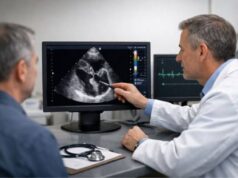
Noninvasive testing
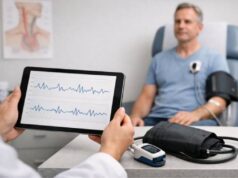
Testing usually starts with measures of perfusion:
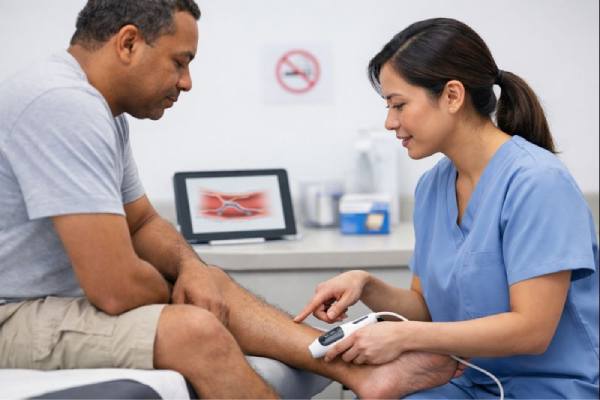
- Ankle-brachial index
- This may be normal if disease is very distal, which is why clinicians often add:
- Toe pressures and toe-brachial index
- Toe measurements can reveal severe distal ischemia when ankle pressures look acceptable.
- Segmental pressures and pulse volume recordings
- These can show where flow drops off.
- Ultrasound
- Duplex ultrasound may identify more proximal disease, but in Buerger’s disease the key lesions are often too distal to map fully with routine ultrasound.
Angiography and what it typically shows
When diagnosis is uncertain or intervention is being considered, angiography can be highly informative. Classic features include:
- Segmental occlusions in small and medium distal arteries
- Relative sparing of the larger proximal vessels
- Prominent collateral networks, sometimes described as corkscrew-like
- Involvement that looks “patchy,” consistent with an inflammatory segmental process
Ruling out other diagnoses
Because treatment and prognosis differ, clinicians often order labs and assessments to exclude:
- Atherosclerotic peripheral artery disease as the primary driver
- Autoimmune vasculitis and connective tissue disease
- Hypercoagulable states when presentation is atypical
- Embolic disease from the heart or proximal arteries
- Diabetes-related microvascular disease if diabetes is present
Why the exclusion step matters
If a person is labeled with Buerger’s disease incorrectly, they may miss treatments for other causes of limb ischemia. Conversely, if the diagnosis is missed, tobacco and nicotine exposure may continue and tissue loss can progress. A good diagnostic process is both strict and practical: confirm the characteristic distal pattern, document perfusion deficits, and actively rule out common mimics before committing someone to a lifelong management plan.
Treatment and long-term management
Treatment for Buerger’s disease has one non-negotiable center: complete cessation of tobacco and nicotine exposure. Everything else—medications, procedures, wound care—works better when the trigger is removed, and many options work poorly without it.
The most effective intervention: stop tobacco and nicotine
A realistic quit plan often combines:
- A firm stop date and removal of smoking cues at home and work
- Behavioral support (counseling, quit programs, structured follow-up)
- Non-nicotine medications when appropriate, such as varenicline or bupropion
- Planning for relapse triggers (stress, alcohol, social smoking)
Because nicotine may contribute to disease activity, many clinicians prefer non-nicotine cessation aids when feasible. If nicotine replacement is used as a bridge, it should be discussed carefully and monitored closely.
Medications that may help symptoms and tissue perfusion
No medication reliably “cures” Buerger’s disease, but therapies may support circulation and comfort:
- Antiplatelet therapy
- Often used to reduce thrombotic tendency, especially in ischemic limb disease.
- Vasodilators
- For vasospasm or Raynaud-like symptoms, clinicians may consider calcium channel blockers or other vasodilators depending on blood pressure and tolerance.
- Prostacyclin analogs
- In severe ischemia, intravenous prostacyclin-type therapy can improve pain and help ulcer healing in selected patients.
- Pain control
- Ischemic pain can be intense. A balanced plan may include acetaminophen, carefully selected anti-inflammatory options when safe, neuropathic pain agents, and short-term stronger analgesia when necessary.
Why surgery and standard stents often do not fit well
Revascularization is challenging because the disease targets small distal arteries that may lack a usable “landing zone” for bypass grafts or stents. Some centers attempt endovascular approaches in select anatomies, but results vary. This is why preventing progression through cessation and early care is so important.
Wound care and limb preservation
If ulcers are present, care becomes urgent and practical:
- Protective footwear and off-loading pressure points
- Meticulous wound care to control bacteria and moisture balance
- Prompt treatment of cellulitis and deeper infection
- Vascular and wound team coordination, especially if tissue loss is advancing
Emerging and specialized options
Some centers use advanced approaches for refractory cases, such as:
- Sympathectomy or neuromodulation strategies for severe pain in selected patients
- Therapeutic angiogenesis or cell-based therapies in research settings
- Structured exercise rehabilitation once ulcers and rest pain are controlled
When to seek urgent care
Seek urgent evaluation for:
- New rest pain that persists for hours
- Rapidly worsening discoloration, coldness, or numbness in a digit
- Any ulcer, especially if there is drainage, foul odor, fever, or spreading redness
- Black, gray, or dusky tissue suggesting gangrene
Long-term management is about protecting what you have: avoid cold exposure, prevent minor trauma, control infections early, and treat cessation as a medical therapy with ongoing support. In Buerger’s disease, the best outcomes often come from combining strict trigger removal with a proactive limb-preservation plan rather than waiting for crises to force decisions.
References
- 2024 ESC Guidelines for the management of peripheral arterial and aortic diseases 2024 (Guideline)
- 2024 ACC/AHA/AACVPR/APMA/ABC/SCAI/SVM/SVN/SVS/SIR/VESS Guideline for the Management of Lower Extremity Peripheral Artery Disease: A Report of the American College of Cardiology/American Heart Association Joint Committee on Clinical Practice Guidelines 2024 (Guideline)
- Treatment Options for Buerger Disease: A Systematic Review and Meta-Analysis of Outcomes 2025 (Systematic Review and Meta-Analysis)
- Therapeutic angiogenesis in Buerger’s disease: reviewing the treatment landscape 2022 (Review)
- A systematic review and meta-analysis of early and late outcomes after endovascular angioplasty among patients with thromboangiitis obliterans and chronic limb ischemia 2023 (Systematic Review and Meta-Analysis)
Disclaimer
This article is for educational purposes only and does not provide medical advice, diagnosis, or treatment. Buerger’s disease can lead to severe limb ischemia, infection, and tissue loss, and it requires evaluation and follow-up by qualified clinicians. Seek urgent medical care for rest pain, rapidly worsening color change, new ulcers, fever with limb redness, or black or gray tissue. For personalized guidance on smoking and nicotine cessation, medication choices, wound care, and limb-salvage strategies, consult a licensed healthcare professional, ideally a vascular specialist.
If you found this article helpful, please share it on Facebook, X (formerly Twitter), or any platform you prefer, and follow us on social media. Your support through sharing helps our team continue producing quality content.