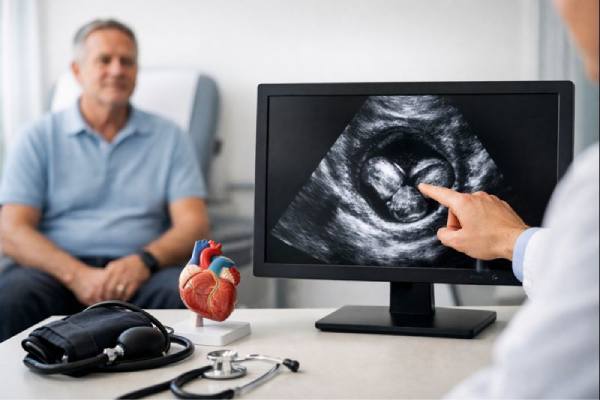
A bicuspid aortic valve is a common heart valve difference present from birth. Instead of three leaflets that open and close like a well-timed gate, the aortic valve has two. Many people feel completely well for years, but the altered valve shape can change blood flow patterns, increasing the chance of valve narrowing (aortic stenosis), valve leaking (aortic regurgitation), or enlargement of the first part of the aorta. The condition often shows up incidentally on an echocardiogram, or later when a murmur, shortness of breath, or chest pressure prompts testing. The encouraging news is that careful monitoring catches problems early, and modern medical, surgical, and transcatheter treatments can restore function and protect the aorta. This guide explains what is happening, what to watch for, and how care is tailored over time.
Table of Contents
- What bicuspid aortic valve means
- Why it happens and who is at risk
- Symptoms and possible complications
- How doctors diagnose and monitor it
- Treatments and procedures to expect
- Living well and when to seek urgent care
What bicuspid aortic valve means
The aortic valve sits between the left ventricle (the main pumping chamber) and the aorta (the body’s largest artery). Its job is simple: open fully when the heart squeezes to let blood out, then seal tightly to prevent backflow when the heart relaxes. In a bicuspid aortic valve, two valve leaflets (cusps) do this work instead of three.
That small structural difference can matter in three practical ways.
1) The valve may wear out earlier
With two cusps, the valve can be exposed to higher stress with each beat. Over time, calcium can build up and make the valve stiff and narrow. This is aortic stenosis. In other people, the valve does not seal evenly, allowing blood to leak backward. This is aortic regurgitation. Some people develop a mix of both.
2) Blood flow can become less “central”
A bicuspid valve often sends blood through the aorta as a slightly off-center jet rather than a smooth, symmetrical column. That can increase shear forces on the aortic wall, which is one reason some people develop enlargement of the aortic root or ascending aorta (often called bicuspid-associated aortopathy).
3) The condition is more than the valve
Bicuspid aortic valve can travel with other features, such as enlargement of the aorta, coarctation (a narrowing) of the aorta, or differences in the coronary arteries. Many people have none of these, but clinicians look for them because they change monitoring and treatment.
A key point for patients is that the diagnosis is not a verdict—it is a roadmap. Some people only need periodic imaging and healthy habits. Others need medication for blood pressure control, and a smaller group eventually benefits from valve repair or replacement and, in some cases, preventive aortic surgery. The right plan depends on valve function, aortic size, symptoms, and how quickly changes occur over time.
Why it happens and who is at risk
A bicuspid aortic valve forms during early fetal development, when the valve leaflets are being shaped from thin layers of tissue. The cause is usually not something a parent did or did not do during pregnancy. Instead, it reflects a mix of genetic tendencies and developmental biology.
Genetics and family patterns
Bicuspid aortic valve can appear in families. Even when no one else is known to have it, first-degree relatives (parents, siblings, and children) have a higher likelihood than the general population. This is why clinicians often recommend screening close family members with echocardiography—especially if the person with bicuspid aortic valve also has aortic enlargement, a history of aortic dissection in the family, or other congenital heart differences.
Some genetic variants have been associated with bicuspid aortic valve and related aortic disease, but most people do not have a single identifiable gene that “explains” their case. Practically, genetics matters because it changes how seriously clinicians take family history and whether referral for genetic counseling is appropriate.
Risk factors for developing problems over time
You cannot change the number of valve leaflets you were born with, but you can influence the forces acting on the valve and aorta. Factors linked with faster progression or higher complication risk include:
- Uncontrolled high blood pressure, which increases stress on the aortic wall and can worsen valve leakage.
- Larger baseline aortic diameter or documented aortic growth over serial imaging.
- Coarctation of the aorta or other congenital heart conditions.
- Male sex (bicuspid aortic valve is more common in males, and some aortic patterns are more frequent).
- Smoking and long-term exposure to vascular risk factors that accelerate calcification.
- High-intensity isometric strain (for example, repeated maximal heavy lifting) in people who already have significant aortic enlargement.
Why blood pressure is a central theme
Among all modifiable factors, blood pressure is the one that shows up in nearly every long-term plan. Even mildly elevated readings can matter when the aorta is enlarged. Many clinicians aim for steady, well-controlled blood pressure using lifestyle steps and, when needed, medication tailored to the individual’s overall cardiovascular profile.
If you have bicuspid aortic valve, your “risk” is not a single number. It is the combination of valve performance, aortic size, family history, blood pressure, and time. That combination is exactly what follow-up visits are designed to track.
Symptoms and possible complications
Many people with bicuspid aortic valve have no symptoms for a long time. When symptoms appear, they often signal that the valve has become significantly narrowed, significantly leaky, or that the heart is beginning to strain under the workload. Symptoms also depend on whether problems develop gradually (allowing the body to adapt) or more abruptly.
Symptoms that suggest valve narrowing
Aortic stenosis makes it harder for the left ventricle to push blood forward. Common signals include:
- Shortness of breath with exertion, especially on hills or stairs.
- Chest pressure or tightness during activity.
- Lightheadedness or fainting, particularly with exertion.
- Unusual fatigue or reduced exercise tolerance compared with your baseline.
Symptoms that suggest valve leaking
Aortic regurgitation increases volume load on the left ventricle. Symptoms may include:
- Shortness of breath, often first noticed when lying flat or at night.
- A sensation of pounding heartbeat or palpitations.
- Reduced stamina, especially during endurance activity.
- Swelling in the legs or rapid weight gain in more advanced stages.
Complications clinicians watch for
- Progressive aortic stenosis or regurgitation, which can lead to heart enlargement, thickening, or reduced pumping efficiency.
- Enlargement of the ascending aorta or aortic root (aneurysm). This may remain silent and is often found on imaging.
- Aortic dissection (a tear in the inner aortic wall). This is uncommon, but it is a high-stakes emergency.
- Infective endocarditis (infection of the valve). Risk is higher than in people with a normal valve, especially if there is significant valve disease.
- Rhythm problems such as atrial fibrillation, often related to changes in heart structure over time.
Emergency symptoms that should never be “waited out”
Seek urgent medical care (emergency services) for:
- Sudden, severe chest pain, upper back pain, or tearing pain.
- Fainting with chest symptoms or breathlessness.
- New neurological symptoms such as weakness, trouble speaking, or sudden vision loss.
- Severe shortness of breath at rest, frothy sputum, or bluish lips.
Because symptoms can be subtle, many care teams encourage patients to pick a few personal benchmarks—like a familiar walk or staircase—and notice meaningful changes over weeks to months. That real-life trend often matters as much as a single test result.
How doctors diagnose and monitor it
Diagnosis typically begins with an echocardiogram, an ultrasound test that shows valve anatomy, blood flow direction, and how hard the heart is working. Because bicuspid aortic valve is both a valve condition and, for some people, an aortic condition, monitoring usually includes looking beyond the valve itself.
Core tests used in evaluation
- Transthoracic echocardiogram (TTE): First-line test. It can identify a bicuspid valve, grade stenosis and regurgitation, and measure heart chamber size and function.
- Transesophageal echocardiogram (TEE): A closer ultrasound view from the esophagus, used when TTE images are limited or when clinicians need more detail.
- CT or MRI of the aorta: Used to measure the aorta precisely, especially when the ascending aorta is not fully seen on echo or when surgical decisions are being considered.
- ECG and exercise testing: ECG checks rhythm; exercise testing can help clarify whether symptoms match valve severity, especially if symptoms are vague or activity level has changed.
- Blood tests: These do not diagnose the valve condition, but they help evaluate complications (for example, heart strain markers) or rule out other causes of symptoms.
What clinicians track over time
A follow-up plan typically focuses on four pillars:
- How tight the valve is (stenosis severity).
- How leaky the valve is (regurgitation severity).
- How the left ventricle is responding (size, thickness, pumping strength).
- The size and growth rate of the aorta (root and ascending aorta).
How often imaging is repeated
Intervals vary by the degree of valve disease and aortic size. Many clinicians follow a pattern like:
- Mild valve disease: repeat echo every few years.
- Moderate valve disease: repeat echo about every 1–2 years.
- Severe valve disease: repeat echo every 6–12 months, or sooner if symptoms change.
For the aorta, imaging frequency depends on diameter and whether the aorta is stable. If the aorta is enlarged, clinicians often image at shorter intervals at first (for example, a repeat scan in 6–12 months) to establish growth rate, then adjust frequency if measurements remain stable.
A practical tip for patients
Ask for your key numbers in a consistent format: valve severity grade, left ventricular ejection fraction (pump strength), and the aortic diameter measured in millimeters at named locations (root and ascending aorta). Consistency makes it easier to notice real change versus measurement variation between tests.
Treatments and procedures to expect
Treatment for bicuspid aortic valve is individualized. The goal is not to “treat the label,” but to prevent heart damage, reduce aortic risk, and restore quality of life. Many people do well for years without an operation, while others benefit from timely intervention.
Medical treatment and risk reduction
Medications cannot change two leaflets into three, but they can protect the heart and aorta by reducing stress:
- Blood pressure control: Often the most important day-to-day treatment when the aorta is enlarged or when regurgitation is present.
- Cholesterol and vascular risk management: Helpful when calcification or general cardiovascular risk is part of the picture.
- Rhythm management: If atrial fibrillation or other arrhythmias develop, treatment may include rate or rhythm control and, for some, anticoagulation.
Clinicians also discuss endocarditis prevention. For most people with a native bicuspid valve, routine antibiotic prophylaxis is not recommended for ordinary dental work unless other high-risk features exist. However, careful dental hygiene and prompt evaluation of unexplained fevers matter because valve infections can be serious.
When valve intervention becomes the best option
Aortic valve repair or replacement is usually considered when:
- Symptoms are clearly linked to severe stenosis or severe regurgitation, or
- The heart shows signs of strain (for example, reduced pumping function or significant enlargement) even if symptoms are limited.
Types of procedures
- Surgical aortic valve replacement (SAVR): Traditional open-heart surgery. Valve choice (mechanical vs bioprosthetic) depends on age, bleeding risk, lifestyle, and willingness to take long-term anticoagulation.
- Valve repair: Possible in selected cases, particularly when regurgitation is driven by specific leaflet mechanics and the anatomy is suitable.
- Transcatheter aortic valve replacement (TAVR): A less invasive catheter-based approach. It is increasingly used in selected bicuspid patients, but anatomy and calcification patterns matter, and not every bicuspid valve is a good candidate.
Managing the aorta at the same time
If the ascending aorta is enlarged, clinicians may recommend preventive aortic surgery—sometimes at the same time as valve surgery—to lower the risk of dissection. Decisions are based on aortic diameter, growth rate, family history, and whether another operation is already planned. This is one reason CT or MRI measurements become so important as people approach intervention thresholds.
What recovery often looks like
Recovery depends on the procedure, but many patients benefit from:
- Cardiac rehabilitation: Supervised exercise and education that rebuilds fitness safely.
- A gradual return to lifting and strenuous activity, guided by the surgical team and aortic measurements.
- A long-term plan for repeat imaging, because bicuspid-related aortopathy can still progress even after the valve is treated.
Living well and when to seek urgent care
Living well with bicuspid aortic valve means balancing two priorities: protecting the heart and aorta over decades, and maintaining a full, active life. Most of the leverage comes from steady habits and reliable follow-up rather than drastic restrictions.
Everyday habits that protect the valve and aorta
- Keep blood pressure controlled: Monitor at home if possible, aiming for consistent readings rather than occasional “perfect” ones.
- Choose heart-forward activity: Regular aerobic exercise (walking, cycling, swimming) supports blood pressure, weight, and stamina. If you have notable aortic enlargement, discuss heavy lifting limits and avoid repeated maximal straining.
- Don’t smoke: Smoking accelerates vascular injury and worsens long-term risk.
- Build a dental routine you can keep: Good oral hygiene and routine dental care help reduce infection risk.
- Treat sleep and stress as medical issues: Poor sleep and chronic stress can worsen blood pressure control.
Questions to ask at follow-up visits
Bring a short list to each visit:
- Has my valve disease stage changed since the last study?
- What is my aortic diameter at the root and ascending aorta today, in millimeters?
- Has the aorta grown compared with the last measurement, and over what time period?
- What symptoms should trigger an earlier appointment?
- What activities are safe for me right now, and which should I modify?
Pregnancy and special situations
Pregnancy increases blood volume and cardiac output, which can stress a diseased valve or enlarged aorta. People with bicuspid aortic valve who are pregnant or planning pregnancy should have pre-pregnancy counseling and a coordinated plan (cardiology and obstetrics with cardiac expertise), especially if there is significant stenosis, significant regurgitation, or known aortic enlargement.
When to seek urgent care
Do not delay emergency evaluation for:
- Sudden severe chest, back, neck, or jaw pain.
- Fainting, especially with exertion or chest symptoms.
- Rapidly worsening shortness of breath, new leg swelling, or inability to lie flat.
- Stroke-like symptoms (face droop, arm weakness, speech trouble).
- Persistent fever with chills, night sweats, or unexplained fatigue—particularly if you have known valve disease or a prior valve procedure.
With bicuspid aortic valve, the best outcomes usually come from a calm partnership: you track symptoms and keep follow-ups, and your care team tracks imaging trends and intervenes before the heart or aorta pays a permanent price.
References
- 2022 ACC/AHA Guideline for the Diagnosis and Management of Aortic Disease: A Report of the American Heart Association/American College of Cardiology Joint Committee on Clinical Practice Guidelines 2022 (Guideline)
- 2020 ACC/AHA Guideline for the Management of Patients With Valvular Heart Disease: Executive Summary: A Report of the American College of Cardiology/American Heart Association Joint Committee on Clinical Practice Guidelines 2020 (Guideline)
- 2021 ESC/EACTS Guidelines for the management of valvular heart disease 2021 (Guideline)
- Bicuspid Aortic Valve Disease: Classifications, Treatments, and Emerging Transcatheter Paradigms 2023 (Review)
- Aortopathy associated with bicuspid aortic valve: advances in clinical and hemodynamics research 2025 (Review)
Disclaimer
This article is for educational purposes only and does not replace personalized medical care. Bicuspid aortic valve can range from harmless to high-risk depending on valve function, aortic size, symptoms, and other health conditions. If you have chest pain, fainting, stroke-like symptoms, sudden severe back pain, or severe shortness of breath, seek emergency care immediately. For diagnosis, monitoring intervals, activity guidance, and decisions about medications or procedures, consult a qualified clinician who can interpret your imaging results and medical history.
If you found this article helpful, please consider sharing it on Facebook, X (formerly Twitter), or any platform you prefer, and follow us on social media. Your support through sharing helps our team continue producing clear, trustworthy health content.