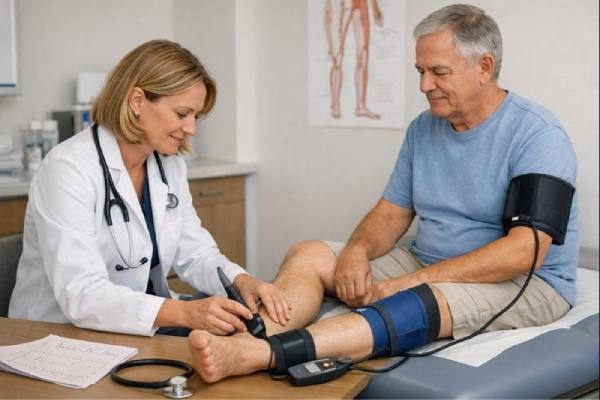
Chronic arterial insufficiency is a long-term reduction in blood flow through an artery—most often to the legs—usually because fatty plaque has narrowed the vessel over years. The body can compensate for a while, but muscles and skin eventually start “asking for more oxygen than the pipeline can deliver.” That mismatch shows up as predictable walking pain, slow-healing wounds, or—in advanced cases—rest pain and tissue loss.
This condition is more than a leg problem. It is a strong signal of widespread atherosclerosis and higher risk of heart attack and stroke. The good news is that many of the most powerful treatments are practical: structured walking therapy, smoking cessation, cholesterol lowering, and carefully chosen medications. When blood flow becomes critically reduced, modern revascularization can restore circulation and protect the limb. This article walks you through the key concepts and the decisions that matter most.
Table of Contents
- How chronic arterial insufficiency limits blood flow
- Causes and risk factors you can change
- Symptoms: from claudication to limb threat
- How doctors confirm the diagnosis
- Treatments that improve function and save limbs
- Daily management, foot care, and when to seek care
How chronic arterial insufficiency limits blood flow
Chronic arterial insufficiency usually means the arteries cannot deliver enough oxygen-rich blood to meet tissue needs, especially during activity. In the legs, this is most often due to peripheral artery disease (PAD), where atherosclerotic plaque gradually narrows the artery lumen. The narrowing becomes clinically important when the vessel can no longer increase flow during demand—like when you climb stairs or walk briskly.
A useful way to think about it is “supply versus demand.”
- At rest, muscles need less oxygen, so many people feel normal.
- With movement, muscles need a surge in blood flow. If the artery is narrowed, that surge cannot happen, and the muscle responds with cramping, tightness, or aching.
Over time, the body may form collateral vessels—small detours around a blockage. Collaterals can delay symptoms, but they are not always strong enough to prevent problems, especially if risk factors continue to injure the artery lining.
Chronic arterial insufficiency is not a single stage. Clinically, it often presents along a spectrum:
- Asymptomatic PAD: reduced blood flow measured on testing, but no typical symptoms.
- Claudication: exertional leg pain relieved by rest, usually in the calf, thigh, or buttock depending on where the blockage is.
- Chronic limb-threatening ischemia (CLTI): severely reduced perfusion causing rest pain, non-healing ulcers, or gangrene.
The pattern of symptoms is often “anatomy in disguise.” Calf pain commonly points to blockages above the knee, while thigh or buttock pain suggests more proximal disease. Skin changes—coolness, hair loss, shiny skin, thickened nails—reflect long-term underperfusion.
It is also important to separate chronic insufficiency from acute limb ischemia, which is sudden loss of blood flow (often from a clot). Chronic disease progresses more slowly, but it still carries serious risks. Advanced plaque in the leg arteries often travels with plaque in the coronary and carotid arteries, which is why chronic arterial insufficiency is as much a cardiovascular warning sign as it is a mobility issue.
Causes and risk factors you can change
The most common cause of chronic arterial insufficiency in adults is atherosclerosis—a process where cholesterol-rich deposits, inflammatory cells, and scar tissue build up in the artery wall. Over years, the artery becomes narrower, stiffer, and more prone to clotting on top of plaque. While genetics and aging play a role, several drivers are strongly modifiable, and changing them can meaningfully improve symptoms and outcomes.
Key causes and contributors include:
Atherosclerosis-related risk factors
- Smoking: the single most powerful, modifiable risk factor for PAD progression and limb loss. Smoking injures the artery lining, increases clotting tendency, and reduces oxygen delivery.
- Diabetes: accelerates plaque formation and damages small vessels. It also reduces protective sensation in the feet, which increases ulcer risk.
- High LDL cholesterol: fuels plaque growth; even “moderate” elevations matter when combined with other risks.
- High blood pressure: increases mechanical stress on vessel walls and worsens endothelial dysfunction.
- Chronic kidney disease: raises vascular calcification and inflammation; PAD in this setting can be more severe.
- Sedentary lifestyle and deconditioning: do not “cause” plaque directly, but they lower walking capacity and can make symptoms appear earlier.
- Age and family history: reflect cumulative exposure and inherited risk patterns.
Less common causes
While atherosclerosis dominates, clinicians also consider other causes when the story does not fit, especially in younger patients:
- Inflammatory vessel diseases (vasculitis)
- Fibromuscular dysplasia (more typical in certain arteries than in classic leg PAD)
- Popliteal artery entrapment or cystic adventitial disease (anatomic/mechanical issues)
- Prior radiation or trauma affecting arteries
- Thromboangiitis obliterans (Buerger disease), strongly associated with tobacco exposure
One practical insight: chronic arterial insufficiency is often “quiet” until a stress test reveals it—walking farther than usual on vacation, starting a new exercise routine, or developing a foot blister that does not heal. That is why prevention should not wait for severe symptoms.
If you are looking for the highest-impact changes, prioritize the “big four” that influence both limb outcomes and overall survival: stop smoking, lower LDL aggressively, control blood pressure, and treat diabetes to a safe, sustainable target. Add a structured walking plan, and you address both the plumbing (arteries) and the engine (muscle efficiency).
Symptoms: from claudication to limb threat
Symptoms depend on how reduced the blood flow is and whether the problem affects mainly muscle during activity or skin and soft tissue even at rest. Many people first notice that walking feels “different,” then they unconsciously adapt—walking slower, taking more breaks, or avoiding hills—so the condition can progress without being named.
Classic claudication symptoms
Claudication is usually:
- Predictable with exertion (a similar distance or intensity triggers it)
- Relieved by rest (often within minutes)
- Felt as cramping, tightness, heaviness, or aching
Location can be informative: - Calf pain is most common
- Thigh pain may suggest more proximal disease
- Buttock pain can occur with more upstream (aorto-iliac) disease
Some people have “atypical” symptoms: numbness, fatigue, or diffuse leg discomfort that still follows an exertion-rest pattern. Others have no leg pain because neuropathy (common in diabetes) blunts sensation.
Signs of more advanced ischemia
As perfusion worsens, symptoms shift from activity-related to rest-related:
- Rest pain, often in the forefoot, worse at night when legs are elevated
- Relief by dangling the foot over the bed or walking briefly (gravity helps blood flow)
- Coldness of the foot, delayed capillary refill, or color changes (pale when elevated, reddish-purple when dependent)
Chronic limb-threatening ischemia (CLTI)
CLTI is a high-risk stage and often includes:
- Non-healing ulcers (especially on toes, heel, or pressure points)
- Gangrene or blackened tissue
- Recurrent wound infections
- Severe rest pain requiring frequent analgesics
Complications people often underestimate
- Infection risk rises sharply once skin breaks down; reduced blood flow impairs immune delivery and antibiotic penetration.
- Functional decline can accelerate: less walking leads to weaker muscles and poorer balance, increasing fall risk.
- Cardiovascular events: PAD is a marker of systemic atherosclerosis, so the risk of heart attack and stroke is higher than many people realize, even when leg symptoms feel “manageable.”
Urgent red flags include sudden worsening pain, a new cold pale foot, rapidly spreading discoloration, or ulcers with fever or rapidly increasing redness. Chronic arterial insufficiency is gradual, but complications—especially infections and sudden drops in perfusion—can move quickly.
How doctors confirm the diagnosis
Diagnosis starts with history and a vascular exam, but confirmation relies on measuring blood flow and locating disease. Clinicians also assess overall cardiovascular risk because treatment targets both limb symptoms and long-term event prevention.
History and exam clues
Common exam findings include:
- Reduced or absent pulses in the feet
- Cool skin temperature in the affected limb
- Shiny skin, reduced hair growth, thickened nails
- Slow wound healing or ulcers on toes/pressure points
- Bruits (whooshing sounds) over major arteries
However, normal pulses do not fully exclude disease, especially if there are collaterals or if the disease is more distal.
Ankle-brachial index (ABI)
The ABI compares ankle blood pressure to arm blood pressure. It is quick, inexpensive, and often the first objective test. In broad terms:
- Lower ABI values suggest more significant arterial narrowing.
- Very high ABI values can occur with calcified, non-compressible vessels (common in diabetes and kidney disease), which can make ABI falsely reassuring.
When ABI is unreliable, clinicians often use:
- Toe-brachial index (TBI) (toe vessels are less likely to be non-compressible)
- Doppler waveforms to assess flow quality
Exercise testing
If symptoms suggest claudication but resting ABI is near normal, an exercise ABI can reveal a drop in ankle pressure after walking, which supports flow limitation during demand.
Imaging to map the arteries
Imaging is chosen based on symptoms and whether revascularization is being considered:
- Duplex ultrasound: shows blood flow speed and can identify stenoses; helpful for follow-up too.
- CT angiography (CTA): detailed anatomy, fast; requires contrast and radiation.
- MR angiography (MRA): detailed anatomy without ionizing radiation; contrast use depends on protocol and kidney function.
- Catheter angiography: invasive but allows treatment at the same time; typically reserved for when intervention is likely.
Staging and risk planning
For severe disease, teams may classify wounds, ischemia, and infection severity to guide urgency and strategy. Just as important, they evaluate heart and kidney status, because these strongly influence procedure risk and medication choices.
A practical approach you can expect from a careful clinician is: confirm reduced perfusion, determine whether symptoms match artery anatomy, then decide whether the best next step is exercise and medical therapy, imaging for procedural planning, or urgent limb-salvage workup.
Treatments that improve function and save limbs
Treatment usually combines lifestyle therapy, medications, and—when needed—revascularization. The best plan addresses two goals at the same time: help you walk and heal, and reduce the risk of heart attack, stroke, and limb loss.
1) Structured walking therapy
For claudication, the most consistently helpful non-procedural treatment is a structured walking program. A common format is:
- Walk until moderate leg discomfort develops
- Rest until the pain eases
- Repeat for a total of about 30–45 minutes per session
- Aim for 3–5 sessions per week, gradually increasing total walking time and intensity
Supervised programs often improve adherence and technique, but well-designed home programs can also help—especially when they include specific goals, progression rules, and regular feedback.
2) Medications to reduce vascular events
Most people with chronic arterial insufficiency benefit from therapies that stabilize plaque and lower clot risk. Clinicians often consider:
- Antiplatelet therapy (commonly aspirin 75–100 mg daily or clopidogrel 75 mg daily, depending on the situation)
- Statins (often high-intensity, aiming for substantial LDL reduction)
- Blood pressure control (often with agents that also protect kidneys and heart)
- Diabetes therapies chosen to reduce vascular risk when appropriate
In selected high-risk patients—especially after revascularization—clinicians may consider “dual-pathway” strategies that combine low-dose anticoagulant and antiplatelet therapy. This decision is individualized because bleeding risk must be weighed carefully against ischemic benefit.
3) Medications for walking symptoms
Some patients with claudication may be offered drugs aimed at walking distance. For example, cilostazol is sometimes used to improve walking performance, but it is not appropriate for everyone and may be avoided in certain heart conditions. The expected benefit is typically measured in improved walking tolerance rather than instant pain relief.
4) Revascularization when blood flow is too low
When symptoms are lifestyle-limiting despite therapy, or when there is CLTI (rest pain, ulcers, gangrene), restoring blood flow can be limb-saving. Options include:
- Endovascular procedures: angioplasty, stenting, atherectomy (selected cases)
- Surgical bypass: using a vein or graft to route blood around a blockage
- Hybrid approaches: combining open and endovascular techniques
Revascularization is most effective when paired with wound care, infection control, and aggressive risk-factor management. A successful procedure restores flow, but long-term outcomes depend heavily on what happens after: smoking status, lipid levels, medication adherence, and foot protection.
Daily management, foot care, and when to seek care
Daily management is where long-term results are won. Chronic arterial insufficiency improves most when patients and clinicians treat it like a shared project: protect the skin, train the muscles, stabilize the arteries, and react quickly to warning signs.
Foot and skin protection (especially if diabetes is present)
Small injuries can become big problems when blood flow is limited. Practical steps include:
- Inspect feet daily: toes, heel, and between toes
- Moisturize dry skin (but avoid lotion between toes if it stays damp)
- Trim nails carefully; consider podiatry if vision, flexibility, or sensation is reduced
- Wear well-fitting shoes and socks; avoid tight elastic bands
- Do not use heating pads or hot water bottles on numb feet (burn risk)
- Treat blisters or cracks early; keep wounds clean and covered
If there is an ulcer, coordinated wound care matters: off-loading pressure, managing infection, and reassessing perfusion regularly.
Exercise and activity without “overdoing it”
Consistency beats intensity. Many people do best with:
- Scheduled walking sessions plus light strength work 2–3 times weekly
- Warm-up and cool-down to reduce sudden demand spikes
- A plan for “bad days” (shorter sessions rather than skipping entirely)
If you have rest pain or wounds, exercise should be guided by your care team to avoid pressure injury and to align with revascularization plans.
Medication routines that prevent setbacks
Because chronic arterial insufficiency is tied to systemic atherosclerosis, long-term protection often hinges on taking vascular medications reliably. A simple tip is to link meds to a daily anchor (breakfast, toothbrushing) and use a weekly pill box to reduce missed doses.
Prevention and long-term risk reduction
The most protective strategy bundle usually includes:
- Complete smoking cessation (including nicotine exposure if it sustains tobacco use)
- LDL lowering with statins and, when needed, add-on lipid therapy
- Blood pressure control with home monitoring when possible
- Diabetes management that prioritizes safety, kidney protection, and cardiovascular risk reduction
- Vaccinations and infection prevention (respiratory illnesses can destabilize heart and vascular disease)
When to seek care urgently
Seek urgent evaluation if any of the following occur:
- Sudden severe leg or foot pain with a cold, pale, or numb limb
- A new black area on a toe or foot, or rapidly spreading discoloration
- A wound with fever, spreading redness, foul drainage, or rapidly increasing pain
- New inability to walk your usual distance combined with rest pain at night
- Symptoms of stroke or heart attack (sudden weakness, facial droop, chest pressure, severe shortness of breath)
Chronic arterial insufficiency is manageable, but it is not “benign.” If you treat early symptoms seriously and protect your feet the way you would protect your eyesight—daily, deliberately—you dramatically improve the odds of staying active and avoiding limb-threatening complications.
References
- 2024 ACC/AHA/AACVPR/APMA/ABC/SCAI/SVM/SVN/SVS/SIR/VESS Guideline for the Management of Lower Extremity Peripheral Artery Disease: A Report of the American College of Cardiology/American Heart Association Joint Committee on Clinical Practice Guidelines 2024 (Guideline)
- 2024 ESC Guidelines for the management of peripheral arterial and aortic diseases 2024 (Guideline)
- Effectiveness of home-based walking exercise for patients with peripheral artery disease and intermittent claudication: a systematic review and meta-analysis 2025 (Systematic Review)
- Dual-pathway Inhibition with Low-dose Aspirin and Rivaroxaban versus Aspirin Monotherapy in Patients with Coronary Artery Disease and Peripheral Artery Disease: Systematic Literature Review and Meta-analysis 2024 (Systematic Review)
- Cilostazol for intermittent claudication 2021 (Systematic Review)
Disclaimer
This article is for educational purposes and does not replace medical advice, diagnosis, or treatment from a licensed clinician. Chronic arterial insufficiency can increase the risk of serious complications, including non-healing wounds, limb-threatening ischemia, heart attack, and stroke. If you have sudden severe limb pain, a cold or pale foot, rapidly worsening discoloration, signs of infection in a wound, chest pain, or stroke-like symptoms, seek urgent medical care. Decisions about medications (including blood thinners), exercise intensity, wound care, and revascularization should be made with a healthcare professional who can evaluate your individual risks and test results.
If this article was useful, please share it on Facebook, X (formerly Twitter), or any platform you prefer, and follow us on social media. Your support through sharing helps our team continue producing reliable, high-quality health content.