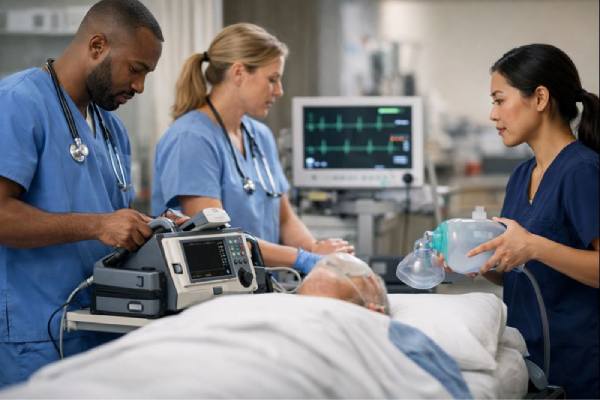
Cardiac arrest is a sudden failure of the heart to pump blood effectively. Within seconds, a person can collapse, lose consciousness, and stop breathing normally. The difference between life and death is often measured in minutes, which is why quick recognition and immediate action matter as much as hospital care. Cardiac arrest is not the same as a heart attack: a heart attack is usually a circulation problem in the heart muscle, while cardiac arrest is an electrical or mechanical shutdown that stops blood flow to the brain and organs. In many cases, cardiac arrest is reversible if someone nearby calls emergency services, starts high-quality chest compressions, and uses an automated external defibrillator (AED) when advised. This guide explains what causes cardiac arrest, how to spot it, what tests and treatments follow, and how survivors reduce risk going forward.
Table of Contents
- What cardiac arrest is and why minutes matter
- What causes cardiac arrest and who is at risk
- How to recognize cardiac arrest and what to do first
- How doctors diagnose the cause after resuscitation
- Treatment in the field and in the hospital
- Long-term management, prevention, and when to seek care
What cardiac arrest is and why minutes matter
Cardiac arrest happens when the heart suddenly cannot generate effective blood flow. The immediate problem is usually an electrical rhythm failure (the heart’s “wiring”) or a catastrophic mechanical failure (the heart’s “pump”). Without blood flow, the brain is starved of oxygen. Unconsciousness often occurs within seconds, and permanent injury can begin within minutes if circulation is not restored.
A common point of confusion is cardiac arrest versus heart attack:
- Heart attack (myocardial infarction): A blockage reduces blood supply to heart muscle. A person may be awake and talking, with chest pain, sweating, or nausea. A heart attack can trigger cardiac arrest, but many do not.
- Cardiac arrest: The person becomes unresponsive and is not breathing normally. There may be gasping, abnormal snoring-like breaths (agonal breathing), or brief jerking movements that can resemble a seizure.
The “minutes matter” principle is practical, not dramatic. Every minute without chest compressions and defibrillation (when needed) lowers the chance of survival and increases the risk of brain injury. That is why modern resuscitation focuses on a simple sequence that bystanders can do:
- Recognize unresponsiveness and abnormal breathing.
- Call emergency services immediately.
- Start high-quality chest compressions.
- Use an AED as soon as it is available.
You will sometimes hear cardiac arrest described as “sudden cardiac death” when it is fatal. Clinically, the focus is on recognizing arrest early enough to prevent it from becoming death.
Two additional terms are useful:
- Return of spontaneous circulation (ROSC): The heart starts pumping again on its own after CPR and defibrillation.
- Post-cardiac arrest syndrome: A complex period after ROSC involving brain injury risk, heart dysfunction, and inflammation. Survival is not only about restarting the heart; it is also about protecting the brain and stabilizing organs afterward.
Because cardiac arrest can look like fainting, overdose, stroke, or seizure, the most reliable guide for the public is: unresponsive and not breathing normally equals cardiac arrest until proven otherwise.
What causes cardiac arrest and who is at risk
Cardiac arrest is not a single disease. It is an emergency endpoint that can arise from many conditions. Understanding the cause matters because it shapes treatment, future risk, and what families should watch for.
Common causes
In adults, many arrests are linked to heart disease, especially rhythms that become chaotic and stop effective pumping:
- Coronary artery disease and prior heart attack: Scar tissue and poor blood supply can destabilize heart rhythms.
- Ventricular arrhythmias: Ventricular fibrillation (VF) and pulseless ventricular tachycardia (pVT) are “shockable” rhythms where early defibrillation can be lifesaving.
- Severe bradycardia or asystole: Very slow rhythms or a flatline pattern can occur after prolonged low oxygen, severe illness, or delayed response.
- Pulseless electrical activity (PEA): Electrical activity appears on a monitor, but the heart cannot generate a pulse because of a reversible cause such as massive clot, tamponade, or severe bleeding.
Not all causes start in the heart:
- Respiratory failure and hypoxia: Severe asthma, choking, drowning, smoke inhalation, or advanced lung disease.
- Drug toxicity: Opioids, sedatives, certain antiarrhythmics, cocaine, and other stimulants.
- Major electrolyte disturbances: Especially high potassium, very low potassium, or severe acid-base abnormalities.
- Pulmonary embolism: A large clot in the lungs can stop circulation abruptly.
- Severe blood loss or shock: Trauma, gastrointestinal bleeding, or ruptured aneurysm.
- Sepsis: Overwhelming infection can lead to circulatory collapse.
- Hypothermia: Profound cold can trigger dangerous rhythms.
Risk factors that increase likelihood
Some risks are medical history, others are clues that deserve deeper evaluation:
- Prior heart attack, known coronary artery disease, or heart failure
- Weak pumping function (reduced ejection fraction)
- Cardiomyopathies (dilated, hypertrophic, arrhythmogenic)
- Known rhythm disorders (long QT syndrome, Brugada syndrome, pre-excitation)
- Family history of sudden unexplained death, especially at young age
- Previous fainting with exertion or palpitations that feel “out of proportion”
- Chronic kidney disease (electrolyte shifts), uncontrolled diabetes, and untreated sleep apnea
- Heavy alcohol use, stimulant use, or medication combinations that prolong the QT interval
A practical clinician’s framework: reversible causes
During resuscitation, teams often search for “reversible causes” because fixing one can restore circulation. You may hear these grouped as Hs and Ts (such as hypoxia, hypovolemia, abnormal potassium, tamponade, toxins, tension pneumothorax, and thrombosis). This framework matters because it keeps the team focused on causes that can be corrected quickly, even when the rhythm looks dire.
How to recognize cardiac arrest and what to do first
Most lives saved from cardiac arrest are saved by the first few people on the scene. The goal is not perfection. The goal is fast action.
How to recognize cardiac arrest
Assume cardiac arrest if the person is:
- Unresponsive (does not wake, speak, or follow commands)
- Not breathing normally (no breathing, gasping, or irregular breaths)
Two points prevent dangerous hesitation:
- Agonal breathing can look like breathing. It is not effective breathing. If the person is unresponsive and gasping, start CPR.
- Brief shaking can occur. A sudden arrest can trigger seizure-like movements. If they do not wake and breathing is abnormal, treat it as cardiac arrest.
What to do immediately: a bystander action plan
- Check for responsiveness and normal breathing (take no more than 10 seconds).
- Call emergency services or tell someone else to call. If you are alone, use speakerphone.
- Start chest compressions in the center of the chest.
- Send someone for an AED or retrieve it yourself if it is very close.
- Use the AED as soon as it arrives and follow the voice prompts.
High-quality chest compressions: what “good” looks like
For adults, aim for:
- Rate: 100–120 compressions per minute
- Depth: about 5–6 cm (around 2 inches)
- Technique: hands in the center of the chest, elbows straight, shoulders above hands
- Recoil: let the chest come fully back up
- Interruptions: keep pauses as short as possible
If you are trained and able, rescue breaths can help in arrests caused by low oxygen (drowning, overdose, choking), but compressions are the priority. If you are not trained, hands-only CPR is absolutely worthwhile.
Using an AED without fear
An AED is designed for non-medical rescuers. Key truths:
- You cannot “accidentally” shock someone who does not need it; the device analyzes the rhythm.
- If the AED says “no shock advised,” resume compressions immediately.
- Apply pads to a bare chest. If the chest is wet, wipe it quickly.
Special situations people worry about
- Opioid overdose: If you suspect it, give naloxone if available, but do not delay CPR.
- Choking: If the person cannot cough or speak and then collapses, begin CPR and look for a visible object only when you open the airway.
- Pregnancy: Call for help and start CPR as usual; emergency teams will modify positioning and care.
A clear mental model is: CPR buys time, and defibrillation (when indicated) can end a lethal rhythm. Your job is to bridge the person to advanced care.
How doctors diagnose the cause after resuscitation
After ROSC or after arrival with ongoing CPR, the clinical question becomes: Why did this happen, and how do we prevent it from happening again? Diagnosis after cardiac arrest is both urgent and methodical, because patients may be unstable and unable to provide history.
Immediate bedside priorities
Clinicians typically begin with rapid assessments that guide lifesaving decisions:
- Electrocardiogram (ECG): Looks for heart attack patterns, dangerous rhythm markers, or conduction issues.
- Blood tests: Electrolytes (especially potassium and magnesium), acid-base status, glucose, blood counts, kidney function, and markers of organ stress.
- Bedside ultrasound and echocardiography: Evaluates heart pumping, signs of tamponade, massive pulmonary embolism patterns, and volume status.
- Oxygenation and ventilation checks: Low oxygen and abnormal carbon dioxide levels can be both causes and consequences of arrest.
Finding cardiac triggers
If there are signs of an acute heart attack or high suspicion of coronary blockage, teams may move quickly toward coronary angiography to look for treatable obstructions. Even without classic heart attack findings, some patients benefit from targeted evaluation based on collapse circumstances, symptoms before arrest, and risk factors.
Other cardiac investigations can include:
- Formal echocardiogram: Assesses valve disease, cardiomyopathy, and structural abnormalities.
- Cardiac MRI (selected cases): Helps detect myocarditis, scarring, or infiltrative disease once the patient is stable.
- Electrophysiology evaluation: Considered when the arrest is unexplained or suggests a primary electrical disorder.
Evaluating non-cardiac causes
If the clinical picture points elsewhere, the workup may include:
- CT scan of the chest: To evaluate for pulmonary embolism or aortic emergencies.
- Toxicology testing: If overdose or poisoning is possible.
- Infection evaluation: Cultures and imaging if sepsis is suspected.
Neurologic assessment and prognosis planning
Brain care begins immediately after ROSC, but predicting neurologic recovery must be cautious. Teams often use:
- Neurologic exams over time
- EEG monitoring when seizures are suspected or when the patient remains comatose
- Brain imaging in selected cases
- A structured, delayed approach to prognosis to reduce the risk of premature conclusions
If you are a family member, it can help to ask two separate questions that are often blended together in stressful moments:
- What do you think caused the arrest?
- What do you need to observe over the next 24–72 hours to understand brain recovery?
Those are different problems, and the timelines differ.
Treatment in the field and in the hospital
Treatment has two phases: resuscitation (restoring circulation) and post-resuscitation care (protecting brain and organs, and treating the cause).
Resuscitation: the core interventions
In the field or emergency department, the essentials are consistent:
- High-quality CPR with minimal interruptions
- Defibrillation for shockable rhythms (VF and pVT) as early as possible
- Airway and breathing support without excessive ventilation
- Medications and vascular access tailored to rhythm and scenario
- Rapid search for reversible causes when progress stalls
Advanced teams may add tools such as point-of-care ultrasound, capnography (measuring exhaled carbon dioxide to gauge CPR effectiveness and detect ROSC), and in select settings mechanical CPR devices when manual compressions are unsafe or impractical. Some centers also use extracorporeal CPR (ECPR) for carefully selected patients, where a machine temporarily takes over circulation while the underlying cause is treated.
What happens right after ROSC
Once the heart is beating again, the focus shifts to preventing secondary injury:
- Blood pressure support: The brain needs adequate perfusion; clinicians may use fluids and medications to maintain stable pressures.
- Oxygen and ventilation targets: Too little oxygen is dangerous, but prolonged high oxygen levels may also be harmful; teams aim for balanced targets and avoid extremes.
- Temperature control: Modern practice emphasizes avoiding fever and using controlled temperature strategies when appropriate, rather than assuming deeper cooling is always better.
- Glucose management: Both very high and very low glucose can worsen outcomes.
- Seizure detection and treatment: Seizures after arrest can be subtle; EEG monitoring helps guide care.
- Cause-specific treatment: For example, urgent coronary intervention for suspected acute blockage, treatment for pulmonary embolism, antidotes for toxin exposure, or correction of severe electrolyte abnormalities.
Common questions about hospital interventions
- Will they “restart” the heart with a shock? Only certain rhythms benefit from defibrillation. Others require CPR, medications, and correcting the cause.
- Will they put in a breathing tube? Many patients need airway protection and controlled ventilation, especially if they are unconscious.
- Why so many machines and lines? Cardiac arrest affects every organ system. Continuous monitoring allows rapid adjustment of oxygen, blood pressure, rhythm, and temperature.
When resuscitation is prolonged
Resuscitation can take time, particularly when the cause is reversible but not yet fixed. Teams use structured protocols to prevent missed steps. Families should know that duration alone is not the whole story; the initial rhythm, time to CPR, time to defibrillation, quality of compressions, and the underlying cause all shape outcome.
Long-term management, prevention, and when to seek care
Survival from cardiac arrest is the beginning of a new chapter, not the end of the story. Long-term management focuses on preventing recurrence, supporting recovery, and helping families prepare.
Preventing another arrest
The prevention plan depends on the cause, but common elements include:
- Treating coronary disease: Medications, lifestyle changes, and sometimes stents or bypass surgery.
- Optimizing heart failure care: Evidence-based therapies can reduce arrhythmia risk by improving heart function and remodeling.
- Correcting structural problems: Valve disease, cardiomyopathy triggers, or congenital issues may require specialized interventions.
- Addressing triggers: Sleep apnea treatment, medication review for QT-prolonging drugs, electrolyte stability, and avoiding stimulant use.
For many survivors, clinicians consider an implantable cardioverter-defibrillator (ICD). An ICD continuously monitors rhythm and can deliver a shock internally if a lethal rhythm returns. It is one of the most effective tools for secondary prevention when the risk of recurrence is significant.
Rehabilitation and brain recovery support
Recovery can include fatigue, memory problems, mood changes, sleep disruption, and reduced exercise tolerance. These are common and deserve structured support. Helpful steps often include:
- Cardiac rehabilitation with monitored exercise and education
- Cognitive and psychological support for attention, memory, anxiety, depression, or post-traumatic stress symptoms
- Return-to-work planning that starts with realistic pacing
- Family education so caregivers know what is normal recovery versus warning signs
Home and family preparedness
Families often ask what they can do that is concrete. Consider:
- CPR and AED training for household members
- Clear medication lists and emergency contacts
- Reviewing warning symptoms and the plan for urgent evaluation
- In select situations, discussing whether a home AED is appropriate
If the arrest cause is unexplained or suggests an inherited rhythm disorder, the care team may recommend family screening (for example, ECGs and targeted genetic evaluation). This is especially relevant when arrests occur at a young age or there is a family history of sudden death.
When to seek medical care urgently
Seek urgent evaluation for symptoms that can signal dangerous rhythm instability or worsening heart disease:
- Fainting or near-fainting, especially during exertion
- New chest pain, pressure, or severe shortness of breath
- Palpitations with dizziness, weakness, or chest discomfort
- Sudden neurologic symptoms such as weakness on one side, speech changes, or severe headache
For survivors with an ICD, contact your clinician promptly if you receive a shock, even if you feel okay afterward. A shock can be lifesaving, but it is also a message that your rhythm became dangerous and needs evaluation.
Long-term management is most effective when it is coordinated. Many survivors do best with follow-up that includes cardiology, primary care, and rehabilitation support, with a clear plan for medication adherence and symptom monitoring.
References
- Part 7: Adult Basic Life Support: 2025 American Heart Association Guidelines for Cardiopulmonary Resuscitation and Emergency Cardiovascular Care 2025 (Practice Guideline)
- Part 9: Adult Advanced Life Support: 2025 American Heart Association Guidelines for Cardiopulmonary Resuscitation and Emergency Cardiovascular Care 2025 (Practice Guideline)
- Part 11: Post-Cardiac Arrest Care: 2025 American Heart Association Guidelines for Cardiopulmonary Resuscitation and Emergency Cardiovascular Care 2025 (Practice Guideline)
- Advanced Life Support: 2025 International Liaison Committee on Resuscitation Consensus on Science With Treatment Recommendations 2025 (Consensus Statement)
- European Resuscitation Council Guidelines 2025 Executive Summary 2025 (Practice Guideline)
Disclaimer
This article is for educational purposes only and does not provide medical advice, diagnosis, or treatment. Cardiac arrest is a life-threatening emergency that requires immediate action and professional care. If someone is unresponsive and not breathing normally, call emergency services right away and begin CPR while an AED is retrieved. If you have symptoms such as fainting, chest pain, severe shortness of breath, or sudden neurologic changes, seek urgent medical evaluation. Always discuss your personal risks, test results, and treatment decisions with a qualified healthcare professional who can consider your full medical history.
If you found this article helpful, please share it on Facebook, X (formerly Twitter), or any platform you prefer, and follow us on social media. Your support through sharing helps our team continue producing high-quality health content.