Cardiac angiosarcoma is a rare cancer that begins in the cells lining blood vessels and grows within the heart. Even when it starts as a small tumor, it can spread quickly, bleed easily, and interfere with normal heart function. Many cases develop in the right atrium, where there is space to grow silently until the tumor causes fluid around the heart, shortness of breath, chest discomfort, or signs of heart failure. Because the symptoms can look like far more common problems—such as pneumonia, blood clots, or pericarditis—diagnosis is often delayed. Modern imaging can raise suspicion early, but a tissue sample is usually needed to confirm what it is. Treatment is typically complex and time-sensitive, involving a coordinated team that may combine surgery, chemotherapy, radiation, and targeted approaches.
Table of Contents
- What it is and why it becomes urgent
- What causes cardiac angiosarcoma and who is at risk
- Early symptoms, red flags, and common complications
- How it is diagnosed and what tests to expect
- Treatment options and what the journey can look like
- Day-to-day management, follow-up, and when to seek care
What it is and why it becomes urgent
Cardiac angiosarcoma is a malignant tumor arising from endothelial cells, the thin layer of cells that normally line blood vessels. In the heart, that origin matters: these tumors are often fragile, richly supplied with abnormal vessels, and prone to bleeding. They do not simply “sit” in one spot. Instead, they tend to infiltrate nearby tissue, extend along surfaces, and seed tumor cells into the bloodstream early. That combination—local invasion plus early spread—is why cardiac angiosarcoma is treated as an urgent diagnosis.
Most primary cardiac angiosarcomas start in the right atrium. From there, the tumor can affect the heart in several ways:
- Obstruction of blood flow: A mass can narrow the path from the vena cava into the right atrium or through the tricuspid valve, leading to swelling, abdominal fullness, and fatigue.
- Irritation of the pericardium: Tumor invasion can trigger pericardial inflammation and fluid buildup. Because the tumor bleeds easily, the fluid may be bloody.
- Electrical instability: Invasion into the atrial wall can contribute to palpitations and rhythm problems.
- Spread to other organs: The lungs are a frequent early destination because blood from the right heart flows directly there.
A practical way to understand urgency is to separate two timelines that often overlap. The first is cardiac mechanics: the tumor can cause sudden hemodynamic problems, especially if it leads to a large pericardial effusion or tamponade (dangerous pressure on the heart). The second is oncology biology: even if the heart symptoms are temporarily stabilized, microscopic metastases may already be present by the time the tumor is discovered.
It is also important to distinguish primary cardiac angiosarcoma (starting in the heart) from metastatic angiosarcoma that has spread to the heart from elsewhere. The management still requires a team approach, but the treatment strategy and goals can differ depending on whether the heart is the main site or one of many affected organs.
What causes cardiac angiosarcoma and who is at risk
For most people, there is no single identifiable cause. Cardiac angiosarcoma is rare enough that clear, direct cause-and-effect links are difficult to prove. Still, clinicians recognize patterns and plausible contributors based on what is known about angiosarcomas in general and about vascular cancers.
How it may develop
Angiosarcoma forms when endothelial cells acquire genetic changes that push them toward uncontrolled growth, abnormal vessel formation, and invasion. The tumor environment often becomes highly “angiogenic,” meaning it encourages the creation of new blood vessels—one reason the tumor can grow rapidly and bleed. Some angiosarcomas in other parts of the body show changes in pathways related to vessel growth signaling. In the heart, the same general theme applies: dysregulated signals that normally help vessels repair and adapt may become permanently switched on.
Known and suspected risk factors
Even though most patients have no clear trigger, these factors can increase suspicion or risk in broader angiosarcoma contexts:
- Prior radiation exposure: Radiation-associated angiosarcoma is well described in soft tissues. While the heart is less commonly the target of radiation than, for example, the breast or chest wall, past chest radiation can be part of the background history.
- Chronic lymphedema: This is a classic association for some angiosarcomas, though it is not a typical driver for primary cardiac disease.
- Chemical exposures: Certain industrial chemicals have been linked to angiosarcoma in other organs. This does not mean exposure causes cardiac disease, but it can shape a clinician’s overall risk assessment.
- Inherited susceptibility (rare): A family pattern is uncommon, but some inherited cancer-predisposition syndromes can raise the risk of sarcomas broadly. If there is a strong family history of early cancers, your team may discuss genetics.
Who is most often affected
Cardiac angiosarcoma tends to be diagnosed in adults, often earlier than many other cancers, and has been reported more often in men than women. That said, it can occur in any sex and across a wide age range. Because it is uncommon, the most important “risk factor” in real life is not a demographic trait—it is the combination of symptoms and imaging findings that don’t fit common explanations.
What you can control
There is no proven way to prevent primary cardiac angiosarcoma. However, you can reduce delays by taking persistent, unexplained cardiopulmonary symptoms seriously—especially shortness of breath that worsens over weeks, recurrent pericardial effusion, unexplained anemia, or chest symptoms paired with systemic signs like weight loss.
Early symptoms, red flags, and common complications
Symptoms depend on where the tumor sits, how large it is, whether it bleeds, and whether it has spread. The early phase can be subtle, which is why many people are first treated for more common conditions. Symptoms often fall into three buckets: heart-related, lung-related, and whole-body (systemic) symptoms.
Common early symptoms
Many people report symptoms that gradually intensify over several weeks to a few months:
- Shortness of breath, especially with exertion
- Chest discomfort or pressure, sometimes mistaken for inflammation or strain
- Fatigue and reduced exercise tolerance
- Palpitations or a sense of racing or irregular heartbeat
- Swelling of the legs or abdomen, particularly if right-sided blood flow is affected
Red flags that deserve urgent evaluation
Some features raise concern for a structural heart problem or a malignant process rather than a routine infection:
- Recurrent or rapidly re-accumulating pericardial effusion, especially if bloody
- Symptoms of cardiac tamponade: severe shortness of breath, chest pressure, fainting, marked weakness, or a sense of “air hunger,” often worsening when lying flat
- Unexplained anemia, dizziness, or fatigue that does not match activity level
- Coughing up blood or unexplained chest pain with imaging that suggests lung nodules or embolic-appearing findings
- Unintentional weight loss, night sweats, or persistent fevers
Complications to understand
Cardiac angiosarcoma can cause complications through local invasion and through spread:
- Pericardial complications: effusion, tamponade, and recurrent pericarditis-like symptoms
- Heart failure: most often right-sided, with fluid retention and liver congestion, but left-sided effects can occur depending on involvement
- Arrhythmias: atrial arrhythmias may occur if the atrial wall is irritated or infiltrated
- Bleeding: tumors can bleed into the pericardial space or, if metastatic, into other tissues
- Metastatic disease: the lungs, liver, bones, and brain can be affected; symptoms vary by site (for example, headaches or neurologic symptoms can signal brain involvement)
A key insight is that symptoms can fluctuate. Draining pericardial fluid may temporarily relieve breathlessness, and steroids or anti-inflammatory medicines may briefly help chest discomfort. Improvement does not rule out a serious cause. If a “treated” problem keeps returning—particularly pericardial effusion—it is reasonable to ask whether a more complete cardiac imaging evaluation is needed.
How it is diagnosed and what tests to expect
Diagnosis aims to answer four questions quickly and safely: Is there a cardiac mass? Is it likely malignant? Can we confirm the diagnosis with tissue? Has it spread beyond the heart? Because the heart is a moving structure with vital blood flow and electrical activity, clinicians often use a stepwise approach that balances speed, detail, and procedural risk.
First-line evaluation
Most workups begin with:
- History and physical exam focused on symptoms of heart failure, pericardial disease, and systemic illness.
- Electrocardiogram (ECG) to assess rhythm and signs of strain.
- Basic labs such as blood counts, kidney and liver function, inflammatory markers, and sometimes cardiac biomarkers. These tests cannot diagnose angiosarcoma, but they help assess stability and guide urgent decisions.
Echocardiography: the usual first imaging test
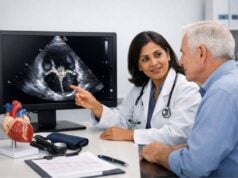
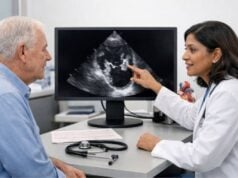
- Transthoracic echocardiogram (TTE) is often the first look. It can detect masses, measure heart function, and identify pericardial effusion.
- Transesophageal echocardiogram (TEE) may be recommended if the view is limited or if the mass is better seen from behind the heart. TEE can provide sharper detail for atrial masses and can help plan a biopsy or surgery.
Cross-sectional imaging for characterization and staging
- Cardiac MRI is often the most informative noninvasive tool for characterizing a mass. It can suggest malignancy by showing infiltration, tissue features, and patterns of contrast uptake.
- Cardiac CT can define anatomy, calcification, involvement of nearby structures, and can be helpful when MRI is not possible.
- PET imaging may help evaluate metabolic activity and search for metastases, particularly when the diagnosis is uncertain or when staging is needed.
Confirming the diagnosis: biopsy and pathology
Imaging can strongly suggest angiosarcoma, but confirmation usually requires tissue. Options may include:
- Surgical biopsy or resection when feasible
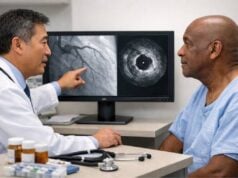
- Catheter-based biopsy in specialized centers, sometimes guided by echocardiography, CT, or intracardiac imaging
Pathologists typically use microscopy plus immunohistochemistry to confirm endothelial origin. Markers commonly used to support the diagnosis include endothelial-associated proteins (your report may list several). This step is crucial because treatment differs for other cardiac tumors such as lymphoma, metastases from another cancer, or benign masses.
Staging and baseline assessments before treatment
Once angiosarcoma is suspected or confirmed, teams often complete:
- Imaging of chest, abdomen, and pelvis to look for spread
- Brain imaging if symptoms suggest involvement
- A careful assessment of heart function to plan therapies that may stress the heart
If you are being evaluated, it is reasonable to ask whether the next step is meant to characterize, confirm, or stage the disease. Knowing the purpose clarifies why certain tests are prioritized.
Treatment options and what the journey can look like
Treatment is usually personalized and often urgent. Because primary cardiac angiosarcoma is rare, most people benefit from care at, or in consultation with, a center experienced in cardiac tumors and sarcoma therapy. Goals typically include stabilizing heart-related risks, controlling the tumor locally when possible, and addressing microscopic or visible spread.
Surgery: when it helps and what “resectable” means
If the tumor can be removed with clear margins, surgery offers the best chance for longer control. However, complete removal is often difficult because the tumor may infiltrate the atrial wall, pericardium, or nearby vessels. Surgery may still be recommended to:
- Relieve obstruction or restore blood flow
- Prevent or reduce recurrent pericardial bleeding
- Obtain adequate tissue for diagnosis
- Reduce tumor burden before systemic therapy
In selected situations, reconstruction of heart structures may be attempted. Heart transplantation has been considered in rare cases, but it is controversial because immune suppression can accelerate recurrence, and hidden metastases are common.
Chemotherapy: systemic control
Chemotherapy is commonly used because of the high risk of early spread. Regimens vary, and the plan may depend on prior health, heart function, and whether the aim is cure-intent (rare) or disease control (more common). Your team may discuss drugs commonly used for soft-tissue sarcomas, including:
- Anthracycline-based regimens in appropriate candidates
- Taxane-based approaches in some settings
- Combinations or sequences tailored to response and tolerance
Because some chemotherapy agents can affect the heart, clinicians weigh benefits against cardiac risk and may adjust doses, schedules, or monitoring.
Radiation therapy: local control and symptom relief
Radiation can be used:
- After surgery to reduce local recurrence risk (adjuvant therapy)
- When surgery is not possible, to slow local growth
- For metastatic sites causing pain or bleeding
Delivering radiation near the heart requires careful planning to limit collateral damage to healthy tissue, especially if other therapies also affect cardiovascular function.
Targeted therapy and immunotherapy: emerging options
Some angiosarcomas respond to therapies aimed at blood-vessel growth pathways or immune checkpoints, but results can be variable. When standard options are limited, clinicians may recommend:
- Targeted agents in select molecular contexts
- Immunotherapy in selected cases
- Enrollment in a clinical trial, particularly at sarcoma centers
What to expect emotionally and logistically
Many people find the speed of decision-making overwhelming. A helpful framework is to request clarity on:
- Immediate risks (for example, tamponade risk, obstruction, unstable rhythm)
- Short-term plan (biopsy, staging, surgical feasibility)
- Systemic strategy (chemo, radiation, trial options)
- Supportive care (symptom relief, nutrition, mental health support)
Treatment is rarely a single intervention. Most care plans involve a sequence of steps with frequent reassessment based on imaging, symptoms, and tolerance.
Day-to-day management, follow-up, and when to seek care
Living with cardiac angiosarcoma—during evaluation, treatment, or surveillance—often means balancing cancer care with heart safety. Many of the most important actions are practical: noticing changes early, keeping appointments, and communicating clearly with your care team.
Managing symptoms at home
Your team may tailor advice, but common home priorities include:
- Breathing and fluid management: Track shortness of breath, ankle swelling, abdominal swelling, and weight. A sudden gain over a few days can signal fluid retention.
- Energy pacing: Use “planned rests” rather than pushing to exhaustion. Many patients do better with shorter activities spread throughout the day.
- Nutrition and hydration: Aim for adequate protein and calories during treatment. If you have fluid overload, your team may recommend sodium limits or fluid guidance.
- Medication organization: Use a simple list that includes cancer drugs, heart medications, nausea medicines, and pain control, plus dosages and timing.
Follow-up and monitoring
Follow-up usually involves repeated imaging and clinical checks. The schedule depends on treatment phase, but plans often include:
- Regular assessment for pericardial effusion recurrence if you have a history of it
- Monitoring of heart function if you are receiving therapies that can stress the heart
- Periodic scans to assess response and to screen for metastases
Because this cancer is rare, second opinions are common and reasonable—especially when deciding whether surgery is feasible or whether a clinical trial may fit.
Reducing avoidable risks
There is no proven lifestyle change that prevents recurrence, but you can improve resilience and safety:
- Avoid smoking and limit alcohol as advised
- Keep vaccinations up to date if your oncology team approves (treatment can affect immunity)
- Report fevers promptly during chemotherapy
- Ask whether you need blood clot prevention; cancer increases clot risk, but heart tumors can also increase bleeding risk, so this decision is individualized
When to seek urgent care
Seek emergency evaluation (or follow your team’s emergency plan) for:
- Sudden severe shortness of breath, fainting, or chest pressure
- New confusion, one-sided weakness, severe headache, or seizures
- Coughing up blood, black stools, or heavy bleeding
- Rapid heartbeat with dizziness, or any symptom that feels abruptly worse than your baseline
How to advocate for coordinated care
Cardiac angiosarcoma care is inherently multidisciplinary. Helpful questions include:
- Who is coordinating between cardiology, cardiothoracic surgery, oncology, and radiation oncology?
- What symptom should trigger a same-day call versus routine messaging?
- What is the plan if pericardial fluid returns?
- Are there trials or sarcoma centers that should review my case?
Well-coordinated care does not remove uncertainty, but it reduces preventable delays and helps you feel less alone in a complex process.
References
- Primary Cardiac Angiosarcoma: A Review 2023 (Review)
- Clinical characteristics, management, and outcomes of patients with primary cardiac angiosarcoma: A systematic review 2023 (Systematic Review)
- Multimodality Imaging in the Diagnostic Work-Up of Patients With Cardiac Masses: JACC: CardioOncology State-of-the-Art Review 2024 (State-of-the-Art Review)
- Multidisciplinary treatment for primary cardiac angiosarcoma: a case report and overview of the literature 2025 (Review)
Disclaimer
This article is for educational purposes only and does not provide medical advice, diagnosis, or treatment. Cardiac angiosarcoma is a rare and serious condition that requires personalized evaluation by qualified clinicians, often across cardiology, cardiothoracic surgery, oncology, and radiology. If you have symptoms such as severe shortness of breath, fainting, chest pressure, coughing up blood, or sudden neurologic changes, seek urgent medical care immediately. Always discuss your test results and treatment options with your healthcare team, who can consider your full history, imaging, pathology, and overall health.
If you found this guide helpful, please share it on Facebook, X (formerly Twitter), or any platform you prefer, and follow us on social media. Your support through sharing helps our team continue producing high-quality health content.