Eosinophilic myocarditis is an uncommon but potentially life-threatening inflammation of the heart muscle driven by eosinophils (a white blood cell involved in allergy and parasite defense). When these cells become overactive, they can injure heart tissue, disrupt the heart’s electrical system, and weaken pumping function—sometimes within days. In other cases, symptoms build quietly and are mistaken for asthma, a viral illness, or “just stress.”
What makes this condition especially important is that it can improve dramatically when the cause is found and treated early. The same diagnosis, however, can look very different from person to person: one patient develops chest pain and shock, another notices only new breathlessness and palpitations. This guide explains what eosinophilic myocarditis is, why it happens, how doctors confirm it, which treatments work best, and how to manage recovery safely.
Table of Contents
- What eosinophilic myocarditis is
- What causes eosinophilic myocarditis
- Symptoms and red flags
- How it is diagnosed
- Treatment options and what to expect
- Recovery, follow-up, and prevention
What eosinophilic myocarditis is
“Myocarditis” means inflammation of the heart muscle. In eosinophilic myocarditis, the inflammation is characterized by eosinophils infiltrating the myocardium and releasing proteins that can directly damage cells. That damage can reduce the heart’s ability to pump, trigger rhythm disturbances, and—in severe cases—cause sudden cardiovascular collapse.
A key point is that eosinophilic myocarditis is not one single disease. It is better understood as a pattern of heart injury that can appear in several clinical settings, including drug reactions, autoimmune disease, parasitic infections, and blood (hematologic) disorders. Sometimes it is linked to a broader condition such as hypereosinophilic syndrome, where eosinophils remain elevated and harm multiple organs.
The heart can be affected in a few ways at once:
- Muscle inflammation and swelling can weaken contraction, leading to low blood pressure, fatigue, and shortness of breath.
- Electrical irritation can trigger palpitations, fast rhythms, or dangerous ventricular arrhythmias.
- Microvascular dysfunction (problems in the heart’s small vessels) can mimic a heart attack with chest pain and abnormal blood tests, even when large coronary arteries are not blocked.
- Healing with scar can leave lasting stiffness or rhythm vulnerability, particularly if inflammation is severe or prolonged.
Clinicians often describe eosinophilic myocarditis presentations along a spectrum:
- Mild: chest discomfort, palpitations, or mild shortness of breath with preserved pumping function.
- Acute symptomatic: notable breathlessness, swelling, arrhythmias, or reduced pumping function.
- Fulminant: rapid deterioration over hours to days with shock, severe rhythm instability, and organ hypoperfusion.
Another nuance: some patients have eosinophilic myocarditis with obvious blood eosinophilia, while others have only modest elevations or fluctuating counts. A normal eosinophil count on one test does not fully exclude the diagnosis, especially if eosinophils have already migrated into tissues or if steroids were started before labs were drawn.
The overall goal in care is to quickly answer two questions: “How sick is the heart right now?” and “What is driving the eosinophils?” The first determines immediate safety and monitoring; the second determines the most effective therapy and the likelihood of long-term recovery.
What causes eosinophilic myocarditis
Eosinophilic myocarditis usually occurs when eosinophils are activated by a trigger elsewhere in the body. Identifying that trigger is not a formality—it often changes treatment, prevents relapse, and can reveal risks to other organs.
Common causes and associated contexts include:
- Medication hypersensitivity: A new prescription, over-the-counter drug, or supplement can provoke an immune reaction that targets multiple tissues, including the heart. Timing matters: symptoms often appear days to weeks after starting a new agent, but delayed reactions can occur. Antibiotics, anti-seizure medicines, and some anti-inflammatory medications are frequently discussed in clinical workups.
- Autoimmune and inflammatory disease: Conditions such as eosinophilic granulomatosis with polyangiitis can cause eosinophil-driven inflammation affecting lungs, nerves, skin, and the heart. Asthma, chronic sinus symptoms, and neuropathy can be important clues in this setting.
- Hypereosinophilic syndromes and blood disorders: Some patients have a primary eosinophilic disorder originating in the bone marrow. This can be idiopathic or related to clonal mutations. Because these disorders can be persistent, cardiac involvement may recur without targeted long-term control.
- Parasitic and helminth infections: Certain parasites can drive high eosinophil counts. This is most relevant with travel or residence in endemic areas, exposure to contaminated water or soil, or specific food exposures. Treating the infection can be essential, and it may influence how clinicians use steroids safely.
- Cancer and immune dysregulation: Some malignancies and immune conditions can produce eosinophilia. In other cases, cancer treatments that alter immune balance can contribute to myocarditis patterns, and clinicians carefully evaluate the timing relative to therapy.
- Idiopathic cases: Even after extensive evaluation, a clear cause is not found in some patients. These cases still require structured follow-up because relapse is possible.
Risk factors that increase suspicion for eosinophilic myocarditis include:
- A current or recent high eosinophil count, especially when persistent
- New cardiac symptoms after starting a medication or supplement
- Systemic signs such as rash, fever, wheezing, sinus disease, gastrointestinal symptoms, or neuropathy occurring alongside heart symptoms
- A history of unexplained blood clots or multi-organ inflammation
- A family or personal history suggesting a hematologic disorder
A practical approach clinicians use is “rule out secondary causes first.” That means carefully checking for medication triggers, infection exposures, and autoimmune signals before labeling the condition idiopathic. At the same time, if the heart is unstable, treatment often begins urgently while the cause evaluation continues in parallel.
Finally, it helps to know what eosinophilic myocarditis is not: it is not the same as typical bacterial endocarditis, and it is not automatically explained by a mild seasonal allergy. It reflects an immune reaction intense enough to injure heart muscle, so it deserves a thorough, cause-driven workup even if symptoms initially seem mild.
Symptoms and red flags
Symptoms can range from subtle to catastrophic, and the early phase can look like many more common illnesses. Paying attention to symptom clusters—especially in the presence of eosinophilia—can shorten time to diagnosis.
Common symptoms include:
- Chest pain or pressure: can feel similar to angina or a heart attack, sometimes worse with deep breathing or lying down.
- Shortness of breath: during exertion, at rest, or when lying flat; some people wake up breathless at night.
- Palpitations: rapid, pounding, fluttering, or irregular beats.
- Fatigue and exercise intolerance: unusually low stamina, heavy legs, or “hitting a wall” with mild activity.
- Lightheadedness or fainting: may signal rhythm instability or low blood pressure.
- Leg swelling or sudden weight gain: suggests fluid retention from heart failure.
Because eosinophilic myocarditis is often part of a systemic process, additional clues may show up outside the heart:
- Rash, hives, facial swelling, or itching (possible drug hypersensitivity)
- Wheezing, asthma flares, chronic sinus symptoms (possible eosinophilic airway disease)
- Fever, night sweats, generalized aches
- Abdominal pain, diarrhea, nausea
- Numbness, tingling, or weakness (possible nerve involvement in systemic inflammation)
Red flags that should prompt urgent evaluation—often in an emergency setting—include:
- Severe or persistent chest pain, especially with sweating, nausea, or breathlessness
- Fainting, near-fainting, or sudden severe dizziness
- Rapid, sustained heartbeat with weakness, chest discomfort, or shortness of breath
- New neurologic symptoms such as facial droop, arm weakness, speech difficulty, or vision loss
- Marked shortness of breath at rest, confusion, or blue lips
- Signs of shock: cold clammy skin, very low blood pressure, minimal urine output
Complications clinicians monitor closely include:
- Acute heart failure and pulmonary edema (fluid in the lungs)
- Arrhythmias, including ventricular tachycardia, which can be life-threatening
- Blood clots if heart function drops significantly or if inflammation alters clotting balance
- Long-term scarring, which can contribute to chronic cardiomyopathy or recurrent rhythm problems
A particularly important pattern is the “false reassurance” scenario: someone has a high eosinophil count and mild symptoms, then suddenly worsens. The heart can compensate until it cannot. If you have known eosinophilia and develop new chest pain, new breathlessness, or new palpitations—especially after a medication change—treat it as time-sensitive.
Another practical tip: symptom timing matters. Sudden onset over hours to days suggests a more severe inflammatory phase and a higher short-term risk. Slower progression over weeks can still be serious but may present with fewer dramatic signs. Either way, early evaluation can prevent irreversible damage and can dramatically improve the chance of recovery.
How it is diagnosed
Diagnosing eosinophilic myocarditis requires confirming heart inflammation and linking it to eosinophils or a compatible eosinophilic disorder. Because treatment often involves immune suppression, clinicians also need to rule out competing causes such as coronary artery disease and certain infections.
Evaluation typically begins with a structured triage:
- Assess immediate stability
Clinicians check blood pressure, oxygen level, signs of fluid overload, and any evidence of shock or dangerous rhythm. - Confirm eosinophilia and systemic context
A complete blood count with differential quantifies eosinophils. History focuses on new medications, supplements, travel or exposure risk, asthma or allergy patterns, autoimmune symptoms, and cancer therapy history.
Core cardiac tests commonly include:
- Electrocardiogram (ECG): may show nonspecific changes, conduction delays, ST-T changes that mimic ischemia, or arrhythmias.
- Blood tests for heart injury and strain: troponin can rise with myocardial injury; natriuretic peptides may rise with heart failure physiology.
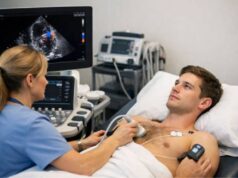
- Echocardiogram: assesses pumping function, chamber sizes, valve function, and fluid around the heart. It can also detect patterns consistent with myocarditis, such as regional motion abnormalities not fitting a single coronary artery distribution. If image quality is limited, contrast echocardiography may improve visualization.
- Cardiac MRI: often a pivotal test when available. It can detect edema (swelling), inflammation, and scar patterns that support myocarditis and can help estimate severity and prognosis.
When clinicians need definitive proof or when the diagnosis remains uncertain, they may consider:
- Endomyocardial biopsy: a catheter-based sampling of heart tissue. In eosinophilic myocarditis, biopsy can show eosinophil infiltration and tissue injury. It is invasive and sampling can miss patchy disease, but it can be decisive in severe or atypical cases where treatment choices carry high risk.
- Coronary evaluation: depending on age and risk factors, clinicians may use coronary CT angiography or invasive angiography to rule out blocked arteries when chest pain and troponin are present.
Cause-finding tests may be extensive because eosinophilia has many potential drivers. Depending on the clinical story, workup may include:
- Targeted parasite testing when exposure risk exists
- Autoimmune markers when systemic inflammatory disease is suspected
- Hematology evaluation for clonal eosinophilic disorders, sometimes including peripheral smear review, bone marrow testing, and molecular studies
Two common diagnostic pitfalls are worth emphasizing:
- Assuming “normal eosinophils today” rules it out. Counts can fluctuate, and tissue infiltration can persist.
- Attributing symptoms to asthma alone. Wheezing and breathlessness can coexist with cardiac involvement, and heart inflammation can worsen breathing.
A good diagnostic endpoint is more than a label. It should clarify severity (mild versus fulminant), identify a likely cause, establish a short-term monitoring plan, and define the triggers for urgent reassessment.
Treatment options and what to expect
Treatment is guided by three priorities: stabilize the heart, stop eosinophil-driven injury, and treat the underlying trigger to prevent relapse. Because eosinophilic myocarditis can progress quickly, clinicians often begin therapy while the full cause evaluation continues.
Stabilizing the heart
If symptoms are significant, care may occur in a hospital, sometimes in an intensive care unit. Supportive treatment can include:
- Oxygen and diuretics for fluid overload and breathlessness
- Medications to support blood pressure if shock develops
- Antiarrhythmic management and continuous monitoring for rhythm instability
- Mechanical circulatory support in severe fulminant cases, used as a bridge while inflammation is brought under control
Reducing eosinophilic inflammation
For many patients with suspected or confirmed eosinophilic myocarditis, clinicians use systemic corticosteroids because they can rapidly reduce inflammation and eosinophil activity. The dose and route depend on severity:
- Severe presentations may require high-dose intravenous steroids.
- More stable cases may begin with high-dose oral steroids.
Steroids are often tapered gradually over weeks to months. The taper is guided by symptoms, eosinophil trends, heart imaging, and medication side effects. Abrupt stopping can lead to rebound inflammation or adrenal complications.
Treating the trigger
Cause-directed therapy is essential and may include:
- Stopping a culprit medication when drug hypersensitivity is suspected, with careful substitution plans.
- Antiparasitic therapy when parasite exposure is likely or confirmed.
- Immunosuppressive or biologic therapy in autoimmune disease or refractory eosinophilic conditions, selected based on the broader diagnosis and organ involvement.
- Targeted therapy in clonal eosinophilic disorders identified by hematology testing.
This cause-focused layer is often what determines long-term success. Without it, steroid dependence and relapse become more likely.
Heart failure treatment and rhythm prevention
If pumping function is reduced, clinicians may start standard heart failure medicines, individualized to blood pressure and kidney function. Rhythm management may include:
- rate or rhythm control strategies if atrial fibrillation occurs
- careful electrolyte management
- activity restriction during the acute phase to reduce arrhythmia risk
Anticoagulation decisions
Anticoagulation is not automatic for every patient, but it may be considered when:
- heart function is markedly reduced,
- intracardiac clot is detected,
- atrial fibrillation is present,
- or embolic events occur.
Clinicians balance clot risk against bleeding risk and reassess as the heart recovers.
What to expect over time:
- Some people improve quickly once inflammation is controlled, especially if treatment begins early.
- Others recover more slowly over months, and some are left with residual scarring or reduced function.
- Follow-up imaging is not optional—it is how clinicians confirm recovery and safely guide steroid tapering, medication adjustments, and return to activity.
Recovery, follow-up, and prevention
Recovery from eosinophilic myocarditis is often a process rather than a single turning point. The main goals are to prevent relapse, monitor for late complications, and rebuild activity safely without triggering arrhythmias or worsening inflammation.
Follow-up that supports safe recovery
Most follow-up plans include:
- Repeat eosinophil counts to confirm durable control, especially during steroid tapering
- Medication safety monitoring for steroid side effects such as elevated blood sugar, blood pressure changes, bone loss risk, mood changes, and infection vulnerability
- Repeat echocardiography to track pumping function, chamber size, valve performance, and any fluid around the heart
- Cardiac MRI in selected cases to assess resolution of inflammation and the extent of scar
- Rhythm monitoring if palpitations persist or if there was arrhythmia during the acute phase
A practical self-monitoring routine can add meaningful safety:
- Track breathlessness during daily tasks, not just during workouts.
- If you had heart failure symptoms, check morning weight and watch for rapid increases.
- Note palpitations, near-fainting, or new chest discomfort and report promptly.
Return to activity
Most clinicians recommend avoiding intense exercise during active myocarditis and for a defined recovery period. The timing of return depends on symptoms, imaging, rhythm stability, and biomarker trends. Many patients do well with a gradual plan:
- Start with gentle walking and daily mobility once stable.
- Increase duration before intensity.
- Add strength training later, starting with low resistance.
- Resume high-intensity exercise only when cleared, especially if there was reduced heart function or ventricular arrhythmia risk.
Preventing relapse
Relapse risk is highest when the underlying driver remains active or when steroid tapering is too rapid for the disease biology. Prevention strategies typically include:
- Clear identification and avoidance of the trigger (for example, a culprit medication)
- Cause-directed long-term therapy when a chronic eosinophilic disorder is present
- Regular follow-up during and after steroid tapering rather than “as needed” visits
When to seek urgent care during recovery
Seek emergency care for:
- chest pain with severe shortness of breath, sweating, or fainting
- sudden neurologic symptoms suggesting stroke
- a sustained very fast or irregular heartbeat with weakness or chest discomfort
- severe shortness of breath at rest or new confusion
Contact your clinician urgently for:
- new or worsening breathlessness, swelling, or rapid weight gain
- recurrent palpitations, dizziness, or near-fainting
- fever while taking steroids or immune-suppressing therapy
- signs of bleeding if you are prescribed anticoagulation
Finally, prevention is not always about lifestyle alone—because eosinophilic myocarditis is often trigger-driven. Still, heart-supportive habits matter: good sleep, avoiding smoking and stimulant drugs, limiting alcohol, and treating underlying asthma or autoimmune disease consistently can reduce overall strain and make relapses easier to detect early. With coordinated care and structured monitoring, many people regain stable heart function and return to a full, active life.
References
- Eosinophilic myocarditis: systematic review – PubMed 2024 (Systematic Review)
- Eosinophilic Myocarditis: From Bench to Bedside – PMC 2024 (Review)
- 2024 ACC Expert Consensus Decision Pathway on Strategies and Criteria for the Diagnosis and Management of Myocarditis: A Report of the American College of Cardiology Solution Set Oversight Committee – PubMed 2025 (Guideline/Consensus)
- 2025 ESC Guidelines for the management of myocarditis and pericarditis – PubMed 2025 (Guideline)
Disclaimer
This article is for general educational purposes and does not replace medical advice, diagnosis, or treatment from a qualified clinician. Eosinophilic myocarditis can cause life-threatening complications, including dangerous heart rhythms, severe heart failure, shock, and stroke-like events. Seek emergency care immediately for severe chest pain, fainting, sudden severe shortness of breath, new neurologic symptoms, or a fast irregular heartbeat with weakness. Treatments such as corticosteroids, immunosuppressive drugs, biologic therapies, and anticoagulants can be highly effective but also carry risks—including infection and bleeding—and must be tailored to your specific cause, severity, and health profile. Do not start, stop, or change prescribed medications without medical guidance.
If you found this article helpful, please share it on Facebook, X (formerly Twitter), or any platform you prefer, and follow us on social media. Your support through sharing helps our team continue producing high-quality health content.