Effusive-constrictive pericarditis is an uncommon but important heart condition where two problems happen at the same time: fluid builds up around the heart, and the heart is also being “held back” by a stiff outer layer. People often feel short of breath, unusually tired, or swollen in the legs or belly—and the symptoms may persist even after doctors drain the fluid.
Because it can look like other causes of heart failure, the key is recognizing the pattern early and confirming it with the right tests. With timely care, many people improve, especially when the cause is treatable (such as inflammation or infection). The best plan usually combines careful drainage decisions, anti-inflammatory or cause-specific therapy, and—when needed—specialist procedures.
Table of Contents
- What is effusive-constrictive pericarditis?
- What causes it and who is at risk?
- Symptoms, warning signs, complications
- How doctors diagnose it
- Treatment options and what to expect
- Living well and when to seek urgent care
What is effusive-constrictive pericarditis?
Your heart sits inside a thin, protective sac called the pericardium. Effusive-constrictive pericarditis (often shortened to ECP) is a “two-layer” problem involving both fluid and stiffness.
- Effusive means there’s an abnormal amount of fluid in the pericardial space (the small gap between layers of the sac).
- Constrictive means the pericardium has become stiff and less flexible—often due to inflammation and scarring—so it can’t move normally as the heart fills with blood.
In ECP, the heart may be squeezed from the outside in two ways:
- Fluid pressure (especially if the fluid accumulates quickly), which can cause tamponade—dangerous compression that reduces the heart’s output.
- A rigid pericardial layer, most often affecting the inner (visceral) pericardium, which limits filling even after fluid is drained.
That last point is what makes ECP distinctive: symptoms and “back-pressure” in the heart can persist after drainage because the constriction remains. Clinicians often suspect ECP when a person’s blood pressure, breathing, or congestion doesn’t improve as expected after pericardiocentesis (needle drainage).
Why it’s easy to miss
ECP can mimic:
- Regular pericardial effusion (fluid only)
- Constrictive pericarditis (stiffness only)
- Restrictive cardiomyopathy (stiff heart muscle rather than stiff pericardium)
- Typical heart failure from other causes
The practical takeaway: if symptoms are out of proportion to imaging, or if they don’t improve after fluid is removed, ECP belongs on the short list.
Why timing matters
Early ECP may be driven more by active inflammation than permanent scarring. In that phase, anti-inflammatory treatment and careful monitoring can sometimes reverse or reduce constrictive physiology. Later, if scarring dominates, definitive therapy may require surgery.
What causes it and who is at risk?
ECP isn’t a single disease—it’s a syndrome that can result from many conditions that inflame or injure the pericardium. The underlying cause matters because it often determines whether the constriction is likely to resolve with medicines or progress toward scarring.
Common causes
Inflammatory and “idiopathic” causes
- Viral or post-viral inflammation (a frequent trigger in higher-income regions)
- “Idiopathic” pericarditis (no clear cause found, but often presumed inflammatory)
Infections
- Tuberculosis (a leading cause of constrictive forms in many parts of the world)
- Bacterial infection (less common, but can be severe)
- Fungal infection (rare, usually in immune compromise)
After procedures or injury
- After heart surgery (post-pericardiotomy inflammation)
- After chest trauma
- After catheter-based procedures (uncommon but possible)
Cancer-related
- Direct cancer involvement of the pericardium (lung, breast, lymphoma, and others)
- Complications of cancer therapies
Radiation
- Prior chest radiation can cause delayed pericardial scarring, sometimes years later
Autoimmune and systemic inflammatory disease
- Rheumatoid arthritis, lupus, vasculitis, sarcoidosis, and related conditions
Risk factors that raise suspicion
ECP is more likely when you have a history that can injure the pericardium, such as:
- Prior chest radiation
- Prior cardiac surgery
- Active or past tuberculosis exposure (depending on region and personal risk)
- Known cancer, especially with new or recurrent fluid around the heart
- Autoimmune disease flares
- Chronic kidney disease (uremia can inflame the pericardium)
A practical “pattern” insight
Clinicians often think in terms of reversible vs. fixed constriction:
- More likely reversible (inflammatory): recent onset, fever or chest pain, elevated inflammatory markers, and imaging that suggests active inflammation rather than dense scarring.
- More likely fixed (fibrotic/scarred): longer duration symptoms, prior radiation, thickened/calcified pericardium, and persistent signs despite anti-inflammatory therapy.
Even when the initial cause is clear, ECP can evolve. Someone may start with a simple effusion, then develop constriction as inflammation continues. That’s why follow-up is not optional—repeat exams and imaging can change the plan.
Symptoms, warning signs, complications
Symptoms come from one core problem: the heart can’t fill normally, so pressure backs up into the lungs, liver, belly, and legs. Some people feel dramatically ill over hours to days, while others develop symptoms over weeks.
Common symptoms
Many people report a mix of:
- Shortness of breath with exertion (and sometimes at rest)
- Fatigue and reduced exercise tolerance
- Chest discomfort or pressure (not always sharp “pericarditis pain”)
- Rapid heartbeat or palpitations
- Trouble lying flat, waking short of breath at night
Signs of fluid congestion are especially common in constrictive physiology:
- Swelling of ankles and legs
- Abdominal bloating or pain (from liver congestion)
- Rapid weight gain from fluid retention
- Reduced appetite or early fullness
Clues that point toward ECP specifically
ECP often shows a “mixed” picture—features of both tamponade and constriction:
- A known pericardial effusion plus marked fatigue, breathlessness, or low blood pressure
- Persistent neck vein distension and swelling even after fluid drainage
- Ongoing shortness of breath despite what looks like successful removal of fluid
Complications to know
Complications can be serious, especially if care is delayed:
- Cardiac tamponade: a medical emergency where fluid pressure sharply reduces cardiac output.
- Progression to chronic constrictive pericarditis: long-term scarring that may require pericardiectomy (surgical removal of the pericardium).
- Atrial arrhythmias: such as atrial fibrillation due to pressure and chamber strain.
- Kidney and liver dysfunction: from long-standing congestion and low forward flow.
- Malnutrition and muscle loss: in prolonged cases, fluid congestion can reduce appetite and absorption, creating a slow decline.
When symptoms should be treated as urgent
Seek emergency care if you have:
- Fainting, confusion, or severe weakness
- New chest pain with severe breathlessness
- Blue lips, severe sweating, or inability to speak full sentences
- Very low blood pressure, rapid worsening swelling, or marked reduction in urine
These can signal tamponade or severe hemodynamic compromise—situations where time matters.
How doctors diagnose it
Diagnosis usually takes two steps: confirming an effusion and then proving that constriction persists even when the fluid’s pressure effect is removed or minimized.
Initial evaluation
A clinician typically starts with:
- History (recent infection, surgery, radiation, cancer, autoimmune disease)
- Exam focused on congestion (neck veins, leg swelling, enlarged liver)
- Electrocardiogram and basic labs
- Chest imaging when needed
Echocardiography: the first key test
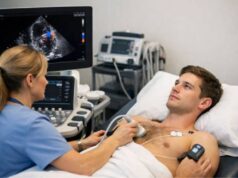
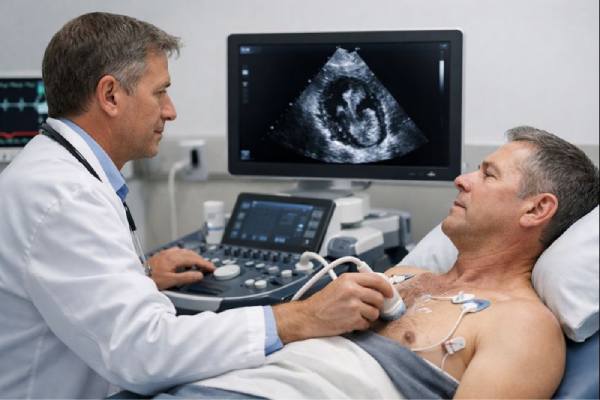
Ultrasound of the heart (echo) is central because it can show:
- The size and location of pericardial fluid
- Signs of tamponade physiology
- Features that suggest constriction, such as exaggerated interaction between the right and left sides of the heart during breathing (often described as “ventricular interdependence”)
Echo is excellent for triage and ongoing monitoring. However, ECP can still be challenging—especially when the effusion is large and dominates the picture.
CT and cardiac MRI: anatomy plus tissue clues
CT can define:
- Pericardial thickening or calcification
- Loculated fluid collections
- Clues to malignancy or prior radiation effects
Cardiac MRI adds information about:
- Inflammation and edema (swelling) in the pericardium
- Scarring patterns
- Effects on filling and motion
These tests help separate “hot” inflammatory disease (more likely to respond to medication) from established scarring (less likely to reverse).
Cardiac catheterization: the definitive confirmation
When the diagnosis remains uncertain—or the treatment decision hinges on certainty—doctors may recommend cardiac catheterization. This measures pressures inside the heart chambers directly and can show the pressure patterns typical of constriction. In classic ECP, clinicians look for evidence that intrapericardial pressure falls with drainage while intracardiac filling pressures remain abnormally high, indicating persistent constriction.
Finding the cause
Because ECP is a syndrome, identifying the trigger changes treatment. Depending on the context, evaluation may include:
- Pericardial fluid analysis (cell count, cultures, cytology for cancer, specialized testing for tuberculosis where appropriate)
- Inflammatory markers
- Autoimmune screening
- Targeted imaging or biopsy in selected cases
If you want to revisit symptom patterns that often prompt these deeper tests, see Symptoms, warning signs, complications.
Treatment options and what to expect
Treatment has three goals:
- Relieve dangerous pressure on the heart (if present).
- Treat the underlying cause.
- Prevent or address ongoing constriction.
Stabilization and drainage decisions
If tamponade or severe compromise is suspected, drainage may be urgent. Options include:
- Pericardiocentesis: needle drainage, often guided by ultrasound
- Pericardial drain left in place temporarily to prevent rapid re-accumulation
- Surgical pericardial window: creates a pathway for fluid to drain (often chosen for recurrent, loculated, or malignant effusions)
A key ECP nuance: drainage may improve some parameters but not fully normalize pressures or symptoms if the constriction component remains.
Anti-inflammatory therapy (when inflammation is driving the problem)
If the clinical picture suggests active inflammation, clinicians may use:
- Nonsteroidal anti-inflammatory drugs (NSAIDs), if safe for kidneys and stomach
- Colchicine (commonly used in pericarditis to reduce recurrence)
- Corticosteroids in selected cases (often when autoimmune disease is present or when other therapies are unsuitable)
The choice depends on kidney function, bleeding risk, infection risk, and the suspected cause. For example, steroids may be harmful if an unrecognized infection is the real driver.
Cause-targeted treatments
Because ECP can come from many sources, therapy may include:
- Anti-tuberculosis therapy (when TB is confirmed or strongly suspected)
- Antibiotics for bacterial infection
- Cancer-directed therapy (and procedures aimed at preventing re-accumulation)
- Immunosuppressive therapy for autoimmune pericardial disease, guided by specialists
When surgery becomes the definitive solution
If constriction is fixed and clinically significant, pericardiectomy—surgical removal of the constricting pericardium—may be the most effective option. It is a major operation and outcomes depend on:
- The patient’s overall health and organ function
- Whether the cause is radiation, prior surgery, infection, or ongoing inflammation
- How advanced congestion and liver/kidney effects are before surgery
A practical expectation: many patients feel improvement in breathing and swelling as filling pressures fall, but recovery can take weeks to months, especially if deconditioning and organ congestion were longstanding.
Living well and when to seek urgent care
Living with (or recovering from) ECP is often about preventing fluid overload, tracking symptoms early, and keeping follow-up tight—because the condition can change quickly in either direction.
Day-to-day management that helps
Your clinician may recommend:
- Daily weights at the same time each morning; report rapid gains (for many people, 1–2 kg in a few days is a meaningful signal).
- Salt awareness: reducing high-salt processed foods can meaningfully lower fluid retention. Rather than chasing perfection, aim for consistent habits—home-cooked meals more often, fewer packaged snacks, careful restaurant choices.
- Medication adherence: diuretics (“water pills”) may be used to control swelling, but dosing often needs adjustment as the illness improves or changes.
- Activity pacing: short, frequent walks usually beat long bursts. If you’re breathless, slow down rather than stopping completely—unless symptoms are severe.
If you have an inflammatory form and are on anti-inflammatory therapy, the plan may also include avoiding intense exercise until symptoms and markers settle.
Follow-up is part of the treatment
ECP management often relies on repeat assessment:
- Symptoms and exam findings (especially swelling and neck vein distension)
- Repeat echocardiography to track effusion size and filling patterns
- Labs to watch kidney function, electrolytes, and inflammation
- Reassessment of the underlying cause if the course is atypical
A useful mindset is to treat follow-up visits as “trend checks.” One snapshot can mislead; the pattern over time is what guides whether you’re improving, plateauing, or moving toward chronic constriction.
Prevention and risk reduction
Not all causes are preventable, but you can reduce risk of complications by:
- Seeking evaluation early for persistent breathlessness or swelling after a known pericardial effusion
- Completing infection-directed therapy exactly as prescribed
- Communicating cancer history or radiation history clearly to all treating clinicians
- Asking whether your case suggests a reversible inflammatory phase—and what signs would indicate it’s time to escalate care
When to seek urgent or emergency care
Call emergency services or go to the ER for:
- Fainting, severe weakness, confusion, or collapse
- Severe shortness of breath at rest, blue lips, or inability to speak comfortably
- Sudden chest pain with sweating, nausea, or a sense of impending doom
- Rapidly worsening swelling with very low urine output
If your symptoms are milder but clearly worsening over days—especially after a recent drainage—contact your clinician promptly. Persistent symptoms after drainage can be a clue to ECP and should not be dismissed as “just recovery time.”
References
- 2025 Concise Clinical Guidance: An ACC Expert Consensus Statement on the Diagnosis and Management of Pericarditis: A Report of the American College of Cardiology Solution Set Oversight Committee 2025 (Guideline)
- 2025 ESC Guidelines for the management of myocarditis and pericarditis 2025 (Guideline)
- Pericardial Diseases: International Position Statement on New Concepts and Advances in Multimodality Cardiac Imaging 2024 (Position Statement)
- Constrictive Pericarditis: An Update on Noninvasive Multimodal Diagnosis 2024 (Review)
- A Comprehensive Review of Effusive-Constrictive Pericarditis, Diagnosis, and Management 2025 (Review)
Disclaimer
This article is for educational purposes only and does not provide medical advice, diagnosis, or treatment. Effusive-constrictive pericarditis can become life-threatening, especially if cardiac tamponade develops. If you have chest pain, severe shortness of breath, fainting, or rapidly worsening swelling, seek emergency care immediately. For personal guidance, consult a qualified clinician who can evaluate your symptoms, tests, medical history, and medications.
If you found this article helpful, please share it on Facebook, X (formerly Twitter), or any platform you prefer—and follow us on social media. Your support through sharing helps our team continue producing reliable health content.