A heart attack is a sudden emergency where part of the heart muscle is starved of blood. The usual reason is a blockage in a heart artery that forms quickly and does not clear on its own. Doctors may call it a myocardial infarction (heart muscle damage from blocked blood flow). What happens next depends on time: the earlier blood flow is restored, the more heart muscle can be saved, and the better the long-term outlook. The challenge is that symptoms do not always look “classic,” especially in women, older adults, and people with diabetes. This article explains what a heart attack is, why it happens, who is most at risk, what warning signs to watch for, how diagnosis is confirmed, which treatments are used in the first minutes through the first year, and how to reduce the chance of another event.
Table of Contents
- What a heart attack is and what it does
- What causes heart attacks and who is at risk
- Early symptoms, red flags, and complications
- How a heart attack is diagnosed fast
- Treatments that save heart muscle
- Recovery, prevention, and when to seek urgent care
What a heart attack is and what it does
A heart attack happens when blood flow through a coronary artery drops so sharply that the heart muscle downstream starts to suffocate. Without oxygen, heart cells begin to fail within minutes. Some injury can be reversed if blood flow returns quickly; prolonged blockage leads to permanent scarring. That scar can weaken the heart’s pumping strength, change how electrical signals move, and raise the risk of dangerous rhythm problems.
Most heart attacks begin with long-term artery narrowing from atherosclerosis—fatty, inflammatory buildup inside artery walls. For years it may cause no symptoms or only exertional chest pressure. Then, often without warning, the surface of a plaque cracks or erodes. Platelets rush in to “patch” the area, and a clot forms. If the clot severely blocks flow, a heart attack starts.
Clinicians often divide heart attacks into two broad patterns because treatment urgency and strategy can differ:
- ST-elevation myocardial infarction (STEMI): typically a sudden, near-total artery blockage. This is the classic “time is muscle” emergency where rapid artery opening is the priority.
- Non–ST-elevation myocardial infarction (NSTEMI): usually a partial blockage or severe narrowing with reduced flow. It is still serious, but decisions may rely more on risk assessment and overall stability.
Not every rise in heart injury markers is a classic clot-driven heart attack. Severe infection, major bleeding, uncontrolled high blood pressure, or very fast heart rhythms can create a mismatch between oxygen supply and demand, leading to “demand-related” injury. The symptoms can look similar, but the long-term prevention plan may focus more on the trigger.
What a heart attack can do to the body is not only about the heart. During an event, stress hormones surge, breathing may become labored, and blood pressure can swing. In the days after, fatigue and anxiety are common and normal. Many people also experience a confusing mix of relief (“I’m alive”) and fear (“Will it happen again?”). A good care plan addresses both the medical repair and the human recovery.
The most practical takeaway: a heart attack is treatable, but it is not something to “wait out.” If symptoms suggest a heart attack, minutes matter, and early action can change a life’s trajectory.
What causes heart attacks and who is at risk
The most common cause of a heart attack is a clot that forms on top of a ruptured or eroded plaque in a coronary artery. But risk is built long before the day of the event. Think of risk in two layers: what makes plaques form, and what makes plaques unstable.
Key drivers that accelerate plaque buildup include:
- High LDL cholesterol (“bad” cholesterol): higher and longer exposure raises risk.
- High blood pressure: damages artery walls and speeds atherosclerosis.
- Smoking and nicotine exposure: injures vessels, increases clotting tendency, and reduces oxygen delivery.
- Diabetes and insulin resistance: increases inflammation and affects blood vessels in multiple ways.
- Kidney disease: strongly raises cardiovascular risk.
- Obesity, especially central weight gain: often travels with high blood pressure, abnormal lipids, and insulin resistance.
- Physical inactivity and poor sleep: contribute to metabolic strain and higher blood pressure.
- Family history: early heart disease in close relatives increases baseline risk.
Factors that can increase the chance that a plaque becomes “clot-prone” include:
- Ongoing inflammation: from smoking, uncontrolled diabetes, or chronic inflammatory diseases.
- Sudden stressors: intense physical exertion in untrained people, severe emotional stress, or stimulant drugs can be triggers in vulnerable arteries.
- Medication nonadherence: stopping antiplatelet therapy after a stent or skipping cholesterol-lowering treatment can raise short-term risk.
- Untreated sleep apnea: linked with higher blood pressure and arrhythmias.
Some groups are more likely to have symptoms that are missed or dismissed. Women may have less “textbook” chest pressure and more shortness of breath, nausea, back or jaw pain, or unusual fatigue. Older adults may present with weakness, confusion, or fainting. People with diabetes may have reduced pain sensation and present later.
A useful way to think about your personal risk is to separate modifiable and nonmodifiable factors.
Nonmodifiable:
- Age, sex at birth, genetics/family history.
Modifiable:
- Blood pressure, cholesterol, smoking, diabetes control, weight, exercise, sleep, alcohol intake, and stress management.
The encouraging truth is that modifiable factors are powerful. Even after someone has significant coronary disease, lowering LDL, controlling blood pressure, stopping smoking, and participating in cardiac rehabilitation can meaningfully reduce the chance of another heart attack. Prevention is not a single behavior; it is a set of small repeatable actions that reshape risk over months and years.
Early symptoms, red flags, and complications
Heart attack symptoms can be dramatic, subtle, or somewhere in between. The most common symptom is discomfort in the center or left side of the chest that lasts more than a few minutes or goes away and returns. Many people describe it as pressure, squeezing, heaviness, or a burning weight—not a sharp “pinpoint” pain.
Common symptoms include:
- Chest pressure, tightness, or pain
- Pain spreading to the arm (often left), both arms, back, neck, jaw, or upper stomach
- Shortness of breath, with or without chest discomfort
- Sweating, clammy skin
- Nausea, vomiting, or indigestion-like discomfort
- Lightheadedness or fainting
- Unusual fatigue or a sudden drop in exercise tolerance
Symptoms that are more common in women, older adults, and people with diabetes can include:
- Breathlessness as the main complaint
- Nausea, weakness, or dizziness without clear chest pain
- Upper back or jaw discomfort
- A “something is very wrong” feeling that is hard to describe
Red flags that should be treated as an emergency:
- Symptoms at rest or that wake you from sleep
- Symptoms lasting more than 10 minutes
- Chest discomfort with sweating, fainting, or severe shortness of breath
- New chest discomfort in someone with known coronary disease or prior stent/bypass
- Sudden collapse or seizure-like activity (may be a dangerous heart rhythm)
What to do in the moment:
- Call your local emergency number immediately (112 in much of Europe, 911 in the U.S.).
- Do not drive yourself unless there is no safer option.
- If the person is unconscious and not breathing normally, start CPR and follow dispatcher instructions.
- If emergency services advise it and there is no allergy or active bleeding risk, chewing a standard adult aspirin may help early by reducing clot growth.
Complications can begin during the event or days later. The most serious early risks are:
- Dangerous rhythms: ventricular fibrillation can cause sudden cardiac arrest.
- Heart failure: fluid in the lungs, severe breathlessness, low oxygen.
- Cardiogenic shock: the heart cannot pump enough blood to support organs.
- Mechanical complications: rare tears or valve problems, more likely with larger untreated attacks.
Later complications may include persistent reduced pumping function, chest pain from ongoing ischemia, depression or anxiety, and medication side effects. Knowing these risks is not meant to frighten you. It is meant to underline the reason for urgent action and careful follow-up: early treatment prevents many complications, and structured recovery reduces long-term disability.
How a heart attack is diagnosed fast
In a suspected heart attack, clinicians diagnose quickly because the next steps depend on it. Diagnosis usually rests on three pillars: symptoms, an electrocardiogram, and blood tests for heart muscle injury—plus imaging when needed.
- History and exam
Clinicians ask focused questions: when symptoms started, what they feel like, what makes them worse or better, and whether there is breathlessness, fainting, or sweating. They also assess vital signs and listen for signs of fluid overload or shock. - Electrocardiogram (ECG/EKG)
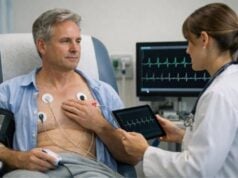
An ECG is a fast, painless test that records the heart’s electrical activity. Certain patterns can strongly suggest an artery is fully blocked (STEMI) and trigger immediate plans to open the artery. Other patterns may suggest ischemia, prior heart damage, or rhythm problems. A normal first ECG does not rule out a heart attack, especially early. That is why repeated ECGs are common when symptoms continue. - Blood tests: cardiac troponin
Troponin is a protein released when heart muscle is damaged. High-sensitivity troponin tests can detect small injuries earlier than older tests, which helps with faster rule-in or rule-out. Clinicians usually measure troponin more than once to look for a rising or falling pattern, because a single value can be unclear early after symptom onset or in people with kidney disease. - Risk stratification and “look-alikes”
Not all chest pain is a heart attack. Heartburn, muscle strain, panic, pneumonia, blood clots in the lungs, and inflammation around the heart can mimic symptoms. Clinicians also consider a condition called aortic dissection, which can be life-threatening and needs very different treatment. A key part of diagnosis is deciding who needs immediate catheter-based treatment and who needs more testing first. - Imaging and procedures
Depending on the situation, clinicians may use:
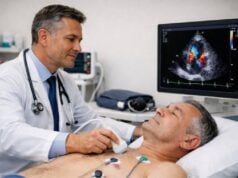
- Echocardiogram (heart ultrasound): shows pumping function and motion changes that can support the diagnosis and spot complications.
- Coronary angiography: a catheter procedure that maps blockages and allows treatment during the same session.
- CT coronary angiography: in selected stable patients with uncertain diagnosis, CT can help evaluate coronary disease, especially in chest pain pathways.
A practical point for patients: the system often moves fast, but you can still help. If you can, share a medication list, allergies, prior heart history, and the exact time symptoms began. That single detail—time of onset—can influence the safest and most effective treatment plan.
Treatments that save heart muscle
Heart attack treatment has two goals: restore blood flow to prevent more damage, and stabilize the heart to prevent dangerous rhythms and complications. The plan depends on the heart attack type, time since symptoms started, bleeding risk, and overall stability.
Immediate actions (often in the ambulance or emergency department):
- Oxygen only if levels are low (routine oxygen is not always needed).
- Pain and nausea control when appropriate.
- Antiplatelet therapy to reduce clot growth (commonly aspirin plus a second agent).
- Anticoagulant medication in many cases to prevent further clotting while plans are made.
- Treatments for dangerously high blood pressure, low blood pressure, or arrhythmias.
Restoring blood flow (reperfusion)
For STEMI, the priority is to open the blocked artery as quickly as possible. The preferred method in most settings is primary percutaneous coronary intervention (PCI)—balloon and stent treatment during urgent angiography. Systems often target a “door-to-balloon” time around 90 minutes when PCI is available. If timely PCI is not possible, clot-busting medication (fibrinolysis) may be used in selected patients, followed by transfer for angiography.
For NSTEMI, treatment is also urgent, but timing may vary. High-risk features (ongoing chest pain, unstable blood pressure, heart failure, serious ECG changes, or very elevated troponin) often lead to early angiography and possible PCI. Lower-risk patients may undergo careful monitoring and planned imaging or angiography.
Hospital treatments over the first days often include:
- High-intensity statin therapy to lower LDL and stabilize plaques.
- Beta-blockers in appropriate patients to reduce heart workload and arrhythmia risk.
- ACE inhibitor/ARB (or related medications) when there is reduced pumping function, diabetes, high blood pressure, or other indications.
- Aldosterone antagonists in selected patients with reduced function and heart failure or diabetes.
- Stent aftercare: dual antiplatelet therapy is commonly continued for months, with duration tailored to bleeding and clot risk.
What to expect after PCI or hospitalization:
- Fatigue is common, even if the procedure went smoothly.
- Chest soreness from the access site (wrist or groin) is typical for days.
- Medication lists often expand quickly; each drug has a reason, and it is worth asking what that reason is.
- Before discharge, many hospitals arrange cardiac rehabilitation, a follow-up plan, and targets for blood pressure and LDL.
A helpful framing: treatment is not “one procedure and done.” Opening the artery treats the crisis. The months that follow—medications, rehab, and lifestyle changes—treat the disease process that caused the crisis. Both matter.
Recovery, prevention, and when to seek urgent care
Recovery after a heart attack is a structured process, not a test of toughness. Most people do best with a clear plan that covers medications, activity, nutrition, emotional health, and warning signs.
The first 4–12 weeks: build stability
- Cardiac rehabilitation: a supervised program that blends safe exercise, education, and risk-factor coaching. Many programs start soon after discharge and adjust intensity based on symptoms and test results. If you cannot attend in person, ask about home-based options.
- Medication adherence: missed doses are a common reason for early complications. Use a pill organizer, phone reminders, or blister packs to reduce friction.
- Activity: walking is usually encouraged early, often in short sessions that gradually lengthen. Your clinician may give heart-rate limits or exertion targets.
- Sleep and stress: poor sleep increases blood pressure and cravings; chronic stress can undermine routine. A simple starting point is a consistent sleep schedule and one daily stress-reducing practice (10 minutes of breathing, stretching, or a quiet walk).
Long-term prevention: lower the odds of another event
Focus on a few high-impact levers:
- Stop smoking completely: the single most powerful behavior change for many patients.
- Lower LDL aggressively: your clinician may aim for very low LDL targets after a heart attack, using high-intensity statins and additional medications if needed.
- Control blood pressure: home measurements (a few times weekly) can reveal patterns clinic readings miss.
- Improve glucose control if you have diabetes: even modest improvements can reduce risk.
- Diet pattern: emphasize vegetables, beans, whole grains, fish, nuts, and unsweetened dairy; reduce ultra-processed foods, sugary drinks, and frequent high-salt meals.
- Exercise: many people work toward at least 150 minutes per week of moderate activity, plus strength training twice weekly, but your rehab team can individualize this safely.
Emotional recovery deserves equal respect
After a heart attack, it is common to experience anxiety, irritability, or low mood—sometimes peaking weeks after discharge. Tell your care team if you have:
- persistent sadness or loss of interest,
- panic symptoms,
- fear that prevents activity,
- problems with intimacy or body confidence.
These are treatable, and addressing them improves both quality of life and health behaviors.
When to seek urgent care during recovery:
- New or worsening chest pressure, especially with sweating or breathlessness
- Shortness of breath at rest, fainting, or palpitations with dizziness
- Rapid swelling of legs or sudden weight gain over a few days (possible fluid retention)
- Black stools, vomiting blood, or unusual bruising (possible bleeding on antiplatelet/anticoagulant therapy)
- A stent access-site problem: expanding bruising, severe pain, numbness, or bleeding that does not stop with firm pressure
A heart attack can feel like a single frightening day. In reality, it is the beginning of a new chapter of prevention. With the right mix of medical therapy, rehab, and realistic habit changes, many people return to full, active lives—and feel more in control of their health than they did before the event.
References
- 2025 ACC/AHA/ACEP/NAEMSP/SCAI Guideline for the Management of Patients With Acute Coronary Syndromes: A Report of the American College of Cardiology/American Heart Association Joint Committee on Clinical Practice Guidelines 2025 (Guideline)
- 2023 ESC Guidelines for the management of acute coronary syndromes 2023 (Guideline)
- 2021 AHA/ACC/ASE/CHEST/SAEM/SCCT/SCMR Guideline for the Evaluation and Diagnosis of Chest Pain: A Report of the American College of Cardiology/American Heart Association Joint Committee on Clinical Practice Guidelines 2021 (Guideline)
- World Heart Federation Roadmap for Secondary Prevention of Cardiovascular Disease: 2023 Update 2024 (Position/Consensus)
- Part 1—Cardiac Rehabilitation After an Acute Myocardial Infarction: Four Phases of the Programme—Where Do We Stand? 2025 (Review)
Disclaimer
This article is for general education and is not a substitute for personal medical care. A heart attack is a medical emergency; if you think you or someone else may be having one—especially with chest pressure, shortness of breath, sweating, fainting, or sudden weakness—call your local emergency number immediately (112 in much of Europe, 911 in the U.S.). Do not delay care or try to drive yourself if emergency services are available. Treatment choices (including antiplatelet drugs, anticoagulants, and cholesterol-lowering therapy) must be individualized by a licensed clinician based on your symptoms, test results, and bleeding risk.
If you found this article helpful, please share it on Facebook, X (formerly Twitter), or any platform you prefer, and follow us on social media. Your support through sharing helps our team continue producing reliable, high-quality health content.