Chinese goldthread (Coptis chinensis)—often called Huanglian in traditional East Asian medicine—is a very bitter rhizome valued for its “cooling” and cleansing character. In modern terms, it is best known for a dense concentration of isoquinoline alkaloids, especially berberine, alongside coptisine, palmatine, and related compounds that interact with inflammation pathways, gut microbes, and metabolic signaling.
People usually reach for Chinese goldthread when they want targeted support for digestive discomfort, occasional loose stools linked to dietary triggers, or a short-term “reset” when the body feels overheated or inflamed. It is also widely discussed for metabolic support—especially healthy blood sugar and lipid balance—though the best evidence is often for berberine-rich extracts and traditional formulas rather than the whole herb alone.
Because it is potent, Chinese goldthread is not a casual daily tonic. Getting benefits depends on choosing the right form, using conservative doses, and knowing who should avoid it.
Essential Insights
- May support healthy blood sugar and lipid markers when used consistently for 8–12 weeks.
- Can be helpful short-term for digestive upset linked to “heat” patterns, especially bitter, yellow-coating tongue and burning sensations.
- Avoid during pregnancy, breastfeeding, and in infants due to safety concerns with berberine-like alkaloids.
- Common adult dosage range: 200–500 mg extract 1–2 times daily, or 1–3 g dried rhizome per day (short-term).
- People on diabetes medications or immunosuppressants should avoid self-prescribing due to interaction risk.
Table of Contents
- What is Chinese goldthread
- Key ingredients and alkaloids
- What does it help with
- How to use Coptis chinensis
- How much Chinese goldthread per day
- Side effects and interactions
- What the evidence says
What is Chinese goldthread
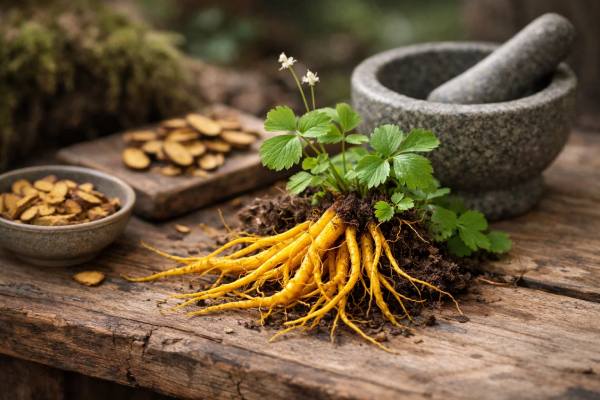
Chinese goldthread (Coptis chinensis) is a small woodland plant in the buttercup family (Ranunculaceae). The medicinal part is the rhizome—a yellow, knotted underground stem that becomes intensely bitter when dried. In many herbal traditions, the color and taste are not just sensory details; they are part of how practitioners decide when an herb “fits.” Chinese goldthread’s sharp bitterness and “cold” nature are traditionally used to clear internal heat, dry dampness, and calm inflammatory patterns.
You may also see it listed as Coptidis Rhizoma or simply Huanglian. Importantly, “goldthread” can refer to other Coptis species in different regions, so the botanical name matters when you’re buying supplements or dried herb.
Historically, Chinese goldthread appears in classic formulas used for:
- Digestive imbalance with heat signs (burning, foul belching, greasy foods feeling “heavy”)
- Damp-heat diarrhea or dysentery-like patterns (urgent stools, possible mucus)
- Mouth and throat discomfort associated with “heat” (canker sores, swollen gums)
- Skin flare patterns described as hot, red, and irritated
In modern wellness use, Chinese goldthread is usually approached as a short-course herb or as part of a formula—not an everyday tea. Its potency is one reason it remains respected: a small amount can be strongly active, which also means dosing errors are easier to make.
If you’re comparing similar plants, Chinese goldthread is often discussed alongside other berberine-containing botanicals such as goldenseal use and safety basics, but they are not interchangeable in traditional practice or in supplement quality standards. Chinese goldthread tends to be more strongly “cooling” and is often chosen for pronounced heat-pattern complaints.
Quality considerations matter. Reputable products identify the exact species, plant part (rhizome), and extraction ratio or standardization. For dried herb, the rhizome should be distinctly yellow inside and strongly bitter; stale, pale material is often weaker.
Key ingredients and alkaloids
Chinese goldthread is chemically famous for isoquinoline alkaloids, a family of bright yellow compounds that tend to bind strongly to biological targets. Most of the herb’s traditional “heat-clearing” reputation maps reasonably well onto what these alkaloids do: they influence inflammatory signaling, microbial balance in the gut, and metabolic pathways that regulate glucose and lipids.
Key compounds commonly discussed include:
- Berberine: The best-known constituent. It is studied for metabolic support (glucose and lipids), gut barrier integrity, and inflammatory modulation. A practical nuance: berberine has low oral absorption, yet it can still be effective—likely because it acts strongly in the intestinal tract, influences bile acids, and shifts microbial activity.
- Coptisine and palmatine: Often present in meaningful amounts, these may complement berberine’s effects on inflammation and microbes. They also help explain why “whole-herb” extracts don’t behave exactly like isolated berberine.
- Jatrorrhizine and epiberberine: Less famous but commonly present, adding to the broader “alkaloid fingerprint” used in quality control.
- Other components: Polysaccharides and minor phenolics may support antioxidant activity and gut immune signaling, though they’re usually not the headline ingredients.
How these constituents may translate to effects:
- Metabolic signaling
Many discussions center on AMPK (an energy-sensing pathway). While you don’t need to memorize pathways, it helps to understand the “direction”: Chinese goldthread constituents often push metabolism toward improved insulin sensitivity and healthier lipid handling. - Gut-microbe interactions
The rhizome’s alkaloids are strongly antimicrobial in lab settings. In real life, the goal is rarely “kill everything”; it’s more about nudging the microbiome away from dysbiosis and reducing inflammatory byproducts. This is one reason some people notice digestive changes—good or bad—early on. - Inflammation modulation
Traditional “heat” often overlaps with modern concepts like oxidative stress and inflammatory signaling. Chinese goldthread constituents may downshift overly activated inflammatory pathways.
If you want a deeper dive into the best-studied single compound, berberine benefits and dosing considerations can be a useful companion topic—especially because many supplements labeled “Coptis” are effectively berberine products in disguise. Still, whole-herb extracts may feel different for some people due to the additional alkaloids and the way they behave together.
A key takeaway for shoppers: look for standardization (for example, “berberine content” listed) and transparency about the full extract, since two products with the same berberine number can still vary in coptisine/palmatine content and overall tolerance.
What does it help with
Chinese goldthread’s uses tend to cluster into two modern categories: digestive support and metabolic support, with additional interest in oral/skin comfort when inflammation is part of the picture. The most realistic outcomes are usually modest and depend heavily on the form used (whole herb vs standardized extract), dose, and whether you’re addressing an acute issue or a longer-term metabolic goal.
Digestive support (short-term)
Traditionally, Chinese goldthread is used when digestive upset has “heat” features—burning, bitter taste, foul belching, greasy-food intolerance, or urgent stools. In practical terms, people most often try it for:
- Occasional loose stools after dietary indiscretion
- A hot, irritated stomach feeling (especially with reflux-like discomfort)
- “Damp-heat” patterns with heaviness, nausea, or greasy tongue coating
For digestion, the most common approach is short duration: several days up to two weeks. If symptoms include fever, blood in stool, significant dehydration, severe abdominal pain, or persistent diarrhea beyond a couple of days, medical care matters more than herbs.
Metabolic support (blood sugar and lipids)
This is where Chinese goldthread gets the most attention. Berberine-rich extracts are studied for supporting:
- Healthy fasting and post-meal blood glucose
- Insulin sensitivity
- Triglycerides and LDL cholesterol
A realistic timeline is 8–12 weeks to see meaningful changes on labs, and the effect is usually strongest when paired with diet, activity, and clinician-guided medication plans. If you are already using prescriptions for glucose control, the priority is safety—stacking can push blood sugar too low.
Oral and skin comfort (inflammation-linked)
Chinese goldthread appears in traditional patterns related to mouth sores, gum irritation, and certain “hot” skin flares. For modern users, these are often secondary uses—supporting overall inflammatory balance rather than acting as a stand-alone treatment.
Liver and gallbladder “heat” patterns
In traditional frameworks, Huanglian is used in formulas aimed at damp-heat that can involve the liver and gallbladder. If your goal is specifically liver-marker support, it may help to compare options such as milk thistle for liver-focused support, since Chinese goldthread is typically not used as a long-term liver tonic.
The bottom line: Chinese goldthread can be useful, but it is best treated as a targeted tool. Strong bitterness often signals strong activity—and strong activity calls for careful dosing and clear goals.
How to use Coptis chinensis
Chinese goldthread can be used as a traditional dried herb, but most modern users encounter it as an extract or capsule. The right form depends on your goal, your tolerance for bitterness, and whether you need precise dosing.
Common forms
- Dried rhizome (decoction/tea): Traditional and flexible, but extremely bitter. Best for short-term digestive heat patterns.
- Powdered rhizome: Sometimes used in small doses, often combined with other herbs to soften the intensity.
- Standardized extracts/capsules: The most practical for metabolic goals because the dose can be measured. Many are effectively “berberine products,” though good extracts keep a broader alkaloid profile.
- Tinctures: Less common for Huanglian compared with other herbs, but available. Alcohol extracts can be potent; label clarity matters.
Practical preparation: simple decoction
If using dried rhizome, think “medicine,” not “beverage.”
- Use 1–3 g dried rhizome for beginners (short-term use).
- Simmer gently in water for 10–20 minutes (covered).
- Strain and take in small servings, often with food to reduce stomach irritation.
Because the taste is intense, people often take it as a small “shot” rather than sipping a full mug.
Using it in blends
In traditional practice, Chinese goldthread is frequently paired with other herbs to refine the effect—cooling heat without overly irritating the stomach. Some classic formulas combine it with warming or harmonizing herbs. For example, licorice is sometimes used in formulas to soften harshness and support overall balance; if you want context on that companion herb, see licorice benefits and safety.
Choosing a quality product
For extracts, look for:
- Species name (Coptis chinensis) and plant part (rhizome)
- Standardization details (for example, alkaloid or berberine content)
- Extraction ratio (such as 10:1) or mg-equivalent labeling
- Third-party testing for contaminants (heavy metals, adulterants)
When to take it
- For digestive support: often after meals or when symptoms arise (short course).
- For metabolic support: commonly with meals, especially if aiming to influence post-meal glucose.
Avoid treating it like a daily “cleanse.” The most effective use is deliberate: choose the smallest dose that fits your goal, track how you feel, and stop if adverse effects show up.
How much Chinese goldthread per day
Chinese goldthread dosing depends on the form you use. Traditional dosing is usually expressed as grams of dried rhizome, while supplements are often labeled in milligrams of extract (sometimes standardized to berberine). Because products vary widely, treat the ranges below as typical adult starting points, not universal rules.
Dried rhizome (decoction)
- Typical range: 1–3 g per day (often divided)
- Short-term upper range in traditional use: 3–6 g per day for limited periods, usually in formulas and with practitioner guidance
A practical strategy is to start low (1 g), assess tolerance for 48 hours, then move toward 2–3 g if needed. For acute digestive “heat” patterns, many people use it for 3–7 days, then stop.
Capsules or tablets (non-standardized or lightly standardized extract)
- Typical range: 200–500 mg, 1–2 times daily
- If the label specifies “berberine content,” you can dose more precisely, but remember that whole-herb extracts may feel stronger than the same berberine amount from a single-compound product.
Strong standardized extracts (berberine-focused)
Some Coptis products function similarly to berberine supplements. In that case, users often land in a total daily alkaloid range comparable to berberine regimens.
- Common total daily range: 500–1,500 mg per day (divided)
If your product is clearly standardized and you’re using it for metabolic support, a common pattern is:
- 1 dose with the largest carbohydrate-containing meal
- Optional second dose with another meal if well tolerated
Timing tips
- With meals tends to reduce nausea and cramping.
- If you’re sensitive to constipation, avoid taking it late at night and increase hydration.
- If you take medications, separate dosing by at least 2 hours unless a clinician advises otherwise, because berberine-like alkaloids can alter absorption and metabolism.
Duration and reassessment
- Digestive short course: 3–14 days
- Metabolic support trial: 8–12 weeks, then reassess with symptoms and labs
- Long-term daily use: generally not recommended without clinician oversight
The most important dose rule is not “more is better,” but “enough to help, not enough to cause side effects.” If you notice dizziness, worsening fatigue, persistent constipation, or low blood sugar symptoms, reduce the dose or stop and seek guidance.
Side effects and interactions
Chinese goldthread is effective partly because it is pharmacologically active—and that same activity can create problems in the wrong person or at the wrong dose. Side effects are most often gastrointestinal, but interaction risks matter, especially for people on prescriptions.
Common side effects
- Nausea, stomach cramping, or appetite suppression (especially on an empty stomach)
- Constipation (a frequent complaint with berberine-rich products)
- Headache or a “wired/tired” feeling in sensitive users
- Bitter taste and reflux-like discomfort (more common with decoctions)
Many side effects improve by lowering the dose, taking it with food, or shortening the course.
Who should avoid Chinese goldthread
- Pregnant or breastfeeding people (avoid due to alkaloid safety concerns and lack of appropriate human safety data)
- Infants and young children, especially newborns (berberine-like compounds raise concern for bilirubin-related complications in early life)
- People with a history of severe reactions to berberine-containing herbs
- Anyone with significant, unexplained liver symptoms unless medically supervised
Medication interaction risk (high importance)
Chinese goldthread’s alkaloids may influence drug-metabolizing enzymes and transporters. That can change medication levels or intensify effects.
Use caution or avoid self-prescribing if you take:
- Diabetes medications or insulin (risk of hypoglycemia when combined with glucose-lowering botanicals)
- Blood pressure medications (possible additive lowering in some people)
- Anticoagulants or antiplatelet agents (risk is not the primary concern, but any multi-drug regimen warrants supervision)
- Immunosuppressants such as cyclosporine or tacrolimus (small changes in levels can matter)
- Medications with narrow therapeutic ranges (antiarrhythmics, certain anticonvulsants)
Red flags to stop and seek help
- Yellowing of skin/eyes, dark urine, or unexplained itching
- Severe fatigue, persistent nausea, or right-upper abdominal pain
- Fainting, severe dizziness, or confusion (possible low blood sugar or low blood pressure)
- Rash, swelling, wheezing, or other allergic symptoms
Special populations
- Older adults: more likely to be on interacting medications; start low if used at all.
- People with liver disease: avoid unsupervised use, and consider baseline and follow-up labs if a clinician agrees it’s appropriate.
- People with chronic constipation: Chinese goldthread may worsen it; choose alternatives or use very short courses.
If you want the benefits of Chinese goldthread, the safest path is to treat it like a concentrated botanical medicine: clear goal, conservative dose, and a strong preference for supervision when medications are involved.
What the evidence says
Chinese goldthread sits at an interesting crossroads: it has centuries of traditional use, a clear set of identifiable active compounds, and a growing modern research base. At the same time, the strongest human evidence often centers on berberine or on multi-herb formulas containing Coptis, rather than on whole Coptis chinensis rhizome used alone in a standardized way.
Where evidence is strongest
- Metabolic outcomes
Across clinical trials and meta-analyses, berberine-rich interventions consistently show potential to improve blood sugar and lipid markers. This supports Chinese goldthread’s reputation, but it also creates a practical challenge: many “Coptis” products are not truly studied as Coptis—they’re studied as berberine sources. If you’re using Chinese goldthread for metabolic support, it’s reasonable to expect modest improvements over 8–12 weeks, especially when combined with lifestyle changes. - Digestive and gut-related mechanisms
Laboratory and animal research strongly suggests effects on gut inflammation, barrier function, bile acids, and microbial balance. Translating that into predictable human outcomes is harder, but it helps explain why some people notice digestive shifts quickly—sometimes positive (less urgency, less “heat”), sometimes negative (constipation, cramping). - Anti-inflammatory activity
Mechanistic studies repeatedly point toward downshifting inflammatory signaling. Clinically, this often shows up as “supportive,” not curative—meaning it may help reduce symptom intensity but should not replace medical care for infections, autoimmune disease, or inflammatory bowel disease.
Where evidence is limited
- Whole-herb, standardized dosing studies are less common than studies on isolated compounds or formulas.
- Long-term safety is not well established for continuous daily use.
- Product variability is a major issue: two products labeled “Coptis” can differ meaningfully in alkaloid profile, potency, and contaminants.
How to use the evidence wisely
- Treat Chinese goldthread as an adjunct, not a replacement for proven care.
- Choose products that state species, plant part, and standardization.
- Match expectations to evidence: modest, measurable changes are realistic; dramatic transformations are not.
- Track outcomes: symptom logs for digestive goals, and lab markers (with clinician help) for metabolic goals.
The most balanced conclusion is this: Chinese goldthread has credible pharmacology and promising human evidence in certain areas, but the best results come when it is used strategically, in the right person, for the right length of time, with safety taking priority over intensity.
References
- Systematic review and meta-analysis of Coptis chinensis Franch.-containing traditional Chinese medicine as an adjunct therapy to metformin in the treatment of type 2 diabetes mellitus 2022 (Systematic Review)
- Berberine and health outcomes: an overview of systematic reviews 2025 (Overview of Systematic Reviews)
- Several major herb pairs containing Coptidis rhizoma: a review of key traditional uses, constituents and compatibility effects 2024 (Review)
- Organic cation transporter 1 and cytochrome P450s play crucial roles in coptisine- and worenine-induced hepatotoxicity 2025 (Mechanistic Safety Study)
Disclaimer
This article is for educational purposes only and does not replace medical advice, diagnosis, or treatment. Chinese goldthread (Coptis chinensis) can interact with prescription medications—especially diabetes drugs, immunosuppressants, and medicines metabolized by liver enzymes. If you are pregnant, breastfeeding, managing a chronic condition, or taking any regular medications, consult a qualified clinician before using Chinese goldthread or berberine-containing products. Stop use and seek prompt medical care if you develop allergic symptoms, signs of low blood sugar, or symptoms that could indicate liver stress.
If you found this guide helpful, consider sharing it with friends or colleagues on Facebook, X (formerly Twitter), or your favorite platform so others can make safer, more informed decisions.