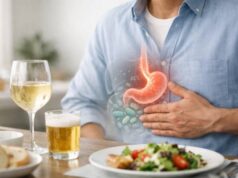
The carnivore diet is one of the most extreme elimination diets in mainstream nutrition: animal foods only, with little to no fiber, and typically very low carbohydrate intake. That simplicity is exactly why many people with irritable bowel syndrome (IBS) pay attention to it. When meals contain fewer fermentable carbohydrates and fewer ingredients overall, bloating, gas, and urgency can feel calmer—at least for some. At the same time, the gut is not just a “tube.” It is an ecosystem shaped by fiber, fluid balance, bile acids, and the microbes that help regulate inflammation and stool consistency. Removing all plant foods may reduce symptoms in the short term while creating new problems over time.
This article unpacks why IBS relief claims happen, what research can and cannot confirm, and how to approach the diet thoughtfully if you are considering it.
Essential Insights
- Some IBS symptoms improve on carnivore because it removes common triggers such as FODMAPs, lactose, sugar alcohols, and many additives all at once.
- A short-term “quieting” of bloating does not guarantee long-term gut benefits; microbiome diversity and fiber-related metabolites may decline.
- Constipation, diarrhea from high fat intake, and nutrient gaps (especially vitamin C, magnesium, and calcium) are practical limits for many people.
- If you try it, treat it as a time-limited elimination (typically 2–4 weeks) with symptom tracking and a planned reintroduction strategy.
Table of Contents
- What the carnivore diet includes
- Why some people report IBS relief
- What studies do and do not show
- Microbiome trade-offs and gut risks
- Constipation, diarrhea, and symptom traps
- A safer way to experiment and exit
What the carnivore diet includes
The carnivore diet is defined by what it removes: all plant foods (fruits, vegetables, grains, legumes, nuts, seeds), which also removes nearly all dietary fiber and most carbohydrates. What remains is a narrow menu of animal-derived foods, often organized along a spectrum:
- Strict carnivore: meat, fish, eggs, and animal fats; sometimes salt and water only
- Carnivore with dairy: adds cheese, butter, yogurt, or cream (often a major variable for IBS symptoms)
- Nose-to-tail carnivore: includes organ meats and connective tissue (liver, heart, bone marrow, gelatin-rich cuts) to broaden micronutrients
Even when it is not intended as a ketogenic diet, carnivore eating frequently results in nutritional ketosis because carbohydrate intake is so low. This matters for the gut because fuel sources change. Instead of fermentable fibers feeding certain bacteria in the colon, digestion leans heavily on protein breakdown and fat digestion, which shifts bile flow and can change stool characteristics.
From a gut-health perspective, carnivore tends to do three things at once:
- Reduces fermentable substrates (which can reduce gas production for some people)
- Changes stool bulk and transit (fiber and plant water-holding capacity are gone)
- Alters microbial “inputs” (fewer diverse carbohydrates and polyphenols reach the colon)
Because IBS symptoms are often meal-related, the diet can feel like a clean experiment. But it is also a blunt instrument. If symptoms improve, you still have to ask: Which removed ingredient helped? Was it lactose, wheat fructans, onions and garlic, excess fat, caffeine, alcohol, emulsifiers, or simply a lower overall food variety for a time?
Why some people report IBS relief
IBS is not one single disease. It is a pattern of gut-brain interaction that can show up as IBS with diarrhea (IBS-D), constipation (IBS-C), mixed stools (IBS-M), or pain and bloating that dominate regardless of stool pattern. That variety explains why carnivore stories can sound dramatic for one person and disastrous for another.
Several plausible mechanisms can make symptoms feel better quickly:
Less fermentation, less gas pressure
Many high-FODMAP foods (certain fruits, wheat, onions, garlic, legumes, sugar alcohols) ferment in the colon and can increase gas, water movement, and distention. Carnivore removes them all automatically. If your main problem is post-meal bloating, cramping, and urgency, this can feel like flipping a switch.
Fewer “hidden” triggers
Processed foods can contain inulin/chicory root fiber, sugar alcohols, thickeners, gums, and high-fructose sweeteners that trigger symptoms in sensitive people. Carnivore versions of eating often eliminate most packaged foods, which reduces exposure.
A temporary low-residue effect
With little fiber, stool volume may shrink. For some people with IBS-D, fewer bulky stools and less rapid propulsion can reduce urgency. That does not mean the gut is “healing”—it may simply be producing less material to move.
Routine and predictability
IBS symptoms often track with stress, sleep disruption, and irregular meal patterns. Highly structured eating can reduce decision fatigue and snacking, which can indirectly reduce symptoms.
Just as important: improvement does not prove the diet is uniquely therapeutic. An elimination diet can function like a spotlight—symptoms improve because triggers are removed, not because the remaining foods are inherently gut-protective. The real value, if any, may be in what you learn during a careful reintroduction phase.
What studies do and do not show
When people ask “What do studies show about carnivore for IBS?” the honest answer is: direct, high-quality evidence is limited. Most published data relevant to carnivore and gut symptoms falls into a few buckets:
- Reviews of carnivore-style eating patterns that conclude the evidence base is small, heterogeneous, and often short-term
- Nutrition modeling work showing likely micronutrient strengths and gaps depending on food choices
- Meat-focused microbiome research that looks at varying meat intake within broader diets (not pure carnivore)
- IBS dietary guidelines that support certain approaches (notably low-FODMAP and soluble fiber) more strongly than meat-only eating
So what can you reasonably take away?
Evidence is stronger for structured, time-limited IBS diet trials
Clinical guidance for IBS diets generally favors time-limited trials with a clear stop rule. For example, restrictive phases are often kept short (weeks, not months), followed by reintroduction and personalization. This framework matters because it reduces the chance that you stay on a restrictive pattern that is not helping—or that causes nutrition problems.
Symptom response is real, but it is not predictable
Some people do report improvement on very low carbohydrate or highly simplified diets. But IBS outcomes vary due to:
- Different dominant triggers (fermentation vs fat intolerance vs lactose vs wheat vs stress)
- Differences in gut transit speed
- Coexisting conditions (reflux, bile acid diarrhea, pelvic floor dysfunction, celiac disease, inflammatory bowel disease)
“Works for me” is not the same as “works for IBS”
If your symptoms improve because you removed lactose and wheat, you could likely achieve similar relief with a less extreme plan that preserves fiber, micronutrients, and food variety. That is where evidence-based IBS strategies can be useful: they narrow the search without closing off entire food groups indefinitely.
The practical interpretation is not “never try carnivore.” It is: do not treat anecdotes as proof, and do not treat symptom relief as a blank check. If you experiment, do it with guardrails, measurable tracking, and a plan to identify the specific triggers you are trying to escape.
Microbiome trade-offs and gut risks
Gut health is more than symptom control. Two people can have the same bloating score and very different long-term risk profiles depending on diet quality, stool patterns, inflammation markers, and microbial diversity.
Carnivore’s biggest microbiome challenge is straightforward: the microbes in the colon mostly live on what you do not digest. For many beneficial microbes, that means fermentable fibers and resistant starches that reach the colon intact. When those inputs disappear, several downstream effects may follow:
Lower production of short-chain fatty acids
Short-chain fatty acids (SCFAs)—especially butyrate—are produced when microbes ferment fibers. These compounds help support the colonic lining, influence immune signaling, and may help regulate inflammation. A strict carnivore diet tends to reduce the substrate needed to make them consistently.
Shifts toward bile-tolerant microbes
High-fat, animal-forward diets can increase bile flow. Bile acids are important for fat digestion, but they also shape which microbes thrive. Some bile-tolerant organisms increase, while others that prefer fiber-rich environments can decline. This does not automatically mean “bad,” but it is a meaningful shift, especially if the diet is prolonged.
Reduced microbial diversity from low variety
Even outside of fiber, plant foods provide diverse carbohydrates and polyphenols that interact with microbes. Low food variety can shrink diversity over time. In microbiome science, diversity is not the only metric that matters, but consistently low diversity is rarely considered a benefit.
Processed meats and gut irritation variables
Many people “do carnivore” with processed meats because they are convenient. For gut health, that is an important fork in the road. Highly salted, cured, or additive-rich meats can aggravate reflux, fluid retention, and sometimes bowel symptoms in sensitive individuals. If someone improves on carnivore while eating mostly unprocessed foods, then declines when processed meats dominate, the “diet label” is less important than the food quality.
The core risk is that carnivore can trade short-term symptom quiet for reduced microbial support—especially if constipation develops, if dietary variety collapses, or if nutrient gaps build slowly. That does not mean everyone will be harmed, but it does mean the long-term gut story is uncertain and worth respecting.
Constipation, diarrhea, and symptom traps
Many carnivore discussions focus on bloating relief, but the day-to-day reality often comes down to stool mechanics. The same diet can push one person toward constipation and another toward diarrhea, depending on bile handling, fat tolerance, hydration, and baseline transit.
Constipation is common, and it is not always “adaptation”
Constipation can happen for several reasons:
- Low stool bulk: fiber and water-binding plant material are removed
- Electrolyte shifts: early low-carb eating increases fluid loss, which can dry stool
- Low magnesium intake: common if food choices are narrow
- Reduced motility from under-eating: appetite can drop sharply, lowering total intake
Signs constipation is becoming a real problem include hard stools, straining, incomplete evacuation, worsening hemorrhoids, or going several days without a bowel movement with discomfort. “Just wait it out” is not a strategy if symptoms are escalating.
Diarrhea can appear from fat load and bile acids
Loose stool on carnivore is often related to:
- High fat intake that exceeds digestive capacity, especially early
- Bile acid diarrhea tendencies (some people are naturally more sensitive)
- Rapid dietary change without a transition period
If diarrhea is severe, frequent, or associated with dehydration, it is a reason to stop the experiment and reassess rather than pushing harder.
IBS symptom traps to watch for
Carnivore can also blur the picture by reducing symptoms while masking important issues:
- Pain relief from lower fermentation may hide ongoing pelvic floor dysfunction
- Less bloating may coexist with worsening constipation
- Reduced stool frequency might be mistaken for “healing” when it is reduced intake
When to seek medical evaluation rather than experimenting
Do not self-manage with restrictive diets if you have red flags such as:
- Unintentional weight loss
- Blood in stool or black stools
- Persistent fever, night sweats, or severe fatigue
- New symptoms after age 50
- Ongoing vomiting, severe dehydration, or severe abdominal pain
- Family history of colorectal cancer, inflammatory bowel disease, or celiac disease with current symptoms
A diet experiment should be a tool, not a substitute for appropriate evaluation.
A safer way to experiment and exit
If you are considering carnivore for IBS symptoms, the safest approach is to treat it as a structured elimination trial, not a long-term identity. That means you decide the rules before you start, including when you will stop.
Step 1: Set a short trial window and track outcomes
A practical framework is 2–4 weeks, with daily tracking of:
- Abdominal pain (0–10)
- Bloating or distention (0–10)
- Stool frequency and form
- Urgency and incomplete evacuation
- Reflux, nausea, and sleep quality
If nothing meaningful improves by the end of the window, continuing longer rarely clarifies the picture—it often just adds nutrition risk.
Step 2: Keep the diet “clean” enough to learn from it
If your goal is trigger identification, minimize confounders:
- Favor unprocessed meats and fish over processed meats
- Be cautious with dairy (it is a common IBS trigger) and treat it as optional rather than automatic
- Keep added sweeteners, sugar alcohols, and “keto products” out of the trial
Step 3: Plan reintroduction to identify the actual triggers
This is where carnivore can become useful rather than just restrictive. Reintroduce one variable at a time, keeping portions consistent and watching symptoms for 1–3 days before adding the next. Common high-yield reintroductions include:
- Lactose-containing dairy vs lactose-free dairy
- Wheat-based foods vs gluten-free grains
- High-FODMAP foods (onion, garlic, legumes) in small test amounts
- Soluble fiber sources (introduced gradually to avoid rebound gas)
If your symptoms return sharply with specific categories, you have gained actionable information that can guide a less restrictive long-term plan.
Step 4: Consider less extreme alternatives with better long-term plausibility
If your goal is IBS symptom control and microbiome support, many people do better with strategies such as:
- Low-FODMAP with structured reintroduction
- Targeted lactose reduction
- A gradual shift toward a fiber-smart pattern (soluble fiber first, then broader variety)
- A Mediterranean-style pattern adapted for your tolerance
Who should avoid carnivore without close medical guidance
Avoid or be highly cautious if you have chronic kidney disease, a history of eating disorders, pregnancy, uncontrolled lipid disorders, recurrent gout, a history of kidney stones, or inflammatory bowel disease unless guided by a clinician.
The bottom line: if carnivore helps, the win is not “meat only forever.” The win is identifying what your gut cannot tolerate and building a sustainable plan around that insight.
References
- Carnivore Diet: A Scoping Review of the Current Evidence, Potential Benefits and Risks 2026 (Scoping Review)
- Assessing the Nutrient Composition of a Carnivore Diet: A Case Study Model 2024
- Meat Consumption and Gut Microbiota: a Scoping Review of Literature and Systematic Review of Randomized Controlled Trials in Adults 2022 (Systematic Review)
- AGA Clinical Practice Update on the Role of Diet in Irritable Bowel Syndrome: Expert Review 2022 (Guideline)
- ACG Clinical Guideline: Management of Irritable Bowel Syndrome 2021 (Guideline)
Disclaimer
This article is for educational purposes and does not replace medical advice. IBS symptoms can overlap with other conditions that require evaluation, including celiac disease, inflammatory bowel disease, infections, bile acid diarrhea, and colorectal disorders. If you have severe pain, blood in stool, persistent vomiting, unintentional weight loss, dehydration, fever, or new symptoms later in life, seek medical care promptly. Before starting a highly restrictive diet such as carnivore—especially if you have chronic illness, are pregnant, take prescription medications, or have a history of disordered eating—discuss it with a qualified clinician and consider working with a registered dietitian.
If you found this guide useful, consider sharing it on Facebook, X (formerly Twitter), or any platform you prefer.