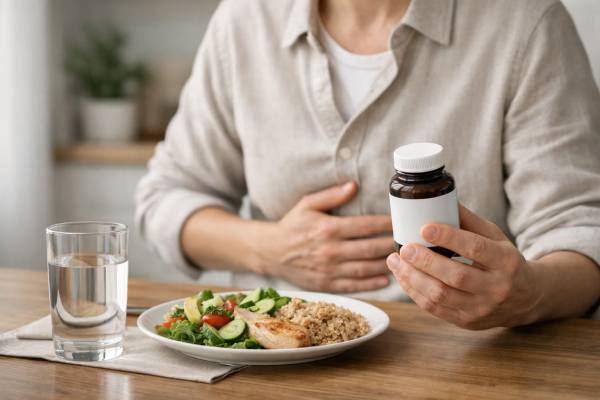
Betaine HCl is marketed as a “stomach acid supplement” for bloating, heaviness after meals, and nutrient absorption. The appeal is understandable: stomach acid plays a central role in breaking down protein, signaling digestive enzymes, and keeping many microbes from colonizing the upper gut. But the step from “acid matters” to “I should take hydrochloric acid in a capsule” is bigger than most labels admit.
In real life, symptoms blamed on “low stomach acid” are often caused by something else—reflux, functional dyspepsia, lactose intolerance, constipation, medication effects, or an irritated stomach lining. Betaine HCl can be helpful for a narrow set of people, yet it can also worsen heartburn, inflame the stomach, or aggravate ulcers if used at the wrong time or by the wrong person. This guide helps you decide where the tool fits—and where it does not.
Core Points
- Low stomach acid is real but less common than social media suggests, and symptoms are not specific enough to diagnose it.
- Betaine HCl may help some people with documented or strongly suspected hypochlorhydria, especially when symptoms cluster around protein-heavy meals.
- Burning, chest discomfort, nausea, or “acid” regurgitation are stop-signs—betaine HCl is not a safe experiment for reflux-prone stomachs.
- Avoid betaine HCl if you have a history of ulcers, gastritis, Barrett’s esophagus, or you use acid-suppressing or ulcer-risk medications unless your clinician guides you.
- If you trial it, take it only with a substantial meal and start low; stop immediately if irritation appears.
Table of Contents
- Betaine HCl and stomach acid basics
- Is low stomach acid really common
- Who might benefit and how to assess
- Risks and side effects you should not ignore
- Medication interactions and who should avoid it
- Practical dosing and safer alternatives
Betaine HCl and stomach acid basics
Betaine HCl (betaine hydrochloride) is a compound that can release hydrochloric acid in the stomach. It is not the same as “betaine” or TMG (trimethylglycine) sold for methylation and exercise performance. Some products combine betaine HCl with pepsin, a protein-digesting enzyme that normally becomes active in an acidic environment.
Why does stomach acid matter so much? Gastric acid is doing several jobs at once:
- Protein digestion: Acid helps unfold proteins so enzymes can break them down.
- Enzyme signaling: Acidic chyme entering the small intestine triggers pancreatic enzymes and bile release.
- Mineral handling: Acid can improve the solubility of certain minerals and may support absorption indirectly (iron is the classic example).
- Barrier function: A low gastric pH reduces the survival of many ingested microbes.
The key idea: betaine HCl can change pH, but pH is only one variable in a complicated system. Your symptoms might come from delayed stomach emptying, hypersensitive nerves, bile reflux, pelvic floor dysfunction, constipation, or FODMAP intolerance—none of which are fixed by “more acid.”
It also helps to know what “normal” looks like. Stomach pH is usually quite acidic while fasting (often around 1–3), but it rises after meals because food buffers acid. That rise is normal and temporary. Many people misinterpret this normal post-meal shift—plus normal burping—as a sign they “lack acid.”
Finally, keep expectations realistic. The strongest evidence we have for betaine HCl is not that it “cures” digestive disorders, but that it can temporarily re-acidify the stomach in certain controlled settings. Temporary is the operative word. For some people, that short window is enough to reduce heaviness after a protein-heavy meal. For others, it is simply an irritant.
Is low stomach acid really common
True hypochlorhydria (low acid) and achlorhydria (no meaningful acid) exist, but they are often over-assumed because the symptom list is so broad. Bloating, burping, nausea, and “reflux” sensations can happen in both high-acid and low-acid states—and in conditions unrelated to acid entirely.
When low stomach acid is most plausible
Low acid is most believable when there is a clear reason the stomach’s acid-producing cells or signaling pathways are impaired. Common examples include:
- Autoimmune gastritis (immune attack on parietal cells), which can progress toward profound hypochlorhydria over time.
- Chronic atrophic gastritis (including from long-standing infection), which reduces the acid-producing surface area.
- Long-term acid suppression (proton pump inhibitors or H2 blockers), which can keep pH higher while the medication is active.
- Older age, especially in the presence of atrophic changes, though age alone does not guarantee low acid.
- Upper GI surgery that alters the stomach’s anatomy or signaling.
Why symptoms mislead people
Many “low acid” symptom checklists are really checklists for dyspepsia, a syndrome that includes early fullness, upper abdominal discomfort, and nausea. Dyspepsia can come from inflammation, altered motility, heightened sensitivity, or stress physiology. Similarly, “heartburn” is a symptom—not a diagnosis. It can be driven by acid reflux, weakly acidic reflux, bile reflux, muscle spasm, or esophageal sensitivity.
A useful reality check: if you routinely feel burning behind the breastbone, sour regurgitation, or symptoms that improve with acid suppression, your problem is more likely reflux physiology than “not enough acid.” In that case, adding betaine HCl often makes things worse.
Food is the bigger lever than most people think
Before assuming a supplement is needed, look at meal patterns. Large late dinners, rapid eating, frequent alcohol, highly carbonated drinks, fatty meals, and low fiber intake can all create bloating and pressure that mimics “poor digestion.” These factors are frequently a better first target than adding an acidifying capsule.
Who might benefit and how to assess
Betaine HCl is most reasonable when there is a strong hypothesis of hypochlorhydria and your symptoms match what low acid can plausibly cause. Even then, it is better framed as a structured trial than a long-term habit.
Profiles that may fit
Consider discussing a supervised trial with a clinician if several of these apply:
- You have confirmed atrophic gastritis or autoimmune gastritis, or have been told your stomach lining shows atrophy.
- You have a history of long-term acid suppression and now experience heavy fullness after protein-rich meals (and you are not currently experiencing reflux burning).
- You have unexplained iron deficiency or vitamin B12 issues alongside upper GI symptoms, especially if gastritis is suspected.
- You experience meal-related symptoms that are predictable and mechanical: heaviness, slow “sitting in the stomach” sensation, excessive post-meal belching, and nausea that is worse with large servings of meat.
This is not a promise that betaine HCl will help—only that the hypothesis is less random.
How hypochlorhydria is actually evaluated
At-home “tests” (like baking soda burp tests or aggressive dose escalation until you feel warmth) are unreliable and can be risky. Clinically, evaluation may include:
- Upper endoscopy with biopsies when symptoms, anemia, weight loss, persistent vomiting, swallowing difficulty, or family history raises concern.
- Assessment for gastritis patterns (including atrophic changes) that can explain impaired acid production.
- Targeted labs when appropriate (iron studies, B12 markers, sometimes gastrin or antibodies in suspected autoimmune patterns—interpreted in context).
- Reflux testing (pH-impedance) when symptoms look like reflux but do not behave like classic acid reflux.
A practical self-screen before any trial
Ask these questions:
- Do I feel burning, sour fluid, or throat irritation after meals?
- Do acidic foods, alcohol, coffee, or late meals reliably worsen symptoms?
- Have I ever had an ulcer, black stools, vomiting blood, or diagnosed gastritis?
- Am I taking medications that raise ulcer risk?
If the answer is “yes” to any of these, betaine HCl is a poor self-experiment. The more reflux and lining irritation are in the picture, the more “acidifying” becomes a gamble rather than a strategy.
Risks and side effects you should not ignore
Betaine HCl can cause harm in two broad ways: direct irritation and worsening of existing disease. Because supplement labels often minimize these risks, it is worth being explicit.
Common side effects
These may happen even in people who “should” tolerate it:
- Warmth, burning, or pressure in the upper abdomen
- Heartburn or chest discomfort
- Nausea
- Throat irritation, especially if reflux is present
- Loose stools (less common, but possible if the gut is sensitive)
Any burning sensation is not a “good sign.” It is a signal the lining is being challenged.
When it can become dangerous
Avoid betaine HCl and seek medical input first if you have, or might have:
- Peptic ulcer disease (current or past), including ulcer-like pain that is worse when the stomach is empty
- Active gastritis (inflamed stomach lining), especially with nausea, gnawing pain, or food aversion
- Erosive esophagitis or known Barrett’s esophagus
- GI bleeding risk signs: black or tarry stools, vomiting blood, unexplained anemia, or persistent severe pain
- Severe reflux symptoms that wake you from sleep, cause coughing/hoarseness, or lead to swallowing discomfort
Adding acid to an already-injured surface can intensify inflammation and delay healing.
Quality and dosing uncertainty are real risks
Unlike prescription medications, supplements can vary in capsule design, dissolution speed, and actual content. Two products labeled with the same milligrams may not behave the same way in your stomach. Some people escalate dose quickly because they “don’t feel anything,” then overshoot and trigger symptoms that take days to settle.
Also, the evidence we have suggests that meaningful acidification in some contexts may require gram-level dosing (thousands of milligrams), which is far above the casual “one capsule” advice people trade online. That gap encourages unsafe experimentation.
Red-flag symptoms that mean stop immediately
Stop the supplement and get clinical guidance if you develop:
- New or worsening chest pain or burning
- Pain with swallowing
- Persistent nausea or vomiting
- Severe upper abdominal pain
- Any signs of GI bleeding
Betaine HCl should never be treated like a harmless digestive “seasoning.”
Medication interactions and who should avoid it
One of the most overlooked issues with betaine HCl is that it can clash with medications and medical plans. Sometimes the clash is practical (working against your prescription), and sometimes it is safety-related.
Do not combine casually with acid-suppressing therapy
If you take a proton pump inhibitor (PPI) or an H2 blocker, adding betaine HCl can create a tug-of-war. You may end up taking enough acid to feel irritation without reliably restoring a normal acid environment—especially around meals. More importantly, people on acid suppression often have a reason: healing erosive reflux, ulcer prevention, or treatment plans that require stable pH control.
If you think you no longer need acid suppression, the safer approach is to discuss reassessment and tapering with a clinician rather than adding acid on top.
Use extreme caution with ulcer-risk medications
Avoid betaine HCl unless your clinician explicitly approves if you regularly use:
- NSAIDs (such as ibuprofen or naproxen)
- Aspirin at doses that raise GI risk
- Oral corticosteroids (risk increases further when combined with NSAIDs)
- Medications that have known upper GI irritation potential for you personally
These combinations can increase the chance that a vulnerable lining becomes symptomatic.
People who should generally avoid betaine HCl
In most cases, betaine HCl is not appropriate for:
- Anyone with current reflux symptoms, especially burning, regurgitation, chronic throat symptoms, or nighttime reflux
- People with known gastritis, ulcers, or Barrett’s esophagus
- Those with unexplained weight loss, persistent vomiting, progressive swallowing difficulty, or anemia without a clear explanation (evaluate first)
- People who are pregnant or breastfeeding, unless a clinician recommends it (safety data are limited)
- Individuals with a history of esophageal strictures, severe hiatal hernia symptoms, or prior esophageal injury
Drug absorption: sometimes the goal, sometimes the problem
There is a niche medical reason clinicians sometimes think about temporary gastric acidification: some medications absorb poorly when stomach pH is high. That said, “fixing absorption” by manipulating pH is a clinical decision—because changing pH can also change how other drugs dissolve and can aggravate reflux. If you are considering betaine HCl for medication absorption, it should be planned with your prescriber and pharmacist.
Practical dosing and safer alternatives
If betaine HCl is appropriate for you, the safest mindset is: small, structured, reversible. The goal is not to “force acid,” but to see whether gentle support with meals improves symptoms without irritation.
Safer trial principles
Use these guardrails:
- Take it only with a substantial meal, ideally one that contains protein. Never take it on an empty stomach.
- Start low. Many capsules range roughly from the low hundreds of milligrams up to 600–750 mg. Begin with the smallest practical dose your product allows.
- Do not escalate quickly. Give any dose several meals on different days before increasing.
- Stop at the first sign of irritation. Warmth, burning, reflux, or nausea means you have enough (or it is not for you).
- Avoid the “titrate until you feel heat” method. That approach normalizes irritation and increases the chance of harming an already sensitive lining.
A short trial (for example, a couple of weeks) is usually more informative than indefinite use. If you only feel better when taking larger and larger amounts, that is a signal to reassess the diagnosis rather than keep climbing.
What to do if you suspect low acid but cannot tolerate betaine HCl
Many people who suspect hypochlorhydria also have reflux sensitivity or gastritis, which makes direct acidification intolerable. In that case, alternatives can be more effective:
- Meal structure: smaller portions, slower eating, and leaving 3–4 hours between dinner and sleep reduces pressure and reflux risk.
- Protein distribution: spreading protein across meals can reduce the “heavy” sensation without changing acidity.
- Bitters and gentle pro-digestive habits: a short walk after meals, mindful chewing, and reducing carbonated drinks often lowers belching and bloating.
- Targeted enzyme support: some people do better with a simple digestive enzyme (especially if fat digestion feels difficult), though this is still symptom-guided, not curative.
- Address constipation: trapped stool increases abdominal pressure and can worsen reflux-like symptoms and bloating. Regularity is an underappreciated lever.
- Evaluate FODMAP triggers: bloating after specific carbohydrates (onions, garlic, wheat, certain fruits, legumes) points more toward fermentation than acid deficiency.
When to prioritize medical evaluation over supplements
Choose evaluation first if you have persistent symptoms plus any of the following: anemia, recurrent vomiting, GI bleeding signs, progressive symptoms after midlife onset, strong family history, or difficulty swallowing. Supplements can postpone the workup that actually finds (and treats) the cause.
Used thoughtfully, betaine HCl can be a tool. Used casually, it becomes a gut irritant with a wellness label. The difference is not willpower—it is the match between your physiology and the intervention.
References
- AGA Clinical Practice Update on the Diagnosis and Management of Atrophic Gastritis: Expert Review 2021 (Guideline)
- ACG Clinical Guideline for the Diagnosis and Management of Gastroesophageal Reflux Disease 2022 (Guideline)
- Management of upper gastrointestinal symptoms in patients with autoimmune gastritis 2022 (Review)
- Creating a Framework for Treating Autoimmune Gastritis-The Case for Replacing Lost Acid 2024 (Review)
- Food, Acid Supplementation and Drug Absorption – A Complicated Gastric Mix: A Randomized Control Trial. 2019 (RCT)
Disclaimer
This article is for educational purposes and does not provide medical advice, diagnosis, or treatment. Betaine HCl can worsen reflux and may aggravate gastritis or ulcers. If you have persistent upper abdominal pain, heartburn, swallowing difficulty, vomiting, black stools, unexplained anemia, or unintended weight loss, seek medical evaluation promptly. If you are pregnant, breastfeeding, have a history of ulcers or Barrett’s esophagus, or take acid-suppressing therapy or ulcer-risk medications, consult a licensed clinician before using betaine HCl or any stomach-acid supplement.
If you found this helpful, consider sharing it on Facebook, X (formerly Twitter), or any platform you prefer so others can make safer, more informed choices.