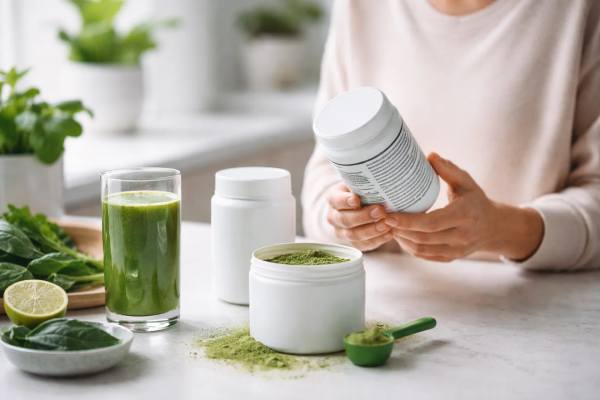
Greens powders promise a shortcut: a scoop that looks like “vegetables in concentrated form,” often with added probiotics, herbs, or enzymes designed to support digestion and everyday energy. For people who struggle to eat enough produce, they can be a convenient bridge—especially when travel, appetite, or schedules make whole foods harder. But the same traits that make greens powders appealing can also raise safety questions. Drying and concentrating plant material may also concentrate unwanted substances from soil, water, or processing, and supplement labels can hide meaningful details behind broad claims.
Safety is not a simple yes-or-no. It depends on ingredient choices (algae, herbs, and mushroom extracts can raise risk), manufacturing controls, and the transparency of testing. This guide will help you weigh real benefits against contamination risks, spot label red flags, and choose products with stronger quality signals.
Key Facts to Know First
- Greens powders can help fill small micronutrient gaps and improve consistency, but they do not replace the fiber and volume of whole vegetables.
- The biggest safety issues are quality-related: heavy metals, microbial contamination, and natural toxins can vary by ingredient and supply chain.
- “Proprietary blends,” detox claims, and vague testing language are common label warning signs.
- Choose brands that provide batch-specific testing details and start with a half serving for 7–10 days to assess tolerance.
Table of Contents
- What greens powders really deliver
- Why contamination happens in powders
- The main risks: heavy metals, microbes, and toxins
- Label red flags that signal poor quality
- What to look for in testing and transparency
- Safer use for sensitive guts and higher-risk groups
What greens powders really deliver
Greens powders are usually blends of dried plant ingredients—often leafy greens, grasses, and vegetable powders—sometimes paired with fruit extracts for flavor and added antioxidants. Many products also include “functional” additions such as probiotics, digestive enzymes, adaptogenic herbs, mushrooms, or algae.
For digestive health, it helps to separate what greens powders can do well from what they cannot realistically provide.
Where greens powders can help
- Convenience and consistency: A daily scoop can make it easier to maintain a routine when meal quality varies.
- Targeted nutrients: Some formulas add vitamins and minerals that may support baseline adequacy, especially for people with low produce intake.
- Plant compounds: Polyphenols and other phytochemicals may support overall gut-environment resilience, although the effect depends on dose and what survives processing.
- Hydration habits: Many people take greens powders in water, and simply drinking more fluids can support bowel regularity.
Where expectations commonly run ahead of reality
- Fiber is often low. Many greens powders contain minimal fiber per serving compared with whole vegetables. If constipation or stool consistency is your main goal, fiber content matters more than “greens” branding.
- They are not a full-spectrum vegetable substitute. Whole plants provide structure, chewing, and a wider mix of fibers that feed beneficial microbes differently.
- “Digestive enzymes” and “probiotics” are not automatically effective. Enzymes need appropriate types and amounts, and probiotics must be viable and stored correctly. A label alone does not guarantee either.
A helpful way to think about greens powders is as a supplement to your diet pattern, not a replacement for it. If your baseline meals are low in plants, a high-quality greens powder may offer a small nutritional nudge. If your meals are already vegetable-rich, benefits are often subtle, and quality becomes the deciding factor.
Why contamination happens in powders
Greens powders sit at the intersection of agriculture and supplement manufacturing. That matters because contamination can occur at several stages—and powders can magnify the issue because they are concentrated.
Concentration is the core problem
When fresh plant material is dried, it loses water weight. If a contaminant is present in the original plant—whether from soil, irrigation water, or air exposure—it may become more concentrated per gram once dried. A single serving might contain multiple plant sources, each with its own risk profile.
Common contamination entry points
- Soil and water exposure: Plants can take up naturally occurring metals from soil, and levels can be higher in regions with industrial pollution or certain geological conditions.
- Pesticide residues: This can be more relevant for ingredients with high surface exposure or those sourced from supply chains with variable agricultural oversight.
- Harvest and drying conditions: Poor drying practices can allow microbial growth or mold development, especially if humidity is high or storage is prolonged.
- Cross-contamination during processing: Shared equipment and inadequate cleaning can spread allergens, microbes, or residues across batches.
- Adulteration pressure: When demand is high and supply is tight, ingredients can be substituted, diluted, or “spiked” to mimic potency—especially in products that blend many botanicals.
Higher-risk ingredient categories
Not all greens powders carry the same risk. Certain ingredients deserve extra scrutiny:
- Algae and blue-green algae ingredients: Often grown in open systems where contamination with toxin-producing organisms is possible.
- Herbal concentrates and “adaptogens”: Complex supply chains and variability make identity and purity harder to guarantee.
- Mushroom powders and extracts: Sourcing and processing quality can vary widely; some products use mycelium-on-grain instead of fruiting bodies, which changes composition and may complicate transparency.
- Imported multi-ingredient blends: The more hands an ingredient passes through, the more important documentation becomes.
This does not mean you should avoid these ingredients automatically. It means the product should earn your trust through testing transparency and manufacturing quality—not through broad wellness claims.
The main risks: heavy metals, microbes, and toxins
When people ask, “Are greens powders safe?” they usually mean three things: contamination, mislabeling, and tolerance. The first two are quality problems; the last is individual biology. Here are the main safety issues to understand.
Heavy metals
The most discussed contaminants are lead, cadmium, arsenic, and mercury. Plants can absorb metals from soil and water, and contamination can also occur from processing equipment. The risk is not only about a single serving—it is about daily exposure over time, especially if you also consume other concentrated products (protein powders, cacao, algae, herbs) that may carry similar risks.
Practical signals that help:
- A product that tests every batch for heavy metals and publishes results is more reassuring than one that uses generic “tested for purity” language.
- Formulas heavily based on algae, certain herbs, or multiple concentrates deserve stricter verification.
Microbes and mold-related compounds
Greens powders are dry, but they are not automatically sterile. Risks include:
- Bacterial contamination from poor handling or equipment sanitation
- Yeasts and molds from improper drying or storage
- Mycotoxins as a downstream concern when mold contamination occurs upstream
Healthy adults often tolerate low-level exposure without noticeable symptoms, but higher microbial load can cause GI upset, and certain groups should be more cautious (covered later).
Natural toxins and ingredient-specific hazards
Some contaminants are not “dirt” in the traditional sense—they are biological compounds that can be harmful.
- Cyanotoxins (such as microcystins): These are associated with contamination in certain algae-related ingredients when toxin-producing organisms are present.
- Excess iodine or other minerals: Some seaweed-derived ingredients can contribute meaningful iodine, which may matter for thyroid-sensitive individuals.
- Oxalates: Greens-heavy blends that emphasize spinach or similar ingredients may be a consideration for people prone to calcium oxalate kidney stones.
Undeclared stimulants and “energy” add-ons
Greens powders that also promise fat loss, rapid energy, or appetite suppression deserve extra caution. Hidden caffeine sources, stimulant-like botanicals, or undeclared compounds are more likely in products chasing dramatic effects. A greens powder should feel like a food-adjacent supplement—not a metabolic shortcut.
No single risk category guarantees harm. The real issue is uncertainty: without credible testing and transparent labeling, you are guessing. And with daily supplements, guessing is a poor strategy.
Label red flags that signal poor quality
A greens powder label can look impressive while revealing very little. The goal is to identify signals that the product is built for marketing rather than quality control.
Red flag: “Proprietary blend” as the core formula
If the main ingredients are grouped into large blends without individual amounts, you cannot evaluate dose, tolerance triggers, or safety relevance. This matters when blends include herbs, algae, or concentrated extracts.
What to prefer:
- Clear amounts for key ingredients, or at least clear amounts for the categories most likely to affect digestion (fibers, sugar alcohols, probiotics, magnesium).
Red flag: Detox, cleanse, and “alkalize” language
Detox claims are often vague because they rely on the idea that your body is “toxic” without defining what that means. Claims that a powder “cleanses the gut” or “flushes toxins” can encourage overuse and distract from the basics: fiber, hydration, and balanced meals.
Red flag: Long ingredient lists that obscure the main driver
A list of 40–70 ingredients may look sophisticated, but it can be a way to sprinkle small amounts of many trendy items without meaningful dosing. It also increases the chance that one ingredient will not agree with you.
If you have a sensitive gut, “more ingredients” usually means:
- more potential triggers (inulin, chicory root, sugar alcohols, emulsifiers, herbal extracts)
- harder troubleshooting if symptoms occur
Red flag: Vague testing statements
Phrases like “tested for quality” or “third-party tested” do not tell you:
- what was tested (metals, microbes, pesticides, toxins)
- how often (every batch or occasionally)
- what limits were used
- whether results are available to customers
Red flag: Disease-adjacent promises
Be cautious if a greens powder suggests it can treat constipation “at the source,” heal the gut lining, reverse bloating, or replace medical therapies. A responsible supplement brand stays in the lane of supportive language and clear limitations.
Green flags that matter more than hype
- Lot numbers and expiration dates that look like real traceability, not decorative design
- A clear manufacturer identity and customer support contact
- Allergen statements and handling disclosures
- Specific, measurable claims (for example, a stated probiotic count through end of shelf life) rather than dramatic transformations
A label will never guarantee safety, but it can reveal whether the company expects informed buyers—or hopes you will not ask questions.
What to look for in testing and transparency
The safest way to buy greens powders is to treat them like a quality audit. You are not only choosing nutrients—you are choosing a supply chain.
Start with the “must-have” quality signals
- Batch-specific testing access: The strongest signal is a certificate of analysis (COA) you can match to your lot number.
- Contaminant panel clarity: Look for explicit testing for heavy metals and microbial limits at minimum. If the formula includes algae, ask whether cyanotoxins are part of the testing plan.
- Identity verification: Multi-ingredient botanical blends should be verified for ingredient identity, not just “purity.” This reduces the risk of substitution.
- Manufacturing controls: Products made under recognized supplement manufacturing standards are preferable to “made for” arrangements with unclear oversight.
Third-party certification: useful, but know what it means
Independent certification programs can improve confidence, especially when they include facility audits and product testing. The key is specificity: a logo means little unless you understand what it covers. Some programs focus on banned substances for athletes; others focus on label accuracy and contaminant thresholds. If the company cannot explain what the certification verifies, treat it as a marketing badge, not a safety tool.
Ask these practical questions before buying
- Does the company provide a COA for the exact lot I will receive?
- Which contaminants are tested, and how frequently?
- Are the results shown as numbers, not just “pass”?
- Are probiotics guaranteed through the end of shelf life, and how should the product be stored?
- Are the sweeteners and fibers clearly listed with amounts, so I can predict GI tolerance?
Match testing to ingredients
Different ingredients raise different testing needs:
- Greens and grasses: metals, microbes, and pesticides are the usual concerns.
- Algae ingredients: metals, microbes, and cyanotoxins should be part of the conversation.
- Herbal and mushroom extracts: identity verification and contamination screening become more important.
Finally, consider your overall “concentrate stack.” If you use multiple powders and supplements daily, you increase cumulative exposure and reduce your margin for error. In that situation, choose fewer products with stronger documentation rather than many products with weak transparency.
Safer use for sensitive guts and higher-risk groups
Even a high-quality greens powder can cause digestive symptoms if the formula does not match your gut. Safety includes both contamination risk and individual tolerance.
A gentle start strategy
- Start at half a serving once daily for 7–10 days.
- Take it with food if you are prone to nausea or reflux.
- Keep the rest of your routine stable so you can interpret effects.
- If you notice bloating, check for common triggers: inulin or chicory root, sugar alcohols, large magnesium doses, or concentrated herbal blends.
If your goal is bowel regularity, look for a product that clearly states its fiber amount. Without enough fiber, “gut support” may be more slogan than function.
Groups who should be extra cautious
- Pregnancy and breastfeeding: Avoid complex botanical blends unless cleared by a clinician. “Natural” does not equal pregnancy-safe.
- Immunocompromised individuals: Be cautious with products containing live probiotics or those with limited microbial testing transparency.
- Kidney disease or kidney stone history: Be mindful of mineral loads and high-oxalate ingredients. Concentrated powders can be a poor fit when kidney handling is already stressed.
- Thyroid conditions: If the product contains seaweed-derived ingredients or high iodine, discuss with your clinician.
- People on anticoagulants: Greens-heavy products may contain vitamin K, which can matter for medication stability. Consistency is more important than avoidance, but you should not change intake without guidance.
- Reflux-prone digestion: Acidic flavor systems or added citrus acids can worsen symptoms in some people, especially when taken on an empty stomach.
When to stop and reassess
Stop use and reassess if you develop:
- persistent nausea, cramping, or diarrhea that does not settle after reducing dose
- worsening reflux or throat irritation
- new headaches, palpitations, or jitteriness (a possible sign of hidden stimulants or excessive caffeine sources)
- rash, itching, or swelling (possible allergy)
Greens powders are best used as a practical support, not a daily gamble. If you choose one carefully, use it consistently, and keep expectations realistic, it can be a helpful addition. If the brand cannot demonstrate quality, the safest choice is often to skip it and invest in simpler, more verifiable improvements—whole plants, fiber-rich foods, and routines your gut can recognize.
References
- Assessment of Heavy Metals in Mexican Dietary Supplements Using Total X-Ray Fluorescence Spectrometry and Health Risk Evaluation 2025
- Prevalence of adulteration in dietary supplements and recommendations for safe supplement practices in sport 2023
- Microcystins and Cyanobacterial Contaminants in the French Small-Scale Productions of Spirulina (Limnospira sp.) 2023
- Small Entity Compliance Guide: Current Good Manufacturing Practice in Manufacturing, Packaging, Labeling, or Holding Operations for Dietary Supplements 2024 (Guideline)
- Spirulina and Chlorella Dietary Supplements—Are They a Source Solely of Valuable Nutrients? 2025
Disclaimer
This article is for educational purposes only and does not provide medical advice, diagnosis, or treatment. Greens powders are dietary supplements, and quality and tolerability can vary by brand, ingredient profile, and individual health status. Contamination risks and ingredient interactions may be higher for people who are pregnant or breastfeeding, immunocompromised, managing kidney or thyroid conditions, or taking prescription medications such as anticoagulants or glucose-lowering therapies. If you have a chronic condition, take medications, or develop concerning symptoms after use, consult a qualified clinician and stop the product until you have clear guidance.
If you found this guide useful, please consider sharing it on Facebook, X (formerly Twitter), or any platform you prefer.