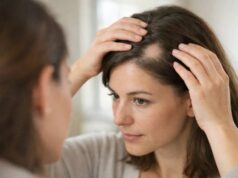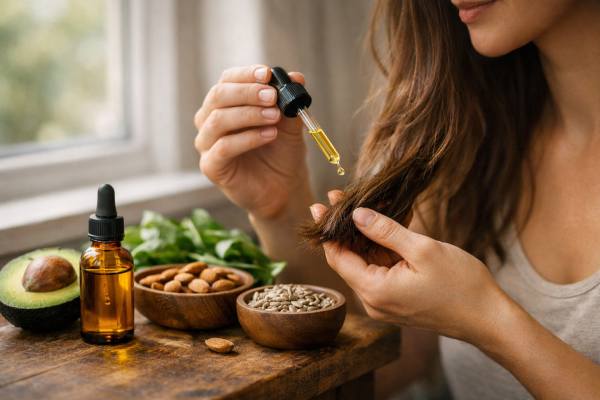
Vitamin E is one of those nutrients that attracts a lot of attention in hair care because it sounds intuitively useful. It is an antioxidant, it appears in oils, serums, and supplements, and it is often marketed as a shortcut to a healthier scalp or fuller-looking hair. But the real picture is more nuanced. Vitamin E does play an important role in protecting cell membranes from oxidative stress, and that matters for skin and scalp biology. At the same time, “important” does not automatically mean “more is better,” and it certainly does not mean every scalp problem needs a vitamin E supplement.
For most people, the most practical questions are simpler: Does vitamin E actually help hair growth, which foods provide enough of it, and when does supplementation become unnecessary or even risky? This guide answers those questions in a clear, evidence-aware way. It covers what vitamin E may contribute to scalp and hair health, where the claims outrun the data, and how to use it thoughtfully without drifting into megadose territory or expensive hype.
Quick Summary
- Vitamin E helps protect lipids and cell membranes from oxidative stress, which makes it biologically relevant to scalp and hair health.
- Most people can meet vitamin E needs through food, and deficiency is uncommon in otherwise healthy adults.
- The evidence for vitamin E supplements as a stand-alone hair growth treatment is limited and not strong enough to justify routine high-dose use.
- High-dose vitamin E can increase bleeding risk and may interact with anticoagulant or antiplatelet medicines.
- A food-first approach, with supplements reserved for a clear reason, is usually the safest and most practical way to use vitamin E.
Table of Contents
- What Vitamin E Actually Does
- What the Evidence Really Shows
- Food Sources, Intake, and Deficiency
- Topical Vitamin E on Scalp and Hair
- Supplement Safety and Overuse
- How to Use Vitamin E Wisely
What Vitamin E Actually Does
Vitamin E is a fat-soluble antioxidant, which means its main job is to help protect lipids from oxidative damage. That sounds abstract until you remember how much scalp and hair biology depends on lipid-rich structures. The scalp barrier contains lipids that help hold water in and irritants out. Cell membranes rely on lipids for structure. Sebum, the scalp’s natural oil, also contains components that can be altered by oxidative stress. In that context, vitamin E is not a random beauty nutrient. It has a plausible biologic role.
It also helps to be precise about what “vitamin E” means. It is not one single molecule. It is a family of compounds that includes tocopherols and tocotrienols, with alpha-tocopherol being the main form the human body preferentially maintains in the blood. That matters because many products and supplements use the phrase “vitamin E” loosely, even though the form and dose can differ.
For scalp and hair health, the most sensible claims about vitamin E are not magical ones. They are these:
- it helps defend lipids and cell membranes against oxidative stress
- it may support a healthier skin barrier environment
- it may help explain why nutrient-dense diets correlate with better overall skin and scalp function
- it has enough mechanistic relevance to keep appearing in scalp and hair formulas
What it does not do is act like a direct, proven hair-growth drug. That distinction matters. Hair follicles are metabolically active, and oxidative stress appears to play some role in several hair and scalp disorders. But moving from “oxidative stress is involved” to “vitamin E cures hair thinning” is too big a leap. Biology is messier than that.
A healthier way to understand vitamin E is to see it as part of the scalp environment rather than as a lone hero. Hair follicles do not grow in isolation. They sit inside living tissue influenced by inflammation, blood flow, hormones, barrier quality, microbiome balance, UV exposure, and nutritional status. Antioxidant defenses are one part of that larger system. If the scalp is chronically inflamed, sun-exposed, irritated, or nutritionally unsupported, vitamin E may be relevant. It is just rarely the whole story. A broader guide to the follicle environment and scalp health can help place that idea in context.
This is also why vitamin E gets pulled into so many hair conversations. It is biologically reasonable, cosmetically familiar, and easy to add to oils, supplements, and leave-on products. But reasonableness is not the same as proof. The main takeaway from the mechanism side is simple: vitamin E makes sense as a supportive nutrient for scalp and skin function. That is not the same as saying more vitamin E will automatically mean more hair.
What the Evidence Really Shows
If you search for vitamin E and hair, you will quickly find confident claims that it boosts circulation, repairs follicles, stops shedding, and restores shine. The evidence is much more restrained than that marketing language suggests. The fairest summary is that vitamin E has plausible biologic relevance, limited direct hair-growth evidence, and better support as part of an overall nutrition and antioxidant story than as a stand-alone treatment.
One small human trial is cited often in this space. In that study, volunteers with hair loss who took mixed tocotrienols daily for 8 months showed a significant increase in hair count compared with placebo. That is interesting, and it is one reason vitamin E keeps showing up in hair discussions. But it is not enough to make sweeping claims. The trial was small, the formulation involved tocotrienols rather than generic over-the-counter alpha-tocopherol alone, and the broader evidence base has not yet reached the level most people assume.
More recent reviews of micronutrients and hair loss reinforce that caution. Nutrition clearly matters for hair. But the strongest and most consistent associations tend to involve nutrients such as iron, vitamin D, zinc, and selected B vitamins more than vitamin E. When vitamin E is discussed, it is usually framed as one part of a broader oxidative stress and micronutrient picture rather than as a first-line intervention.
That distinction is useful because it protects readers from two common mistakes. The first is dismissing vitamin E entirely because it is not a miracle cure. The second is overvaluing it because it sounds sophisticated and antioxidant-rich. A balanced interpretation looks like this:
- vitamin E is relevant to scalp and skin biology
- oxidative stress likely matters in some forms of hair and scalp dysfunction
- a nutrient-rich diet that includes vitamin E is sensible
- high-dose supplementation has not earned a routine role for most people with hair concerns
This matters especially in an era when supplement blends are marketed aggressively. Many “hair growth” formulas hide behind antioxidant language, then quietly package vitamin E alongside a long list of other compounds so that no one ingredient can be evaluated clearly. That is one reason readers benefit from learning the warning signs of overmarketed hair supplements before they buy another bottle.
The evidence is also stronger for prevention and support than for reversal. In other words, vitamin E may help sustain a healthier biologic environment, but it is not a substitute for proven treatment when the main problem is androgenetic alopecia, inflammatory scalp disease, thyroid dysfunction, iron deficiency, or scarring hair loss. In those settings, relying on antioxidant supplements can delay more appropriate care.
The honest bottom line is that vitamin E belongs in the conversation, but not at the center of it. It is a supporting player with real biologic logic and limited direct clinical proof. That makes it worth respecting, but not overselling. For most people, the best use of vitamin E is still as part of an overall food-first, scalp-aware approach rather than as a high-dose shortcut.
Food Sources, Intake, and Deficiency
For most adults, vitamin E is easiest to approach through food. That is not just the safest path. It is also the most practical one, because vitamin E-rich foods often bring other useful nutrients with them, including healthy fats, polyphenols, fiber, and trace minerals. Once you look at the food list, the “hair nutrient” label starts to feel less like a specialty product and more like part of an overall eating pattern.
Adults generally need 15 mg of vitamin E per day. That target is very achievable with a thoughtful diet. Foods especially rich in vitamin E include:
- wheat germ oil, about 20.3 mg per tablespoon
- sunflower seeds, about 7.4 mg per ounce
- almonds, about 6.8 mg per ounce
- sunflower oil, about 5.6 mg per tablespoon
- safflower oil, about 4.6 mg per tablespoon
- hazelnuts, about 4.3 mg per ounce
- peanut butter, about 2.9 mg per 2 tablespoons
- spinach, about 1.9 mg per half cup cooked
This is one reason food-first advice works well here. A handful of almonds and sunflower seeds, or a meal built around leafy greens and unsaturated oils, can move vitamin E intake meaningfully without exposing someone to the risks of megadose supplementation. If the broader goal is a more nutrient-dense scalp-supportive diet, a guide to omega-3-rich foods for scalp health pairs naturally with this conversation.
Vitamin E deficiency is also less common than many people think. In otherwise healthy adults, true deficiency is rare. When it happens, it is usually linked to problems with fat absorption or rare genetic conditions, not to simply missing a few “hair vitamins.” That point matters because many readers interpret thinning hair or dryness as proof of a vitamin E deficiency when a far more common explanation may be iron depletion, thyroid issues, stress-related shedding, androgenetic hair loss, or scalp inflammation.
A sensible food strategy looks less dramatic than supplement marketing, but it works better in real life:
- Build regular meals that include nuts, seeds, nut butters, avocado, and leafy vegetables.
- Use vitamin E-containing oils in normal cooking amounts rather than chasing exotic products.
- Treat dietary vitamin E as part of a pattern, not a single superfood.
- Remember that hair and scalp health rely on protein, iron, zinc, essential fats, and overall energy intake too.
This last point is especially important. Hair biology does not reward nutrient tunnel vision. A person can eat enough vitamin E and still have hair concerns because total protein intake is low, iron stores are depleted, or calorie intake is inconsistent. That is why “Which vitamin should I take?” is often the wrong first question. A better question is whether the overall diet is adequate and whether there is any real evidence of deficiency.
Food sources also solve a safety problem quietly. Vitamin E from food has not been linked to the same concerns seen with high-dose supplements. For most readers, that makes food the smartest default and supplements a secondary option used only when there is a clear reason.
Topical Vitamin E on Scalp and Hair
Topical vitamin E is probably more familiar to many readers than dietary vitamin E. It shows up in scalp serums, hair oils, masks, conditioners, and “repair” products, often under names such as tocopherol or tocopheryl acetate. In these formulas, vitamin E is usually marketed as soothing, protective, and nourishing. Those descriptions are not entirely wrong, but they need context.
Topically, vitamin E makes the most sense as a supportive ingredient rather than a stand-alone scalp treatment. It can contribute emollient and antioxidant properties, which may be useful when the scalp feels dry, tight, or environmentally stressed. It may also help products feel more conditioning on the hair shaft, especially in formulas aimed at dry, frizz-prone, or chemically treated hair.
Where it tends to help most is in situations like these:
- dry scalp with mild tightness or roughness
- hair that feels weathered, dry, or overprocessed
- leave-on products designed to reduce surface roughness
- formulas intended to support barrier comfort rather than treat a medical scalp disorder
Where it is often overclaimed is in direct regrowth. Topical vitamin E is not a proven equivalent to minoxidil, nor is it a dependable fix for seborrheic dermatitis, psoriasis, or androgenetic hair loss. A serum may feel soothing, but soothing is not the same as treating the cause of hair thinning.
There is also a cosmetic tradeoff. Vitamin E-rich oils and serums can feel heavy, especially on fine hair or oily scalps. That can matter more than people expect. A product that leaves buildup at the roots, attracts debris, or worsens greasiness is not automatically “nourishing” simply because it contains antioxidants. On some scalps, especially those already prone to seborrheic dermatitis or product film, rich oil-based formulas may be counterproductive. Readers comparing oil-based routines may find a guide to scalp oiling risks and benefits helpful here.
Another important distinction is between scalp protection and sun protection. Vitamin E has antioxidant relevance in the setting of UV stress, but it is not a replacement for hats, scalp sunscreen, or physical sun protection. It may complement a broader protective routine, but it does not function as a reliable stand-alone shield against sun exposure. For readers with thinning parts or exposed crown areas, proper scalp sun protection does more for prevention than a vitamin E serum ever will.
If you do try topical vitamin E, judge the whole formula, not just the star ingredient. Fragrance, essential oils, preservatives, sticky emollients, and the product base often matter more for irritation than the vitamin E itself. Patch testing is sensible if you have sensitive skin, a history of contact reactions, or an already inflamed scalp.
The practical takeaway is that topical vitamin E can be useful for comfort and conditioning, especially in dry or cosmetically stressed hair. It is much less convincing as a direct answer to hair thinning, and it works best when expectations stay realistic.
Supplement Safety and Overuse
Vitamin E’s biggest safety problem is that it sounds harmless. Because it is a vitamin and because deficiency is rare, many people assume the margin for error is wide. That assumption can backfire. Vitamin E is fat-soluble, which means it is not handled like water-soluble vitamins that are more readily excreted. High-dose supplementation is therefore a place where “natural” language can become misleading.
For adults, the tolerable upper intake level for supplemental vitamin E is 1,000 mg per day. That is far above the daily requirement, but many supplements still provide doses that are substantially higher than food-level intake and well beyond what is needed for routine nutritional adequacy. Some products are labeled in international units rather than milligrams, which adds another layer of confusion and makes it easy to take more than intended.
The main safety issues with high-dose vitamin E include:
- increased bleeding risk
- interaction concerns with anticoagulant or antiplatelet medicines
- questionable benefit for people who are not deficient
- possible harm when high doses are taken long term without a clear reason
The bleeding issue is the most important one for everyday decision-making. Vitamin E can affect platelet function and vitamin K-related clotting pathways, which is why high doses deserve caution in people taking medicines such as warfarin or other blood thinners. It is also a reason to tell a clinician about supplement use before surgery or procedures.
This is where supplement stacking becomes a hidden problem. Many people do not take a single vitamin E capsule. They take a multivitamin, a “hair and nail” formula, an eye-health supplement, and a beauty gummy, all of which may contain overlapping amounts. That is how well-intentioned routines drift into excess. If you want a broader look at this pattern, the discussion of vitamin overload and selenium excess shows how easy it is for beauty-oriented supplement habits to cross from supportive to unhelpful.
There is another issue that deserves honesty: the benefit side of vitamin E supplementation is not strong enough to justify routine high-dose use for hair alone. If someone has a poor diet, a documented deficiency, a malabsorption disorder, or a very specific clinician-guided indication, supplementation can make sense. But in the average reader with diffuse hair concerns, the likely upside is modest while the downside becomes more relevant as the dose rises.
A good rule is to be more skeptical when a supplement is sold as “antioxidant support” without explaining dose, form, or the evidence for the specific hair claim being made. That language often sounds scientific while staying vague enough to avoid accountability.
The safest mindset is this: vitamin E is essential, but supplementation is not automatically essential. Food intake is the default. Supplements need a reason. High-dose supplements need a very good reason. And any person on blood thinners, with bleeding concerns, or taking multiple overlapping products should treat vitamin E as something worth reviewing carefully rather than casually adding.
How to Use Vitamin E Wisely
The smartest way to use vitamin E for scalp and hair is not to build your routine around it. It is to place it correctly. For most people, that means seeing vitamin E as one supportive element inside a bigger plan that includes diet quality, scalp care, diagnosis accuracy, and evidence-based treatment when hair loss is significant.
A practical approach looks like this:
- Start with food, not capsules. Make sure your routine diet actually contains vitamin E-rich foods before assuming you need a supplement.
- Match the form to the goal. Use food for nutritional adequacy, a topical product for conditioning or scalp comfort, and supplements only when there is a clear rationale.
- Be realistic about outcomes. Vitamin E may support scalp comfort and overall antioxidant status, but it is not a replacement for proven therapies in patterned or inflammatory hair loss.
- Keep the rest of the picture in view. Protein intake, iron status, thyroid health, hormones, stress, scalp inflammation, and hair practices usually matter more than one antioxidant alone.
- Review supplements if hair loss is persistent. More is not always safer, and “beauty support” stacks can become excessive quickly.
This is especially important when hair changes are significant. If someone is experiencing sudden shedding, a widening part, eyebrow loss, scalp pain, or obvious inflammation, vitamin E should not be the first or only move. Those patterns deserve a diagnosis, not just a supplement. In that setting, seeing a clinician is more useful than trying another antioxidant. A guide on when hair loss warrants a dermatologist visit can help you judge that threshold more clearly.
Topically, the same principle applies. If a vitamin E serum makes the scalp feel calmer and the hair less rough, that can be a reasonable cosmetic win. But if the scalp is itchy, greasy, flaky, or reactive, a product that feels “nourishing” may still be the wrong one. Comfort is useful information, not proof of medical benefit.
The healthiest long-term posture is to resist single-ingredient thinking. People often want one nutrient to explain everything because hair loss and scalp problems are emotionally exhausting. But the scalp rarely behaves that simply. Vitamin E fits best as part of a nutrient-dense eating pattern, a sensible topical routine, and a broader treatment plan that is honest about the actual cause of the problem.
That balanced approach may sound less exciting than a miracle-cure headline, but it is more likely to help. It keeps vitamin E in its proper role: meaningful, supportive, and worth understanding, but not a stand-alone answer to every scalp complaint or hair-growth hope.
References
- Vitamin E – Health Professional Fact Sheet 2021
- Micronutrients and Androgenetic Alopecia: A Systematic Review 2024 (Systematic Review)
- Oxidative stress in hair follicle development and hair growth: Signalling pathways, intervening mechanisms and potential of natural antioxidants 2024 (Review)
- Benefits and risks of hair, skin, and nail supplements in older adults 2025 (Review)
- Effects of Tocotrienol Supplementation on Hair Growth in Human Volunteers 2010 (RCT)
Disclaimer
This article is for educational purposes only and is not a substitute for medical advice, diagnosis, or treatment. Hair thinning, scalp irritation, and persistent shedding can have many causes, including iron deficiency, thyroid disease, androgenetic hair loss, inflammatory scalp disorders, medication effects, and nutritional imbalance. Seek care from a qualified clinician if symptoms are ongoing, worsening, painful, or associated with visible thinning or scalp changes.
If this article helped, please share it on Facebook, X, or another platform you trust so more readers can get clear, balanced guidance on vitamin E, scalp care, and supplement safety.