Hair loss from styling often begins with small compromises that are easy to dismiss. A tighter braid than usual. A sleek ponytail that feels sore by evening. A hairline that looks a little thinner in photos, then slowly keeps moving back. By the time the change is obvious, many people assume the damage is already permanent. Sometimes it is not. That is what makes traction alopecia so important to recognize early.
Traction alopecia is hair loss caused by repeated pulling on the follicles over time. It is common, preventable, and often reversible in its earlier stages. Yet it is also one of the easiest forms of hair loss to normalize, especially when the style causing it is culturally familiar, professionally expected, or simply part of a daily routine. The right response is not fear. It is pattern recognition: knowing which styles create the most risk, what warning signs appear before scarring, and how to change course while regrowth is still possible.
Quick Overview
- Traction alopecia often improves when tension is removed early, before scarring replaces active follicles.
- Tight braids, ponytails, buns, weaves, extensions, and repeated overnight tension are among the most common triggers.
- Pain, bumps, tenderness, or short broken hairs along the hairline are warning signs, not just a normal part of styling.
- If a style hurts during installation or stays sore afterward, it is already too tight for repeated wear.
- Regrowth usually depends on consistent style changes over months, not a one-time treatment or a single product.
Table of Contents
- What Traction Alopecia Really Is
- Hairstyles and Habits That Trigger It
- Early Warning Signs on the Hairline
- Can It Grow Back
- Treatments That May Help Regrowth
- How to Prevent It From Returning
What Traction Alopecia Really Is
Traction alopecia is hair loss caused by chronic mechanical tension. The key word is chronic. A single tight style usually does not create permanent damage on its own, but repeated pulling, day after day or week after week, can gradually injure the follicle enough to reduce growth and eventually destroy it. That is why traction alopecia is best understood as a wear-and-tear condition. It is not a sudden shedding disorder, and it does not begin as an internal hormonal problem.
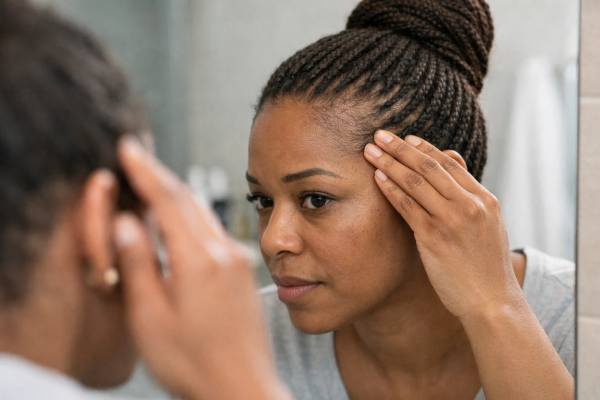
The most typical pattern affects the frontal and temporal hairline, including the edges in front of the ears and around the temples. These areas are often under the greatest tension in sleek styles, edge-focused braids, tight buns, and pulled-back extensions. Over time, the hairline may look thinner, more irregular, or farther back than it once did. In some people, the loss is more patchy, depending on where the pulling is concentrated.
Early traction alopecia is usually non-scarring. That means the follicles may still be active, even if they are inflamed, stressed, and producing weaker hairs. In later stages, the damage becomes scarring. Once the follicle is replaced by fibrous tissue, regrowth becomes much less likely. This is the central reason early recognition matters so much. The condition often begins as reversible and becomes permanent only when the same tension continues for too long.
One of the easiest mistakes is confusing traction alopecia with general shedding. Shedding usually means hairs are leaving the scalp diffusely from many areas at once, while traction alopecia is more localized to areas under tension. It can still look subtle at first, especially if the rest of the hair is dense. A person may only notice that the hairline seems less full or that the front no longer styles the same way. If you are trying to sort out whether you are dealing with pulling-related loss or a broader hair fall pattern, it helps to understand the difference between hair shedding and true hair loss.
Traction alopecia also has a different emotional profile from many other scalp conditions. Because it develops slowly, people often normalize it. They assume their edges are just “naturally thin,” that the soreness after styling is normal, or that the recession is part of aging. In reality, repeated pain or pulling is not a harmless styling side effect. It is often the earliest message the scalp gives before visible loss sets in.
Another point worth knowing is that traction alopecia is not limited to one texture, ethnicity, or age group. It is especially common where high-tension styling is widespread, but it can affect anyone whose routine repeatedly pulls on the same follicles. The risk comes from force, frequency, and duration more than from identity alone.
Hairstyles and Habits That Trigger It
The hairstyles most likely to cause traction alopecia are the ones that combine pulling force with repetition. A tight style worn once for an event is less concerning than a style worn tightly every day, refreshed often, or repeated for years without recovery time. The highest-risk routines are usually not dramatic on paper. They are simply relentless.
Common triggers include:
- Tight braids, especially when installed close to the hairline.
- Cornrows with strong forward pull.
- Sleek ponytails and high buns.
- Weaves or sewn-in extensions that create constant tension.
- Heavy braids or loc styles that add weight as well as pull.
- Hair extensions attached to already fragile or chemically treated hair.
- Repeated edge styling that keeps the front under strain.
- Tight nighttime wrapping, rollers, or maintenance methods worn during sleep.
Weight matters almost as much as tightness. A style may feel tolerable at first but still keep the follicles under stress if the added hair is heavy enough. That is one reason extensions and weaves can be problematic even when the person wearing them is used to protective styling. “Protective” only applies if the style reduces damage overall. When it pulls chronically at the root, it stops being protective.
Chemical processing can increase the risk. Relaxed, bleached, or otherwise weakened hair does not respond well to heavy tension, and the combination of chemical fragility plus mechanical pull can accelerate loss. The problem is not just breakage of the shaft. It is that compromised follicles are being asked to support a more stressful style system than they can comfortably tolerate.
Pain is a useful clue. A style that causes immediate headache, scalp tenderness, tenting of the skin, bumps along braid lines, or soreness when touched is too tight. That remains true even if the stylist says it will “settle” in a day or two. Repeated acceptance of pain is one of the clearest pathways to traction alopecia, because discomfort often arrives before visible thinning.
A practical way to think about risk is to look beyond the salon chair. Many people focus on installation day but forget maintenance habits. Sleeping in tight rollers, redoing edges aggressively, pinning hair back the same way for work, or wearing a tight ponytail for exercise every day can all keep the exact same follicles under load. The scalp experiences cumulative tension, not just formal hairstyles. That is why readers who want a closer look at braids and hairline protection often discover that the problem is not braids in the abstract but how tight, how heavy, and how often they are worn.
The same principle applies to children and teens. Repeated tight styling from a young age can shift the hairline before anyone realizes a pattern is developing. Early traction alopecia is often mistaken for “just how the hair grows.” In reality, many cases begin years before diagnosis because the trigger is built into the routine.
The safest mental rule is simple: any hairstyle that repeatedly hurts, pulls, tents the scalp, or leaves the roots feeling stressed is a style that deserves modification, even if it looks polished and lasts well.
Early Warning Signs on the Hairline
Traction alopecia often gives warnings before major recession becomes visible. The challenge is that those warnings are easy to dismiss, especially when tight styling has been normalized for years. Many people do not realize they are in the reversible phase because they are watching for bald spots, not for the smaller clues that come first.
Early symptoms can include:
- Scalp pain or tenderness after styling.
- Tiny bumps or pustules around the follicles.
- Redness along braid lines or the hairline.
- Short broken hairs around the edges.
- Reduced density at the temples or preauricular area.
- A “fringe” of retained short hairs at the front while density behind it thins.
- Hair casts, which look like tiny sleeves around the base of the hair shaft.
- A sensation that the scalp feels tight, sore, or irritated when the style is touched.
That combination matters because traction alopecia is not always silent. The earliest stage may involve inflammation, follicular irritation, and discomfort before the follicles stop producing strong hair. A person may complain that their hairstyle “always feels sore” for the first few days, or that their edges never fully recover between installs. Those are not cosmetic inconveniences. They are clinical clues.
The fringe sign is one of the better-known findings. It describes short retained hairs along the frontal or temporal margin with thinning just behind them. It can look confusing because the presence of those little hairs makes it seem as though the hairline is still intact. In fact, that retained rim may be one of the hints that the loss is from traction rather than another form of alopecia.
Another clue is asymmetry. If one side of the hairline thins faster, it may reflect how the hair is parted, pinned, braided, or wrapped at night. Some people create more tension on the same side every day without realizing it. Over time, the scalp records that habit clearly.
Because discomfort can be part of the picture, some readers first look for explanations under general scalp sensitivity. But ongoing soreness after styling should not simply be filed under generic scalp pain and tenderness if the hair is under repeated pull. In that context, the styling pattern itself may be the cause.
The most serious warning sign is not always the one people expect. It is loss of follicular openings and a smoother, shinier, more scar-like appearance in longstanding areas. By the time the skin looks that way, the disease may no longer be in an easily reversible stage. That is why the earlier clues matter so much. If you wait for obvious baldness, you may miss the window when changing the hairstyle is enough to reverse the process.
This is also why “my edges have always been thin” deserves a second look if the style history is strong. Longstanding traction can quietly reshape what someone thinks their normal hairline is. The earlier the pattern is recognized, the better the odds that the follicles are still capable of recovery.
Can It Grow Back
This is the question nearly everyone asks first, and the answer depends less on the hairstyle name than on the stage of damage. Early traction alopecia can often improve, sometimes substantially, once the pulling stops. Longstanding traction alopecia may only improve partially, or not at all, if scarring has already replaced active follicles.
The simplest way to think about reversibility is this: if the follicle is stressed but still alive, regrowth is possible. If the follicle has been destroyed and replaced by scar tissue, regrowth becomes unlikely without surgical restoration. The difficulty is that people rarely know which stage they are in based on photographs alone. A hairline can look dramatically thin and still have recovery potential, while another can look modestly thinned but already be partly scarred.
Signs that regrowth may still be possible include:
- Recent onset rather than many years of loss.
- Ongoing short hairs still emerging in the area.
- Tenderness, bumps, or irritation suggesting an active early process.
- Visible follicular openings on close exam.
- Improvement once tension is removed.
Signs that loss may be more permanent include:
- Very smooth or shiny areas.
- Loss that has been stable for years without new regrowth.
- Complete disappearance of follicular openings in the thinnest zone.
- Repeated exposure to the same tight styles despite earlier warning signs.
Time also matters emotionally. Even when the condition is reversible, recovery is not immediate. Hair does not return in one growth spurt the week after braids are removed. The follicles need time to resume healthier cycling, and the new hairs need time to gain visible length and density. Many people first notice tiny short hairs, soft coverage at the edge, or slightly better fullness in photos before the improvement is obvious in everyday styling. Sorting real regrowth from simple breakage can be tricky, which is why readers often compare their changes with baby hairs, regrowth, and breakage patterns rather than assuming every short front hair means recovery.
The other important truth is that removing tension is necessary but not always sufficient. If there is persistent inflammation, overlapping pattern hair loss, or years of cumulative trauma, the hairline may need more than a style change. That does not mean recovery is impossible. It means the style change is the foundation, not the entire plan.
People are often surprised that traction alopecia can plateau. Once they stop the damaging style, the hairline may stop worsening even before visible regrowth begins. That is already a success. Stabilization is the first goal. Density improvement comes later, if the follicles are capable of it.
The best answer, then, is neither falsely reassuring nor hopeless. Yes, traction alopecia can grow back. But it usually does so only when tension is reduced early enough and consistently enough. The scalp keeps a long memory. A brief break from traction followed by a return to the same habits rarely produces lasting recovery.
Treatments That May Help Regrowth
The first treatment for traction alopecia is mechanical, not pharmaceutical: stop the tension. No topical, injection, or supplement can fully compensate for a hairstyle that continues to pull on the same follicles. Once that principle is clear, other treatments can make more sense as supportive tools rather than substitutes for behavior change.
The treatment plan usually depends on stage. In early inflammatory disease, clinicians may focus on calming irritation and preserving follicles. In more established cases, the emphasis shifts toward maximizing whatever growth capacity remains and deciding whether medical or surgical options are appropriate.
Common treatment approaches may include:
- Removing or modifying the offending hairstyle.
This is the single most important step. Without it, other treatments have limited value. - Reducing scalp inflammation.
When there is tenderness, redness, folliculitis-like bumps, or active irritation, clinicians may use anti-inflammatory treatments such as topical or intralesional corticosteroids in selected cases. - Supporting regrowth with minoxidil.
Topical minoxidil is often considered, especially when there are still viable follicles and the goal is to improve density during recovery. Some clinicians also consider oral minoxidil in carefully selected patients, though that choice depends on the broader medical context. - Addressing overlapping causes of hair loss.
Not every thinning hairline is pure traction alopecia. Pattern hair loss or breakage may coexist, and treatment may need to reflect that. - Considering transplantation for stable scarring.
In longstanding cases with little spontaneous recovery and no ongoing traction, hair transplantation may be discussed.
It is important to be honest about evidence. Traction alopecia has fewer large, definitive treatment trials than more common diagnoses like androgenetic alopecia. Much of management still relies on clinical experience, smaller studies, and the basic principle that early follicles can recover when the cause is removed. That means the most evidence-aligned advice is sometimes the least glamorous: loosen the style, reduce inflammation, and give the follicles time.
This is also why many over-the-counter “edge regrowth” products disappoint people. They often promise dramatic reversal without asking the crucial question: has the pulling actually stopped? If not, even a helpful ingredient will be fighting the same daily injury.
Transplantation belongs in a separate category. It is not a first-line answer for active traction alopecia. It is typically considered only when the loss is stable, scarring is established, and the person is realistically able to avoid recreating the same tension after surgery. Anyone thinking about that route should understand who makes a good hair transplant candidate rather than assuming every recessed edge can simply be filled in.
A final point matters for expectations. Treatment is usually most successful when the goal is staged properly: first stop progression, then calm the scalp, then support regrowth, then judge what remains. Trying to skip directly to “full restoration” without changing the mechanical cause is one of the most common reasons treatment fails.
How to Prevent It From Returning
Prevention is not a vague idea in traction alopecia. It is a concrete set of styling decisions that lower force, lower frequency, and give the hairline recovery time. Once someone has had traction alopecia, prevention matters even more, because follicles that have already been stressed once are not ideal candidates for repeated strain.
A practical prevention plan usually includes five habits.
First, use pain as a rule, not a debate. If a style hurts during installation, causes headache later, or leaves the scalp tender the next morning, it is too tight. There is no benefit in waiting for the pain to “settle” if the same cycle repeats every time.
Second, reduce duration. High-tension styles should not be worn continuously without breaks. Even a hairstyle that looks neat and lasts well can become damaging if the follicles never get a recovery window. Long stretches of back-to-back installs are particularly risky at the hairline.
Third, reduce weight and edge stress. Ask whether added hair is heavier than necessary, whether the front braids are smaller and tighter than the rest, and whether the tension at the nape and temples can be eased. Many people assume the visible style shape cannot change, when in fact small installation changes can dramatically reduce risk.
Fourth, vary the direction of pull. Repeating the same part, same bun placement, or same slicked-back line every day concentrates stress on the same roots. Rotation matters.
Fifth, be careful with nighttime maintenance. A daytime style that seems fine can become riskier if it is then pinned, wrapped, rolled, or compressed every night. Repeated overnight tension is a subtle but important contributor in some patients.
Useful low-risk habits include:
- Looser ponytails and buns.
- Alternating style placement.
- Avoiding tight edge control on fragile hairlines.
- Using less heavy extension hair.
- Taking early thinning seriously instead of styling over it.
- Getting prompt help if the scalp feels inflamed or the hairline keeps receding.
This is especially important for children, adolescents, athletes, performers, and professionals whose grooming standards encourage repeated sleek or pulled styles. The goal is not to ban braids, buns, ponytails, or extensions altogether. It is to build them more safely. A practical guide to preventing hairline thinning from tight hairstyles often starts with that same principle: lower-tension styling is usually a better long-term beauty strategy than repeatedly trying to repair a damaged hairline.
A dermatologist should be involved when the hairline continues to thin despite style changes, when the scalp is painful or inflamed, or when the area looks smooth and scarred. The earlier that happens, the better the odds that the follicles can still be protected.
Traction alopecia is one of the clearest examples in hair medicine of cause and effect. That is also what makes it hopeful. When the cause is recognized early enough, the future of the hairline can still change.
References
- Traction Alopecia 2025 (Clinical Review). ([PubMed][1])
- Dermoscopy of Traction Alopecia in Black Scalp Patients: Insights from a Literature Review 2025 (Review). ([PMC][2])
- The histopathologic diagnosis of traction alopecia: An evidence-based model 2023 (Diagnostic Study). ([PubMed][3])
- Traction alopecia: assessing the presentation, management and outcomes in a diverse urban population 2023 (Retrospective Study). ([PubMed][4])
- Review of traction alopecia in the pediatric patient: Diagnosis, prevention, and management 2021 (Review). ([PubMed][5])
Disclaimer
This article is for educational purposes only and does not replace personal medical advice, diagnosis, or treatment. Hairline thinning can be caused by traction alopecia, but other conditions, including alopecia areata, frontal fibrosing alopecia, and androgen-related hair loss, can sometimes look similar. If your scalp is painful, inflamed, rapidly worsening, or showing signs of scarring, a dermatologist can help confirm the diagnosis and guide treatment before the loss becomes harder to reverse.
If this article helped clarify how hairstyles can lead to hair loss, please share it on Facebook, X, or another platform where it may help someone recognize the signs earlier.