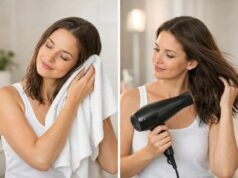
The scalp used to be treated as a narrow strip of skin hidden under hair. Now it is being treated more like facial skin: cleansed more thoughtfully, hydrated on purpose, exfoliated when needed, and targeted with serums built around recognizable skincare ingredients. That shift is what “skinification of haircare” really means. It is not just a trend name. It reflects a broader idea that scalp health shapes comfort, flaking, oil balance, and even how well hair retains its density and shine.
Still, the scalp is not simply the forehead with more follicles. It is oilier, more densely populated with hair, more prone to buildup, and often more reactive when too many actives are layered at once. That is why skincare-style scalp care can be genuinely useful in some routines and unnecessarily irritating in others. The goal is not to copy a facial routine onto the scalp. It is to understand which ingredients make sense there, what problem each one solves, and how to use them without turning a healthy scalp into an inflamed one.
Quick Overview
- Skincare-style scalp products can improve oil control, flaking, dryness, and comfort when the ingredient matches the scalp problem.
- Niacinamide, ceramides, humectants, and select exfoliants tend to be the most practical crossover ingredients from skincare.
- More actives do not mean better results, and a sensitive or inflamed scalp can worsen with strong acids, fragrance, or heavy layering.
- Leave-on scalp serums usually work best when started slowly, while exfoliating products are often better limited to once weekly at first.
- Choose products by scalp condition first, not by trend language on the label.
Table of Contents
- What Skinification Means for Scalp Care
- Why the Scalp Is Not Facial Skin
- Which Skincare Ingredients Help Most
- Which Ingredients Need More Caution
- How to Match Actives to Scalp Type
- How to Build a Safe Scalp Routine
What Skinification Means for Scalp Care
Skinification of haircare is the migration of skincare logic into scalp products. Instead of treating shampoo as the only meaningful step, brands now offer pre-wash treatments, exfoliating serums, hydrating tonics, barrier-support masks, microbiome-focused formulas, and leave-on scalp concentrates. The language is familiar to anyone who shops for skin care: hyaluronic acid, niacinamide, ceramides, peptides, acids, antioxidants, postbiotics, and soothing agents such as panthenol or allantoin.
At its best, this shift is useful. It pushes scalp care beyond the old two-category split of “dandruff shampoo” versus “regular shampoo.” That matters because many people do not have a single obvious scalp disorder. They have mixed complaints: oily roots with tightness after washing, flakes without clear dandruff, itching from styling buildup, or an irritated scalp that does not tolerate aggressive cleansing. A more ingredient-led approach can make that care more precise.
At its worst, skinification turns the scalp into another place to over-layer. The problem is not the concept. The problem is applying facial skincare habits too literally. The scalp does not need a ten-step routine. It rarely benefits from piling on multiple strong actives at once, especially under hair where heat, sweat, sebum, and product residue change how formulas behave. A good scalp routine is usually simpler than a good face routine.
What makes the trend worth paying attention to is that it lines up with how dermatology increasingly thinks about the scalp: as living skin with a barrier, a microbiome, inflammatory pathways, and a close relationship with hair quality and hair retention. If the scalp surface is chronically greasy, flaky, inflamed, or stripped, the hair growing through it is not entering the most favorable environment. That does not mean every scalp problem causes hair loss, but it does mean comfort and hair appearance are closely tied to the condition of the scalp itself. Readers looking deeper into that relationship usually benefit from understanding the broader idea of scalp health and the follicle environment.
This is also why the trend has spread beyond dandruff care. People with dry scalps want barrier support. People with oily scalps want lighter leave-ons that do not flatten roots. People using minoxidil, color, heat, or frequent dry shampoo often want a scalp routine that reduces irritation without sacrificing hair styling. Skinification speaks to all of those needs.
The most sensible way to understand the trend is this: it is not about making the scalp fashionable. It is about recognizing that scalp products can be chosen with the same ingredient awareness people already use for skin—while remembering that scalp skin has its own rules.
Why the Scalp Is Not Facial Skin
The scalp is skin, but it is not just facial skin hidden under hair. That distinction explains why some skincare ingredients translate beautifully and others become irritating, greasy, or ineffective when moved into scalp products.
First, the scalp is densely packed with terminal hair follicles and sebaceous glands. That makes it a high-sebum environment in many adults, especially near the crown and frontal scalp. Oil changes how products spread, how long they sit, and how quickly buildup accumulates. A serum that feels elegant on the cheek can feel sticky or heavy at the roots. It can also trap more residue when layered with leave-in conditioner, dry shampoo, and styling products.
Second, the scalp is physically harder to reach. Hair interferes with direct contact, so the same amount of product that covers a forehead may barely touch the scalp unless it is parted and applied deliberately. That is one reason many scalp formulations are thinner, nozzle-based, foam-like, or designed for short contact time in the shower. Texture matters here more than trend language.
Third, the scalp experiences its own kind of microenvironment. Sweat, friction from hats or pillows, ultraviolet exposure at the part line, hard-water residue, and repeated cleansing all shape barrier function. The microbiome is also distinct. The balance among yeast, bacteria, sebum, and shedding cells matters more on the scalp than most people realize. When that balance shifts, flakes, itch, odor, and irritation often follow. That is why a basic grounding in the scalp microbiome makes many ingredient claims easier to judge.
Fourth, hair itself changes the stakes. A facial over-exfoliation episode is unpleasant. A scalp over-exfoliation episode can create burning, increased flaking, more breakage during washing, and a sudden fear that hair is falling out. Often what people interpret as “my scalp product caused shedding” is a mix of irritation plus breakage plus previously loosened hairs becoming visible during washing. The scalp can recover, but it does not forgive product excess as gracefully as many people assume.
This is why “scalp-friendly” should mean more than trendy ingredients. It should mean formulas built for actual scalp realities:
- Easy placement between hairs.
- Low residue.
- Reasonable wash-off or leave-on tolerance.
- Minimal unnecessary fragrance.
- A pH and surfactant system that do not leave the scalp stripped.
- Clear instructions for frequency.
The scalp also does not always want the same thing from day to day. An oily, sweaty scalp after workouts may need frequent cleansing but still benefit from soothing hydration in a leave-on tonic. A dry, reactive scalp may need fewer wash days but richer barrier support after washing. That variability is normal.
So when a label promises “skincare for your scalp,” the right question is not whether the ingredient is famous. It is whether the formula respects the scalp’s oil level, microbiome, barrier, and hair-bearing surface. If it does not, the product may still be marketable, but it is not truly scalp smart.
Which Skincare Ingredients Help Most
Some skincare ingredients genuinely make sense on the scalp because they address the same core issues seen on skin elsewhere: excess oil, impaired barrier function, dehydration, inflammation, and uneven shedding of dead cells. The best crossover ingredients are not always the flashiest ones. They are the ones that solve a real scalp problem without creating a new one.
Niacinamide is one of the most useful examples. In scalp products, it is appealing because it sits at the intersection of oil balance, barrier support, and visible calm. That makes it especially attractive for oily or combination scalps, people with mild itch, and those whose roots get greasy quickly but whose scalp still feels irritated after washing. It is not a dandruff drug and not a hair-growth treatment on its own, but it is often a smart support ingredient. For readers choosing among these formulas, a closer look at niacinamide for scalp oil and itch helps separate realistic benefits from marketing drift.
Humectants such as hyaluronic acid, glycerin, and panthenol are another practical group. Their role is simple: attract and hold water. On the scalp, that can translate to less tightness, a more comfortable feel after washing, and better tolerance of stronger active products. These ingredients are most useful in dry, flaky, or sensitized scalps, and in people who over-cleanse or use medicated shampoos. They are not a cure for dandruff, but they can reduce the dry, papery feeling that many people mistake for “more dandruff.”
Ceramides are among the most sensible additions when barrier repair is the goal. A scalp with a compromised barrier often feels simultaneously reactive and dry. It may sting with ordinary shampoos, itch after coloring, or flake more in cold weather. Ceramide-containing leave-ons, masks, or scalp lotions are not dramatic products, but that is exactly their value. They support structure rather than chasing quick cosmetic effects.
A few other skincare-style ingredients often deserve a place in scalp formulas:
- Allantoin for soothing and comfort.
- Bisabolol for reducing irritation signals.
- Zinc PCA for oil balance and support in greasy, flaky scalps.
- Peptides for conditioning claims and scalp-cosmetic positioning, though evidence for major hair-density effects is often thinner than the marketing suggests.
- Prebiotics and postbiotics as emerging tools aimed at the scalp ecosystem, with more promise than certainty.
What these ingredients have in common is that they are usually best used as helpers, not heroes. They improve the scalp environment, tolerance, and comfort. That can matter a great deal, especially when someone is also using medicated shampoo, a growth treatment, or frequent styling. But supportive ingredients should not be mistaken for treatment-grade solutions when the real issue is psoriasis, seborrheic dermatitis, infection, or progressive hair loss.
The most useful scalp actives are usually the ones that do enough, not the ones that try to do everything.
Which Ingredients Need More Caution
The rise of skincare-style scalp care has made some ingredients sound universally beneficial when they are actually highly context dependent. This is especially true for exfoliating acids, strong botanical blends, and ingredients borrowed from facial anti-aging products without much adjustment for the scalp.
Salicylic acid is the clearest example of an ingredient that is helpful in the right scalp and disruptive in the wrong one. It can loosen adherent flakes, cut through oil-rich buildup, and improve the feel of a scalp burdened by product residue or seborrheic scaling. But it is not a daily default for everyone. In a dry or sensitive scalp, frequent use can make tightness, stinging, and visible flaking worse. That is why practical guidance on salicylic acid for scalp flakes matters more than the simple claim that it “detoxes” the scalp.
Other exfoliating acids deserve similar restraint. Glycolic acid is effective on skin, but the scalp is harder to monitor in real time, and overuse can create silent irritation under hair before redness becomes obvious. Lactic acid is often gentler, but “gentler” does not mean risk free. Even low-level exfoliation can backfire if the barrier is already impaired, if the scalp is sunburned, or if a person is also using retinoids, medicated shampoos, or alcohol-heavy growth treatments.
Fragrance deserves caution too. Many scalp products are perfumed heavily to create a fresh, luxurious identity. The problem is that fragrance is one of the most common reasons a scalp serum feels elegant at first and itchy by week two. The same is true for many essential oils. They may sound natural, but natural does not guarantee tolerability. Peppermint, rosemary, citrus oils, tea tree, and mixed botanical complexes can be sensitizing, especially on scalps that are already inflamed.
Retinoid-style scalp products are another category to approach carefully. The theory is understandable: normalize turnover, support skin renewal, possibly improve the environment around follicles. In practice, many people do not tolerate them well without very measured use. The scalp is harder to moisturize evenly than the face, and irritation under hair can be more persistent because it is less visible and easier to ignore until it becomes uncomfortable.
A few caution signs matter regardless of the ingredient:
- Burning that lasts beyond the first few minutes.
- Increased tenderness during washing.
- New diffuse flaking after starting an exfoliant.
- Sudden itch in areas where product pools.
- Hair that feels rougher or tangles more at the root.
These signs do not automatically mean an allergy, but they do mean the scalp is not handling the routine well. One of the most common reasons is over-stacking: using an acid scrub, a medicated shampoo, a fragranced serum, and a growth treatment in the same week without enough recovery time.
A scalp product should feel targeted, not punishing. If the ingredient category sounds potent, the frequency should usually become more conservative, not more ambitious.
How to Match Actives to Scalp Type
The most common mistake in scalp care is choosing by ingredient hype rather than scalp presentation. A niacinamide serum is not automatically a good idea for a dry, tight scalp. A ceramide lotion may feel lovely on a reactive scalp but too rich for someone whose roots collapse by noon. Matching ingredients to scalp type is what turns skinification from trend-following into useful care.
For an oily scalp, the priority is balance rather than aggressive stripping. These scalps often benefit from lightweight leave-ons, regular cleansing, and ingredients that reduce the greasy-feeling cycle without provoking rebound irritation. Niacinamide, zinc PCA, and occasional salicylic acid are often the most logical options. Thick oils and buttery scalp masks usually feel satisfying for a day and heavy by day three.
For a dry or tight scalp, the aim is comfort and barrier support. This is where ceramides, glycerin, panthenol, and hyaluronic acid make more sense than exfoliating acids. If flakes are fine, dry, and powdery rather than waxy or oily, a barrier-first strategy is often better than a “deep cleanse” strategy. A helpful next step for these readers is to understand how ceramides support a dry scalp barrier when irritation and dehydration keep recurring.
For a flaky and oily scalp, people often need two things at once: scale management and barrier respect. This is the classic territory where wash-off actives outperform rich leave-ons. A keratolytic or antidandruff shampoo can reduce scale, while a simple, non-irritating tonic used between washes can improve comfort. These scalps do not usually need five separate products. They need the right main cleanser and a calm maintenance step.
For a sensitive scalp, less is usually more. The best formulas are often fragrance-light or fragrance-free, low in unnecessary botanicals, and built around soothing rather than stimulating claims. Panthenol, glycerin, select ceramides, and simple emulsions tend to outperform highly active formulas in this group. A sensitive scalp can still be oily, flaky, or dry, but tolerability becomes the first filter.
For thinning-prone scalps, the goal is clarity. Skincare-style ingredients can improve comfort and scalp condition, but they are not substitutes for treatment when patterned thinning or active shedding is present. In this group, it is especially important not to mistake “energizing,” “density boosting,” or “follicle awakening” language for proven medical benefit.
A simple matching framework helps:
- Oily and itchy: niacinamide, zinc PCA, occasional salicylic acid.
- Dry and tight: ceramides, panthenol, glycerin, hyaluronic acid.
- Flaky and greasy: wash-off exfoliants or antidandruff actives, then simple hydration.
- Sensitive and reactive: bland formulas, fewer actives, slower introduction.
- Thinning plus scalp complaints: treat scalp comfort, but evaluate hair loss separately.
The right scalp product should solve the problem you actually have, not the one the packaging makes sound most sophisticated.
How to Build a Safe Scalp Routine
A safe scalp routine does not need many steps, but it does need order, restraint, and consistency. The easiest way to fail with skincare-style scalp care is to introduce several active products at once and then blame the wrong one when irritation starts. Because the scalp is partly hidden, mild inflammation can build quietly before it becomes obvious.
Start with one anchor product. For most people, that is either a shampoo chosen for scalp needs or a single leave-on scalp serum. If flakes, oil, or itch are the main complaint, start with the cleanser. If the scalp mostly feels dry, tight, or reactive, start with the leave-on. Only once that step is clearly tolerated does it make sense to add another product.
A practical routine often looks like this:
- Choose the base cleanser.
Use a regular gentle shampoo or a targeted one if flakes and oil are major issues. Cleanse as often as your scalp needs, not as rarely as you can tolerate. - Add one leave-on support product if needed.
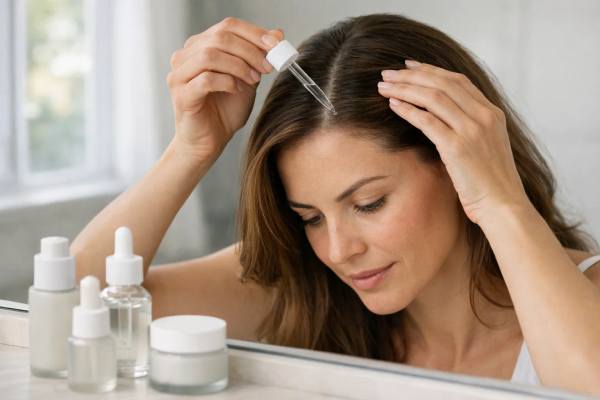
A hydrating or barrier-support serum can be applied after washing or on non-wash days in small amounts along the part lines. - Introduce exfoliation slowly.
If an exfoliating acid is useful, start once weekly, not daily. Increase only if the scalp is clearly handling it. - Keep the rest of the routine quiet.
Avoid starting a new hair oil, strong fragrance-heavy scalp mist, and clarifying scrub at the same time. - Watch for irritation early.
Itching, burning, tenderness, or a sudden increase in dry flakes means the routine needs simplifying.
Patch testing is worth doing, especially with leave-on products. Even a small test behind the ear or on a discreet scalp area can reveal whether a formula stings, reddens, or itches before full use. This matters because many reactions are not classic allergies. They are irritation from actives, fragrance, essential oils, or a compromised barrier. Knowing the difference between product allergy and irritation can prevent people from abandoning every useful ingredient after one bad experience.
A few timing rules help as well. Exfoliating products are often better on a separate day from coloring, bleaching, or strong heat styling. Medicated shampoos usually need contact time, so rinsing them immediately can make them seem ineffective. Leave-on serums work best when they actually reach the scalp instead of being rubbed onto the hair shaft.
The real marker of success is not tingling. It is a scalp that feels calmer, flakes less, washes more predictably, and tolerates routine care without escalating reactivity. Skinification of haircare works best when it makes the scalp quieter, not busier.
References
- Scalp microbiome: a guide to better understanding scalp diseases and treatments 2024.
- INDIVIDUAL ARTICLE: Insights on the Impact of Scalp Barrier Condition on Hair Health 2025.
- INDIVIDUAL ARTICLE: A Clinical Evaluation of Scalp Barrier Function, Ceramide Levels, and Microbiome in Diverse Dandruff Patients 2025.
- Mechanistic Insights into the Multiple Functions of Niacinamide: Therapeutic Implications and Cosmeceutical Applications in Functional Skincare Products 2024.
- Hyaluronic Acid in Topical Applications: The Various Forms and Biological Effects of a Hero Molecule in the Cosmetics Industry 2025.
Disclaimer
This article is for educational purposes only and is not a substitute for medical advice, diagnosis, or treatment. A flaky, itchy, painful, or rapidly changing scalp can reflect conditions such as seborrheic dermatitis, psoriasis, contact dermatitis, infection, or hair-loss disorders that need professional assessment. Seek care from a qualified clinician if symptoms persist, worsen, or occur alongside visible thinning, patchy hair loss, crusting, or scalp pain.
If this article helped you, please share it on Facebook, X, or any other platform you use to help others make better scalp-care decisions.