A scalp massage sounds simple: a few minutes of gentle pressure and movement across the scalp. Yet this small habit has gained remarkable attention in hair-care discussions. People often claim it improves hair growth, strengthens follicles, and even reverses thinning. The reality is more nuanced. Scalp massage does not magically create new follicles, but research and clinical observations suggest it may support a healthier scalp environment and influence the way follicles behave over time.
What makes the practice interesting is that it sits at the intersection of circulation, mechanical stimulation, and stress reduction—three factors that all affect hair biology in subtle ways. When done correctly and consistently, scalp massage may help some people improve hair density, reduce scalp tension, and maintain healthier follicles. However, it also has limits and should never replace medical treatment for conditions such as pattern hair loss or inflammatory scalp disease.
Understanding what scalp massage can realistically do—and how to do it properly—helps turn a trendy tip into a useful routine rather than a misleading promise.
Essential Insights
- Regular scalp massage may improve scalp circulation and mechanical stimulation around follicles, which can support healthier hair growth conditions.
- Some small studies suggest daily massage over several months may increase hair thickness rather than dramatically increasing the number of hairs.
- Scalp massage works best as a supportive habit alongside proven treatments, not as a replacement for medical therapy.
- Excessive pressure, scratching, or aggressive tools can irritate follicles and worsen scalp inflammation.
- A practical routine is 4–5 minutes of gentle circular massage once or twice daily using fingertips, not nails.
Table of Contents
- How scalp massage may affect hair growth
- What research says about scalp massage
- How to perform an effective scalp massage
- Tools oils and techniques
- Who may benefit most
- Limits risks and common mistakes
How scalp massage may affect hair growth
Hair growth is governed by the biology of the follicle and its environment. Each follicle cycles through phases known as anagen (growth), catagen (transition), and telogen (rest). The duration of the growth phase largely determines hair length and density. Because this cycle is controlled by genetics, hormones, inflammation, and cellular signaling, any intervention that influences the scalp environment may theoretically influence hair behavior.
Scalp massage may affect this system in several indirect ways. The most discussed mechanism involves mechanical stimulation of the scalp tissue. When the scalp is gently compressed and moved across the skull, the underlying connective tissue stretches slightly. This movement may affect dermal papilla cells—specialized cells at the base of the follicle that regulate hair production.
Another possible pathway involves microcirculation. The scalp already has an excellent blood supply, but massage may temporarily increase local blood flow. Greater circulation means improved delivery of oxygen and nutrients to active follicles. While this does not guarantee new hair growth, it can support follicles that are already capable of producing hair.
Tension relief may also play a role. Many people carry muscular tension in the scalp, temples, and neck. Chronic tension may affect the tiny muscles attached to hair follicles and influence scalp mobility. Gentle massage can relax these tissues and restore a more flexible scalp surface.
Several additional benefits may contribute indirectly:
- Removal of minor product buildup through mechanical movement
- Stimulation of the scalp microbiome environment
- Improved distribution of natural scalp oils
- Reduced stress levels, which may influence shedding patterns
Hair shedding often increases during periods of physiological stress. Practices that encourage relaxation may therefore help reduce stress-related hair shedding in some individuals.
Scalp massage also overlaps with broader scalp-care strategies. The health of the follicle environment matters as much as the follicle itself. Understanding the importance of the surrounding scalp environment for hair growth helps explain why massage is sometimes beneficial even though it does not change genetics or hormone levels.
In practical terms, scalp massage should be viewed as a supportive habit. It may help maintain a healthier scalp ecosystem and improve the mechanical stimulation of follicles. However, its influence is subtle and cumulative rather than dramatic. The greatest benefits appear when the practice is consistent and combined with overall scalp care rather than used as an isolated quick fix.
What research says about scalp massage
Scientific research on scalp massage and hair growth is limited but intriguing. Most available studies are small, and many focus on hair thickness or follicle behavior rather than dramatic hair regrowth. Still, several findings suggest the practice may influence hair characteristics over time.
One frequently cited clinical observation involves daily scalp massage performed over several months. Participants who massaged their scalp for a few minutes each day showed measurable increases in hair thickness compared with baseline measurements. Researchers proposed that mechanical stretching of the scalp may affect gene expression in dermal papilla cells, potentially encouraging stronger hair production.
Laboratory experiments provide another layer of insight. When skin tissue is mechanically stretched, cells may respond by altering their signaling patterns. This type of mechanotransduction can influence growth factors, extracellular matrix remodeling, and cellular activity in the follicle environment. In simple terms, gentle physical stimulation may encourage follicles to behave differently at the cellular level.
However, these results should be interpreted cautiously. The evidence does not show that scalp massage reliably increases the number of follicles or reverses genetic hair loss. Instead, the research suggests it may improve hair shaft thickness or follicle performance under certain conditions.
The variability in outcomes also reflects the complexity of hair biology. For example:
- Genetic pattern hair loss is primarily driven by hormonal sensitivity.
- Autoimmune disorders affect immune signaling around follicles.
- Nutritional deficiencies influence follicle metabolism.
In these scenarios, massage alone cannot correct the underlying cause. At best, it may act as a supportive measure.
Another factor to consider is consistency. Many studies involve daily routines maintained for several months. Hair growth cycles are slow, and visible changes may take three to six months to appear. Short trials or sporadic massage sessions are unlikely to produce measurable differences.
The potential benefit also relates to scalp condition. A healthy scalp with good circulation and minimal inflammation is more likely to respond positively than a scalp affected by severe dermatologic disease. For example, inflammatory conditions linked to hair loss often require targeted treatment. In such cases, identifying signs of scalp inflammation related to hair loss is more important than relying on massage alone.
Overall, the research supports a modest but plausible benefit from scalp massage. It appears capable of improving hair thickness and scalp mobility in some individuals. Yet it remains a complementary practice rather than a primary treatment. The evidence suggests potential advantages for scalp health, but expectations should remain realistic.
How to perform an effective scalp massage
Technique matters more than intensity. Many people assume scalp massage should involve strong pressure or vigorous rubbing. In reality, the most effective approach is gentle, controlled movement that mobilizes the scalp without irritating the follicles.
A useful principle is to move the scalp rather than rub the hair. The goal is to shift the skin over the skull slightly, which creates subtle mechanical stimulation beneath the follicles.
A simple step-by-step method works well:
- Start with clean hands. This prevents introducing bacteria or product residue to the scalp.
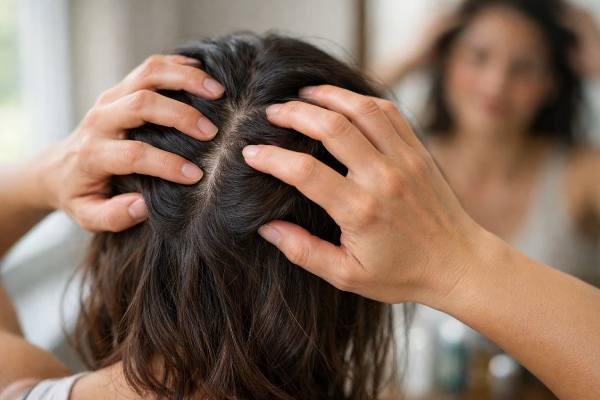
- Place fingertips on the scalp. Use the pads of the fingers rather than nails.
- Apply gentle pressure. The pressure should feel comfortable and never painful.
- Make small circular motions. Move the scalp in slow circles rather than sliding across the hair.
- Work across the entire scalp. Include the temples, crown, sides, and nape.
- Continue for 4–5 minutes. Consistency matters more than duration.
Daily practice tends to be more effective than occasional sessions. Many people find it easiest to incorporate scalp massage into an existing routine such as:
- Before washing the hair
- During shampooing
- While applying a treatment product
- As part of a nighttime relaxation routine
Shampoo time can be particularly convenient because the scalp is already lubricated, reducing friction. However, dry massage can work equally well when performed gently.
Posture also matters. Tension in the neck and shoulders can transfer to the scalp. Sitting comfortably with relaxed shoulders helps the scalp remain more mobile during massage.
Some people combine massage with topical treatments aimed at supporting hair growth. In those cases, gentle stimulation may help distribute the product more evenly across the scalp. For example, certain topical therapies benefit from consistent application, as described in guides about how minoxidil works for hair loss. Massage does not replace these treatments but may complement them.
The most important rule is to avoid aggressive movements. Excess pressure can inflame follicles, cause breakage, or irritate sensitive scalps. A successful scalp massage should feel relaxing and soothing rather than forceful.
When performed correctly and consistently, this simple routine can become a small but meaningful part of scalp care.
Tools oils and techniques
Many products claim to enhance scalp massage results, including electric massagers, silicone brushes, and specialized oils. While some tools can make massage easier, they are not essential. The fingertips remain one of the safest and most effective methods.
Manual massage offers better control over pressure and movement. Fingertips allow subtle adjustments that reduce the risk of irritation. Tools, on the other hand, can sometimes apply uneven pressure or catch hair strands if used too aggressively.
Silicone scalp brushes are among the more commonly recommended accessories. They are designed to distribute shampoo and gently stimulate the scalp. When used carefully, they can provide a mild massage effect. However, they should not replace fingertip massage entirely.
Electric massagers are also popular but require caution. Some models vibrate strongly, which may feel pleasant but can irritate sensitive scalps. Individuals with inflammatory scalp conditions or fragile hair should use these devices sparingly.
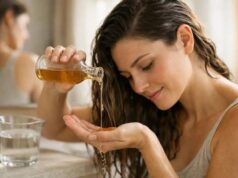
Oils are often combined with scalp massage as well. Coconut oil, argan oil, and other plant oils are commonly used to reduce friction during massage. While these oils may improve hair conditioning, they are not proven to stimulate hair growth directly.
Certain oils receive attention for possible biological activity. For instance, rosemary oil has been studied for its potential influence on hair growth pathways. If oils are used during massage, they should be applied sparingly and washed out regularly to avoid buildup.
It is also important to consider scalp cleanliness. Heavy oils left on the scalp for long periods may clog follicles or trap debris. A balanced routine usually works best: light application, gentle massage, and regular cleansing.
Another technique involves combining massage with other scalp-care practices. For example:
- Light exfoliation can help remove buildup.
- Balanced hydration may support the skin barrier.
- Gentle brushing may stimulate circulation.
These practices overlap with broader scalp-care strategies described in discussions about safe scalp exfoliation methods. When performed gently, these techniques may complement scalp massage by maintaining a healthier scalp environment.
Ultimately, tools and oils are optional. The most reliable benefit comes from the act of massage itself. Consistency, gentle pressure, and attention to scalp comfort matter far more than the specific product used.
Who may benefit most
Scalp massage does not affect everyone equally. The people most likely to notice improvements are those whose hair concerns involve scalp tension, mild thinning, or stress-related shedding rather than irreversible follicle loss.
Individuals experiencing temporary hair shedding may benefit from the relaxation and circulation effects of massage. Stress-related shedding often occurs when hair follicles prematurely shift into the resting phase. Stress-reducing habits, including scalp massage, may help support recovery in these cases.
People with tight scalp muscles or reduced scalp mobility may also find massage helpful. Limited scalp movement has been observed in some individuals with pattern hair loss, although it is not clear whether this relationship is causal or coincidental. Improving scalp flexibility through massage may provide modest support to the follicle environment.
Another group that may benefit includes those building comprehensive hair-care routines. Scalp massage integrates easily with broader habits such as balanced nutrition, consistent washing routines, and stress management. When multiple supportive practices combine, their cumulative effect can help maintain healthier hair over time.
However, massage should not be expected to treat medical hair disorders alone. Conditions such as autoimmune hair loss, severe hormonal hair thinning, or scarring alopecia require targeted medical therapy. For example, patchy hair loss linked to autoimmune processes behaves very differently from mechanical scalp issues, as explained in discussions of autoimmune patchy hair loss.
The benefit of massage therefore depends on context. It can be a helpful supportive habit in many routines but rarely acts as a primary treatment.
Some people may also enjoy the psychological benefits. Massage encourages relaxation, mindfulness, and awareness of scalp health. This connection between stress and hair biology should not be underestimated. Chronic stress can influence hormone signaling and hair cycling, so routines that promote relaxation may indirectly support hair health.
In summary, scalp massage tends to provide the greatest value for individuals seeking to maintain scalp health, reduce tension, and support existing follicles. Its role is supportive rather than curative.
Limits risks and common mistakes
Despite its potential benefits, scalp massage also has clear limitations. Hair growth is governed by powerful biological factors including genetics, hormones, immune signaling, and nutrition. Massage alone cannot override these mechanisms.
One common misconception is that more pressure leads to better results. In reality, aggressive massage can damage the scalp barrier, irritate follicles, and even increase hair breakage. Fingernails should never be used, as scratching can introduce bacteria and worsen inflammation.
Another frequent mistake involves excessive use of oils. While oils can reduce friction during massage, thick layers left on the scalp for extended periods may trap debris and block follicles. Regular cleansing is essential when oils are used frequently.
Individuals with active scalp conditions should exercise caution. Inflamed skin, infections, or open lesions can worsen with mechanical stimulation. For example, conditions involving painful bumps or infection may require medical care before massage is resumed. Recognizing symptoms of disorders such as scalp folliculitis and recurring scalp bumps helps prevent irritation from inappropriate massage.
Overuse of massage tools is another issue. Hard brushes or vibrating devices can apply uneven pressure that irritates sensitive scalps. Gentle fingertip techniques usually provide better control.
Unrealistic expectations also create disappointment. Scalp massage may improve hair thickness slightly, but it is unlikely to restore significant hair density in advanced hair loss. For many people, it works best as a supportive routine combined with proven treatments.
Signs that massage should be paused include:
- Persistent scalp pain
- Increased hair shedding during massage
- Redness, burning, or irritation
- Development of bumps or lesions
In these situations, the scalp may already be inflamed or sensitive. Continuing massage could worsen the problem rather than help it.
The most effective approach is moderation. A few minutes of gentle stimulation each day can support scalp comfort without overwhelming the follicles. When practiced thoughtfully and combined with good scalp care, scalp massage can remain a safe and useful addition to a broader hair-health routine.
References
- Standardized Scalp Massage Results in Increased Hair Thickness by Inducing Stretching Forces to Dermal Papilla Cells in the Subcutaneous Tissue 2016
- Mechanobiology of Hair Follicles: Understanding How Physical Forces Influence Hair Growth 2019 (Review)
- Treatment options for androgenetic alopecia: Efficacy, side effects, compliance, financial considerations, and ethics 2021 (Review)
- Female-pattern hair loss: therapeutic update 2023 (Review)
Disclaimer
This article is for educational purposes only and is not intended to replace medical advice, diagnosis, or treatment. Scalp massage may support scalp health, but it does not cure underlying medical causes of hair loss. Individuals experiencing sudden hair shedding, patchy hair loss, scalp pain, or persistent scalp disease should consult a qualified healthcare professional for proper evaluation and treatment.
If you found this article helpful, consider sharing it on Facebook, X (formerly Twitter), or another platform so others can learn about safe and realistic approaches to scalp massage and hair growth.