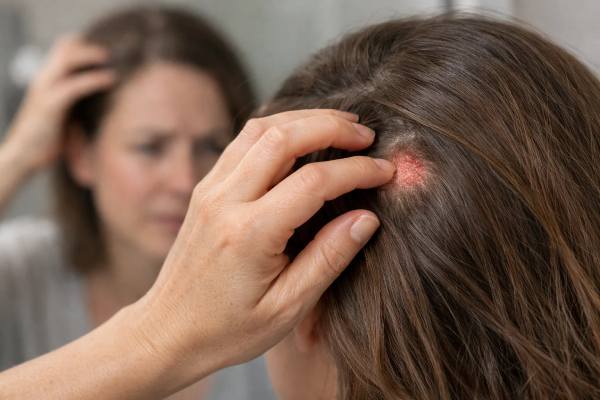
A scalp patch that keeps itching, even after you have already scratched it raw, can feel oddly relentless. Many people describe it as one stubborn spot they cannot stop touching, rubbing, or picking. That pattern is classic for scalp lichen simplex chronicus, also called neurodermatitis. It is not usually a dangerous condition, but it can become deeply frustrating because the scratching meant to bring relief ends up keeping the itch alive.
On the scalp, this problem is easy to miss at first. Hair can hide thickened skin, broken hairs, and scratch marks, while the main symptom is often the urge to “check” the area again and again. The good news is that the cycle can be interrupted. Lasting improvement usually comes from treating both sides of the problem at once: the inflamed, overreactive skin and the repeated rubbing or scratching that keeps re-triggering it.
Essential Insights
- Scalp lichen simplex chronicus often improves when inflammation is treated and mechanical scratching is reduced at the same time.
- The condition usually causes temporary hair breakage or thinning rather than permanent follicle loss.
- Progress is slower when an underlying trigger such as dandruff, contact irritation, or stress remains active.
- Potent scalp treatments can help, but they should not be used indefinitely without medical guidance.
- Practical control often starts with short nails, a cooling measure for flare-ups, and a plan to interrupt automatic touching.
Table of Contents
- What This Condition Is
- How It Looks and Feels
- Why the Cycle Keeps Going
- How Doctors Confirm It
- How to Break the Cycle
- Healing Time and Prevention
What This Condition Is
Scalp lichen simplex chronicus is a thickened, itchy patch of skin that develops after repeated rubbing, scratching, or picking. Doctors often describe it as a reaction pattern rather than a single isolated disease. In plain terms, the scalp becomes trapped in a loop: something starts the itch, scratching briefly relieves it, and that scratching then makes the nerves and skin even more reactive, which leads to more itch.
Over time, the affected area changes texture. The skin may become tougher, slightly raised, drier, or more leathery than the surrounding scalp. This thickening is called lichenification. On the scalp, it may be harder to see than on the neck, wrists, or ankles because hair partly hides the patch. Sometimes the person notices the urge to touch the area before they notice the skin change itself.
What makes scalp lichen simplex chronicus different from an ordinary itchy scalp is persistence and pattern. The itch is often focused in one area or a few repeated spots. It may worsen in the evening, during stressful moments, while reading or watching screens, or during sleep when scratching happens automatically. Many people say they do not fully realize how often they are rubbing the spot until they try to stop.
This condition can affect anyone, but it is especially common in people who already have a reason for scalp irritation. That may include dandruff, eczema, contact sensitivity to hair products, friction from extensions or tight styling, or a period of intense stress. Once the itch-scratch cycle becomes established, the original trigger may still be present, or it may have become much less important than the cycle itself.
A useful way to think about scalp lichen simplex chronicus is that it sits at the intersection of skin inflammation, nerve signaling, and habit. That is why a purely cosmetic fix rarely works. Shampoo changes alone may not be enough, and willpower alone usually is not enough either. The most effective approach is combined: calm the inflamed skin, reduce the itch signal, and make scratching harder and less automatic.
One reassuring point is that scalp lichen simplex chronicus is not usually a scarring disorder. The hair may look thinner because of breakage, rubbing, and short-term shedding, but the follicles are often still capable of normal growth once the area settles. That distinction matters, because it means early treatment can prevent weeks or months of unnecessary damage.
How It Looks and Feels
The hallmark symptom is intense itch, but the scalp can produce a wider set of clues than many people expect. Some people feel a prickly, hot, crawling, or tingling sensation before they scratch. Others notice a patch that feels sore after rubbing, with a strange mix of itch and tenderness. This is one reason the condition is so frustrating: the sensations can be strong enough to pull attention back to the same area many times a day.
Visually, the patch may look slightly darker or lighter than nearby skin, especially after months of inflammation. It can be dry, scaly, or shiny from repeated friction. On the scalp, there may also be broken hairs of uneven length, a rough texture, or a localized “thinned” area that is really caused by breakage rather than true follicle shutdown. Sometimes the patch is broad and diffuse, but just as often it is a well-defined spot that seems to invite the hand back to it.
Common signs include:
- A single stubborn itchy area or a few repeat patches
- Thickened skin that feels firmer than the rest of the scalp
- Fine scale, scratch marks, or tiny crusts
- Short broken hairs in the involved zone
- Sleep disruption because itching becomes worse at night
The scalp location matters. Hair can trap heat, sweat, styling residue, and friction, all of which can intensify the urge to scratch. That is why some people first assume they have simple dandruff, product buildup, or “dry scalp.” Those can be part of the picture, but scalp lichen simplex chronicus is often more localized and more repetitive than ordinary flaking.
Hair changes can cause extra alarm. Many people worry that the patch means permanent hair loss. In most cases, the visible thinning is due to three things: hair shafts breaking from friction, temporary shedding triggered by inflammation, and hair clumping apart over a textured plaque. When the patch heals, density often improves. Even so, persistent itch plus visible thinning deserves a careful look, because other conditions can overlap with it, including problems covered in this guide to itch plus shedding on the scalp.
What the condition feels like emotionally is also important. Because the scratching is partly automatic, people often feel embarrassed or frustrated when they cannot stop. That reaction is common and does not mean the problem is “all in your head.” The scalp nerves have become sensitized, and the behavior has become reinforced. Recognizing that pattern is often the first real turning point, because it shifts the goal from “try harder not to scratch” to “build a treatment plan that makes scratching less rewarding and less frequent.”
Why the Cycle Keeps Going
Scalp lichen simplex chronicus rarely appears out of nowhere. Most cases begin with a trigger that makes the scalp itch in the first place. After that, scratching becomes the engine that keeps the condition alive. Understanding both parts matters, because treating only the thickened patch while ignoring the original trigger often leads to relapse.
Common starting triggers include seborrheic dermatitis, dry scalp, eczema, contact irritation from hair dye or fragranced products, friction from braids or extensions, sweat, heat, and stress-related scratching. Even a small irritation can be enough if it hits an area that is easy to reach and repeatedly rub. Many readers who are unsure whether something else is driving the itch benefit from reviewing broader persistent itchy scalp triggers before assuming one diagnosis explains everything.
Stress deserves special attention. It does not cause every case, but it often intensifies the urge to touch the scalp. People may scratch while concentrating, driving, studying, scrolling, or falling asleep. In those moments, the movement is less a deliberate choice than a conditioned response. The brain learns that rubbing gives a moment of relief, so it keeps returning to the same behavior even though the longer-term effect is worse.
Several changes then reinforce the cycle:
- The skin barrier weakens. Repeated friction damages the outer layer of the scalp, making it sting, dry out, and react more easily.
- Inflammation increases. The skin releases signals that promote itch and redness.
- Nerves become more sensitive. The scalp starts overreacting to light touch, warmth, sweat, or hair movement.
- Habit takes over. Scratching becomes automatic in familiar settings, especially at night or during stress.
That four-part loop explains why a flare can continue even when the original trigger becomes less obvious. Someone may no longer have major dandruff or active irritation from a product, yet the same patch still itches because the skin and nerves have been trained into overreaction.
The scalp is a particularly easy place for this to happen. Hair makes it simple to hide touching, and the fingertips can reach the area quickly without much thought. Nails, combs, brushes, and even vigorous shampooing can all become part of the same pattern. Some people do not “scratch” in the usual sense at all; they rub, pick, scrape, or press instead.
A helpful insight is that scalp lichen simplex chronicus behaves less like a one-time rash and more like a self-reinforcing loop. That is why successful treatment usually feels layered rather than singular. You need a trigger check, itch control, barrier support, and behavior interruption. Remove one piece and the improvement may be partial. Address all four, and the scalp has a much better chance to reset.
How Doctors Confirm It
Doctors usually diagnose scalp lichen simplex chronicus from the story and the exam. The history often sounds familiar: a stubborn itchy spot, repeated rubbing, and a cycle that has lasted weeks or months. On inspection, the scalp may show a thickened plaque, scale, scratch marks, broken hairs, or mild color change. The exact appearance varies with hair density, skin tone, and how much the area has been manipulated.
Because the scalp can host several look-alike conditions, the real skill is not only recognizing lichen simplex chronicus but also making sure something else is not being missed. Common mimics include seborrheic dermatitis, psoriasis, allergic or irritant contact dermatitis, fungal infection, scalp folliculitis, and scarring alopecias. Some of those are mainly inflammatory and reversible; others need faster treatment because they can threaten lasting hair density.
A clinician may use a magnified scalp exam, often called trichoscopy or dermoscopy, to look more closely at scale pattern, hair breakage, follicular openings, and inflammation. This can help separate simple friction-related breakage from signs of a more specific scalp disease. For example, heavy silvery scale, sharply bordered plaques, or a more diffuse pattern may point away from lichen simplex chronicus and toward conditions such as scalp psoriasis patterns.
Testing is not always needed, but it becomes more likely in a few situations:
- The patch is painful rather than mainly itchy
- Hair loss looks progressive or scar-like
- There is pus, marked crusting, or swollen lymph nodes
- A child has broken hairs and scale, raising concern for fungal infection
- The rash spread quickly or did not respond to standard treatment
- The presentation is unusual or there are several possible diagnoses
In those cases, a doctor may do a fungal test, swab a suspicious infection, review hair product exposures, or recommend patch testing if contact allergy seems likely. Sometimes a scalp biopsy is the best way to clarify what is going on, especially when inflammation around follicles or signs of scarring are present.
One of the most useful clinical clues is that scalp lichen simplex chronicus often has a “reachable” pattern. The involved area is frequently somewhere the hand naturally returns to, and the skin change tends to reflect repeated trauma. Still, no one should self-diagnose with complete confidence if there is significant hair loss, burning, or tenderness. The scalp has a limited vocabulary for distress, and several disorders can look similar at home.
The aim of diagnosis is practical: confirm that the problem really is an itch-scratch disorder, identify any trigger that keeps feeding it, and rule out conditions that need different treatment. Once that is done, the management plan becomes much more effective and much less frustrating.
How to Break the Cycle
Breaking scalp lichen simplex chronicus usually requires more than one tool at a time. The best plan treats inflammation, reduces itch, protects the barrier, and interrupts the physical act of scratching. When people only do one of those steps, the patch often improves briefly and then flares again.
A practical treatment plan often looks like this:
- Calm the inflamed patch. Doctors commonly use a prescription corticosteroid in a scalp-friendly vehicle such as a solution, foam, lotion, or shampoo. On the scalp, this helps more than a thick ointment that never reaches the skin. These treatments are often used for a short focused course, then stepped down.
- Control the urge to scratch. Cooling the area with a cold pack wrapped in cloth for 5 to 10 minutes can reduce the immediate impulse. Some people also do better when they keep nails short, avoid sharp combing, and use a soft scalp touch only when washing.
- Treat the trigger. If dandruff, eczema, contact irritation, or friction is part of the picture, that piece must be managed too. Otherwise the scalp keeps restarting the itch signal.
- Reduce automatic touching. This is the overlooked step. Habit reversal works best when it is concrete: wear a soft sleep cap if nighttime scratching is common, keep hands busy during screen time, and notice the moments when the hand starts moving toward the scalp.
- Support the skin barrier. Use a gentle cleanser, avoid very hot water, and simplify styling products during a flare.
For some people, especially those with a clear product trigger, ingredient review matters almost as much as medication. Fragrance, essential oils, strong hold sprays, harsh dyes, and repeated chemical exposure can keep the scalp reactive. If that pattern seems likely, learning about patch testing for hair and scalp products can be useful before repeatedly switching products at random.
There are also treatments doctors may add for stubborn cases. These can include a steroid injection into a thick plaque, an anti-itch medicine at night when sleep is disrupted, or a steroid-sparing topical for maintenance in selected situations. If anxiety, compulsive skin picking, or severe stress is driving the behavior, addressing that piece often improves the scalp more than expected.
A few important cautions matter here. Potent steroid treatments are helpful, but they are not meant for indefinite unsupervised use. Overuse can thin skin and sometimes worsen irritation or folliculitis. Scrubbing harder is also counterproductive. A scalp brush, exfoliating acid, or “detox” routine may feel active and satisfying, but on an already sensitized patch it often adds more trauma.
The deepest shift is psychological as much as dermatologic: replace the goal of perfect self-control with the goal of making the itch less intense and the scratching less automatic. That is how the cycle actually starts to loosen.
Healing Time and Prevention
Recovery usually happens in stages rather than all at once. The first thing to improve is often the urge to scratch. If treatment matches the diagnosis and the main trigger is addressed, itch may begin to ease within several days to two weeks. Thickened texture and visible scale usually take longer. A stubborn plaque may need several more weeks before it feels close to normal, and color change can linger for months after active inflammation settles.
Hair recovery has its own timeline. Broken hairs need time to grow out, so the patch may still look uneven after the itching improves. That delay can make people think the condition is not responding when it actually is. In many cases, density fills back in gradually because the follicles were irritated, not destroyed. That said, ongoing inflammation, pain, or expanding loss should not be ignored. Those features raise the chance that another scalp disorder is also present.
Relapse prevention depends on identifying your pattern. Ask three questions:
- What seems to start the itch?
- When do my hands go to the area automatically?
- What makes the patch worse the next day?
For many people, the answers are surprisingly consistent. Common repeat triggers include stress, sweaty workouts followed by delayed washing, fragranced products, tight hairstyles, rough towel drying, and nighttime scratching. Once the flare is quiet, prevention becomes more realistic than it seemed during the worst phase.
Useful long-term habits include:
- Keeping the scalp care routine simple during sensitive periods
- Treating dandruff or eczema early instead of waiting for a major flare
- Avoiding repeated friction from nails, picks, brushes, and tight styles
- Building a substitute response, such as pressing on the shoulder or clenching a fist, when the hand starts moving toward the scalp
- Seeking review if the same patch keeps returning despite good adherence
Medical follow-up is especially important if you have bleeding, crusting, pus, significant tenderness, sleep loss, or visible hair thinning that is not improving. A repeat flare in exactly the same spot can still be lichen simplex chronicus, but it is worth checking whether the underlying trigger was missed. That is particularly true if the symptoms resemble broader warning signs discussed in guides on when to get specialist help for scalp symptoms.
The encouraging part is that scalp lichen simplex chronicus is one of those conditions where small repeated changes matter. A gentler wash routine, faster trigger treatment, fewer unconscious scalp checks, and a short targeted treatment course can shift the scalp out of a cycle that once felt endless. Recovery is not only about stopping a rash. It is about retraining the skin and the habit loop that keeps waking it up.
References
- Lichen simplex chronicus (Neurodermatitis) 2023
- Neurodermatitis: Diagnosis and treatment 2024
- Neurodermatitis – Symptoms and causes – Mayo Clinic 2024
- Neurodermatitis – Diagnosis and treatment – Mayo Clinic 2024
- Neurodermatitis: What It Is, Causes, Symptoms and Treatment 2023
Disclaimer
This article is for educational purposes only and is not a medical diagnosis or treatment plan. Scalp lichen simplex chronicus can overlap with dandruff, psoriasis, contact dermatitis, fungal infection, folliculitis, and some forms of hair loss. Seek medical care promptly if you have severe pain, pus, rapid shedding, patch expansion, sleep-disrupting itch, or no improvement after a short trial of appropriate care.
If this article was helpful, please share it on Facebook, X, or your preferred platform so others dealing with persistent scalp itch can find it too.