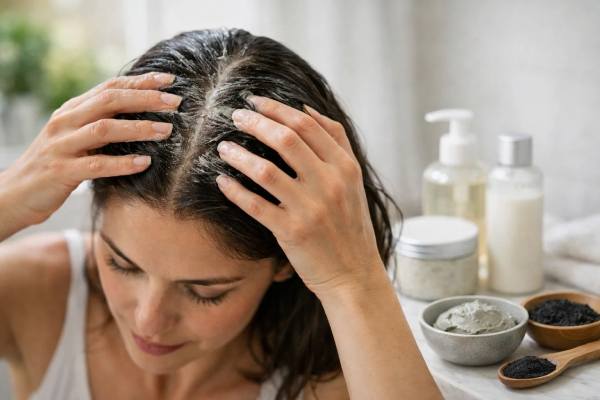
“Scalp detox” sounds dramatic, but most people do not need anything dramatic. They need a cleaner, calmer scalp and a routine that removes what has been collecting there: sebum, sweat, styling residue, dry shampoo, flakes, and sometimes mineral film from water. That is the useful meaning of scalp detox. It is not about pulling vague “toxins” out of the skin. It is about clearing buildup without damaging the scalp barrier in the process. Done well, a detox-style reset can make hair feel lighter, reduce itch, improve flaking, and help shampoos or treatments work the way they should. Done badly, it can leave the scalp tight, irritated, oilier by rebound, or confused by too many harsh steps. The difference usually comes down to method. A good scalp detox is simple, targeted, and repeatable. A bad one is abrasive, overcomplicated, and guided more by trends than by scalp biology.
Quick Facts
- A sensible scalp detox can reduce buildup, itch, visible flakes, and heavy roots when the problem is residue rather than disease.
- The best detox methods are usually ordinary ones used well: clarifying shampoo, medicated shampoo when needed, and gentle exfoliation only in the right cases.
- Harsh scrubs, undiluted acids, and repeated DIY rinses can worsen burning, flaking, and scalp barrier damage.
- A practical starting point is one reset wash every 2 to 4 weeks for buildup-prone scalps, with more frequent cleansing based on oil, sweat, and product use.
Table of Contents
- What scalp detox actually means
- Signs you may need a reset
- Best methods that actually help
- How to match the method to your scalp
- What to avoid
- When detox is not enough
What scalp detox actually means
In practical hair care, “scalp detox” is mostly a marketing phrase for buildup removal and scalp normalization. The scalp does not need a cleanse in the same way the liver or kidneys are often misused in wellness language. It already has its own barrier, immune defenses, microbiome, and oil-regulating systems. What it may need, however, is help removing the residue that accumulates when product use, scalp oil, sweat, flakes, and wash habits fall out of balance.
That distinction matters because it changes the goal. The goal is not to strip the scalp until it squeaks. It is to reduce what is interfering with comfort and function. For some people, that means removing styling film and dry shampoo. For others, it means loosening scale so a medicated shampoo can actually reach the scalp. For another group, it simply means washing often enough to keep sebum, odor, and irritation from building up. A good detox routine should leave the scalp cleaner and calmer, not raw or overcorrected.
Three things are usually involved in the “detox” experience people want. The first is cleansing. This removes oil, sweat, residue, and environmental grime. The second is exfoliation, but only when exfoliation is truly needed. On the scalp, exfoliation should mean loosening excess surface scale or residue gently, not treating the head like a rough body scrub area. The third is simplification. Many people improve not because they add a miracle product, but because they temporarily stop layering oils, creams, powders, fragrance-heavy serums, and repeated refresh products on top of a stressed scalp.
A useful way to think about detox is this: it is a reset, not a punishment. You are not trying to prove how “deep” you can cleanse. You are trying to restore the scalp to a state where ordinary shampooing works again and the hair feels responsive. That is why the most effective resets are usually ordinary methods done more thoughtfully. A clarifying shampoo used at the right interval often helps more than a complicated multi-step ritual. The same is true if the real issue is product film and heavy roots rather than a scalp disease. In that case, the larger problem may be simple product buildup in the hair and scalp rather than anything that deserves the word detox at all.
The phrase can still be useful if it reminds people to reassess their routine. It becomes unhelpful only when it encourages harshness, fear of “toxins,” or the idea that discomfort is proof a product is working. A healthy scalp is not a scalp that feels aggressively purified. It is one that feels clean, comfortable, and predictable between wash days.
Signs you may need a reset
Not every itchy, flaky, or oily scalp needs a detox. But some patterns do suggest that residue, buildup, or under-cleansing may be part of the problem. The most common sign is heaviness at the roots that returns very quickly after washing. Hair may look flat, separate into stringy sections, or feel coated instead of fresh. If dry shampoo seems to help only briefly before the scalp feels dirtier than before, buildup is a reasonable suspect.
Another clue is poor product performance. Your regular shampoo stops feeling effective. Conditioners and scalp serums seem to sit on top instead of rinsing cleanly. Curl definition gets dull or uneven. The scalp may feel waxy at the crown or along the hairline. This is especially common in people who use styling creams, root powders, leave-in products, scalp sunscreens, or frequent refresh sprays. It is also common after long stretches of infrequent washing paired with sweat, hats, helmets, or exercise.
Flaking can be part of the picture too, but it needs careful interpretation. Buildup flakes are often mixed with oil or residue and may cling to the scalp in patches. They do not always behave like classic dandruff. At the same time, true dandruff or seborrheic dermatitis can also worsen when oil, scale, and product film are allowed to sit too long. A detox may help expose the real problem, but it does not automatically treat it. That is why greasy yellowish flakes, persistent itch, or recurrent scale may point beyond simple buildup.
Scalp odor is another under-discussed clue. When sebum, sweat, microbes, and residue accumulate, the scalp can develop a stale smell even if the person is otherwise clean. That does not necessarily mean poor hygiene. It often means the wash routine is not matching the scalp’s actual load. If that issue keeps returning, the pattern may overlap with the same causes discussed in persistent scalp odor rather than a vague need for “detox.”
People most likely to benefit from a reset often fall into a few groups:
- frequent dry shampoo users
- heavy oil or butter users
- people who wash infrequently but use several stylers
- swimmers or people with mineral-heavy water
- anyone whose scalp feels coated, itchy, or stale without obvious inflammation
A final clue is how your scalp responds after a thorough wash. If one well-executed cleanse makes the scalp feel dramatically better, buildup was probably involved. If symptoms return immediately, burn, or never improve, a condition like seborrheic dermatitis, psoriasis, contact irritation, or folliculitis may be more likely. The purpose of a reset is not to guess perfectly. It is to test whether the simplest explanation, excess residue, fits the pattern before you move on to stronger treatment or clinical care.
Best methods that actually help
The best scalp detox methods are usually the least dramatic ones. They work because they address the actual problem: excess oil, product film, scale, or microbial overgrowth. They do not rely on tingling, harsh scrubbing, or extreme pH tricks to feel effective.
For straightforward buildup, clarifying shampoo is the best first tool. A true clarifier is designed to remove residue more efficiently than an everyday gentle shampoo. It can be especially helpful after repeated use of dry shampoo, heavy stylers, silicone-rich products, or rich scalp oils. Many people only need it every 2 to 4 weeks. Others need it sooner if they use more product or sweat heavily. The key is to apply it to a fully wet scalp, massage it in thoroughly, and rinse longer than feels necessary. A rushed rinse is one reason buildup lingers. If you want a fuller framework for timing, a guide to clarifying shampoo frequency can help align the reset with your actual routine.
When flaking, itch, or greasy scale are part of the problem, a medicated dandruff shampoo may be more useful than a cosmetic detox product. Ingredients such as ketoconazole, selenium sulfide, zinc pyrithione, ciclopirox, or salicylic acid are targeted to common scalp conditions that simple cleansing does not fully address. In those cases, “detox” is not really the right word. Treatment is. Many medicated shampoos work best when left on the scalp for a few minutes before rinsing and used several times per week during active symptoms.
Gentle scalp exfoliation can help, but it should be chosen carefully. Chemical exfoliants are usually safer than harsh physical scrubs. Salicylic acid can be useful when there is stubborn scale, oiliness, or a feeling of compacted buildup. It helps loosen surface debris rather than forcing it off mechanically. Used too often, though, it can dry or sting. For most people, once weekly or less is a reasonable starting point unless a clinician recommends otherwise.
A gentle scalp brush can also help during shampooing, but only as an assistive tool. It should move lather around and lift residue lightly, not scrape the skin. Fingertips are often enough.
A practical detox sequence usually looks like this:
- Wet the scalp thoroughly.
- Cleanse with a clarifying or indicated shampoo.
- Rinse very well.
- Repeat once if buildup is heavy.
- Condition mainly the lengths, not the scalp, unless the product is designed for scalp use.
This kind of reset works because it is targeted. It asks what is on the scalp and removes it with the mildest effective method. That is what good scalp care usually looks like.
How to match the method to your scalp
A scalp detox should never be one-size-fits-all. An oily scalp, a dry sensitive scalp, a coily scalp under a protective style, and a dandruff-prone scalp may all feel “unclean” in different ways, but they do not need the same reset. The safest method is the one that matches the scalp’s pattern instead of following a trend.
If your scalp runs oily, frequent cleansing may matter more than any special detox product. Oily scalps usually do better with regular shampooing and occasional clarifying than with long gaps between washes followed by aggressive scrubbing. For this group, dryness is often overestimated and residue is underestimated. A practical rhythm may be every day to every other day with a mild shampoo, plus a clarifying wash when heavy product use or sweat accumulates. A more detailed approach to washing an oily scalp well can help fine-tune that balance.
If your scalp is dry, reactive, or easily irritated, the goal changes. Here, detox should mean gentle cleansing and minimal friction. Strong clarifiers, gritty scrubs, and multiple acids are more likely to trigger tightness and rebound discomfort. You may still need to remove buildup, but less often and with more attention to the formula. Fragrance-free or lower-residue shampoos, shorter contact time, and cooler water are often more useful than “deep clean” marketing.
Curly, coily, or tightly textured hair adds another layer. These routines often rely on richer leave-ins, oils, creams, and protective styling, which can make buildup more likely at the scalp even while the lengths remain dry. In that setting, a reset should focus on scalp access. Part the hair in sections, apply shampoo directly to the scalp, and rinse thoroughly. Avoid dumping conditioner at the roots just because the hair lengths need moisture. People with tighter textures often do best with fewer but more deliberate reset steps instead of frequent harsh cleansing.
If flakes are the main problem, first ask what kind of flakes they are. Dry powdery flakes, greasy adherent scale, and thick plaques do not all respond the same way. If symptoms include itch, visible oiliness, and recurring scale, an anti-dandruff treatment is usually smarter than a generic detox scrub. If the scalp is simply product-coated, buildup removal may be enough.
If you sweat often, swim, or live with hard water, your reset needs may be more mechanical than biological. Mineral deposits, salt, chlorine, and sunscreen can all change how the scalp and hair feel. These users often benefit from a clarifying or chelating-style reset at regular intervals, even when they do not use many stylers.
The easiest mistake is copying someone else’s routine without sharing their scalp type, wash frequency, hair density, or product load. A successful scalp detox is personalized by need, not by aesthetic. When the method fits the scalp, the reset feels simpler, gentler, and more effective.
What to avoid
Most scalp-detox mistakes come from trying to force fast results. The scalp is often treated like thicker body skin or like a greasy surface that needs to be scoured clean. It is neither. The scalp has follicles, sebaceous activity, a microbiome, and a barrier that can become inflamed quite quickly when overworked.
The first thing to avoid is harsh physical scrubbing. Sugar scrubs, salt scrubs, rough scalp pastes, and gritty brushes may feel satisfying for a moment, but they can create micro-irritation, worsen flaking, and make an already reactive scalp more sensitive. This is especially risky when there is dandruff, seborrheic dermatitis, eczema, psoriasis, or scalp acne in the background. A gentle chemical exfoliant usually makes more sense than abrasive friction, which is why a safer approach to scalp exfoliation without irritation matters more than “deep scrub” intensity.
The second thing to avoid is DIY acid experimentation. Lemon juice, vinegar used too often or too strong, facial acid toners applied directly to the scalp, and homemade peel mixtures can all disrupt the barrier. Mild, well-formulated acid products may have a role, but improvised kitchen chemistry rarely improves on a properly designed shampoo or scalp treatment. The same caution applies to baking soda, which is still promoted online despite being a poor fit for regular scalp use.
Another frequent mistake is oil overload. Scalp oiling can have a place in some routines, but it is often used in exactly the wrong situations: on already flaky, itchy, or buildup-prone scalps. Oil can temporarily soften scale, yet it may also trap residue, make cleansing harder, and worsen the feeling of congestion if used too often. That tradeoff is easy to miss in routines built around “nourishing” language, which is why it helps to understand the benefits and limits of scalp oiling before turning it into a weekly detox ritual.
Also avoid these common missteps:
- leaving strong treatments on longer than directed
- combining a clarifier, a scrub, and an acid on the same day
- picking or scraping off scales with nails
- using very hot water to “melt” buildup
- applying thick conditioners directly to the scalp without need
- switching shampoos constantly instead of using one correct product consistently
Perhaps the biggest mistake is assuming discomfort proves effectiveness. Tingling, stinging, burning, or extreme tightness are not signs of toxin release. They are warning signs that the scalp may be irritated. A good detox should feel cleaner, not punished. If your routine depends on discomfort to feel convincing, it is probably too aggressive for the job it is trying to do.
When detox is not enough
A scalp detox can remove residue. It cannot diagnose a disease. That is the line many people miss when they keep trying harsher and harsher resets for a problem that is not buildup in the first place. If the scalp improves clearly after a reset but drifts back over time, a maintenance routine may be all you need. If it never truly improves, the issue may be inflammatory, infectious, allergic, or hair-loss related rather than cosmetic.
One sign detox is not enough is persistent itch. Itch that keeps returning despite good cleansing may reflect dandruff, seborrheic dermatitis, psoriasis, contact dermatitis, folliculitis, or another scalp condition. Burning, tenderness, or pain are even stronger clues that you are beyond ordinary buildup. The same is true of visible redness, oozing, crusting, pustules, or thick plaques. Those findings deserve a different level of attention than a clarifying wash.
Hair loss changes the threshold too. Buildup can make hair look limp and can increase breakage indirectly, but it does not usually cause clear progressive thinning from the root. If your part is widening, shedding is heavy, or the scalp feels inflamed where hair is thinning, a detox should not be your main plan. The bigger question may be inflammation, telogen effluvium, androgenetic alopecia, or another medical driver. If your main symptom is recurring discomfort rather than obvious residue, a review of itchy scalp causes and warning signs is more relevant than another exfoliating scrub.
There are also scenarios where you should move more quickly toward expert care:
- symptoms last for several weeks despite a simpler routine
- flakes extend beyond the scalp onto brows, ears, or face
- you notice patchy loss or broken hairs around inflamed areas
- scalp pain or burning interferes with sleep or washing
- you react repeatedly to products that others tolerate well
A good detox can still be useful in these cases as a clarifying first step, but it should not delay diagnosis. In fact, a careful reset sometimes helps because it reveals the true pattern more clearly. Once residue is gone, persistent redness, greasy scale, or tenderness become easier to interpret.
The most helpful mindset is to treat detox as a tool, not an identity. Use it when the scalp is coated, congested, or clearly overdue for a reset. Do not use it as a universal answer to every scalp complaint. Healthy scalp care is less about doing intense things and more about doing the right simple thing at the right time.
References
- The Impact of Shampoo Wash Frequency on Scalp and Hair Conditions 2021
- On Hair Care Physicochemistry: From Structure and Degradation to Novel Biobased Conditioning Agents 2023 (Review)
- Scalp microbiome: a guide to better understanding scalp diseases and treatments 2024 (Review)
- Ketoconazole Shampoo for Seborrheic Dermatitis of the Scalp: A Narrative Review 2024 (Narrative Review)
- Child and Adult Seborrheic Dermatitis: A Narrative Review of the Current Treatment Landscape 2025 (Narrative Review)
Disclaimer
This article is for educational purposes only and is not a diagnosis or treatment plan. Scalp buildup, dandruff, seborrheic dermatitis, psoriasis, contact allergy, folliculitis, and inflammatory hair loss can look similar at first. If you have persistent itch, burning, pain, visible inflammation, thick scale, pustules, or ongoing hair shedding, seek advice from a dermatologist or other qualified clinician rather than relying on repeated detox routines.
If this guide helped, consider sharing it on Facebook, X, or your preferred platform so someone else can replace a harsh “detox” habit with a smarter scalp routine.