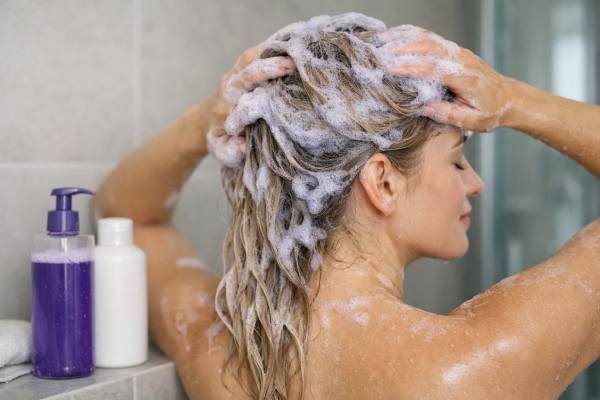
Purple shampoo has a reputation for doing two opposite things at once. On one wash day, it can make blonde, silver, highlighted, or gray hair look cleaner, cooler, and more expensive. On the next, the same bottle can leave hair feeling rough, overly matte, or strangely stiff. That contrast is why so many people end up asking the same practical question: how do you get the toning effect without paying for it in dryness?
The answer starts with understanding what purple shampoo is really for. It is not a standard daily cleanser with a little color added. It is a maintenance product that deposits violet pigment to visually soften yellow tones. Most hair that needs it is already fragile from bleaching, lightening, heat, or repeated color services, so technique matters as much as formula.
Used well, purple shampoo can stretch the life of your color and reduce brassiness. Used too often, left on too long, or paired with the wrong routine, it can make already stressed hair feel worse.
Quick Facts
- Purple shampoo helps neutralize yellow tones in blonde, silver, gray, and highlighted hair.
- The main drying risk usually comes from the formula and frequency of use, not from violet pigment alone.
- A short contact time and once-weekly start point are often enough for many people.
- Highly porous, freshly bleached, or very dry hair can turn dull or rough faster than expected.
- Follow every toning wash with a slip-rich conditioner or mask, and use a regular hydrating shampoo for most other wash days.
Table of Contents
- What purple shampoo is actually doing
- Why it can make hair feel dry
- Who should use it and who should not
- How often to use it and for how long
- How to tone without losing softness
- Mistakes that cause dryness dullness and staining
What purple shampoo is actually doing
Purple shampoo works through simple color balancing, but the hair condition underneath that color effect is what determines whether the result looks polished or parched. Violet sits opposite yellow on the color wheel, so when a purple-toned cleanser deposits a small amount of pigment on pale hair, it can make brassiness look less obvious. This is why purple shampoo is most useful for blonde, platinum, silver, white, and highlighted hair that pulls yellow between salon visits.
What it does not do is lighten hair, repair bleach damage, or replace a true toner service when the underlying color is very warm. It is a maintenance tool, not a full corrective treatment. If hair is bright orange, patchy, or deeply gold after lifting, purple shampoo may be too gentle or the wrong shade family altogether.
Why the effect varies so much
Purple shampoo is not a single product type. Some formulas behave more like a standard shampoo with added violet dyes. Others are closer to a color-depositing treatment in a cleansing base. That difference matters. A formula with strong pigment and a more cleansing base may tone quickly but leave the fiber less smooth. A milder formula may feel nicer but need repeated use before the change becomes visible.
Hair porosity changes the outcome even more. Bleached or weathered hair tends to grab pigment unevenly because the cuticle is more lifted and the surface is less uniform. That is why two people can use the same bottle and get very different results. One sees a soft cool-beige effect after two minutes. The other ends up with dry-feeling ends and an ashy cast around the most damaged sections.
What purple shampoo cannot fix
Purple shampoo cannot correct:
- Severe brassiness caused by inadequate lightening.
- Orange tones that usually respond better to blue-based products.
- Chronic roughness caused by chemical damage.
- Tangling that is really a cuticle and friction problem.
- Mineral staining from hard water.
A useful way to think about it is this: purple shampoo changes what the eye sees first, not what the fiber is made of. If the hair is already weakened, dry, or highly porous, the cosmetic toning effect can expose that weakness instead of hiding it. That is why the best purple shampoo routine always includes a plan for surface conditioning and moisture support, especially if the hair has a history of heavy lifting or repeated lightening. If that sounds familiar, a guide to bleach damage recovery helps explain why toned hair can still feel fragile.
Why it can make hair feel dry
Many people blame the purple pigment when their hair feels rough after toning, but the real reason is usually more layered. The biggest issue is that the hair most likely to need purple shampoo is often already compromised. Blonde hair that has been bleached, highlighted, double-processed, or heat-styled regularly usually has a more damaged cuticle, less lipid protection, and lower tolerance for repeated cleansing.
The formula matters more than the color
Purple shampoo can feel drying for four main reasons:
- The cleansing base may be too strong for frequent use.
- The hair may already have bleach-related porosity and protein loss.
- The formula may not contain enough conditioning agents to offset friction.
- Users often leave it on longer than their hair can comfortably handle.
This is an important distinction. The violet dye itself is not the main drying mechanism. The problem is the combination of pigment deposition, wash-time friction, and a shampoo base used on hair that is already vulnerable. When the cuticle has been lifted by chemical processing, water moves in and out of the fiber less predictably. That often leaves hair feeling swollen when wet and coarse when dry.
Why blondes notice dryness faster
Lightened hair often loses smoothness before it loses visible color quality. In practical terms, that means you may tone away yellow but still feel that your ends are dull, squeaky, or harder to comb. This is why many people describe purple shampoo as “working, but making my hair worse.” The color result and the tactile result are separate outcomes.
A second issue is contact time. Leaving a toning shampoo on for five minutes can sound harmless, but if the hair is very porous, that is longer exposure to both water and surfactants than damaged lengths may want. Hair does not only respond to what is in a product. It also responds to how long the product stays in place and how much swelling happens during the wash.
Dryness is often really friction
Sometimes what feels like dryness is actually drag. When the cuticle is rougher, strands do not glide past each other well. They catch, resist, and tangle. That creates the impression of dehydration even when the deeper problem is surface damage and poor lubrication. Products that reduce friction, improve slip, and help the cuticle lie flatter often change the feel of purple-shampooed hair more than extra pigment ever will.
That is also why a good purple shampoo routine should never be built around the shampoo alone. Toning without enough aftercare is what turns a useful maintenance product into a roughness trigger.
Who should use it and who should not
Purple shampoo is best for hair that is light enough for yellow tones to show clearly. That includes platinum, icy blonde, beige blonde, silver, gray, white, and many highlighted brunettes with pale ribbons around the face. It can also help naturally gray hair that looks yellowed from product buildup, smoke exposure, sun exposure, or repeated use of rich styling products.
Good candidates for purple shampoo
You are more likely to benefit if your hair falls into one of these groups:
- Bleached blonde that turns warm within one to three weeks after a salon visit.
- Gray or silver hair that looks slightly yellow rather than bright white.
- Highlighted hair where pale sections lose brightness faster than the rest.
- Fine blonde hair that needs a short, controlled toning step instead of frequent re-toning in salon.
- Natural or color-treated hair that is truly yellow, not orange.
When it is the wrong tool
Purple shampoo is often overused by people whose problem is not actually yellow brassiness. It is less useful when:
- The hair is orange or coppery rather than buttery or yellow.
- The main issue is dullness from buildup, not unwanted warmth.
- The hair is so porous that any pigment grabs unevenly.
- The scalp is very dry, inflamed, or sensitive to stronger cleansers.
- The hair is already brittle enough that every wash increases breakage.
This last point matters for curls, coils, and textured bleached hair. These patterns often need more lubrication, longer-lasting conditioning, and less frequent cleansing overall. Purple shampoo can still work, but the margin for error is smaller. Highly porous hair tends to absorb tone fast and lose softness fast, which is why understanding hair porosity differences can save a lot of frustration.
Gray hair and very porous blonde need extra care
Gray and white hair can grab violet quickly because there is little competing pigment. Damaged blonde ends can do the same. In both cases, it is better to start with less exposure than you think you need. A diluted application, shorter contact time, or even mixing a small amount with regular shampoo can work better than a full-strength, long-contact wash.
People sometimes assume stronger results are always better, but the most flattering tone is usually not the coolest possible tone. It is the tone that looks intentional while still leaving shine and softness intact. Hair that looks slightly creamy and healthy almost always wears better than hair that looks flat, hollow, or over-toned.
How often to use it and for how long
The safest way to use purple shampoo is to treat it like a dose, not a habit. Most people do better when they start low, watch the response, and adjust only if the hair truly needs more toning. This approach protects both color and texture.
A good starting schedule
For many people, this works well:
- Start with once a week.
- Leave it on for 1 to 3 minutes the first few uses.
- Rinse thoroughly.
- Follow immediately with conditioner or a mask.
- Use a regular hydrating shampoo on other wash days.
That schedule is often enough for highlighted blondes, softer beige blondes, and silver hair with mild yellowing. More resistant brassiness may need 3 to 5 minutes, but not every wash. Fine, porous, or recently lightened hair often needs less contact, not more.
Adjust by hair behavior, not by label promises
A bottle may claim “daily use,” but that does not mean your hair will enjoy daily use. Marketing language tends to describe what is possible, not what is best for fragile lengths. The better guide is your own hair after drying.
Use less often if you notice:
- A matte or chalky look.
- Ends that feel stiff after drying.
- Tangling that increases after toning days.
- A violet cast on the palest pieces.
- Scalp tightness or extra roughness through the mid-lengths.
Use a little more often if yellow returns quickly but the hair still feels soft and manageable.
Timing tips that reduce risk
A few technique changes lower the chance of dryness:
- Apply to fully wet hair so it spreads evenly.
- Focus on the areas that turn warm first instead of flooding the whole head.
- Comb through gently with fingers only if the formula has enough slip.
- Avoid piling the hair on top of the head and scrubbing aggressively.
- Do not keep adding extra product once the lengths are saturated.
If your hair is already dry, a regular gentle cleanser may need to do most of the maintenance work, with purple shampoo used only when the tone truly calls for it. That is where knowing when a sulfate-free shampoo helps can be useful, especially for color-treated hair that loses softness easily.
Purple shampoo works best when it interrupts brassiness, not when it becomes the center of the routine.
How to tone without losing softness
The simplest way to keep purple shampoo from drying out your hair is to stop asking it to do too many jobs. It should tone. Your conditioner, mask, leave-in, and repair products should handle slip, flexibility, and softness. When one product is expected to cleanse, tone, smooth, repair, and detangle all at once, disappointment is almost guaranteed.
Build the wash day around protection
A practical wash-day sequence looks like this:
- Detangle gently before washing if your hair knots easily.
- Use purple shampoo only where tone correction is needed most.
- Rinse thoroughly with lukewarm water.
- Apply a rich conditioner from mid-lengths to ends.
- Add a mask if the hair feels rough, stretchy, or unusually porous.
- Finish with a leave-in conditioner or lightweight serum on damp lengths.
The goal is to replace glide immediately after the toning step. Damaged blonde hair rarely needs more cleansing than it already gets. What it needs is less friction and better surface protection.
Alternate toning and repair
One of the best ways to reduce dryness is to separate toning days from repair-heavy days. For example, one wash each week may include purple shampoo plus a rich conditioner. Another wash later in the week may use a gentle hydrating shampoo plus a more substantial mask or bonding treatment. This pattern gives the hair correction without stacking too many stressors into one session.
Bonding and conditioning products are not identical, but they complement each other well. Bond-repair formulas aim to support internal structure, while conditioners and masks mainly improve slip, softness, and cuticle feel. If your blonde hair feels toned but keeps snapping, brushing roughly, or looking wiry, it may need more than moisture alone. That is where a routine focused on bond-repair for damaged hair can make purple shampoo easier to tolerate.
Small changes with big payoff
These adjustments often matter more than buying a new bottle:
- Use less product than you think you need.
- Keep the shampoo mostly on mid-lengths and ends if the scalp is dry.
- Do not chase an ultra-ashy result every wash.
- Add heat protection before blow-drying toned hair.
- Trim weathered ends that stay rough no matter what you apply.
Hair that is toned and touchable almost always looks healthier than hair that is perfectly cool-toned but straw-like. Softness is part of the final color result, not a separate luxury.
Mistakes that cause dryness dullness and staining
Purple shampoo usually goes wrong in predictable ways. The most common mistake is using it as a daily shampoo just because the hair is blonde. The second is leaving it on longer and longer in hopes of a brighter result. The third is using it on hair that is not actually yellow enough to need it.
The mistakes that sabotage results
Watch for these patterns:
- Using purple shampoo every wash instead of as needed.
- Leaving it on for 7 to 10 minutes without checking how the hair responds.
- Applying it to extremely porous ends first and roots last.
- Skipping conditioner because the formula claims to be moisturizing.
- Layering it over heavy buildup and expecting an even tone.
- Using it to fix orange hair, banding, or uneven salon work.
When buildup is present, tone can deposit unevenly. Some sections may look cooler while others still look brassy, which leads people to use more product and dry the hair further. In that situation, the better first move may be removing residue with a plan for clarifying shampoo timing, then returning to purple shampoo on a cleaner surface.
Purple stains and dullness are usually a warning
A violet cast, grayish haze, or flat-looking finish usually means one of three things: the product is too strong for the hair, it stayed on too long, or the hair is porous enough to catch more pigment than intended. The answer is rarely “use even more next time.” It is usually to shorten contact, space out use, or switch to a gentler formula.
Dryness can also be mistaken for protein overload, hard-water film, or simple over-washing. That is why a thoughtful routine always looks at the whole system, not only the purple bottle.
When to stop and rethink the routine
Pause purple shampoo and reassess if:
- Hair feels rougher every single time you use it.
- The ends look smoky, dull, or darker than the rest.
- Breakage increases after wash day.
- The scalp becomes irritated.
- Brassiness returns immediately despite frequent use.
At that point, the issue may not be maintenance. It may be underlying lift, porosity, buildup, water quality, or cumulative chemical damage. Purple shampoo can refine good blonde hair, but it cannot rescue every version of stressed blonde hair. Its best role is selective, controlled, and supported by the rest of the routine.
References
- A comparison of dyeing efficacy between hair‐oxidation‐based and hair‐coating‐based shampoos for the treatment of gray hair 2023
- On Hair Care Physicochemistry: From Structure and Degradation to Novel Biobased Conditioning Agents 2023 (Review)
- Mechanisms of impairment in hair and scalp induced by hair dyeing and perming and potential interventions 2023 (Review)
- Effects of excessive bleaching on hair: comparative analysis of external morphology and internal microstructure 2024
- With or without Silicones? A Comprehensive Review of Their Role in Hair Care 2025 (Review)
Disclaimer
This article is for educational purposes only and does not replace personal advice from a dermatologist, trichologist, or qualified hair professional. Persistent breakage, sudden shedding, scalp irritation, patchy hair loss, or severe dryness after coloring may point to damage, allergy, scalp disease, or another issue that needs direct evaluation. If purple shampoo causes burning, rash, marked brittleness, or repeated discoloration, stop using it and seek professional guidance.
If this article helped you, please share it on Facebook, X, or another platform you use most.