The phrase “bond repair” sounds wonderfully precise. It suggests that damaged hair can be rebuilt in a clean, measurable way, almost like fixing a cracked surface and moving on. Real hair is more complicated. Bleach, heat, friction, and chemical services damage the fiber in overlapping ways, so the best repair product is rarely the one with the boldest claim. It is the one that matches the kind of damage you actually have and the routine you will truly follow.
That is why the Olaplex versus K18 debate never lands on one universal winner. Both are designed for damaged hair, but they approach repair differently, feel different in use, and suit different people. One may fit a bleach-heavy routine better. The other may work better for someone who wants a fast, leave-in step and a softer cosmetic finish. The key is to compare them as systems, not slogans, and to judge them by your hair’s breakage pattern, porosity, wash routine, and tolerance for upkeep.
Key Facts
- Both Olaplex and K18 can improve the feel, strength, and manageability of damaged hair, especially after bleach, color, or frequent heat.
- Olaplex generally fits a more structured repair routine, while K18 is often easier for people who want a quick leave-in step.
- Neither system makes severely damaged hair identical to virgin hair, and neither permanently erases split ends.
- If your scalp is irritated or your hair is breaking because of a medical or traction issue, bond repair alone will not solve the problem.
- Choose based on your damage pattern and routine: repeated rinse-out repair for fragile, overprocessed hair or a lightweight leave-in option for faster maintenance.
Table of Contents
- What each system is really doing
- How the results feel different
- Routine and application differences
- Which hair types match best
- Limits, build-up, and safety
- The better choice by goal
What each system is really doing
Olaplex and K18 are often placed in the same shopping basket, but they are not identical in concept. They are both sold as repair systems for damaged hair, yet they frame “repair” through different chemistries and different routines.
Olaplex built its reputation around a patented molecule that the brand positions as targeting broken disulfide-bond damage inside the hair fiber. In practical terms, Olaplex has long been associated with bleach-heavy routines, salon color services, and repeated use on hair that has become weak, rough, or less elastic. The line has evolved, but the core identity is still the same: bond-focused repair, usually in a rinse-out or pre-wash style that fits into a repeated treatment system.
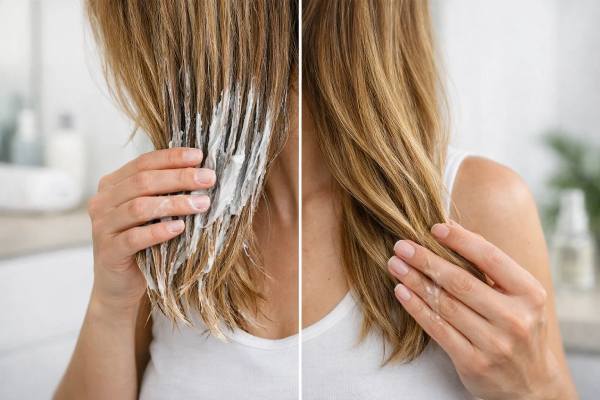
K18, by contrast, is built around a peptide-centered message. The brand presents its peptide as a biomimetic shortcut that helps reconnect broken keratin-related structure after bleach, color, heat, and chemical services. Its most recognizable consumer product is a leave-in mask used after shampooing, then left in place for several minutes before styling. That creates a very different user experience. K18 feels less like a weekly treatment ritual and more like a streamlined post-wash repair step.
What matters for the buyer is not only the chemistry claim, but the practical consequence of the claim. These systems differ in at least four ways:
- the kind of repair story they tell
- how long they stay on the hair
- whether they are rinsed out or left in
- how much of the result feels structural versus cosmetic
That last point is worth more attention than it usually gets. The softness, shine, and “my hair feels alive again” response people notice after one or two uses is not pure bond science alone. It is shaped by a full formula: conditioning agents, lubricity, pH, surface smoothing, and how the product changes combing and friction. In other words, users do not experience chemistry in a vacuum. They experience a whole formula on a damaged fiber.
This is why two true statements can exist at once. A product can be doing something meaningful for damaged hair, and the visible result can still be partly cosmetic. That is not a criticism. It is simply more honest than pretending every improvement comes from a single patented mechanism.
If you are new to this category, it helps to start with bond-repair basics for damaged hair. Once you understand that “repair” in hair care usually means partial structural support plus better fiber behavior, the Olaplex versus K18 comparison becomes much clearer. They are not promising the same exact outcome. They are solving related problems in different ways.
How the results feel different
People often ask which one is “stronger,” but that is not usually the most useful question. The better question is which one makes your particular damage pattern behave better. On real hair, that shows up as different kinds of wins: less breakage, better elasticity, smoother ends, softer texture, easier detangling, more bounce, or better tolerance for the next color service.
Olaplex often appeals most to people whose hair feels structurally fragile. This is the hair that gets stretchy when wet, rough after highlighting, and increasingly unreliable from one wash day to the next. On this kind of fiber, Olaplex’s more treatment-like identity can make sense. It tends to feel like a system for reinforcing hair that has been through too much chemical work, especially if bleach or high-lift color is part of the story. The improvement many users notice is not always instant silkiness. It is often better resilience over repeated uses.
K18 tends to impress people who want repair that feels faster and lighter in daily life. Because the flagship mask is leave-in, many users report a quick improvement in softness, smoothness, and bounce without a heavy treatment feel. That can be especially appealing for hair that is damaged but still needs movement, or for people who dislike extended pre-wash steps. K18 often fits the person who wants, “I need my hair to look and feel better this wash day,” not just “I need a longer recovery project.”
This does not mean one is only structural and the other only cosmetic. Both are working on damaged hair. But the way the results show up often feels different:
- Olaplex often reads as steadier, more system-based support
- K18 often reads as faster visible payoff with less routine friction
- Olaplex may suit very compromised, bleach-stressed hair better
- K18 may suit moderately damaged, busy-routine hair better
There is also a timing issue. People with severe bleach damage may judge products too quickly. Hair that has been repeatedly lightened does not recover in one dramatic jump. It usually improves in layers: less snagging first, then less breakage, then better styling behavior, then a healthier-looking surface. If that is your starting point, bleach recovery steps matter just as much as product choice.
One more practical difference is the way hair “carries” the result. Some people find Olaplex leaves their hair feeling sturdier but not especially plush on day one. Others find K18 gives a more immediately polished, flexible result but may not feel as treatment-heavy in the long run. That is why personal preference can diverge from online consensus so sharply. The same product can feel transformative on highlighted, medium-density hair and underwhelming on coarse, low-damage virgin hair.
The honest conclusion is that the result profile matters more than the hype profile. If your hair is severely compromised, the winner is often the one that makes breakage less likely over time. If your hair is moderately damaged and you want a simpler route to smoother, more cooperative hair, the winner may be the one you actually keep using.
Routine and application differences
Even when two products aim at the same kind of damage, routine can decide the outcome. A repair system that is perfect on paper will fail if it does not fit how you wash, style, color, and manage your hair in real life.
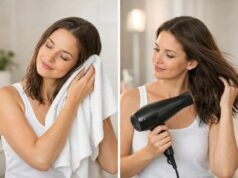
This is where Olaplex and K18 separate most clearly. Current consumer Olaplex repair treatment is positioned as a rinse-out or pre-shampoo style step used repeatedly through the week, depending on damage level. K18’s mask is positioned as a post-shampoo, towel-dried, leave-in treatment that sits for several minutes before styling. That single difference shapes nearly everything about the user experience.
Olaplex often fits people who are willing to build repair into a dedicated treatment rhythm. It can feel more natural for someone who already sees hair care as a sequence: repair, cleanse, condition, style. That structure also works well for people whose hair damage is serious enough that they expect repair to feel like maintenance, not a one-step shortcut.
K18 tends to suit the opposite personality. It is often easier for people who want fewer steps, less wash-day friction, and a leave-in product that does not ask for a second round in the shower. That convenience matters. A product used correctly six times will usually outperform the theoretically better product used twice and forgotten.
The routine differences become clearer in practice:
- Olaplex usually fits best when you do not mind scheduling repair into wash day.
- K18 usually fits best when you want repair to happen after shampoo with minimal extra steps.
- Olaplex often makes more sense inside a larger salon-damage control routine.
- K18 often makes more sense for busy maintenance between salon visits.
There is also a product-compatibility issue. K18 specifically works best when used the way the brand directs, which means not treating it like a traditional rich mask and not crowding it with conditioner before it has had time to sit. Olaplex, by contrast, is easier to understand for people who prefer a rinse-out treatment format. That difference may sound small, but it changes compliance dramatically.
Hair type plays into this too. Fine hair may tolerate a rinse-out treatment more easily because it is easier to control how much remains on the fiber afterward. On the other hand, someone with dense or highly textured hair may love the simplicity of a leave-in step if it cuts down the total routine time. People with porous ends may also prefer a system they can direct mostly to the damaged lengths rather than overworking the scalp area.
There is no reason to own both unless your routine truly supports both. Some people alternate them successfully on different wash days, but many people buy both and then layer too much, misread the result, or confuse build-up with failure. If your hair starts feeling coated, heavy, or strangely dull, it may be time to review how product build-up changes hair behavior before blaming the treatment itself.
The better routine is the one that is technically correct and behaviorally realistic. On damaged hair, consistency beats ambition surprisingly often.
Which hair types match best
Hair type does not decide everything, but it does change which system is likely to feel worthwhile. The more damaged the fiber, the more specific the match needs to be.
Severely bleached hair is the clearest case where Olaplex often earns its reputation. When hair has gone beyond simple dryness into visible weakness, rough cuticles, high porosity, and more breakage with everyday handling, a steadier treatment framework can make more sense than a quick cosmetic win. Hair that is regularly highlighted, double-processed, or repeatedly toned often benefits from products that feel less like “finishers” and more like part of a repair routine.
K18 often shines on hair that is damaged but still relatively responsive. Think color-treated hair that feels rougher than it used to, heat-styled hair that has lost bounce, or ends that feel overworked without being completely straw-like. It is also a strong contender for people who want less routine burden and more immediate softness and styling ease.
A few matching patterns tend to hold up well:
- very bleached, brittle, or elasticity-compromised hair often leans Olaplex
- busy, moderately damaged, heat-styled hair often leans K18
- fine hair may prefer whichever option creates less residue in practice
- coarse hair may appreciate whichever option better improves slip and combing
- curly or textured hair often depends more on porosity and damage level than curl pattern alone
Porosity is a major filter here. Highly porous hair tends to absorb and lose water quickly, snag more, and look damaged faster. That kind of hair often needs both internal support and surface control. A guide to high-porosity and low-porosity care can help explain why two people with the same curl pattern react so differently to the same bond-repair product.
Healthy or minimally damaged hair is another category worth mentioning. On hair that is not color-treated, not heat-damaged, and not breaking much, neither system may feel especially dramatic. That is not because the products are bad. It is because the problem they are meant to solve is not very present. In that case, a simpler conditioner, heat protection, and gentler handling may offer better value.
There is also a lifestyle match. People who bleach every six to eight weeks, tone often, or do repeated salon lightening usually benefit from thinking long-term. People who occasionally color their hair and mostly need damage control from hot tools may care more about feel, speed, and ease. Those are not small preferences. They are often the difference between satisfaction and regret.
One final reminder: breakage can mimic “hair loss” in the mirror. If your ponytail feels smaller because the mid-lengths and ends are snapping, a bond-repair system may help. If the thinning is coming from the scalp, it is a different problem. That is where understanding breakage versus hair loss becomes important. These systems repair damaged fiber. They do not treat follicle disorders.
Limits, build-up, and safety
Bond repair is useful, but it is not magic. The biggest mistake in this category is expecting either system to do something hair fiber cannot do. Once the hair shaft has been heavily damaged, it can be improved, supported, smoothed, and made less breakage-prone, but it cannot be restored to a truly untouched state.
That matters for expectations. Neither Olaplex nor K18 permanently seals split ends in a lasting way. Neither prevents all future damage if you continue bleaching aggressively or using high heat without protection. Neither replaces a trim when the ends are fraying beyond repair. And neither should be mistaken for a medical treatment if the real problem is scalp inflammation, shedding, or thinning from the root.
There is also the question of build-up. People often describe this as “protein overload,” but the lived experience is usually broader than that. Hair can feel stiff, coated, oddly dull, or less responsive when too many repair, smoothing, and styling products stack on top of each other. This does not always mean the main product is bad. It can mean the total routine has become too crowded.
A few signs that the routine needs simplification:
- hair feels heavy even after drying
- the ends look dull despite repeated treatment
- styling becomes harder rather than easier
- the hair feels rough and overworked instead of soft and elastic
- you cannot tell which product is helping because there are too many variables
In that case, step back and look at the whole system. Clarify when needed, reduce overlapping treatments, and return to one repair product used correctly. Hair often responds better to a cleaner routine than to a more expensive one.
Safety is usually straightforward because these are hair-fiber products, not scalp medications. Still, reactions can happen. Fragrance sensitivity, preservative sensitivity, or general irritation from repeated product exposure are real possibilities, especially if the scalp gets involved or if the user already has a reactive skin history. If you develop burning, itching, rash, or redness where the product touches skin, stop and reassess rather than pushing through.
The bigger limit, though, is strategic. Bond repair cannot outrun repeated damage forever. If you are bleaching very dark hair to very pale blonde, flat-ironing at high temperatures most days, and brushing roughly through wet ends, the products are working against a strong current. They can improve the outcome, but they cannot erase the physics of repeated stress.
The most useful way to think about these systems is as part of damage management, not proof that damage no longer matters. They are strongest when paired with fewer harsh chemical sessions, better detangling, heat protection, and realistic trim timing. In other words, they work best when they are helping hair that is being treated a little more gently, not constantly being asked to recover from the impossible.
The better choice by goal
After all the chemistry and routine talk, most people still want a verdict. The honest one is not dramatic, but it is useful: neither system is better for everyone, and the wrong choice is usually the one that mismatches your damage pattern or your patience.
Choose Olaplex when the core problem is structural fragility from chemical stress. It often makes the most sense for hair that has been repeatedly bleached, highlighted, or processed and now feels less elastic, more fragile, and more prone to breakage over time. It also suits people who are comfortable with a treatment-oriented routine and do not mind a rinse-out or pre-wash repair step.
Choose K18 when you want repair to fit more easily into normal life. It is often the better pick for people with moderate chemical or heat damage who want a lighter-feeling, leave-in format and who value speed and simplicity. If your biggest obstacle is routine fatigue, K18 may win simply because it is easier to use as directed.
A practical decision guide looks like this:
- choose Olaplex if your hair is severely bleached, repeatedly highlighted, or visibly fragile
- choose K18 if your hair is damaged but you want a faster, lower-friction routine
- choose Olaplex if you think in terms of long-term repair maintenance
- choose K18 if you want quick post-wash softness and easier styling
- choose neither as a miracle fix if your ends are badly split and overdue for a trim
Cost and habit also matter. A product that works beautifully in a salon-style routine may be a poor buy if you only remember to use it twice a month. A product that feels less dramatic scientifically may be the smarter choice if it fits your real wash schedule and gives you consistent results.
This is also where many people overbuy. You do not need a full shelf of “repair” to make progress. Most damaged hair responds best to one main repair system, a gentle cleanser, a sensible conditioner, heat protection, and less repeated trauma. When the routine gets too complicated, the signal gets lost.
If I had to reduce the comparison to one sentence, it would be this: Olaplex is often the better choice for highly compromised hair that needs a more treatment-like repair rhythm, while K18 is often the better choice for damaged hair that needs a simpler, faster, leave-in route to better behavior.
The real winner, though, is the system that you use correctly for long enough to judge honestly. In hair care, that is usually more important than the brand war.
References
- Your Guide to OLAPLEX Nº.3PLUS Complete Repair Treatment – OLAPLEX Inc. 2026 (Official product guidance)
- How to Use the K18 Mask Correctly Step-by-Step | K18 Hair 2026 (Official product guidance)
- Bleached Hair as Standard Template to Insight the Performance of Commercial Hair Repair Products 2024 (Comparative laboratory study)
- On Hair Care Physicochemistry: From Structure and Degradation to Novel Biobased Conditioning Agents – PMC 2023 (Review)
- Effects of excessive bleaching on hair: comparative analysis of external morphology and internal microstructure – PMC 2024 (Microscopy study)
Disclaimer
This article is for educational purposes only and does not replace professional medical or dermatologic advice. Olaplex and K18 are cosmetic hair-fiber repair systems, not treatments for scalp disease, hair loss disorders, or medical causes of breakage and shedding. Stop use and seek professional guidance if a product causes persistent irritation, rash, scalp burning, or worsening hair fragility, or if you are unsure whether the problem is fiber damage or true hair loss.
If this article helped you decide, please share it on Facebook, X, or any other platform your readers use most.