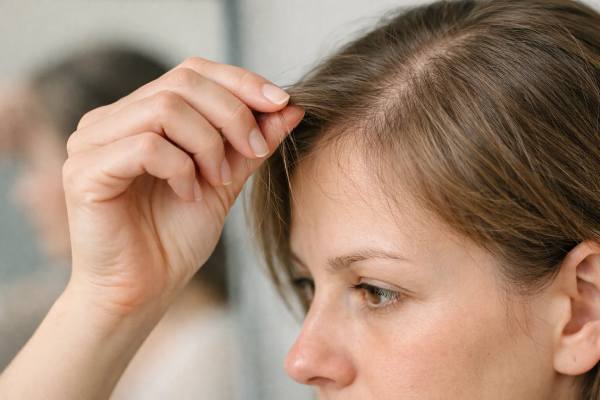
Loose anagen syndrome is one of those hair disorders that can look alarming long before it is understood. A child may have hair that seems thin, wispy, unruly, or strangely unable to grow past a certain length. Parents may notice extra strands on the pillow, in the bath, or on a hairbrush, yet the scalp itself often looks normal. That mismatch can be confusing and frustrating.
What makes this condition distinctive is not inflammation or permanent follicle damage, but weak anchoring of hairs during the growth phase. In plain terms, the hair is “in” the follicle, yet not held firmly enough. The result is hair that sheds too easily and never seems to gain much length.
The good news is that loose anagen syndrome is usually benign and often improves with age. The challenge is getting the diagnosis right, separating it from breakage or other causes of thinning, and knowing when simple reassurance is enough and when treatment is worth considering.
Key Insights
- Loose anagen syndrome usually causes hair that sheds easily, stays short, and often looks sparse or unruly rather than inflamed or scarred.
- Most children improve gradually over time, and many need reassurance and gentle hair care more than aggressive treatment.
- Diagnosis depends on the hair exam, especially a positive pull test and root findings, not on routine blood work alone.
- Self-diagnosis is unreliable because the condition can mimic breakage, short anagen syndrome, or patchy alopecia.
- Low-tension styling, careful detangling, and dermatologist-guided treatment decisions are the most practical first steps.
Table of Contents
- What Loose Anagen Syndrome Is
- Common Signs and Everyday Patterns
- Why It Happens and Who Gets It
- How Dermatologists Make the Diagnosis
- Treatment Options and Hair Care
- Outlook and When to Seek More Help
What Loose Anagen Syndrome Is
Loose anagen syndrome is a non-scarring hair disorder in which growing hairs are not anchored firmly enough inside the follicle. The key word is anagen, the active growth phase of the hair growth cycle. In this condition, hairs that should still be securely growing can be removed with very little traction and often with no pain. Because those hairs let go too early, the person may seem unable to grow fuller or longer scalp hair even though the follicles are still present and working.
This is different from disorders that destroy follicles or cause inflammation on the scalp. In loose anagen syndrome, the scalp usually looks healthy. There is typically no shiny scar, no widespread redness, and no obvious scaling driving the shedding. That is one reason the condition can be missed at first. The hair looks thin or uncooperative, but the scalp does not look “sick.”
Many families describe the hair as fine, flyaway, dull, or difficult to manage. Some say it has never needed a proper haircut because it simply does not get long enough. Others notice that hairs seem to come out during gentle combing, toweling, or even casual handling. The child may not complain of pain when hairs are pulled, which is an important clue.
Clinicians often place loose anagen syndrome under the broader umbrella of childhood hypotrichosis or pediatric nonscarring alopecia, but it has a very specific mechanism. The problem is not that the child lacks follicles. It is that the bond between the growing hair shaft and surrounding structures is too weak. Microscopy of extracted hairs shows the classic changes that reflect this poor anchoring.
Another helpful distinction is that loose anagen syndrome is about shedding of intact growing hairs, not about snapping of the shaft. The hair itself may not be inherently fragile in the way some shaft disorders are. That distinction matters because families often assume the hair is “breaking,” when in reality many strands are being released from the scalp.
Although it is classically described in young children, especially girls, it is not limited to one age group or hair color. Some cases are mild enough that they are noticed later, and some persist into adolescence or adulthood. Even so, the overall pattern remains the same: hair that should be growing normally is too easy to pull free, so density and length never quite match expectations.
Common Signs and Everyday Patterns
The most common complaint is simple but striking: the hair does not seem to grow. A child may have had sparse or fine hair since toddlerhood, and the length may plateau well before the shoulders. The hair may look wispy at the ends, uneven from area to area, or generally low in volume. Parents often say it feels like there is “less hair than there should be,” even when the scalp is not completely bare anywhere.
Another classic feature is easy, painless shedding. Hair may come out during brushing, shampooing, or loose styling. Some families notice strands collecting on pajamas, car-seat straps, or bedding. Unlike many inflammatory scalp disorders, this usually happens without tenderness, itching, or burning. The child may tolerate pulling of affected hairs with surprisingly little discomfort.
Texture matters too. Loose anagen syndrome hair is often described as soft but unruly, frizzy, sticky, or difficult to smooth. It may mat easily or look as if it never settles into a polished style. In some children, the main problem is low density and short length. In others, the hair appears fuller but behaves in an unmanageable way. That variation is why some clinicians describe loose anagen syndrome in patterns or phenotypes rather than as one single look.
A practical way to think about those patterns is this:
- One child may have obviously sparse, short hair throughout the scalp.
- Another may have fuller but rough, unruly, hard-to-control hair.
- A third may look almost normal at first glance but shed much more than expected.
Those patterns can overlap, and they are descriptive rather than rigid categories.
The frontal scalp, crown, and occipital area may all be involved, but the thinning is often diffuse rather than sharply defined. That helps distinguish the condition from some forms of patchy loss. Even so, it can still be mistaken for other problems, especially if the child twirls, rubs, or manipulates the hair. Because the anchoring is weak, everyday friction can exaggerate the uneven appearance.
It is also important to separate loose anagen syndrome from hair breakage and true hair loss. Breakage leaves shortened, fractured shafts and blunt ends. Loose anagen syndrome, by contrast, releases whole anagen hairs from the follicle. To the naked eye, both can look like “hair that will not grow,” which is why a focused exam matters.
Most children do not have scalp symptoms, body hair changes, or major eyebrow and eyelash loss. When those features are prominent, the diagnosis may need to be widened. On the other hand, the absence of dramatic symptoms should not minimize the impact. For a child, visibly thin or oddly behaving hair can affect grooming, confidence, school interactions, and family stress long before anyone names the condition.
Why It Happens and Who Gets It
At its core, loose anagen syndrome appears to come from abnormal anchoring of the growing hair shaft within the follicle. Research points to structural problems in the inner root sheath and nearby anchoring layers that normally hold an anagen hair in place. When that grip is defective, the hair can slide free too early. Under the microscope, this shows up as characteristic root changes rather than the normal appearance of a firmly anchored growing hair.
Some cases occur sporadically, meaning no obvious family history is present. Others seem familial, and inheritance can look autosomal dominant with variable expression. That means more than one family member may be affected, but not everyone looks the same. One person may have mildly thin hair and another may have obvious, chronic short hair from early childhood. This variable expression is one reason the condition can be missed across generations.
Historically, loose anagen syndrome was described most often in young, light-haired girls, especially between about ages 2 and 6. That classic picture is still useful, but it should not be treated as a strict rule. Cases are reported in boys, in adults, and in people with darker hair and diverse ethnic backgrounds. In everyday practice, the older stereotype may have contributed to underrecognition in those who do not fit the “textbook” look.
The syndrome may also appear as part of a broader genetic picture. Rare associations have been described with certain syndromic conditions, including Noonan-like syndrome with loose anagen hair, and with other hair texture disorders. That does not mean every child with loose anagen syndrome needs a full genetic workup. It does mean clinicians stay alert when hair findings come with developmental differences, unusual facial features, heart disease, growth concerns, nail changes, or other systemic clues.
What loose anagen syndrome is not caused by is just as important. It is not usually the result of poor hair hygiene, a harsh shampoo, a vitamin deficiency alone, or a parent using the wrong brush. Those factors can worsen the appearance by increasing mechanical loss, but they are not the core defect. That distinction often brings relief to families who have spent months changing products without understanding why nothing truly fixes the problem.
There is also an overlap problem: a child can have loose anagen syndrome and still have another contributor to thinning, such as traction, telogen shedding, or rubbing habits. That is why the diagnosis should be clinical and specific, not just based on age or hair color.
In day-to-day terms, the people most likely to be evaluated are children whose hair has always seemed too short, too sparse, or too easy to pull out. But the underlying lesson is broader: any person with chronic “hair that never gets long” deserves consideration of loose anagen syndrome, especially when the scalp appears healthy and the history starts early in life.
How Dermatologists Make the Diagnosis
Diagnosis begins with the story. A dermatologist will ask when the hair problem was first noticed, whether the hair has ever grown normally, whether shedding is painless, and whether anyone else in the family has similar hair. The timing matters. Loose anagen syndrome often starts early, and the history usually sounds more like “hair never became thick or long” than “hair was normal and suddenly started falling out.”
Next comes the physical exam. The clinician looks for diffuse thinning, short hairs of uneven length, and hair that appears fine, unruly, or poorly controlled. Just as important, they look for what is not there: marked inflammation, scarring, extensive scale, or obvious broken stubble that would point elsewhere.
The bedside test that often changes the whole visit is the pull test. In loose anagen syndrome, a firm but controlled pull can remove multiple hairs with minimal pain. That alone is not enough for a final diagnosis, but it raises suspicion quickly. The extracted hairs can then be examined more closely. This is where the disorder becomes much easier to identify.
On light microscopy or root examination, loose anagen hairs show classic anagen bulbs with abnormal features such as misshapen roots, absent sheaths, and ruffled proximal cuticle. The well-known “floppy sock” description refers to this loosened, distorted appearance near the root. Modern trichoscopy can also support the diagnosis and help distinguish it from other causes of pediatric thinning, but direct examination of extracted hairs remains especially useful.
The main diagnostic challenge is sorting loose anagen syndrome from similar-looking conditions. Short anagen syndrome is an important example. In short anagen syndrome, the hair is anchored normally but the growth phase is too brief, so the hair never reaches great length. In loose anagen syndrome, the growth-phase hair is there, but it lets go too easily. Patchy alopecia areata, trichotillomania, shaft breakage disorders, and traction can also confuse the picture.
Blood tests are not the primary way to diagnose loose anagen syndrome. They may still be appropriate when the history suggests iron deficiency, thyroid disease, nutritional restriction, or another separate cause of shedding. But a vitamin panel alone will not confirm this condition. That is one of the most useful practical points for families.
A scalp biopsy is rarely the first step. It is usually reserved for cases where the diagnosis remains unclear or another disorder, especially one involving scarring or inflammation, needs to be excluded. In most children, a good history, focused exam, pull test, and hair-root analysis provide enough information to make the diagnosis without an invasive procedure.
Treatment Options and Hair Care
Treatment starts with perspective. Loose anagen syndrome is usually benign, and in many children the best first intervention is explanation, reassurance, and practical grooming changes. Families often arrive expecting a prescription, but what helps most at the beginning is understanding that the follicles are not being permanently destroyed and that improvement with age is common.
The foundation of care is reducing mechanical trauma. Because the hairs are loosely anchored, friction matters more than usual. Helpful adjustments include loose hairstyles, avoiding tight elastics, limiting repeated ponytails or braids, detangling gently from the ends upward, and using conditioner or a detangling product to reduce drag. A wide-tooth comb often works better than repeated brushing, especially on damp hair. Rough towel-drying, aggressive scalp scrubbing, and frequent heat styling can make the hair look much worse even if they are not the root cause.
The aim is not to create a rigid routine. It is to lower the daily number of hairs that are accidentally dislodged. A simple family rule is often enough: handle the hair as if it is anchored lightly, because it is.
When symptoms are mild, observation alone may be reasonable. This is especially true in younger children who are not distressed and whose scalp exam is otherwise reassuring. In more noticeable or persistent cases, dermatologists sometimes consider topical minoxidil. The rationale is that it may help lengthen the growth phase and reduce visible shedding over time. Still, the evidence base is modest, and pediatric use should be individualized. Minoxidil is not a universal fix, and it should not be started casually without a clinician’s guidance about concentration, application, side effects, and safe storage.
For families wondering about supplements, special shampoos, or hair-growth products, the answer is usually more conservative than marketing suggests. Loose anagen syndrome does not reliably improve with generic hair vitamins unless a real deficiency is present. Likewise, expensive “growth” serums do not correct weak follicular anchoring. It is smarter to spend effort on diagnosis and low-trauma care than on a shelf full of unproven products.
A few practical priorities tend to help most:
- Keep styles low tension and easy to remove.
- Detangle slowly, ideally with slip from conditioner.
- Limit habits that repeatedly tug on the same areas.
- Choose treatments based on diagnosis, not on internet trends.
For children bothered by appearance, a shorter intentional haircut can sometimes improve the look of density and reduce tangling. In older patients with persistent symptoms, treatment discussions may expand, but the basic principle stays the same: protect the hair you have, avoid unnecessary trauma, and use medication only when the expected benefit justifies the effort and monitoring.
Outlook and When to Seek More Help
The long-term outlook is generally favorable. Many children improve as they get older, often with better anchoring, fuller appearance, or hair that finally begins to achieve more length. Improvement does not always mean the hair becomes thick or completely typical, but the condition often becomes less obvious over time. That natural history is one reason overly aggressive treatment is usually unnecessary.
Even so, “benign” does not mean trivial. Hair is visible every day, and children notice when theirs looks different. Parents notice too. Styling challenges, comments from peers, and repeated confusion about whether the child is shedding, breaking, or “not growing hair normally” can create real stress. For some families, the emotional burden is heavier than the physical disorder. Reassurance works best when it is not dismissive. Saying, “It is not dangerous, and it is also understandable that this bothers you,” is often more helpful than minimizing the concern.
Follow-up is worth considering when the diagnosis is uncertain, the shedding pattern changes, or the appearance worsens rather than slowly stabilizing. It is also reasonable to revisit the plan if the child develops new symptoms such as scalp inflammation, sharply defined bare patches, eyebrow loss, or signs of another medical condition. Loose anagen syndrome can coexist with other hair problems, and the story can evolve.
A specialist review becomes especially useful when:
- the child has never had normal hair growth and the diagnosis is still unclear,
- there are systemic or developmental findings that raise concern for a syndrome,
- patchy loss suggests another alopecia,
- the family wants to discuss a trial of treatment rather than observation alone.
If you are trying to decide whether a specialist appointment is warranted, a guide to when a dermatologist should evaluate hair loss can help frame that decision.
Adults can also need evaluation. Persistent loose anagen syndrome is less classic, but it happens. In adults, the condition may be mistaken for chronic shedding, texture damage, or nonspecific thinning. That makes careful diagnosis just as relevant later in life.
The bottom line is reassuring but nuanced: loose anagen syndrome usually does not scar the scalp or permanently destroy follicles, and many patients improve with time. Still, it deserves a precise diagnosis, thoughtful daily care, and attention to confidence and quality of life. When those pieces are in place, families usually feel far less overwhelmed and much more prepared for what comes next.
References
- Loose Anagen Syndrome 2023 (Review). ([NCBI][1])
- Practical guidelines for evaluation of loose anagen hair syndrome 2009 (Comparative Study). ([PubMed][2])
- The psychologic impact of loose anagen syndrome and short anagen syndrome 2022 (Observational Study). ([PMC][3])
- Paediatric Hypotrichosis: A Clinical and Algorithmic Approach to Diagnosis 2025 (Review). ([PMC][4])
- Loose Anagen Hair Associated with Wooly Hair Caused by a Heterozygous, Intronic KRT71 Variant 2025 (Genetic Study). ([PMC][5])
Disclaimer
This article is for educational purposes only and is not a substitute for medical advice, diagnosis, or treatment. Hair loss and poor hair growth can have several overlapping causes, including conditions that require professional evaluation. If a child or adult has sudden shedding, patchy bald spots, scalp inflammation, pain, or other concerning symptoms, seek assessment from a qualified clinician or dermatologist.
If this article was helpful, please share it on Facebook, X, or any other platform your readers use most.