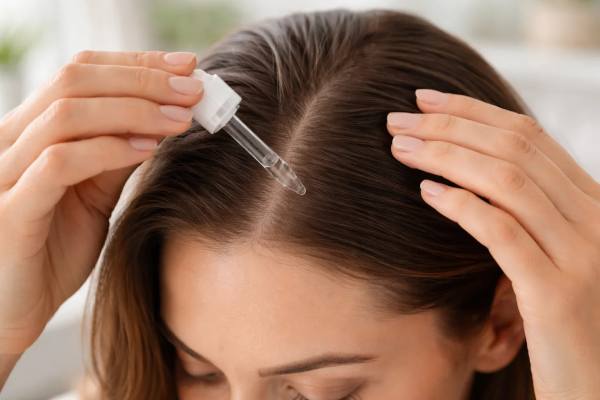
Hyaluronic acid has quietly moved from facial serums into scalp care, and the interest makes sense. The scalp is skin, and skin that feels tight, flaky, or uncomfortable often benefits from better water balance and barrier support. Used well, hyaluronic acid can help a dry-feeling scalp feel calmer, softer, and less irritated. Used blindly, though, it can disappoint people who are really dealing with dandruff, seborrheic dermatitis, or product buildup rather than simple dehydration.
That distinction is the heart of this topic. Hyaluronic acid is best understood as a hydration tool, not a cure-all scalp treatment. It can improve comfort, reduce that papery dry feeling, and support a healthier surface environment, but it does not replace antifungal treatment when flakes are driven by yeast and inflammation. The best results usually come when the product is matched to the actual scalp problem and used in a routine that is gentle enough to protect the barrier rather than strip it again. Once you know where hyaluronic acid fits, it becomes much easier to choose the right product and avoid the common mistakes.
Key Facts
- Hyaluronic acid can help a dry, tight scalp feel more comfortable by drawing water to the skin surface.
- It works best for dehydration and barrier support, not as a stand-alone fix for true dandruff or seborrheic dermatitis.
- Lightweight leave-on scalp serums are often easier to tolerate than heavy oils when flakes come with itch or tightness.
- If flakes are greasy, yellowish, or paired with strong itch and redness, hydration alone is usually not enough.
- Apply hyaluronic acid scalp products to a clean, slightly damp scalp 2 to 4 times weekly at first, then adjust based on comfort.
Table of Contents
- What hyaluronic acid can do for the scalp
- When flakes are dryness and when they are not
- Who is most likely to benefit
- How to use it without making things worse
- What to look for in scalp products
- When hydration is not enough
What hyaluronic acid can do for the scalp
Hyaluronic acid is best known as a humectant, which means it helps attract and hold water. In skincare, that usually translates to a surface that feels less tight, looks less dull, and tolerates irritation a bit better when the barrier is dry or stressed. The same general logic applies to the scalp. A scalp that feels papery, tight after washing, mildly itchy from dryness, or prone to fine powdery flakes may benefit from a formula that improves hydration rather than simply coating the area with oil.
What hyaluronic acid does not do is make the scalp “moisturized” in every possible sense by itself. Hydration and barrier repair are related, but they are not identical. Humectants draw in water, while barrier-supportive ingredients help keep that water from escaping too quickly. That is why the best scalp formulas often do not rely on hyaluronic acid alone. They pair it with ingredients such as glycerin, panthenol, niacinamide, ceramides, or lightweight conditioning agents. Readers who want the bigger picture on the scalp barrier often find ceramides and scalp dryness useful, because the most comfortable scalp is usually the one that both attracts and retains water.
There is also a practical texture advantage. Many people with scalp discomfort dislike oils because oils can feel heavy, worsen the look of fine hair, or make flakes cling more visibly. A lightweight hyaluronic acid serum or tonic can sometimes give relief without flattening the roots or making the scalp feel coated. That can be especially useful for people with fine hair, oily roots, or wash-day routines that already feel crowded.
Still, it helps to keep expectations realistic. Hyaluronic acid does not directly treat the yeast overgrowth associated with dandruff. It does not dissolve heavy scale the way a keratolytic ingredient can. It does not replace antifungal shampoos, medicated therapy, or evaluation for inflammatory scalp disease. Its value is more focused. It can reduce dryness-related discomfort, support a calmer-feeling scalp surface, and make a compromised barrier easier to live with while the rest of the routine becomes less irritating.
The most useful way to frame it is this: hyaluronic acid can help the scalp feel better and function better when dehydration is part of the problem. It is a support ingredient, not a stand-alone diagnosis or cure. People tend to get the best results when they stop expecting it to solve every type of flaking and instead use it where it makes biologic sense.
When flakes are dryness and when they are not
One of the biggest reasons hyaluronic acid disappoints people is that not all flakes come from dryness. Fine, light, dust-like flaking can happen when the scalp barrier is dry or irritated. But dandruff and seborrheic dermatitis are different. Those conditions are more strongly linked to inflammation, scalp oil, microbial imbalance, and the way Malassezia yeast interacts with the scalp. In those cases, hydration may improve comfort, but it will not address the main driver.
Dryness-related flakes are often small, light, and easy to brush away. The scalp may feel tight after washing, especially in cold weather, after harsh shampoos, or when hot water and strong cleansing strip the skin repeatedly. There may be mild itch, but not always. The skin can feel sensitive without looking obviously inflamed. This is the situation where hyaluronic acid is most likely to earn its place. It can ease that dry-surface feel and make the scalp less reactive to a basic routine.
Dandruff behaves differently. The flakes are often more persistent, sometimes larger, and often come with itch. The scalp may not feel dry at all. In fact, some people with dandruff have an oily scalp that still flakes heavily because the problem is not lack of water alone. Seborrheic dermatitis adds another layer, often bringing redness, irritation, greasy scale, and flares around the scalp margins, ears, brows, or sides of the nose. In those situations, the more useful question is not “How do I hydrate my scalp?” but “What is driving the flaking?” A deeper look at dry scalp versus dandruff differences often clears up why one serum cannot solve both.
There is also product buildup, which can mimic flakes but behaves differently again. Styling residue, dry shampoo, scalp sunscreen, heavy oils, and not-rinsed-well conditioners can create particles that look like dryness from a distance. Hyaluronic acid will not fix that either. In fact, piling more leave-on product onto an already coated scalp can make the scalp feel worse.
A few clues help separate these categories:
- Dryness tends to feel tight, papery, or mildly prickly.
- Dandruff tends to itch more and recur even when the scalp is not dry.
- Seborrheic dermatitis is more likely to include redness and greasier scale.
- Buildup often worsens with product-heavy routines and improves after a proper cleanse.
- True inflammatory conditions usually keep returning unless the right treatment is used.
This matters because hydration is most helpful when water loss and barrier stress are central to the problem. If the real issue is yeast-driven flaking, inflammation, or residue, hyaluronic acid becomes a side player rather than the main fix. The smart move is not to reject the ingredient. It is to put it in the right role.
Who is most likely to benefit
Hyaluronic acid for the scalp makes the most sense for people whose main complaints are dryness, tightness, mild sensitivity, or fine flaking rather than heavy inflammatory scale. A classic candidate is someone whose scalp feels worse in winter, after frequent shampooing, after swimming, after strong exfoliating products, or when indoor heat and low humidity leave the skin feeling uncomfortable. In these cases, the barrier is often under-hydrated rather than infected or severely inflamed.
It can also be helpful for people who already use actives that work but feel drying. Someone with dandruff may use ketoconazole, selenium sulfide, or salicylic acid and notice that the flakes improve while the scalp starts to feel stripped between washes. A lightweight hydrating scalp serum can sometimes make the routine easier to tolerate without interfering with the medicated step. That is a very different goal from replacing the medicated step altogether.
People with curly, coily, color-treated, or textured hair may also appreciate hyaluronic acid scalp products because scalp dryness and hair routine complexity often overlap. Wash days may be less frequent, styling products may stay on the scalp longer, and heavy oils may not always feel elegant or effective. In this group, a lighter hydrating layer can be easier to fit into the routine than another oil or butter. Those with chronic winter discomfort may also find overlap with dry scalp in winter causes, where barrier stress and environment matter as much as the product choice.
There are also people who are less likely to benefit from hyaluronic acid alone. This includes anyone with greasy yellowish scale, strong itch, scalp redness, follicle bumps, rapidly worsening flakes, or a history strongly suggestive of seborrheic dermatitis. It also includes people whose scalp feels coated rather than dry, since adding another leave-on may increase congestion or irritation. If someone has true contact dermatitis from fragrance, preservatives, essential oils, or hair dye, the formulation matters more than the hyaluronic acid headline.
Another group that needs a more careful approach is anyone using many layered scalp products already. A hydrating serum can be genuinely useful, but not when it becomes the fifth leave-on step in a routine that never truly cleanses the scalp. In that situation, the first benefit often comes from simplification rather than another bottle.
A reasonable “good fit” checklist looks like this:
- Fine, dry-looking flakes rather than thick greasy scale.
- Tightness after washing or during cold weather.
- Mild sensitivity from over-cleansing or active ingredients.
- A desire for lightweight hydration instead of heavy oils.
- No obvious signs of infection, scarring, or severe inflammation.
In other words, hyaluronic acid shines when the scalp needs water support and gentleness. It underperforms when the real issue is microbial, inflammatory, or mechanical. Choosing the right audience for it is half the success.
How to use it without making things worse
Hyaluronic acid tends to work best on a clean, slightly damp scalp. That detail matters. Humectants perform more logically when there is water available at the surface rather than when they are dropped onto a dry, product-coated scalp and expected to create comfort from nothing. For most people, the easiest method is to apply the serum or tonic after washing, parting the hair in sections and using a small amount directly on the scalp rather than saturating the hair lengths.
Frequency should be practical, not obsessive. A good starting point is 2 to 4 times per week, especially after wash days or whenever the scalp predictably feels tight. Daily use may be fine for some, but more is not always better. If the product leaves residue, worsens itch, or makes the roots collapse, the routine needs adjusting. Hyaluronic acid is helpful when it disappears into the routine, not when it becomes another layer that has to be managed.
Application order matters too. If you use medicated shampoo, let that do its work first. Rinse thoroughly, then apply the hydrating product afterward if your scalp still needs comfort between wash days. Do not use hyaluronic acid as a shortcut around proper cleansing when flakes are building up. And do not assume that stinging means the active ingredient is “working.” A well-formulated hydrating serum should generally feel mild. Persistent burning points more toward irritation or an unsuitable formula than toward success.
A few habits make a big difference:
- Apply to a freshly washed or refreshed scalp, not heavy buildup.
- Use small amounts in parted sections instead of flooding the scalp.
- Let the product sit rather than scraping it through with a brush.
- Reduce very hot water and harsh cleansers if dryness is recurring.
- Reassess after a few weeks instead of changing products every few days.
People who exfoliate the scalp need extra caution here. Over-exfoliation is a common reason a hydrating serum seems ineffective. The barrier keeps getting stripped faster than hydration can stabilize it. If you use acids or scalp scrubs, they should be occasional tools, not daily punishment. A gentler guide to scalp exfoliation without irritation is often more helpful than adding stronger and stronger soothing products afterward.
There is also an easy mistake to avoid: putting a hydrating scalp serum on top of a scalp that is already reacting to fragrance, botanicals, or styling residue. In that situation, the serum may get blamed for a problem it did not create, or it may add one more irritant to the pile. The simplest routine often wins.
The goal is comfort, not drama. When used correctly, hyaluronic acid should make the scalp feel calmer, less tight, and less flaky over time. If it makes the routine feel more complicated, sticky, or reactive, the formula or the diagnosis is probably off.
What to look for in scalp products
A good hyaluronic acid scalp product is usually defined less by the headline ingredient than by the full formula. The scalp is more selective than marketing suggests. A serum can advertise hyaluronic acid and still feel sticky, heavily fragranced, or loaded with ingredients that undermine comfort. That is why label reading matters.
First, think about format. Lightweight serums, essences, and tonics are usually easier to use on the scalp than thick creams or rich masks. They spread more easily between the hair shafts, are less likely to leave the roots heavy, and tend to suit people who want hydration without looking oily. Dropper bottles, nozzle applicators, and spray-style scalp tonics can all work as long as they help you reach the skin rather than just wet the hair.
Second, look at the supporting ingredients. Hyaluronic acid often performs best in formulas that also include glycerin, panthenol, niacinamide, betaine, aloe, or barrier-supportive lipids. Some formulas use sodium hyaluronate, a common hyaluronic acid form in topical products. The exact molecular language on the label matters less for most consumers than the overall feel and tolerability of the formula.
Third, be cautious with extras that are marketed as exciting but can be irritating in practice. Strong fragrance, menthol, a heavy load of essential oils, aggressive exfoliating acids, and drying alcohols can all make a sensitive scalp worse. Readers who are unsure whether their scalp is reacting to “treatment” ingredients or to the formula around them may find product allergy versus irritation clues helpful when choosing more carefully.
A practical product checklist looks like this:
- Lightweight leave-on format.
- Hyaluronic acid or sodium hyaluronate high enough on the list to be meaningful.
- Added humectants or barrier-supportive ingredients.
- Minimal fragrance or fragrance-free when sensitivity is high.
- No obvious overload of strong exfoliants unless that is specifically needed.
- Packaging that lets you target the scalp directly.
It is also worth matching the product to your hair type. Fine hair usually does better with watery serums and minimal residue. Thicker or curlier hair may tolerate slightly richer leave-ons if the scalp itself is dry. Oily roots often do better with hydration that feels invisible rather than cushiony. And if you already use medicated shampoos, the best hydrating product is often the one that is quiet enough not to compete with them.
Finally, remember that “for scalp and hair growth” is often a marketing blend of several claims. Hydration can improve comfort and reduce visible dryness, but that does not mean the product treats hair loss. Choose it for the benefit it can realistically deliver: a better-feeling scalp.
When hydration is not enough
There is a point where the scalp needs more than water support. If flakes are persistent, greasy, itchy, inflamed, or spreading, hyaluronic acid should move into a supporting role rather than the lead role. This is especially true for seborrheic dermatitis, psoriasis, contact dermatitis, scalp folliculitis, and other inflammatory conditions that can look “dry” to the eye while being driven by something else underneath.
Seborrheic dermatitis is the most common example. The scalp may flake, itch, and feel uncomfortable, but the treatment anchor is usually antifungal or anti-inflammatory care, not hydration alone. A serum can help comfort between washes, but it usually cannot control the condition by itself. The same principle applies when the scalp shows thick scale, sticky flakes, or recurrent irritation around the hairline, ears, and brows. In those cases, looking into seborrheic dermatitis symptoms and triggers is usually more helpful than adding another hydrating layer.
Hydration is also not enough when the problem is contact irritation. Hair dye, fragrance, essential oils, preservatives, and styling products can all trigger scalp symptoms that look dry at first. If a new product caused the problem, even a soothing one may not help until the trigger is removed. Likewise, if the scalp is coated with dry shampoo, edge products, or heavy oil blends, the smarter step may be a proper cleanse rather than another leave-on.
Seek medical evaluation sooner when you notice:
- Thick or greasy scale that keeps returning.
- Redness, soreness, burning, or visible rash.
- Pustules, crusting, or tender bumps.
- Flakes with noticeable hair shedding or thinning.
- Symptoms spreading beyond the scalp.
- No improvement after several weeks of a simpler, gentler routine.
There is also a psychological trap here. When the scalp feels uncomfortable, it is tempting to keep layering soothing products, then exfoliating harder when the flakes stay, then adding oils when the exfoliation stings. That cycle can keep the barrier unstable. Sometimes the most effective move is not adding another step but narrowing the routine to a gentle cleanser, the right medicated treatment if needed, and one well-tolerated hydrating product.
Hyaluronic acid earns its place when it is used with clear expectations. It can make a dry scalp more comfortable, help a stripped scalp feel less tight, and support a better barrier environment. It is not a substitute for diagnosis. When the scalp is giving stronger warning signs, the best product tip is not about ingredients. It is to treat the cause, not just the sensation.
References
- Hyaluronic Acid in Topical Applications: The Various Forms and Biological Effects of a Hero Molecule in the Cosmetics Industry – PMC 2025 (Review)
- Benefits of topical hyaluronic acid for skin quality and signs of skin aging: From literature review to clinical evidence – PMC 2022 (Review)
- Understanding the dandruff flare‐up: A cascade of measurable and perceptible changes to scalp health – PMC 2025
- An Assessment of the Safety, Efficacy, and Tolerability of a Novel Scalp Treatment Regimen Combining a Hydroxy Acid-Based Scrub and Copper Tripeptide Serum in the Management of Seborrheic Dermatitis in Adults – PMC 2024
- Scalp Microbiome and Dandruff—Exploring Novel Biobased Esters 2024 (Review)
Disclaimer
This article is for educational purposes only and is not a substitute for medical advice, diagnosis, or treatment. Scalp flakes, itch, and irritation can result from simple dryness, but they can also reflect dandruff, seborrheic dermatitis, psoriasis, allergic reactions, infections, or other scalp disorders. Persistent, painful, worsening, or treatment-resistant symptoms should be assessed by a qualified clinician.
If this article helped you, please share it on Facebook, X, or another platform you use so more people can choose scalp products with clearer expectations and better results.