Heatless curls appeal for a simple reason: they offer shape, bend, and movement without the repeated high temperatures that can roughen the cuticle, dry out the fiber, and make hair more vulnerable to breakage over time. For many people, they are not just a styling trend. They are a practical way to keep hair looking polished while reducing one of the most common sources of everyday wear.
That does not mean every no-heat method is automatically gentle. A style can skip the curling iron and still stress the hair through excess tension, rough detangling, heavy dampness, or overnight friction. The safest heatless curls come from methods that respect the hair’s structure: soft wrapping, moderate tension, smooth surfaces, and enough drying time to set the shape without keeping strands soaked for hours.
The best results usually come from matching the method to your hair type, length, and damage history. When you do that, heatless curls can become more than a workaround. They can be one of the easiest ways to get definition while protecting your ends, preserving softness, and keeping styling damage from quietly building up week after week.
Key Facts
- Heatless curls can reduce repeated thermal stress, which helps protect the cuticle and lowers the chance of dryness and breakage over time.
- The gentlest methods usually rely on soft materials, light tension, and hair that is damp rather than soaking wet.
- The best option depends on hair length, density, porosity, and how much definition you want the next day.
- Tight wrapping, sleeping on very wet hair, and rough takedown can still cause damage even when no hot tool is used.
- A useful starting point is to style hair at about 70 to 90 percent dry and let it set for several hours or overnight.
Table of Contents
- Why heatless curls are often gentler
- Best methods by curl goal
- How to prep hair before you wrap
- Choosing the right method for your hair type
- Common mistakes that still cause damage
- How to take down and make curls last
Why heatless curls are often gentler
The main reason heatless curls can protect hair from damage is straightforward: they remove repeated exposure to high styling temperatures. That matters because the hair shaft is a fiber, not a living tissue that can repair itself after injury. Once the cuticle is lifted, chipped, or stripped, the strand may feel rougher, lose shine more easily, tangle faster, and become more likely to split or snap.
Heatless methods avoid that specific kind of stress, but their real advantage goes deeper than “no heat.” They often encourage a slower, lower-friction approach to styling. Instead of forcing the hair into shape with a very hot tool, you create bend through wrapping and time. That change can be especially helpful for hair that is bleached, color-treated, fine, porous, curly, coily, or already showing signs of weathering at the mid-lengths and ends.
A useful way to think about styling damage is as a cumulative load. Hair does not usually fail because of one perfect blowout or one curling session. It becomes fragile because of the total burden placed on it over weeks and months: hot tools, rough brushing, overlapping bleach, tight elastics, aggressive towel drying, and friction while sleeping. Heatless curls remove one large piece of that burden.
Still, “heatless” does not mean “damage-proof.” The safest methods are the ones that keep three stressors low at the same time:
- tension
- damp exposure
- friction
That is the real filter to use when comparing methods. A very tight braid on wet hair may be more stressful than a loose ribbon wrap on mostly dry hair. A style set on a slippery satin rod may be gentler than one secured with several tiny elastics. A curl method that looks soft online can still leave the hairline sore if it pulls too firmly at the roots.
This is also why heatless styling works especially well as part of a hair-recovery routine. If your ends already feel rough, your top layer looks fuzzy, or your curl pattern has become inconsistent from repeated hot-tool use, lowering thermal exposure can help keep damage from progressing further. It will not fuse split ends back together, but it can make the next months much kinder to the fiber you still have.
For people who are unsure whether their problem is true shedding or simply snapping strands, learning the difference between breakage and actual hair loss can make styling choices much easier.
Best methods by curl goal
The best heatless curl method is not the same for everyone because “best” depends on the finish you want. Some methods create a soft blowout bend, some mimic a loose curling wand, and some give tighter, springier definition. The most protective options are usually the ones that match your texture without asking the hair to bend more sharply than it wants to.
Here are the methods that tend to balance results and hair protection well.
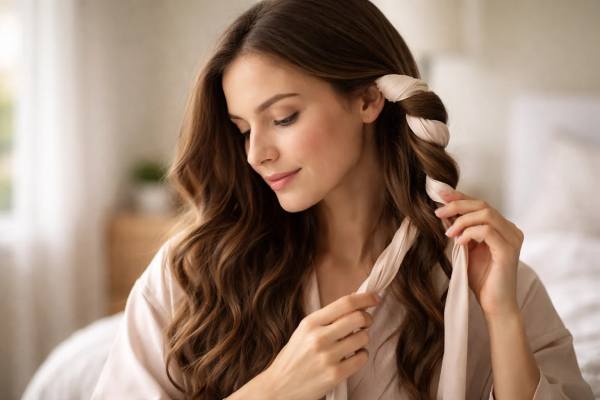
Ribbon or robe-belt curls
This method works by wrapping sections away from the face around a soft, elongated base. It is one of the best choices for medium to long hair when you want smooth, loose curls or a brushed-out blowout effect. It is usually gentle because the surface is soft, the bend is broad, and the hair can be secured without tiny clips near the ends. It works best on damp, not wet, hair.
Foam rollers or flexi rods
These create more defined curls and can work well on shorter layers that slip out of ribbon wraps. They are especially useful when the goal is shape that lasts through the day rather than only soft movement. Their safety depends on size and tension. Larger rollers are usually kinder than very small ones because they require less extreme bending.
Loose braids
Braids are simple and familiar, and they are excellent for creating waves rather than polished curls. Two loose braids are often gentler than multiple tight ones. They suit medium to long hair and tend to work best for people who want texture, body, and a more relaxed finish. The downside is that they can crimp the pattern if the sections are pulled too hard or braided too close to the scalp.
Pin curls
These are underrated for shorter hair, layered cuts, and classic curl patterns. They can produce beautiful shape without needing a long rod or wrap. The method becomes less gentle when sections are twisted too tightly or secured with pins that catch on fragile strands.
Sock or soft-tube curls
These are similar in principle to ribbon curls but often easier to improvise at home. The most protective versions use a smooth fabric and enough width to create a gradual bend.
In general, the gentlest ranking looks like this:
- soft ribbon-style wraps for loose curls
- larger foam or flexi options for stronger set
- loose braids for relaxed waves
- pin curls for short or layered hair when placed carefully
If you like overnight styling, it is smart to borrow ideas from protective sleep routines that limit breakage, because the line between “style setting” and “overnight friction” is thinner than many people think.
How to prep hair before you wrap
Preparation is what separates a soft, durable heatless set from a style that turns frizzy, flat, or oddly stretched by morning. It is also where much of the damage prevention happens. When the prep is right, you need less tension, less product, and less manipulation the next day.
The most useful rule is to start with hair that is damp rather than wet. For many people, that means roughly 70 to 90 percent dry. Hair in that range is still flexible enough to set into shape, but it is less swollen and less vulnerable than dripping hair. It also dries faster inside the style, which matters if the curls are meant to stay in place for several hours or overnight.
A simple prep routine usually works best:
- Cleanse and condition as usual.
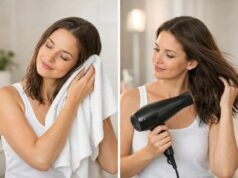
- Gently blot with a microfiber towel or soft cotton T-shirt.
- Detangle with patience, starting at the ends and working upward.
- Apply a light leave-in or styling product if needed.
- Let the hair air dry until only mildly damp before sectioning.
The product step is where many routines go wrong. Too little slip can make wrapping rough and snaggy. Too much product can leave the set sticky, slow-drying, and heavy. In most cases, you only need one light support product, such as a leave-in, lightweight mousse, or a small amount of curl cream on the mid-lengths and ends. Fine hair usually does better with less. Thicker, drier, or textured hair may need more slip to prevent friction while wrapping.
Sectioning also matters. Smaller sections create more definition, but they also increase handling time and the chance of tangles. Larger sections are faster and often gentler, though the curl will be looser. If your hair is fragile, err on the side of fewer sections first.
The direction of wrapping affects the final look. Wrapping away from the face at the front usually creates a more open, flattering finish. Alternating directions through the rest of the head can make the result look less uniform and more natural.
Two overlooked details make a big difference:
- dry the roots more than the ends if needed
- avoid brushing aggressively right before wrapping
Roots that stay wet for too long can make the entire style feel unfinished, while rough pre-wrap brushing can create the frizz you will blame on the method later.
If you are unsure how much detangling your hair tolerates best, reviewing the pros and cons of wet versus dry detangling can help you set up a gentler routine before any curl method begins.
Choosing the right method for your hair type
Hair type changes everything about heatless curls. A method that gives glossy, loose bends on thick straight hair may leave fine hair flat, or may stretch a natural curl pattern more than intended. The safest approach is to choose a method that works with your fiber’s natural behavior instead of fighting it.
Fine hair usually needs light products, broad wraps, and modest expectations. Heavy creams and very damp sets can make it collapse before morning. Ribbon curls, larger foam rollers, and soft pin curls often work best because they shape the hair without saturating it in product. Fine hair is also more likely to show dents from clips and elastics, so smooth fasteners matter.
Medium-density hair tends to be the easiest category for heatless styling. It can hold a set without needing excessive product and usually tolerates a wider range of methods. This hair type often does well with robe-belt curls, loose braids, or mixed-size rollers depending on the desired finish.
Thick or coarse hair often needs more drying time and more section control. This is where many people accidentally create damage by wrapping the hair too wet, too tightly, or in sections that are too large to dry fully overnight. For this hair type, preparation matters more than the accessory. Letting the hair get closer to mostly dry before wrapping can reduce stress and improve results.
Curly and coily hair need special care because the goal is not always to create curl from scratch. Often the goal is to stretch, refine, or redirect the existing pattern without roughing up the cuticle. Flexi rods, larger braids, banding-inspired wraps, or satin-covered rollers can work well. What usually works less well is forcing the hair into a tight, repetitive bend that causes root tension and end tangling.
Short hair or layered cuts usually do better with pin curls, smaller rollers, or flexi rods than with long wrap methods. When the hair cannot fully anchor around a ribbon or tube, it slips, knots, or needs extra tension to stay put.
Length matters too:
- chin to shoulder length often prefers pin curls or smaller rollers
- shoulder to bra-strap length usually adapts well to ribbon methods
- very long hair often benefits from fewer, larger sections to avoid twisting the ends into knots
This is also where porosity changes the strategy. High-porosity hair often sets faster but frizzes sooner. Low-porosity hair often needs more time to dry inside the style. Understanding how porosity affects moisture and styling behavior can save a lot of trial and error.
The best heatless method is not the most popular one. It is the one your hair can hold with the least force, the least friction, and the least moisture stress.
Common mistakes that still cause damage
Heatless curls can absolutely reduce damage, but they can still go wrong. Most problems come from a small set of avoidable mistakes. The common thread is that people focus on the accessory and ignore the mechanics: how wet the hair is, how hard it is pulled, and how much friction it endures while setting.
The first mistake is starting with hair that is too wet. Very wet hair may feel easier to mold, but it is also more swollen and more vulnerable. It can stay damp for too long inside the style, especially overnight, which increases friction, delays full setting, and often leaves the roots limp by morning. A damp set is usually safer and more effective than a soaked one.
The second mistake is using too much tension. This often happens when people try to make the method “work harder” by wrapping tighter. That can leave the scalp tender, stress the hairline, and create snapped shorter hairs around the temples. If you feel pulling while wrapping or while lying down, the style is too tight.
The third mistake is securing with rough tools. Tiny rubber bands, sharp clips, rough Velcro-like surfaces, and stiff elastics can all create weak points in the fiber. Soft scrunchies, satin ties, and smooth pins are usually better choices.
The fourth mistake is sleeping with high-friction contact. A beautiful damp wrap can still turn into frizz if it rubs against cotton for eight hours. The top layer often pays the price first. Friction is one reason overnight methods work better when the hair is protected by a smooth bonnet or pillow surface.
The fifth mistake is forcing a method that does not suit the hairline. Tight front sections, especially repeated night after night, can be hard on delicate edges. If the tension is concentrated near the temples, the style is no longer protective, no matter how soft the rod looks.
A few warning signs tell you a method is too stressful:
- scalp soreness the next morning
- visible dents or sharp bends at the roots
- snapped baby hairs near the hairline
- dry, frayed ends after takedown
- persistent tangling around the nape or crown
If those signs show up, change the method rather than trying to perfect it through repetition. Looser sections, smoother tools, and slightly drier hair usually help more than extra product.
People who rely often on braid-based curls should also pay attention to early hairline and edge stress from repeated tension, because a style can look neat long before it starts to feel truly safe.
How to take down and make curls last
The final stage is where many heatless styles lose their advantage. A gentle set can still become frizzy or broken-looking if the takedown is rushed. The goal is to preserve the bend without pulling the curl apart before it has settled.
The first rule is simple: do not take the style down until the hair is dry. If the inner sections still feel cool or damp, wait longer. Undoing a set too early can stretch the shape out and create fuzzy ends at the same time. This is especially important for thick, dense, or low-porosity hair, which can feel dry on the surface before it is fully dry inside.
When you do begin, work slowly:
- remove ties or pins one section at a time
- let each section fall before touching it much
- separate with fingers first, not a brush
- smooth only where needed
- add a drop of lightweight serum or oil only to frizzy ends if necessary
For a softer finish, gently split each curl into two or three pieces with your fingertips. For more polished definition, leave the curls more intact and allow them to relax naturally over the next hour.
How long the style lasts depends on hair type, product choice, humidity, and sleep protection. A few habits improve hold without increasing damage:
- set on damp hair instead of nearly dry hair if your hair drops very fast
- use a light mousse before wrapping if your hair is fine or resistant
- sleep on a smooth surface
- avoid heavy brushing once the style is released
- loosely rewrap or pineapple the hair at night instead of leaving it fully loose
It also helps to accept that “lasting” and “soft” sit in tension with each other. The styles that hold the longest are often slightly more structured. The styles that feel the airiest usually fall sooner. Trying to force both can lead to too much product or too much manipulation.
A smart compromise is to aim for day-one definition and day-two softness. Many of the best heatless sets actually look more natural after a few hours, once the curl has relaxed slightly and the fiber has settled.
If your top layer always turns fuzzy no matter how careful you are, look closely at friction and pre-existing weakness rather than blaming the technique alone. Signs of top-layer breakage and surface frizz can explain why some heatless methods seem less smooth even when the curls themselves are well formed.
References
- On Hair Care Physicochemistry: From Structure and Degradation to Novel Biobased Conditioning Agents – PMC 2023 (Review)
- A review of bubble hair deformity 2023 (Review)
- Traction Alopecia – StatPearls – NCBI Bookshelf 2025 (Clinical Review)
- Hair Shaft Damage from Heat and Drying Time of Hair Dryer – PMC 2011 (Seminal Study)
Disclaimer
This article is for educational purposes only and is not a substitute for medical advice, diagnosis, or treatment. Hair breakage, texture change, and thinning around the hairline can have several causes, including heat damage, traction, chemical processing, scalp disorders, and medical hair-loss conditions. Seek professional evaluation if you notice persistent breakage, scalp pain, patchy loss, or worsening thinning despite gentler styling.
If this article helped, please share it on Facebook, X, or another preferred platform so more readers can find practical ways to style their hair with less damage.