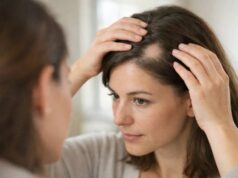
Head lice can feel overwhelming because the problem is intensely personal, highly visible, and often tied to school, siblings, and household routines. Yet the biology is simple once you know what to look for. Head lice spread mainly through direct hair-to-hair contact, not poor hygiene, and they do not mean a child or adult is unclean. The most effective approach is also more focused than many people expect: confirm that live lice are present, choose a treatment that fits the person’s age and situation, repeat treatment when needed, and clean the few household items that actually matter. That matters because many treatment failures are not true treatment failures at all. They come from misdiagnosis, applying products incorrectly, retreating too soon or too often, or dealing with reinfestation from an untreated close contact. Once those patterns are clear, families can treat lice more calmly, protect the scalp from overuse of insecticidal products, and prevent the exhausting cycle of checking, washing, and starting over.
Key Facts
- Head lice usually spread by direct head-to-head contact, not by poor hygiene.
- The best proof of active infestation is finding a live louse or live nymph, not just old nits.
- Correct timing of retreatment is often what determines whether treatment works.
- Fumigant sprays and deep housecleaning are not needed and can create avoidable risk.
- Treat the affected person promptly, check close contacts carefully, and clean combs, brushes, bedding, and recently used clothing the same day.
Table of Contents
- How head lice spread and what they cause
- How to confirm an active infestation
- How to treat head lice step by step
- Which medicines and methods are used
- How to prevent reinfestation at home
- When treatment fails or needs medical help
How head lice spread and what they cause
Head lice are small parasitic insects that live mainly on the scalp and feed on human blood. Adult lice are about the size of a sesame seed, and the most common symptom is itching. That itch does not happen because the lice are “dirty.” It happens because the body reacts to louse bites. In a first infestation, itching may not appear right away. Some people do not itch at all early on, while others develop a tickling feeling, trouble sleeping, irritability, or sores from scratching.
The most important fact for families is that head lice spread mainly by direct head-to-head contact. That is why they move so easily among young children, siblings, close friends, camp groups, and sports teammates. Lice crawl. They do not hop or fly. They are also not a sign of poor hair care, poor parenting, or an unclean home. That point matters because panic often leads to overcleaning and overtreatment, neither of which fixes the main route of spread.
Shared objects can play a role, but much less often. Hats, scarves, hair accessories, brushes, towels, pillows, and bedding are possible but secondary routes, especially when used very recently by someone with active lice. In practical terms, the closer the contact to the scalp and the more recent the use, the more it matters. A child leaning heads together during play is a much more efficient route than a clean couch used hours later.
Another useful fact is that head lice are different from dandruff and many other scalp problems. They cause itch, but they do not usually cause thick scale, dramatic redness, or the kind of diffuse flaking seen in seborrheic dermatitis. If the scalp is itchy but no live lice are found, it is worth considering a broader look at other causes of an itchy scalp before repeating lice treatments that may not be needed.
Households also worry about how long lice survive off the head. Adult lice do not live long if they fall off and cannot feed. That is why targeted cleaning works better than whole-house disinfection. It is also why active close contacts matter more than rugs, walls, or air.
One more point helps lower anxiety: head lice do not transmit disease. They are uncomfortable, distracting, and socially stressful, but they are not considered a disease hazard in the way many parents fear. The real goals are to stop itching, clear live lice, avoid unnecessary chemical exposure, and prevent the next round of spread.
How to confirm an active infestation
The best way to avoid unnecessary treatment is to diagnose head lice correctly. That sounds obvious, but misdiagnosis is common. Many people treat because they see white specks, assume those are nits, and then begin a long cycle of medicated products and repeated washing. The problem is that dandruff, hair spray residue, lint, skin flakes, and other particles can look very convincing in the hair.
The most reliable sign of an active infestation is finding a live crawling louse or live nymph on the scalp or hair. That is the key difference between “there are lice here now” and “there may have been lice before.” Nits can help with the diagnosis, but they need context. Nits attached close to the scalp are more concerning than those farther down the shaft. Nits found more than one-quarter inch from the scalp are usually hatched or dead and often do not mean current infestation.
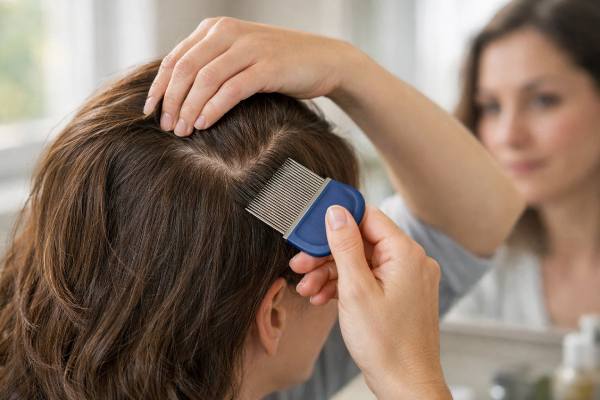
Where should you look first? The most useful places are behind the ears and near the back of the neck. Those areas often hold nits and live lice more readily than random parts of the scalp. Good lighting matters. A fine-toothed lice comb is often more helpful than just parting the hair with fingers, because lice are small, fast, and avoid light.
A practical check works like this:
- Start with dry or slightly damp hair in bright light.
- Separate the hair into small sections.
- Focus first behind the ears and at the nape.
- Use a fine lice comb from the scalp outward.
- Wipe the comb on a white tissue or towel so moving lice are easier to spot.
This step is worth slowing down for, because treatment decisions depend on it. If you only find old nits far from the scalp, medication may not be necessary. If you find live lice, treatment is warranted. If you are not sure what you are seeing, it is better to pause than to keep applying products every few days.
This is also the moment to separate lice from scalp irritation caused by scratching. Itching can create sores, and those sores can make the scalp feel more inflamed than the infestation itself. When the scalp has crusting, tenderness, or bumps, a clinician may need to rule out secondary infection or another scalp condition.
A common source of confusion is the school policy question. Children with head lice do not need to be sent home early in the middle of the day just because nits are seen. What matters most is starting appropriate treatment and limiting fresh head-to-head spread. That distinction can spare families a lot of unnecessary urgency while still treating the problem seriously.
How to treat head lice step by step
Head lice treatment works best when it is orderly. Families often lose ground by mixing methods, skipping the retreatment window, or treating repeatedly without confirming that live lice are still present. A calm, stepwise plan is far more effective.
Start with this sequence:
- Confirm active lice. Look for live crawling lice or live nymphs rather than treating based on flakes alone.
- Choose one treatment plan. Follow the exact label directions or clinician instructions for that product.
- Use the product correctly. This includes the correct amount, the right hair condition, and the proper timing.
- Comb if needed. Some products still benefit from nit combing, while some prescription options do not require it.
- Retreat only when indicated. Some medicines need a second treatment after 7 days or 9 to 10 days. Others usually do not unless live lice are seen.
- Check close contacts. Do not automatically treat everyone, but inspect household members carefully and treat those with active infestation.
- Do targeted cleaning the same day. Focus on the recent, high-contact items that matter most.
Correct use is where many households run into trouble. For example, some lice medicines do not kill unhatched eggs, so the second treatment is what clears newly hatched lice before they can lay more eggs. Miss that timing, and the treatment may appear to “fail” even when the medicine itself was fine. Another issue is applying treatment after combination shampoo or conditioner. Product residue can interfere with how some lice medicines work.
It is also important not to overuse lice medicines. Using the same insecticidal product again and again within a short period can irritate the scalp and does not guarantee better results. More is not safer, and it is not usually more effective. If a product has been used correctly and live lice are still present after the full treatment course, it often makes more sense to switch strategy than to repeat the same product over and over.
Mechanical removal can help, especially when families want to reduce the number of visible eggs or confirm whether live lice are still being found. Fine-comb checks are also useful in the days after treatment because they help you tell the difference between active lice and old evidence.
What about home remedies such as mayonnaise, olive oil, butter, or similar “suffocation” ideas? They are popular, but they are not well supported as reliable treatment. The bigger issue is that they can delay proven therapy while the infestation continues.
The most successful treatment plans are surprisingly plain: one evidence-based method, correct timing, close contact checks, and just enough cleaning to stop recently displaced lice from getting back onto the scalp.
Which medicines and methods are used
Head lice treatment options fall into three broad groups: over-the-counter products, prescription products, and manual removal methods such as wet combing. The best choice depends on the person’s age, the product’s instructions, local resistance patterns, how much egg-killing activity the product has, and whether treatment has already failed once.
Among over-the-counter options, pyrethrins with piperonyl butoxide and 1% permethrin are well-known first choices. Pyrethrins are approved for children 2 years and older. They kill live lice but not unhatched eggs, so a second treatment around day 9 to 10 is recommended. Permethrin is approved for children 2 months and older. It kills live lice and may continue killing some newly hatched lice for several days, but many cases still need retreatment around day 9.
Prescription options include benzyl alcohol lotion, ivermectin lotion, malathion lotion, and spinosad topical suspension. These products differ in age cutoffs, whether they kill eggs, whether nit combing is required, and whether retreatment is usually needed. Benzyl alcohol kills lice but not eggs, so it generally needs repeat treatment after 7 days. Ivermectin lotion is approved for people 6 months and older and usually works as a single application, though retreatment should not be done casually without guidance. Malathion can kill live lice and some eggs, but it is for people 6 years and older and it is flammable, so no smoking or heat tools should be used while the hair is wet with the product. Spinosad is approved for children 6 months and older, kills live lice and unhatched eggs, and usually does not require nit combing.
Wet combing still has a place, especially for families who prefer a noninsecticidal method or for very young children in whom treatment choices are narrower. The challenge is consistency. Wet combing is time-intensive and requires careful repetition. It can be helpful as part of a broader plan, but many households find it difficult to use as the only method unless they are very organized.
Two cautions matter here. First, resistance can limit how well some older products work. Second, “stronger” does not always mean better. A prescription product is not automatically necessary for every case. The best treatment is the one that fits the person, is used correctly, and matches the biology of the infestation.
Because lice products are insecticides or insecticide-adjacent treatments, they should be used with respect. Keep them away from the eyes, do not apply extra amounts, and do not repeat a failed product endlessly. And if the scalp is already irritated, burned, or inflamed, a clinician should guide next steps rather than letting the household improvise.
How to prevent reinfestation at home
Preventing reinfestation is less about sterilizing the home and more about interrupting the few routes that matter. Families often spend hours bagging toys, washing every fabric in sight, and vacuuming repeatedly, when the real issue is an untreated close contact or a missed retreatment day. The goal is to be targeted, not exhaustive.
The first step is to check the people who have had close head-to-head contact with the affected person. That usually means household members and sometimes very close playmates or sleepover contacts. Do not automatically treat everyone “just in case,” but do inspect carefully. The person who keeps the cycle going is often the one with mild symptoms or no obvious itch at all.
At home, focus on the two days before treatment, because that is the timeframe most relevant for recently used items. The main actions are straightforward:
- Machine wash and dry clothing, towels, pillowcases, bed linens, and other recently used washable items in hot water and high heat.
- Soak combs and brushes in hot water for 5 to 10 minutes.
- Vacuum floors and upholstered furniture where the affected person sat or lay.
- Bag items that cannot be washed for two weeks if they were recently used and are worth addressing.
Just as important are the things you do not need to do. You do not need fumigant sprays or foggers. They are unnecessary and can be toxic. You do not need to deep-clean the entire house. You do not need to wash every stuffed animal the child owns if it has not been used recently. And you do not need to keep re-washing the same bedding every day once appropriate treatment has started.
Behavior changes help too. Avoid head-to-head contact during play, sleepovers, sports, and selfies taken cheek-to-cheek with hair touching. Do not share hats, scarves, brushes, combs, hair ribbons, clips, helmets, or towels during the active treatment window. Even when brushing tools are not the main route of spread, this is an easy risk to cut down. A practical guide to cleaning hair brushes and combs can help families turn that step into a routine rather than a one-time panic task.
School and camp questions come up often. A child usually does not need to miss long stretches of school once appropriate treatment has started. Long exclusions for nits alone are not the most useful way to control spread. What helps more is clear communication, contact checking, and treatment started promptly and correctly.
The best way to prevent reinfestation is to pair the right treatment with the right follow-up. Most repeat cases are not proof that lice are unbeatable. They are usually a sign that something small but important was missed.
When treatment fails or needs medical help
Not every ongoing itch means treatment failure. Some people keep scratching for a while even after live lice are gone, especially if the scalp is irritated from bites, combing, or the treatment itself. That is why the question is not “Does the scalp still itch?” but “Are live crawling lice still present?”
True treatment failure usually falls into a few patterns. The infestation may have been misdiagnosed from the start. The product may not have been used exactly as directed. A second treatment may have been missed. The person may have been reinfested by an untreated close contact. Or the lice may be less responsive to that medication. The solution depends on which of those is most likely.
A sensible response to suspected failure is this:
- Recheck carefully for live lice.
- Review whether the first treatment was used correctly.
- Confirm whether retreatment was done on the proper day, if that product requires it.
- Check close contacts again.
- Switch to an alternative treatment if live lice remain after appropriate use of the first one.
This is also when clinician input becomes more useful. Medical help is especially appropriate when:
- The affected person is very young.
- The scalp is raw, infected, swollen, or crusted.
- There is severe scratching with sores.
- Several correct treatment cycles have failed.
- The person is pregnant, breastfeeding, or has special medication concerns.
- The diagnosis is still uncertain.
Secondary bacterial infection is one reason not to ignore persistent scratching. When sores, crusts, tenderness, or pustules appear, the scalp may need separate treatment in addition to lice management. If bumps and inflammation are prominent, it can help to understand how that overlaps with scalp folliculitis and inflamed scalp bumps rather than assuming every sore patch is just part of the lice itself.
There is also a limit to how much home treatment should be improvised. Repeated exposure to lice products can irritate the scalp and create confusion about what is medicine failure, what is reinfestation, and what is chemical irritation. That is why switching strategy thoughtfully is better than using the same product every few days.
The good news is that most head lice cases do clear. They are frustrating, but they are not unbeatable. The households that get out of the cycle are usually the ones that confirm live lice, choose one appropriate treatment, check contacts carefully, and avoid the temptation to turn the whole home into a decontamination project.
References
- Clinical Care of Head Lice 2025 (Guidance)
- Treatment of Head Lice 2024 (Guidance)
- About Head Lice 2024 (Guidance)
- Paediatrics: how to manage pediculosis capitis 2022 (Review)
- Treatment Modalities of Pediculosis Capitis: A Narrative Review 2023 (Review)
Disclaimer
This article is for educational purposes only and is not a substitute for medical advice, diagnosis, or treatment. Head lice can usually be managed at home, but medication choice, timing, age restrictions, scalp irritation, and repeated treatment failures can make the situation more complex. Seek advice from a qualified clinician if the diagnosis is unclear, the scalp looks infected, the person is very young, or live lice persist after correctly used treatment.
Share this article on Facebook, X, or your preferred platform if it helped you treat head lice more calmly and prevent the next round of reinfestation.