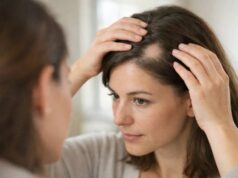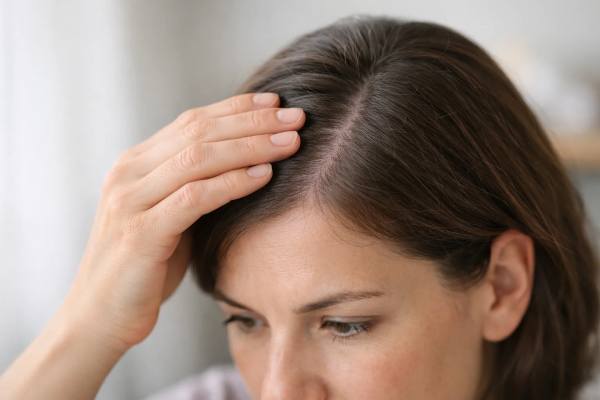
A tingling scalp can be easy to dismiss until hair loss appears beside it. That pairing often changes the question from “Is this just a weird sensation?” to “Is my scalp telling me something important?” Sometimes the answer is reassuring. Brief tingling can happen after a tight hairstyle, a strong hair product, heat exposure, or even simple nerve sensitivity. In those cases, the sensation is short-lived and the scalp looks normal.
But scalp tingling can also travel with inflammation, irritation, or a true hair-loss disorder. People may describe it as pins and needles, crawling, prickling, burning, tenderness, or a sore scalp that seems out of proportion to what they can see in the mirror. Dermatologists often group these symptoms under terms like trichodynia or scalp dysesthesia, especially when hair shedding is involved.
This article explains what scalp tingling usually means, when it is often harmless, and when it starts to look more like an inflammation sign. It also covers the hair-loss patterns that matter most, what doctors look for during evaluation, and which next steps are worth taking sooner rather than later.
Core Points
- Brief scalp tingling without redness, scaling, or ongoing shedding is often a temporary nerve or product reaction rather than a dangerous sign.
- Tingling that lasts for days, keeps returning, or appears with itching, burning, scale, tenderness, or visible thinning deserves closer attention.
- Diffuse shedding can occur with scalp discomfort even when the scalp looks normal, but patchy loss or painful inflamed areas raise more concern.
- New hair products, tight hairstyles, bleaching, and scratching can worsen symptoms and blur the real cause.
- The most useful at-home step is to track the timing, triggers, and scalp appearance for two to four weeks while reducing irritation and arranging care if red flags appear.
Table of Contents
- Why Scalp Tingling Happens
- When Tingling Is Often Benign
- When Tingling Points to Inflammation
- Hair Loss Patterns That Change the Meaning
- How the Scalp Is Evaluated
- What to Do Now and When to Seek Care
Why Scalp Tingling Happens
Scalp tingling is not a diagnosis by itself. It is a sensation, and sensations can come from several different pathways. The first pathway is nerve signaling. The scalp is richly supplied with sensory nerves, so even minor changes in pressure, product exposure, temperature, tension, or inflammation can create a noticeable response. That is why a scalp can feel prickly, sore, or electrically “alive” even when the mirror shows very little.
The second pathway is inflammation or irritation. When the skin barrier is disrupted, nerve endings become easier to trigger. A person may feel tingling before a rash becomes obvious, or feel burning and tenderness even when the visible changes are subtle. This is especially common with contact reactions, scalp dermatitis, psoriasis, sunburn, and scratching that never fully stops.
The third pathway is follicle-related discomfort. Some people with active shedding or inflammatory hair loss describe an uneasy scalp before they notice real thinning. Dermatologists often use the term trichodynia when the scalp feels painful, tender, burning, or tingling in association with hair complaints. That does not automatically mean the follicles are being permanently damaged. In many cases, it reflects nerve sensitivity, inflammation, or mechanical stress rather than irreversible loss.
The fourth pathway is referred or amplified sensation. Neck tension, jaw clenching, headaches, migraine tendencies, poor sleep, and stress can all make the scalp feel more reactive. In those cases, the scalp is not inventing the sensation, but the nervous system is amplifying it. That is one reason some people say their scalp tingles more at night, after stressful workdays, or during periods of heavy shedding.
This is also why the same symptom can mean different things in different people. A minty shampoo can create a harmless cool-tingling effect in one person. The same sensation after bleach, dye, or a retinoid-like scalp product may suggest irritation. Tingling with a normal-looking scalp and sudden diffuse shedding often points toward a nonscarring process such as telogen effluvium or trichodynia. Tingling with scale, redness, or tender bumps suggests the skin itself is inflamed.
A useful mental model is to ask three questions at once:
- Is the sensation brief or persistent?
- Does the scalp look normal or inflamed?
- Is there actual hair loss, and if so, what pattern does it follow?
Those questions separate many harmless episodes from the situations that need a closer look. If the symptom you feel is closer to soreness, tenderness, or pain than simple tingling, the overview of scalp pain and trichodynia causes may help you identify which type of scalp discomfort fits best.
When Tingling Is Often Benign
Not every tingling scalp is an inflammation signal. In many cases, the sensation is short, mild, and tied to an obvious trigger. The most reassuring pattern is tingling that appears briefly, resolves within hours, and does not travel with redness, scaling, tenderness, or ongoing shedding.
Tight hairstyles are a common example. A high ponytail, bun, braids, clips, or a helmet can pull on scalp nerves and follicles enough to create prickling or soreness, especially when the style is first removed. The same is true after extensions or a style worn too long. If the discomfort improves after the tension is gone and the scalp looks normal, the sensation is often mechanical rather than inflammatory.
Hair products can do the same thing. Shampoos or scalp serums with menthol, peppermint, niacin derivatives, acids, essential oils, or strong fragrance can create deliberate or accidental tingling. That does not always mean the product is harmful. Some formulas are designed to feel active. The distinction is whether the sensation stays mild and fades, or whether it progresses into itch, burning, redness, flaking, or tenderness. A product that tingles for a few minutes is not the same as a product that leaves the scalp reactive for two days.
Heat and environment also matter. A very hot shower, a blow-dryer used close to the scalp, sun exposure, or a day of sweating under a hat can all leave the scalp more aware of itself. So can washing after several days of buildup, when the scalp suddenly goes from oily and occluded to freshly cleansed. That change in blood flow, temperature, and surface oil can briefly heighten sensation without indicating disease.
Stress can make a benign sensation feel more ominous. People in the middle of heavy shedding often become hyperaware of every scalp feeling. The result is a feedback loop: tingling leads to checking, checking leads to rubbing and parting the hair, and the repeated friction makes the scalp feel even more noticeable. That does not mean the symptom is imaginary. It means a mild trigger can feel much louder when attention is fixed on it.
Signs that a tingling episode is more likely to be benign include these:
- It lasts minutes to a few hours, not days.
- The scalp looks normal in daylight.
- There is no crusting, scale, pus, or rash.
- Hair density appears stable over the following weeks.
- The sensation clearly follows a product, hairstyle, or heat trigger.
Even benign tingling deserves respect if it repeats. Repeated exposure to a trigger can eventually tip a mild reaction into real irritation. That is why it helps to simplify the routine for a week or two, reduce traction, and avoid piling on “stimulating” scalp treatments. When the symptom is brief and the scalp remains visually quiet, observation is often reasonable. When it starts recurring without a clear reason, the meaning changes.
When Tingling Points to Inflammation
Tingling becomes more concerning when it stops behaving like a fleeting sensation and starts acting like a symptom cluster. Inflammation rarely arrives alone. It tends to bring company: itching, burning, tenderness, visible redness, grease and flakes, dry scaling, bumps, crusting, or spots that feel hot or raw. When those features appear with hair loss, the threshold for medical evaluation drops.
One reason is that inflammatory scalp disease can damage hair in two different ways. In some conditions, inflammation mainly increases shedding without permanently injuring follicles. In others, especially some scarring alopecias, inflammation targets the follicular unit itself and can reduce the chance of regrowth if treatment is delayed. Tingling does not tell you which type is present, but persistent tingling plus visible scalp change is a signal not to ignore.
Contact reactions are a common example. A new dye, bleach, fragrance, preservative, essential oil blend, or “growth” serum may cause tingling at first, then evolve into itch, burning, tightness, or diffuse shedding. The scalp may look pink, flaky, dry, or only subtly irritated. The article on contact dermatitis from hair dye and scalp products is especially relevant here because allergic and irritant reactions often begin with sensation before the rash becomes obvious.
Seborrheic dermatitis and psoriasis can also create a tingling or burning scalp, particularly when inflammation is active and scratching is frequent. These conditions often add scale, redness, or waxy flakes, though some cases are more subtle around the hairline or crown. Folliculitis can cause tingling too, but it usually brings bumps, pustules, soreness, or crusting.
More serious patterns include perifollicular scale, marked tenderness, shiny patches, or hair loss that seems to leave the scalp looking smoother, paler, or less follicle-dense than before. Those findings raise more concern for a scarring process such as lichen planopilaris or central centrifugal cicatricial alopecia. In these disorders, burning, pain, tingling, or itching may be an early clue before visible thinning becomes dramatic.
Red flags that make tingling look more inflammatory include:
- Symptoms lasting longer than one to two weeks.
- Tingling that turns into burning, pain, or marked tenderness.
- Redness, scale, or bumps that keep returning.
- Hair loss concentrated in one area rather than diffuse seasonal-like shedding.
- Shedding plus loss of eyebrows, eyelashes, or body hair.
- Symptoms that worsen after dyeing, bleaching, or using medicated serums.
- Any scalp area that looks shiny, scar-like, or unusually smooth.
If the question is whether the scalp is just “sensitive” or actually inflamed, signs of scalp inflammation linked to hair loss helps frame what visible clues matter most. Tingling alone is ambiguous. Tingling with persistent scalp change is much less so.
Hair Loss Patterns That Change the Meaning
When scalp tingling appears with hair loss, the pattern of loss often tells more than the sensation itself. Two people can both say, “My scalp tingles and my hair is falling out,” yet the underlying causes may be completely different.
Diffuse shedding across the whole scalp often points toward a nonscarring process. This is the pattern many people notice after stress, illness, weight loss, medication changes, or hormonal shifts. The scalp may feel sore, prickly, or “busy,” but the skin can still look mostly normal. In that setting, trichodynia is common. The discomfort is real, yet the follicles are usually not being destroyed. The main question becomes what triggered the hair cycle shift.
Patchy hair loss changes the picture. Smooth, round patches may suggest alopecia areata, which can sometimes itch, tingle, or burn before the bare area becomes obvious. Patchy loss with broken hairs, scale, or inflamed borders raises other possibilities, including fungal infection, traction, or inflammatory disease. Irregular patches that feel tender or look scar-like need prompt attention because time matters more when follicles are under sustained attack.
Crown-centered scale and shedding can suggest seborrheic dermatitis or psoriasis, especially when flakes, grease, or itch are part of the story. Frontotemporal thinning with soreness may reflect traction from styling. Diffuse thinning through the midline with little scalp change may fit pattern hair loss, but tingling layered on top can mean the scalp barrier has become reactive from products or compulsive rubbing rather than from the hair-loss disorder itself.
One pattern deserves special caution: hair loss plus burning or tingling plus perifollicular scale or redness around the follicles. That combination raises more concern for lichen planopilaris and related scarring disorders. These conditions do not always start with obvious bald patches. Sometimes the first complaint is a scalp that feels wrong long before the patient or clinician can see the full extent of loss. The guide to lichen planopilaris symptoms and diagnosis is useful here because sensation can be an early clue in this specific type of inflammatory alopecia.
A helpful way to think about the major patterns is this:
- Diffuse shedding with a mostly normal scalp often points to telogen effluvium, trichodynia, or an internal trigger.
- Flakes, redness, and irritation with shedding point more toward dermatitis, psoriasis, or product reaction.
- Tender bumps or pustules suggest folliculitis or infection.
- Patchy, smooth loss suggests alopecia areata.
- Pain, burning, perifollicular scale, or shiny areas raise concern for scarring alopecia.
That is why no one should try to answer the inflammation question from sensation alone. Tingling is the clue. The hair-loss pattern gives that clue its real meaning.
How the Scalp Is Evaluated
A good evaluation of scalp tingling with hair loss is more structured than many people expect. Dermatologists are not just asking whether the scalp tingles. They are mapping time, triggers, scalp appearance, and the type of hair loss.
The history usually starts with timing. Did the tingling start before the shedding, at the same time, or after a new product or hairstyle? Was the onset sudden after illness or stress, or has it built slowly over months? Scalp symptoms that flare after coloring, lightening, tight styles, dry shampoo, or essential oil blends point in a different direction from symptoms that appear without any obvious surface trigger.
The exam focuses on whether the scalp looks inflamed and whether follicles still appear preserved. A clinician will often part the hair in several areas, not just the spot the patient notices most. They look for scale, erythema, follicular plugging, perifollicular scale, miniaturization, broken hairs, pustules, crusting, scarring change, and the pattern of density loss. These details matter because a normal-looking scalp with heavy shed hairs suggests one group of conditions, while follicle-centered redness and scale suggest another.
Trichoscopy often adds useful detail. This magnified view can reveal miniaturized hairs, yellow dots, broken hairs, black dots, perifollicular scaling, and other pattern-specific clues that are hard to see with the naked eye. In many cases, trichoscopy helps distinguish inflammatory hair loss from simple shedding or cosmetic breakage.
The workup may also include targeted testing. That can mean fungal testing when infection is possible, patch testing when allergy is suspected, or blood work if the pattern suggests an internal trigger such as iron deficiency or thyroid disease. A biopsy is not needed for every tingling scalp, but it becomes more important when the diagnosis is unclear, a scarring process is suspected, or treatment is not working as expected. The page on what a scalp biopsy can show in hair loss is helpful because many patients hear the word biopsy and assume it is a last resort, when in reality it can be the fastest route to clarity in selected cases.
One mistake people make before the appointment is masking the pattern. They switch five products, start scalp exfoliants, apply oils, use steroid creams left over from another rash, and scrub harder because the scalp feels strange. That can blur the exam and worsen irritation. Another mistake is arriving without a timeline. Photos from one, three, and six months earlier are often more useful than memory alone.
A strong evaluation asks not just “What does this sensation feel like?” but also “What is the scalp doing, what are the follicles doing, and what changed right before it started?” That combination is what turns a vague symptom into a workable diagnosis.
What to Do Now and When to Seek Care
The best next step depends on how intense the tingling is, how long it has been present, and what the scalp looks like. A brief prickling sensation after a product or hairstyle change usually calls for simplification, not panic. A persistent tingling scalp with ongoing hair loss deserves a more deliberate plan.
At home, the first priority is to reduce noise. Stop any new or strongly scented scalp products, essential oil blends, exfoliating acids, and “stimulating” serums for at least one to two weeks. Avoid tight hairstyles, scratching, high heat, and repeated scalp checks throughout the day. Use a gentle shampoo on a schedule that fits your scalp type rather than waiting until buildup becomes extreme. Keep notes on five basics: when the tingling happens, how long it lasts, what it feels like, whether the scalp looks different, and how much hair you are shedding.
Those notes help sort the situation into one of three broad paths:
- Brief and improving: likely watchful care and trigger avoidance.
- Persistent but visually quiet: likely medical review soon, especially if hair shedding is ongoing.
- Persistent with visible inflammation or patchy loss: likely prompt dermatology evaluation.
Practical reasons to book sooner include symptoms lasting longer than two weeks, worsening tenderness, obvious thinning, recurrent flakes or redness, bumps or crusting, or hair loss that is no longer diffuse. Sudden patchy loss, eyebrow or eyelash loss, pustules, scalp swelling, or any shiny scar-like area should move the appointment up. If the scalp is painful enough to disturb sleep or daily function, that also deserves timely care.
The risk of waiting is not the same for every diagnosis. A benign tingling episode may resolve on its own. An inflammatory scarring alopecia may not. That is why the article on when hair loss needs a dermatologist is so relevant to this symptom pair. Tingling is easy to minimize, but the wrong kind of delay can matter if the follicles are actively inflamed.
While waiting for care, do not assume that more treatment is better. Adding minoxidil, antifungal shampoos, acids, rosemary oil, steroid products, and camouflage fibers all at once makes it harder to tell what is helping and what is irritating the scalp. A simpler routine is usually more informative.
The most reassuring sign is improvement: less tingling, fewer shed hairs, and a scalp that looks calm. The most important warning sign is progression: more discomfort, more visible loss, and a scalp that starts showing scale, redness, bumps, or smooth shiny change. When those appear together, the symptom is no longer just a sensation. It has become a clinical clue.
References
- The Hormonal Background of Hair Loss in Non-Scarring Alopecias 2024 (Review)
- Scalp dysesthesia, more than skin deep 2022 (Review)
- Scalp psoriasis: a literature review of effective therapies and updated recommendations for practical management 2021 (Review)
- Lichen planopilaris and frontal fibrosing alopecia: review and update of diagnostic and therapeutic features 2023 (Review)
- Trichodynia revisited 2010 (Review)
Disclaimer
This article is for educational purposes only and is not a diagnosis or a substitute for medical care. Scalp tingling with hair loss can reflect irritation, dermatitis, autoimmune hair loss, infection, or scarring inflammatory disease, and some of these causes are easier to treat early. Seek prompt medical evaluation for sudden patchy loss, pus, crusting, severe pain, rapidly spreading redness, or any shiny areas that look scar-like.
If this article helped, please share it on Facebook, X, or any other platform your readers use most.