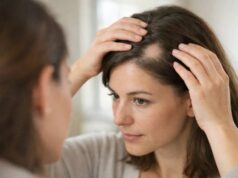
Hair loss with high prolactin is one of those problems that can feel both cosmetic and deeply medical at the same time. Prolactin is a pituitary hormone best known for its role in lactation, but when it stays elevated outside pregnancy or breastfeeding, it can disrupt ovulation, sex hormones, libido, fertility, and sometimes the normal rhythm of the hair cycle. For some people, the first sign is more shedding in the shower. For others, thinning arrives with missed periods, nipple discharge, headaches, or a medication change.
What makes this topic tricky is that prolactin-related hair loss is often indirect rather than dramatic. A high result does not always mean a pituitary tumor, and it does not always explain every strand that falls. Stress, sleep, exercise, thyroid disease, kidney disease, and several medications can all raise prolactin. At the same time, common hair disorders can overlap with it.
This guide explains how high prolactin can affect hair, which symptoms make the link more likely, which lab details matter most, and what next steps usually help clarify both the hormone issue and the hair-loss pattern.
Quick Overview
- High prolactin can contribute to shedding, but it often affects hair indirectly through changes in ovulation, estrogen, testosterone, or other hormones.
- Diffuse shedding is more common than sharply defined bald patches, and menstrual changes, low libido, infertility, or galactorrhea often provide the strongest clues.
- A single mild elevation does not always signal disease, because stress, sleep, exercise, and certain medications can all push prolactin up.
- Self-treating with supplements or stopping prescription drugs without medical guidance can delay the real diagnosis.
- The most useful approach is to confirm the lab, review medications and symptoms, and match the blood test to the actual scalp pattern.
Table of Contents
- How High Prolactin Can Affect Hair
- Symptoms That Make the Connection More Likely
- Which Labs Help and How to Read Them
- Common Causes of High Prolactin
- Next Steps After an Abnormal Result
- Treatment and Regrowth: What to Expect
How High Prolactin Can Affect Hair
High prolactin does not usually create a distinctive scalp pattern that lets a clinician identify the cause at a glance. That is one reason the connection gets missed. Most people do not walk in saying, “My pituitary hormone is affecting my hair.” They say they are shedding more than usual, their part is widening, or their ponytail feels thinner. In many cases, the visible change overlaps with another common diagnosis such as chronic telogen effluvium or pattern hair loss.
The reason is that prolactin often affects hair through hormonal cross-talk rather than through a single direct effect. When prolactin rises, it can interfere with the signals that regulate ovulation and sex hormone production. In women, that may mean irregular ovulation, lower estrogen exposure, and a shift in androgen balance. In men, high prolactin can suppress testosterone and affect sexual function, fertility, and overall hormonal stability. Hair follicles are sensitive to these changes. Instead of staying in the growth phase as long as they should, more follicles can move into resting and shedding phases.
That usually translates into diffuse hair loss rather than sharply outlined patches. Some people notice more strands on the pillow, in the brush, or during washing. Others see a slow reduction in density at the crown or through the midline because prolactin is aggravating a preexisting tendency toward pattern thinning. In other words, prolactin may not be the whole story. It may be the factor that speeds up a process already underway.
It also helps to separate hair loss from hair breakage. Prolactin-related problems are more likely to increase hairs shed from the root than to cause snapped strands through the mid-lengths. If what you see is mostly short broken pieces, rough ends, or damage after bleaching and heat styling, the explanation is often different. The article on the hair growth cycle can make that distinction easier to understand, because real shedding follows the follicle cycle while breakage does not.
Another useful point is that prolactin rarely acts alone. A person may have high prolactin and low ferritin. Another may have high prolactin and thyroid disease. Someone else may have a medication-driven prolactin rise plus stress-related shedding. That is why a prolactin result should be viewed as one important clue, not the entire diagnosis. The scalp, symptoms, and hormone context all need to line up before the picture becomes clear.
Symptoms That Make the Connection More Likely
Hair loss becomes much more suggestive of a prolactin-related problem when it appears with symptoms outside the scalp. Those extra clues often matter more than the hair pattern itself.
In women, the classic symptom cluster includes irregular periods, skipped periods, difficulty getting pregnant, lower libido, vaginal dryness, and galactorrhea, meaning a milky nipple discharge unrelated to pregnancy or nursing. Some people also notice breast fullness or tenderness and feel that their cycle suddenly no longer behaves the way it used to. When diffuse shedding arrives alongside those changes, high prolactin becomes a more meaningful lead.
In men, the pattern can be easier to overlook because the reproductive clues are less obvious at first glance. Hair loss may come with reduced libido, erectile dysfunction, infertility, fatigue, gynecomastia, or symptoms linked to low testosterone. Sometimes the hair complaint is what starts the evaluation, but the broader endocrine picture only becomes clear when the history is reviewed carefully.
Neurologic symptoms matter too. Persistent headaches, visual blurring, or reduced side vision raise more concern than hair loss alone, especially when prolactin is clearly elevated. Those features can suggest pressure near the optic pathways from a pituitary lesion and deserve medical assessment rather than watchful waiting.
At the same time, many other conditions can mimic or overlap with hyperprolactinemia. Hypothyroidism can raise prolactin and also contribute to thinning, dry hair, fatigue, constipation, and feeling cold. Polycystic ovary syndrome can coexist with prolactin abnormalities and may cause scalp thinning through androgen excess. Menopause can shift hair density for hormonal reasons that have nothing to do with the pituitary. Emotional stress can trigger shedding on its own. That is why symptom clusters matter more than any single sign.
A few real-world patterns make the difference clearer:
- Diffuse shedding plus missed periods is more suspicious than diffuse shedding alone.
- Hair thinning plus galactorrhea deserves more endocrine attention than thinning without breast symptoms.
- Hair loss plus headaches or visual changes moves pituitary evaluation higher on the list.
- Shedding plus fatigue, cold intolerance, and constipation may point toward thyroid disease as part of the explanation.
If thyroid symptoms are present, thyroid-related hair loss clues and lab patterns can help you compare the overlap. The key idea is simple: the scalp rarely makes this diagnosis by itself. The more the hair complaint travels with menstrual, sexual, fertility, breast, or visual symptoms, the more likely prolactin is contributing to the problem in a meaningful way.
Which Labs Help and How to Read Them
The starting test is usually a serum prolactin level, but the number only makes sense when you know how it was drawn, how high it is, and what else is happening clinically. Most laboratories use their own assay-specific reference ranges, so the printed range on the report matters more than a number quoted online. A result that is only mildly elevated may be interpreted very differently from one that is clearly above the upper limit.
Context matters because prolactin is a hormone that rises and falls. Poor sleep, a stressful appointment, vigorous exercise, sex, nipple stimulation, pain, or a difficult blood draw can all nudge the number upward. That is why a borderline result often gets repeated before anyone jumps to conclusions. A repeat test is not a delay tactic. It is part of good interpretation.
A useful hair-loss workup usually goes beyond prolactin alone. Depending on the symptoms, clinicians often consider several related tests:
- Pregnancy testing when relevant.
- TSH and often free T4 to look for thyroid disease.
- Kidney function, and sometimes liver tests if the history suggests a broader medical issue.
- Gonadal hormones when menstrual, fertility, or sexual symptoms are present.
- Androgen testing in the right clinical setting, especially if acne, hirsutism, or crown thinning suggest androgen excess.
- Basic hair-loss labs such as a complete blood count and ferritin if diffuse shedding is prominent.
That broader view matters because it is easy to over-attribute hair loss to prolactin when another driver is also present. Iron deficiency, thyroid disease, recent illness, rapid weight loss, and medication changes can all produce similar shedding. The article on blood tests often used in hair-loss evaluation is useful here because it shows how prolactin fits into a wider lab framework rather than standing alone.
Two technical issues are worth knowing because they can change the entire interpretation. The first is macroprolactin, a larger form of prolactin that may elevate the total reported value while causing few or no symptoms. The second is the hook effect, a lab artifact in which very high prolactin levels can sometimes appear falsely modest unless the sample is diluted.
Practical questions to ask after an abnormal result include these:
- Was the elevation mild or clearly abnormal?
- Does the result match my symptoms?
- Should the test be repeated under calmer conditions?
- Was macroprolactin considered?
- Have pregnancy, thyroid disease, kidney disease, and medications already been reviewed?
A prolactin result is most useful when it helps organize the next step. By itself, it is not a diagnosis. It becomes meaningful only when it is paired with the symptom pattern, scalp findings, and the rest of the hormone story.
Common Causes of High Prolactin
One of the biggest misconceptions about high prolactin is that it automatically means a prolactinoma. In reality, the list of causes is much broader, and many of them are common and non-tumor related.
Some elevations are physiologic, meaning they happen as part of normal body function. Pregnancy and breastfeeding are the obvious examples, but prolactin can also rise with sleep, sex, exercise, stress, and pain. Even an anxious appointment or a very difficult blood draw can produce a mild bump. These situations are important because they can create false alarms when the result is interpreted without context.
Medical causes also matter. Primary hypothyroidism is a classic one because it can stimulate pathways that increase prolactin. Kidney disease and significant liver disease can reduce hormone clearance and leave prolactin elevated. Chest wall irritation, surgery, shingles, or repeated nipple stimulation can also play a role. These causes are easy to miss if the focus stays too narrowly on the pituitary.
Medications are another major category. Antipsychotics are well known for raising prolactin, but they are not alone. Drugs used for nausea and gastric motility, certain antidepressants, some blood pressure medicines, opioids, and estrogen-containing therapies can also contribute. That is why the medication timeline matters so much. If shedding begins soon after a prescription change, the hormone result may be telling you more about the drug than about a new gland disorder. The overview of medication-related hair loss patterns can help you compare timing, because the date when a treatment started often matters as much as the test itself.
Then there are the lab traps. Macroprolactin can make the total number look high in a person who has few symptoms and no real prolactin excess at the tissue level. The hook effect can do the opposite by making a very high level appear deceptively lower than it is. These are not everyday scenarios for patients to diagnose themselves, but they explain why endocrinologists sometimes repeat or refine testing before committing to a conclusion.
True pituitary causes do exist, of course. A prolactinoma is a benign pituitary adenoma that secretes prolactin. Other masses near the pituitary can also raise prolactin by interfering with dopamine signaling. But even then, the diagnosis is not made from a hair complaint alone. The prolactin level, associated symptoms, medication review, and imaging findings all need to fit together.
For readers focused on hair, the practical lesson is this: high prolactin should widen the differential before it narrows it. It may be the main diagnosis, a medication side effect, a clue to thyroid disease, or an incidental finding that sits beside a separate hair-loss disorder.
Next Steps After an Abnormal Result
After prolactin comes back high, the next step is usually clarification, not panic. Mild elevations are often repeated, especially when the history is weak or the test conditions were far from ideal. At the same time, the clinician will usually review pregnancy status, symptoms, medications, thyroid history, kidney health, and any clues that point toward a pituitary problem.
In many cases, the workup unfolds in a stepwise order:
- Confirm the elevation if it was mild, unexpected, or drawn under stressful conditions.
- Review common secondary causes such as medications, thyroid disease, pregnancy, and kidney problems.
- Consider macroprolactin if the result is abnormal but the symptom pattern is thin.
- Decide whether pituitary imaging is needed.
- Continue evaluating the scalp rather than assuming every strand problem comes from prolactin.
MRI becomes more likely when the prolactin elevation is persistent and unexplained, when symptoms strongly fit hyperprolactinemia, or when headaches and visual symptoms raise concern for a sellar mass. If imaging shows a pituitary lesion, visual field testing may also be added depending on location and size.
This is also the stage where a hair-loss diagnosis has to stay honest. A person may have mildly elevated prolactin and still primarily have female pattern hair loss. Another may have heavy menstrual bleeding causing low ferritin, with prolactin only slightly abnormal in the background. Someone else may have scalp pain, redness, scale, or patchy loss that suggests inflammation or autoimmune disease instead. In other words, an abnormal prolactin result can be important without being the whole explanation.
That is why dermatology input can be useful when the scalp pattern is not simple diffuse shedding, when the timeline is confusing, or when regrowth does not begin after the endocrine issue is treated. Signs that deserve more scalp-specific evaluation include burning, marked itching, scaling, redness, patchy gaps, loss of eyebrows or eyelashes, or hairs that seem to be breaking rather than shedding. The guide on when hair loss needs specialist care can help you judge that threshold.
It also helps to know what not to expect. A high prolactin result does not automatically mean surgery. It does not automatically explain every form of thinning. And it does not automatically tell you whether the hair will fully recover. The most productive approach is to confirm the lab, identify the cause, diagnose the scalp pattern accurately, and then follow the response over time. That steady sequence usually answers more than any single test result can.
Treatment and Regrowth: What to Expect
Treatment depends on why prolactin is high. There is no single hair protocol that works for every case, because the target is not just the shedding. It is the reason the hormone level is abnormal.
If the rise is medication-induced, the safest path is usually a prescribing review rather than abruptly stopping the drug. In some cases, the dose can be lowered, the medication can be switched, or an alternative with less prolactin effect can be considered. That decision has to balance the original reason for treatment against the hormone side effect, which is why self-discontinuation can create more problems than it solves.
If hypothyroidism is driving the prolactin elevation, thyroid treatment may bring the level down and improve shedding gradually. If kidney disease or another systemic illness is involved, the broader medical condition needs attention before the scalp is likely to stabilize.
When a prolactinoma is diagnosed, medical therapy is often first line. Dopamine agonists are commonly used to lower prolactin and, when needed, shrink the tumor. Many patients hear about cabergoline first because it is frequently used in modern care, though bromocriptine still has a role in some situations. Surgery is generally reserved for selected cases, such as medication intolerance, inadequate response, or specific tumor features.
From a hair standpoint, regrowth nearly always moves slower than the lab values. The prolactin level can improve long before the mirror shows much change. That lag is normal. Hair follicles need time to move back through the cycle, and density returns gradually, not overnight. Shedding often slows before fullness improves. If there is an overlapping condition such as pattern hair loss, menopause-related thinning, androgen excess, or low iron, recovery may be partial unless those issues are also treated.
A few practical habits help during this phase:
- Track shedding and photos monthly rather than judging the hair day by day.
- Avoid piling on supplements unless a deficiency is confirmed or your clinician recommends them.
- Use gentle hair care while active shedding is high.
- Ask whether the scalp pattern suggests a second diagnosis that needs its own treatment.
- Expect progress to be measured over months rather than weeks.
For some people, treating prolactin reveals that a separate pattern-hair-loss issue was present all along. In that situation, additional therapies may still matter. The article on female pattern hair loss stages and treatment options can help readers understand what ongoing thinning may mean after the hormone issue is addressed.
The overall outlook is often encouraging. Prolactin-related hair loss is frequently manageable, especially when the cause is identified early. The best results come from treating the reason prolactin is high, not only reacting to the shed hairs.
References
- Diagnosis and management of prolactin-secreting pituitary adenomas: a Pituitary Society international Consensus Statement 2023 (Consensus Statement)
- Hyperprolactinemia in women: diagnostic approach 2024 (Review)
- Diagnosis of hyperprolactinemia in women: A Position Statement from the Brazilian Federation of Gynecology and Obstetrics Associations and the Brazilian Society of Endocrinology and Metabolism 2024 (Position Statement)
- The Hormonal Background of Hair Loss in Non-Scarring Alopecias 2024 (Review)
- Hair loss and hyperprolactinemia in women 2012 (Clinical Study)
Disclaimer
This article is for educational purposes only and is not a diagnosis or a substitute for personal medical care. Hair loss and abnormal prolactin levels can reflect conditions that need clinician-guided testing, including medication effects, thyroid disease, fertility-related hormone changes, or pituitary disorders. Seek prompt medical care for new visual symptoms, persistent headaches, nipple discharge outside pregnancy or breastfeeding, missed periods, infertility, or rapid worsening hair loss.
If you found this article helpful, please share it on Facebook, X, or any platform your readers use most.