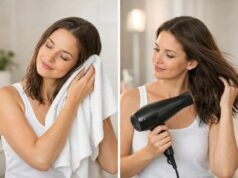
Hair cycling sounds like a beauty trend, but the idea behind it is practical: your scalp and hair do not have the same needs every wash day. Roots can get oily while lengths stay dry. A scalp can feel calm one week, then flaky or heavy with buildup the next. A single shampoo or treatment can handle one problem well and still miss another.
That is why many people experiment with rotation. A gentle cleanser may suit routine washes, a clarifying shampoo may help when residue builds up, and a richer mask may make sense after heat styling or coloring. Used well, that kind of product cycling can improve comfort, manageability, and the overall feel of the hair.
Still, hair cycling is not a magic system. It does not automatically improve growth, and it cannot fix medical causes of shedding or scalp disease. Its value is more specific than that: matching the right formula to the right moment. When the routine is simple and intentional, rotating products can help the scalp feel steadier and the hair look better with less trial and error.
Key Insights
- Rotating gentle, clarifying, conditioning, and sometimes medicated products can improve scalp comfort and hair manageability.
- The most common benefits are less buildup, better oil control, fewer flakes, and softer lengths rather than faster hair growth.
- Hair cycling is not a proven treatment for hair loss, and too many products can worsen dryness, irritation, or confusion.
- Start with a small core routine and place stronger products only where they solve a clear problem.
Table of Contents
- What hair cycling actually means
- Why rotation can help
- When rotation does not help
- Build a routine by scalp needs
- A simple two-week rotation
- How to tell it is working
What hair cycling actually means
Hair cycling is best understood as planned product rotation, not constant product swapping. In practice, it means you do not ask one shampoo, one conditioner, or one treatment to do every job. Instead, you keep a small lineup and use each item for a reason.
That distinction matters because hair and scalp are different tissues with different problems. The scalp is living skin. It can become oily, irritated, flaky, or sensitive. The hair shaft is a fiber. It can lose smoothness, feel rough, hold residue, tangle easily, or break from heat and chemical processing. A routine that helps the scalp may not always help the lengths, and vice versa.
A useful hair cycling routine usually includes three categories:
- A gentle shampoo for most wash days.
- A targeted product used less often, such as a clarifying or medicated shampoo.
- A conditioner or mask matched to the level of dryness or damage.
Some people also add a leave-in treatment, scalp serum, or bond-building product, but the core idea stays the same: repeat the basics and rotate the extras with purpose.
The biggest misunderstanding is thinking that more variety means better results. It often means the opposite. If every wash uses a new formula, you cannot tell what is helping and what is causing problems. Good cycling is structured. You may use a gentle cleanser two or three times in a row, then clarify once. You may use a lightweight conditioner most weeks and bring in a heavier mask only after bleaching, swimming, or heavy heat styling.
It also helps to separate cosmetic improvement from medical treatment. Hair cycling may help hair feel cleaner, smoother, or less weighed down. It may reduce some mild scalp discomfort when the right product is used at the right time. But it is not a formal medical protocol, and it is not a proven way to stimulate growth on its own.
The most realistic way to think about it is this: hair cycling is a method for adjusting care to changing conditions. When it works, it feels less like a trend and more like common sense.
Why rotation can help
A smart rotation can help because hair problems often come from mismatch. A formula may be too rich for the scalp, too weak for buildup, too drying for damaged ends, or too mild during a dandruff flare. Rotating products lets you correct that mismatch without rebuilding your entire routine every week.
The first benefit is better cleansing balance. If you use a strong shampoo every wash, the scalp may feel tight and the lengths may become rough. If you use only very creamy or residue-heavy products, roots may collapse faster, styles may not last, and buildup can make the hair feel coated. Alternating a gentle cleanser with an occasional reset wash is often enough to keep both sides in balance. For readers dealing with repeated residue, a focused product buildup reset often explains why hair suddenly feels dull, sticky, or heavy.
The second benefit is better targeting of scalp conditions. Flaking, itch, and oiliness do not always need daily treatment, but they do respond to the right treatment at the right frequency. A medicated shampoo can be useful during active symptoms, while a mild shampoo can carry the routine in between. That approach may lower unnecessary exposure to stronger ingredients while still keeping symptoms under control.
The third benefit is improved hair-shaft feel. Conditioners and masks work mainly on the fiber itself. They reduce friction, improve slip, and make tangling less severe. But fine hair may go limp with very rich formulas, while color-treated or bleached hair may need more conditioning support than a standard rinse-out can provide. Cycling helps you place richer care where it is earned instead of using it automatically every time.
Rotation also fits real life. Hair needs shift with weather, exercise, styling habits, hard water, coloring, and sleep patterns. A routine that works in winter may feel too heavy in summer. A person who heat-styles twice a week may need more repair support than someone who air-dries. Hair cycling creates room for those changes without turning hair care into guesswork.
The most important point is that the improvement usually comes from precision, not novelty. Rotating products can improve the look and feel of hair and the comfort of the scalp when it replaces a poor match with a better one. The rotation itself is not the magic. The better match is.
When rotation does not help
Hair cycling loses its value when it becomes too complicated, too frequent, or disconnected from the real problem. Many routines fail not because rotation is wrong, but because there are too many variables at once.
The most common mistake is over-rotating. If you switch shampoos every wash, add several new serums, and alternate multiple masks in the same month, you make troubleshooting almost impossible. Irritation, breakage, limp roots, or waxy residue can appear, and you will not know which product caused it. A simpler routine often outperforms a crowded one.
The second problem is using strong products without a clear reason. Clarifying shampoos, scalp exfoliants, and some anti-dandruff formulas can be helpful, but using several of them too often may leave the scalp dry, stingy, or reactive. Hair can feel “squeaky clean” at first and then become rough, static-prone, or harder to detangle. That is not a sign of success. It is often a sign that cleansing strength is outrunning the hair’s ability to stay smooth.
A third limit is sensitivity. Fragrance, essential oils, preservatives, botanical extracts, and high-protein treatments can bother some people even when the ingredient list looks impressive. If the scalp burns, itches more, develops bumps, or becomes flaky in a more inflamed way, the issue may be product allergy vs irritation rather than a need for more cycling.
Hair cycling also does not replace medical care. It will not correct androgen-related thinning, iron deficiency, thyroid disease, scarring alopecia, or sudden shedding after illness, surgery, or major weight loss. In those cases, better product rotation may improve comfort and reduce breakage, but it does not address the cause.
It also does not automatically increase hair growth. That claim is easy to find online, but the logic is weak unless the routine solves a real scalp problem that was interfering with comfort or adherence. Cleaner roots may make hair look fuller. Less breakage may make ends appear denser. A calmer scalp may make treatment use more consistent. Those are real wins, but they are different from growing new hair.
A useful rule is to pause and simplify when any of these happen:
- You have introduced more than three new products in a month.
- Your scalp feels worse after “reset” days.
- Your hair feels both dry and coated.
- You are rotating because of trend advice rather than a clear need.
If a rotation adds confusion, it is no longer a good routine.
Build a routine by scalp needs
The best hair cycling routine starts with assessment, not shopping. Before choosing products, identify what needs help most often. Four questions usually give you a workable starting point:
- How quickly do your roots become oily?
- Do you have flakes, itch, or scalp tenderness?
- Are your lengths dry, frizzy, bleached, or heat-damaged?
- Is your hair fine and easily weighed down, or thicker, curlier, and more moisture-hungry?
Once you know that, build around a small base routine. Most people need one cleanser for regular use, one targeted cleanser for specific situations, and one conditioning product that matches the lengths.
Here is how that often looks by pattern:
- Oily scalp and fine hair: Use a gentle shampoo for routine washes and a clarifying wash every 7 to 14 days, depending on how quickly residue returns. Keep conditioner light and apply it mainly from mid-length to ends.
- Dry scalp or easily irritated scalp: Use a low-irritation shampoo and avoid stacking several active scalp products in the same wash. If you need treatment, add only one targeted product at a time.
- Flake-prone or seborrheic scalp: Use a medicated anti-dandruff shampoo during flares and a mild shampoo between treatment washes. Maintenance usually works better than random use.
- Color-treated, bleached, or heat-damaged hair: Keep cleansing mild most of the time and rotate in a richer mask or bond-support treatment when the lengths start to feel rough, stretchy, or porous.
- Curly, coily, or highly textured hair: Clarify less often unless there is obvious buildup, and make sure any stronger cleansing step is balanced with enough conditioning afterward.
The routine should also respect how often you wash. Someone who washes daily after workouts may need a different cadence from someone who washes twice a week. A guide to wash frequency by scalp type can help you avoid forcing a schedule that does not fit your scalp’s oil production.
Two principles keep the routine stable. First, rotate categories, not endless versions of the same category. Second, make changes slowly. If your scalp improves with one medicated wash a week, do not assume three will be better. If your fine hair looks cleaner with occasional clarification, do not jump to clarifying every wash.
The goal is not to create a long ritual. It is to create a repeatable pattern that keeps roots comfortable and lengths manageable.
A simple two-week rotation
A sample schedule works best when treated as a template, not a rule. The right routine depends on wash frequency, scalp symptoms, hair texture, and damage level. Still, a two-week pattern can show how targeted rotation is supposed to feel: steady, simple, and easy to repeat.
For someone washing three times a week with mild oiliness at the scalp and some dryness through the lengths, a practical cycle might look like this:
- Wash 1: Reset day
Use a clarifying shampoo if the hair feels coated, the roots collapse too fast, or styling products have built up. Follow with a regular conditioner on mid-lengths and ends. - Wash 2: Maintenance day
Use your gentle shampoo and your standard conditioner. This should be the most common wash in the routine. - Wash 3: Repair day
Use the gentle shampoo again, then replace regular conditioner with a richer mask or bond-support treatment if the lengths feel rough, frizzy, or over-processed. - Wash 4: Scalp-target day
If you are flare-prone, this is where a dandruff or oil-control shampoo may fit. If your scalp is calm, repeat the maintenance wash instead. - Wash 5: Maintenance day
Return to the gentle shampoo and standard conditioner. - Wash 6: Choose based on feedback
If roots feel heavy, clarify. If lengths feel dry, repair. If everything feels balanced, keep it simple and do another maintenance wash.
That structure prevents one mistake many people make: piling every “good” product into the same wash. A clarifier, an exfoliating scalp serum, and a medicated shampoo do not all need to appear on the same day. Usually, one strong or targeted step per wash is enough.
There are also useful modifications:
- If your hair is very dry, curly, or coily, clarifying may fit every 2 to 4 weeks instead of weekly.
- If you have active dandruff or seborrheic dermatitis, medicated shampoo may be needed 2 to 3 times weekly for a short control phase, then weekly or every other week for maintenance.
- If your hair is fine and easily flattened, deep masks may work better every other week than every week.
A guide to clarifying shampoo timing can help you decide whether your routine needs a reset wash every week, every two weeks, or only occasionally.
The simplest test is repeatability. If you cannot follow the plan without second-guessing every wash day, it is too complex.
How to tell it is working
A good hair cycling routine should become easier to live with after a few weeks, not harder. You are looking for calmer patterns, not dramatic overnight change.
Signs it is working often show up within 2 to 4 weeks:
- Roots stay fresh longer without feeling stripped.
- Flakes, itch, or scalp discomfort become less frequent.
- Hair feels smoother and tangles less.
- Styling becomes more predictable.
- Lengths look less dull or puffy between trims.
These are subtle but meaningful improvements. They suggest your routine is matching real needs instead of fighting them.
Signs it is not working are usually just as clear:
- The scalp feels tight, hot, or stingy after washing.
- Flakes are increasing rather than easing.
- Hair feels dry at the ends but greasy again within a day.
- The surface looks coated, sticky, or flat.
- Breakage increases, especially around the crown, nape, or hairline.
When that happens, resist the urge to buy more products immediately. First, remove complexity. Go back to one gentle shampoo, one conditioner, and one targeted product. Then adjust only one variable every 1 to 2 weeks. That slow method tells you much more than rapid switching ever will.
It also helps to watch for problems that product rotation cannot solve. See a dermatologist if you have patchy hair loss, a rapidly widening part, scalp pain, pustules, thick plaques, bleeding, or burning that keeps returning. Get evaluated if shedding is sudden, heavy, or lasting beyond several weeks, or if it follows a new medication, illness, or major hormonal change. If you are unsure when a scalp issue needs medical care, that is usually a sign not to rely on trial-and-error alone.
So, does rotating products improve hair and scalp? It can, when the rotation is purposeful, limited, and based on a real mismatch. It does not need to be trendy to be useful. The best routines are often the ones that use fewer products more intelligently.
References
- Hair Cosmetics for the Hair Loss Patient – PMC 2021 (Review)
- On Hair Care Physicochemistry: From Structure and Degradation to Novel Biobased Conditioning Agents – PMC 2023 (Review)
- Mechanisms of impairment in hair and scalp induced by hair dyeing and perming and potential interventions – PMC 2023 (Review)
- Ketoconazole Shampoo for Seborrheic Dermatitis of the Scalp: A Narrative Review – PMC 2024 (Narrative Review)
- Child and Adult Seborrheic Dermatitis: A Narrative Review of the Current Treatment Landscape – PMC 2025 (Narrative Review)
Disclaimer
This article is for educational purposes only and does not diagnose, treat, or replace medical care. Hair cycling is a cosmetic care strategy, not a medical treatment for hair loss or scalp disease. If you have persistent itch, pain, heavy shedding, patchy thinning, scalp lesions, or a reaction to a hair product, seek evaluation from a qualified dermatologist or other licensed clinician.
If this article was helpful, please consider sharing it on Facebook, X, or your preferred platform.