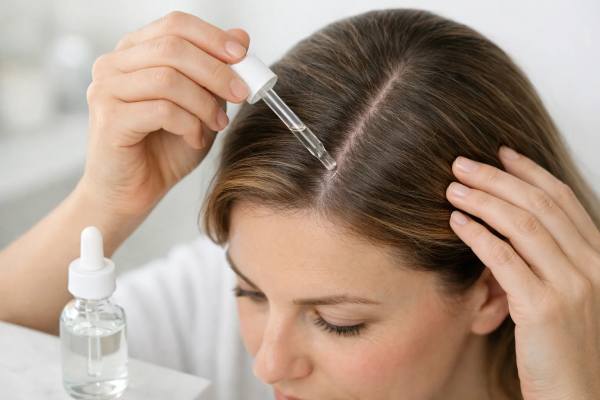
Glycolic acid is no longer limited to facial toners and peel pads. It has moved into scalp serums, pre-shampoo treatments, and exfoliating scrubs, usually with one promise: a cleaner, fresher scalp with less buildup. That appeal makes sense. The scalp collects oil, sweat, styling residue, dead skin, and environmental debris more easily than most people realize, especially when dry shampoo, leave-ins, and heavy conditioners are part of the routine. A well-formulated exfoliant can help loosen that film and make the scalp feel lighter.
But glycolic acid is also easy to over-romanticize. It can improve flaking, product residue, and rough-feeling scalp texture, yet it is not a cure-all for dandruff, hair loss, or every itchy scalp. It is an acid, and on the scalp that means the margin between “helpful reset” and “angry barrier disruption” can be surprisingly narrow. The real value of glycolic acid lies in using it for the right reason, at the right frequency, on the right scalp. Once those pieces are clear, its benefits become more useful and its risks far easier to avoid.
Quick Facts
- Glycolic acid can help loosen dead skin, excess oil, and styling residue, which may leave the scalp feeling cleaner and less congested.
- It may improve the look of mild flaking and buildup, but it does not directly treat every cause of dandruff or scalp itching.
- Overuse can trigger burning, redness, tightness, and rebound dryness, especially on a sensitive or already inflamed scalp.
- Start with a low-frequency approach, such as once weekly, and increase only if the scalp stays comfortable.
- Apply it to the scalp rather than the hair lengths, and stop if you notice persistent sting, soreness, or worsening flaking.
Table of Contents
- What glycolic acid does on the scalp
- Benefits it can realistically offer
- Irritation risks and who should avoid it
- How to use it with less irritation
- Glycolic acid versus other scalp exfoliants
- When buildup is not the real problem
What glycolic acid does on the scalp
Glycolic acid is an alpha hydroxy acid, or AHA. Its main job is chemical exfoliation. In practical terms, that means it helps loosen the bonds between surface skin cells so they detach more easily. On the scalp, this can soften the dull layer made up of dead skin, oil, sweat, and product residue. When that layer thins out, the scalp often feels smoother, fresher, and less coated.
That surface action is the main reason glycolic acid shows up in scalp products. It is not really a “deep detox” ingredient, despite how it is often marketed. It does not vacuum out follicles or reset the scalp in one dramatic step. What it does more credibly is reduce the cling of accumulated material on the outermost layer of the scalp. For someone whose roots feel waxy, sticky, or rough by day two, that can be a meaningful difference.
Its small molecular size matters too. Glycolic acid penetrates more readily than some larger acids, which can make it feel effective quickly. It is one reason the scalp may look cleaner after a single use. It is also one reason irritation can happen faster than expected. An acid that moves through the outer layer more efficiently can help, but it can also sting if the barrier is already fragile.
On the scalp, glycolic acid may help with several surface-level problems:
- Adherent flakes that sit on the scalp and do not rinse away easily
- Oil mixed with styling residue
- Product film from dry shampoo, hairsprays, waxes, and heavy leave-ins
- Rough-feeling patches that improve when dead skin is loosened
- A scalp that feels “coated” even after washing
That does not mean it is a hair-growth ingredient. Some people assume a cleaner scalp automatically means faster growth. The truth is narrower. A healthier scalp environment can support better comfort and reduce residue that interferes with routine cleansing, but glycolic acid itself is not an established stand-alone treatment for pattern hair loss or shedding disorders. Its best role is supportive, not miraculous.
This is also where formulation matters more than the ingredient name. A wash-off scalp scrub with glycolic acid behaves differently from a leave-on serum. The total acid level, the pH, the contact time, and the rest of the formula all shape how strong it feels. Two products labeled “glycolic acid scalp treatment” may perform very differently.
The most balanced way to think about glycolic acid is this: it is a controlled surface loosener. It can help remove what should not stay on the scalp for long, but it is not meant to strip the scalp down to squeaky-clean skin. If that is the goal, irritation usually follows. For readers dealing mainly with residue rather than a true skin disorder, a simpler discussion of how to fix product buildup in hair is often the best starting point.
Benefits it can realistically offer
The best case for glycolic acid is not that it transforms the scalp overnight. It is that it can solve a narrow but common set of problems better than ordinary shampoo alone. When it works well, the improvement is usually practical and easy to describe: less clingy buildup, flatter flakes, cleaner-feeling roots, and a scalp that feels less congested between wash days.
One real benefit is better release of surface debris. Many people with oily roots or styling-heavy routines are not dealing with a medical scalp disease at all. They are dealing with the simple fact that modern hair routines layer products onto a high-sebum area. A gentle chemical exfoliant can loosen that residue more evenly than aggressive fingernail scrubbing or gritty physical scrubs.
A second benefit is improved feel and appearance of mild flaking. This is especially true when flakes are sitting on the surface and tend to stick around the part line, crown, or hairline after washing. Glycolic acid may help detach those visible scales, making the scalp look cleaner. That does not necessarily mean it is treating the underlying cause. It may just be improving the visible expression of it.
A third benefit is better product performance afterward. When the scalp is less coated, shampoo can rinse more efficiently and lighter leave-on products may sit better. Some people also find that their roots gain more movement or lift after occasional exfoliation because residue is no longer weighing the area down.
These are the most realistic outcomes to expect:
- A cleaner-feeling scalp for a few days after use
- Less visible residue at the roots
- Softer, flatter flakes in mild cases
- Less urge to scratch or scrub if buildup was the trigger
- A more balanced feeling between wash days
What glycolic acid usually does not do on its own:
- Cure moderate or severe dandruff
- Resolve scalp psoriasis
- Treat fungal overgrowth by itself
- Stop shedding
- Regrow hair in a medically meaningful way
That distinction matters because many irritated scalps are overtreated, not undertreated. Someone with visible flakes may jump straight to stronger acids when the real issue is seborrheic dermatitis, infrequent washing, or too many styling products layered onto the roots. In that setting, glycolic acid may help a little, but it is not the main fix.
The strongest candidates for scalp glycolic acid are usually people with mild buildup-prone, oil-prone, or flaky scalps that tolerate active ingredients well. It may also suit people whose wash routine is sound but who still develop a film at the roots from repeated use of dry shampoo or silicone-heavy styling products. For those cases, it can function like a periodic reset rather than a daily dependency.
The most useful mindset is to treat glycolic acid as a maintenance tool. It fits best when the scalp needs occasional loosening of surface buildup, not constant stripping. If the problem is mainly persistent scale, redness, and itch, the conversation often shifts toward causes discussed in seborrheic dermatitis symptoms and shampoos rather than toward stronger exfoliation alone.
Irritation risks and who should avoid it
The main downside of glycolic acid on the scalp is not that it is ineffective. It is that it can work a little too well on the wrong scalp. By loosening the outer layer of skin, it can leave the scalp more reactive if used too often, in too high a strength, or on skin that is already inflamed. That can lead to the exact symptoms people were trying to escape: stinging, tightness, redness, tenderness, flaking, and a scalp that suddenly feels “sensitive” to everything.
This risk rises quickly in several situations. The first is a compromised barrier. A scalp that already burns with shampoo, reacts to fragrance, feels sore after coloring, or becomes itchy with small routine changes is not the same as a resilient oily scalp. Adding glycolic acid to that environment can turn mild sensitivity into overt irritation.
The second problem is stacking actives. A scalp may tolerate one exfoliating product but not multiple irritants at once. Trouble becomes more likely when glycolic acid is combined with:
- Harsh physical scrubs
- Strong anti-dandruff shampoos used too frequently
- Retinoid-like scalp treatments
- Recently applied hair dye or bleach
- Relaxers, perms, or keratin-smoothing services
- Alcohol-heavy tonics on an already dry scalp
The third risk is using glycolic acid when the diagnosis is wrong. Scalp scale can come from dandruff, psoriasis, eczema, allergic reactions, and other inflammatory conditions. In some of those settings, an acid makes the scalp feel worse because the issue is not simple surface buildup. It is active inflammation.
Warning signs that the product is too strong or too frequent include:
- Burning that lasts beyond a brief mild tingle
- Red patches or a warm, sore scalp
- Increased flaking after the first few uses
- Tightness or tenderness the next day
- New breakouts, weeping, or crusting
- Hairline irritation around the ears, neck, or forehead
That last pattern matters because scalp products often run onto nearby skin. A reaction may first show up behind the ears or along the hairline rather than on the crown itself.
Some people should be especially cautious or skip scalp glycolic acid altogether until they have better guidance. This includes those with active eczema, psoriasis flares, open sores, recent sunburn, a history of strong product reactions, or a very sensitive scalp. People who have just colored, bleached, relaxed, or otherwise chemically processed the hair should also give the scalp time to calm before adding an acid.
It is also easy to confuse irritation with allergy. Irritation is more common, but true allergy can happen with scalp products. If a reaction spreads, worsens with repeated exposure, or shows up in surrounding skin, the issue may be broader than “my scalp is dry.” That is where understanding hair product allergy versus irritation becomes especially helpful.
A good rule is simple: glycolic acid should make the scalp feel cleaner, not raw. Once the scalp starts feeling hot, fragile, or persistently uncomfortable, the product has moved from exfoliation into injury.
How to use it with less irritation
Using glycolic acid well is less about courage and more about restraint. The people who do best with it are usually the ones who start slowly, keep the rest of the routine simple, and judge results by comfort as much as by flake removal. On the scalp, “more” is rarely the smart move.
The safest starting point is low frequency. For most first-time users, once weekly is a reasonable entry point. That gives the scalp enough time to show whether it is going to stay calm or become progressively reactive. If the scalp remains comfortable after several uses, some people can tolerate twice weekly. Many never need more than once a week, and some do best using it only when buildup becomes obvious.
Application technique matters too. Glycolic acid belongs on the scalp skin, not rubbed through the mid-lengths and ends. Hair fiber itself does not need acid exfoliation, and repeated acid contact can make already dry hair feel rougher. Most people get the most controlled use by applying along parts or rows, keeping the product where the buildup actually sits.
A practical routine looks like this:
- Start on a calm scalp, not one that is already burning or freshly irritated.
- Apply to a dry or nearly dry scalp if the product instructions allow it.
- Use small sections so the acid reaches skin rather than coating the hair.
- Follow the brand’s contact-time directions exactly.
- Rinse thoroughly if it is a wash-off treatment.
- Use a gentle shampoo and conditioner afterward if directed.
- Pause and reassess if the scalp feels more reactive over the next 24 to 48 hours.
A few habits reduce the odds of trouble:
- Do not use it on the same day as a harsh scrub unless the product is designed that way
- Avoid it right after coloring, bleaching, relaxing, or heavy sun exposure
- Skip it when the scalp has open scratches or active inflammation
- Keep fragrance-heavy stylers and strong actives to a minimum around treatment day
- Protect exposed part lines from the sun, especially after recent use
Patch testing is a smart step, even though many people skip it. A small trial area can reveal whether the product causes prolonged sting or rash before it reaches the whole scalp. This is especially worth doing for anyone with a history of reactivity.
It also helps to keep expectations boring and realistic. Glycolic acid is not supposed to produce a dramatic “purge” or a painful stripping sensation. If the scalp feels severely tight and squeaky, that is not proof it worked. It usually means the barrier paid too high a price.
For people whose real need is periodic deep cleansing rather than chemical exfoliation, a better solution may be a targeted look at when and how often to use clarifying shampoo. Clarifying and exfoliating overlap, but they are not identical. Sometimes shampoo adjustment solves the problem without adding another active step.
Glycolic acid versus other scalp exfoliants
Glycolic acid is often treated like the default scalp exfoliant, but it is only one option. Whether it is the best one depends on the scalp problem. The wrong comparison is “Which exfoliant is strongest?” The better comparison is “Which one matches the material I am trying to remove and the skin I am trying not to upset?”
Glycolic acid works best as a surface exfoliant for buildup and rough-feeling scale. It is water-friendly rather than oil-loving, so its strength is loosening dead skin and helping detach film on the scalp surface. For many people, that is enough. But if the scalp is very oily, greasy, or acne-prone, a different acid may be a better fit.
Salicylic acid is the comparison people usually want. It is a beta hydroxy acid, and it is more oil-soluble. That makes it especially useful when the problem involves sebum-heavy flakes, greasy scale, or clogged-feeling roots. In plain terms, glycolic acid is often chosen for smoother exfoliation, while salicylic acid is often chosen for oilier, more compact buildup.
Other exfoliating approaches include:
- Lactic acid, usually milder and often better tolerated in sensitive skin formulas
- Urea, which softens scale and helps with dry, adherent roughness
- Enzyme exfoliants, which can be gentler but are less common in scalp care
- Physical scrubs, which can feel satisfying but are easy to overdo on an irritated scalp
There is also the question of dandruff. When flakes are driven by seborrheic dermatitis, exfoliation may help lift scale, but it usually does not replace targeted antifungal or medicated treatment. In those cases, the exfoliant is supporting the routine, not leading it. This is where people often waste time. They rotate acids and scrubs when the scalp really needs the right shampoo active and a more consistent wash schedule.
A useful way to choose is to match the product to the dominant problem:
- Waxy residue and stubborn surface film: glycolic acid may help
- Greasy, adherent flakes: salicylic acid may be a better first look
- Very dry, rough scale: urea or gentler softening agents may suit better
- Inflamed dandruff: medicated treatment often matters more than exfoliation
- Sensitive, easily burning scalp: less can be more, and exfoliation may need to wait
The texture of the product matters as much as the active. A rinse-off exfoliating shampoo or scrub usually carries less irritation risk than an aggressive leave-on acid. Some people who cannot tolerate glycolic acid serums do fine with an occasional wash-off formula.
The mistake is assuming “exfoliation” is one category with one answer. It is not. A person with oily, sticky roots may do well with glycolic acid. A person with red, itchy scale might do better with a regimen centered on salicylic acid for scalp flakes or even a medicated dandruff approach instead. Good scalp care is less about following ingredient trends and more about choosing the tool that matches the scalp in front of you.
When buildup is not the real problem
One of the easiest ways to misuse glycolic acid is to treat every flaky or itchy scalp as a buildup issue. Sometimes buildup is the problem. Often it is only part of the picture. The scalp can flake because it is oily, because it is dry, because yeast-driven dandruff is active, because an allergic reaction is developing, or because an inflammatory skin disease is present. If the cause is misread, exfoliation may bring only brief improvement or make the scalp noticeably worse.
A few patterns deserve a step back before reaching for acid. Persistent greasy yellowish scale often suggests dandruff or seborrheic dermatitis rather than simple residue. Thick plaques, bleeding from scratching, or sharply defined patches raise concern for psoriasis or another inflammatory condition. Intense itch with redness after introducing a new product points more toward irritation or allergy. Tender bumps, pustules, or oozing suggest something beyond routine exfoliation.
These are signs that the scalp needs reassessment, not stronger acids:
- Flakes that return almost immediately after washing
- Redness that is easy to see along the part or hairline
- Stinging from multiple unrelated products
- Weeping, crusting, or sore bumps
- Noticeable shedding along with itch or inflammation
- Symptoms spreading to the ears, neck, or forehead
There is also a timing clue. If the scalp briefly feels better after glycolic acid but then rebounds with more tightness and flaking, the product may be stripping the barrier faster than the scalp can recover. That is a sign to simplify, not escalate.
In clinical practice, many “dirty scalp” complaints come from one of three routine problems: washing too infrequently for the person’s oil level, relying too heavily on dry shampoo, or treating dandruff as dryness. None of those is fixed by piling on stronger exfoliants. In fact, a clearer schedule, a better-matched shampoo, and fewer layers of root products often do more than an acid serum.
This is where a calm diagnostic approach helps. Ask:
- Is the scalp truly coated with residue, or mainly flaky and inflamed?
- Are the flakes dry and powdery, or oily and adherent?
- Did symptoms begin after a new product, color service, or styling habit?
- Is the discomfort mostly itch, burn, pain, or tightness?
- Is there visible hair shedding, thinning, or scalp tenderness too?
If the answer suggests something beyond buildup, the next step should not be “stronger glycolic acid.” It should be more accurate treatment. In many cases, that means looking beyond cosmetic scalp care and knowing when to see a dermatologist for persistent scalp symptoms or associated shedding.
Glycolic acid has a place, but it is a narrow one. It helps most when the scalp needs occasional controlled loosening of surface debris. It helps least when used as a stand-in for diagnosis. When the scalp keeps signaling that something deeper is wrong, listening to that signal is more valuable than exfoliating harder.
References
- Evaluating the Efficacy and Safety of Alpha-Hydroxy Acids in Dermatological Practice: A Comprehensive Clinical and Legal Review 2024 (Review)
- Allergic contact dermatitis of the scalp: a review of an underdiagnosed entity 2024 (Review)
- Sensitive Scalp and Trichodynia: Epidemiology, Etiopathogenesis, Diagnosis, and Management 2023 (Review)
- Alpha Hydroxy Acids | FDA 2022 (Official Guidance)
- Topical glycolic acid enhances photodamage by ultraviolet light 2003 (Randomized Controlled Trial)
Disclaimer
This article is for educational purposes only and is not a substitute for medical advice, diagnosis, or treatment. Glycolic acid can irritate the scalp, especially in people with sensitive skin, dandruff, eczema, psoriasis, recent chemical services, or a history of contact reactions. Persistent itching, redness, pain, crusting, sores, or hair shedding deserves evaluation by a qualified clinician before continuing exfoliating products.
If this article helped you understand when glycolic acid may help the scalp and when it may backfire, please consider sharing it on Facebook, X, or your preferred platform.