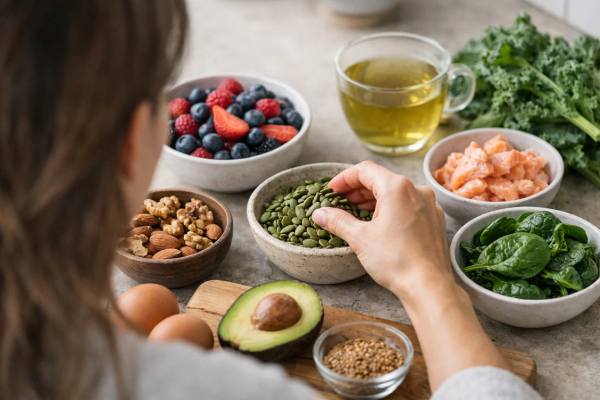
The idea of “blocking DHT with food” is appealing because it sounds gentle, natural, and within your control. And there is a real biological target behind the trend: dihydrotestosterone (DHT) can gradually shrink susceptible scalp follicles, especially in androgenetic alopecia (male and female pattern hair loss). The problem is scale. The amount of DHT suppression needed to meaningfully change follicle behavior is difficult to achieve through everyday foods alone, and many popular claims come from test-tube studies that do not translate cleanly to human scalps.
Still, diet is not irrelevant. The right eating pattern can support hair by improving insulin sensitivity, lowering inflammatory “background noise,” and reducing common nutrient bottlenecks that amplify shedding. In other words, food is rarely a stand-alone DHT solution—but it can be a strong foundation and a smart “adjunct” alongside proven treatments. This article separates what is plausible from what is overpromised, and shows practical alternatives that work.
Core Points
- DHT-blocking foods are unlikely to match medication-level DHT reduction, but some may offer small, supportive effects.
- The most reliable diet wins for hair come from metabolic stability, adequate protein, and anti-inflammatory patterns—not “one magic food.”
- Evidence is strongest for established treatments; foods and botanicals are best framed as adjuncts with modest expectations.
- Over-restricting food groups to “lower DHT” can backfire by increasing nutrient gaps and shedding.
- A realistic approach is to build a supportive diet for 12–16 weeks while using scalp-directed therapies when indicated.
Table of Contents
- DHT and follicle sensitivity basics
- What food can and cannot change
- Foods with limited DHT evidence
- Diet patterns that support hair
- Best alternatives to food blockers
- Building a realistic hair plan
DHT and follicle sensitivity basics
DHT is a potent androgen made from testosterone through the enzyme 5-alpha-reductase. It is not inherently “bad”—it has normal roles in development and physiology—but in people with genetic susceptibility, DHT can gradually change how scalp follicles behave. Over time, growth phases shorten, each new hair becomes finer, and density looks reduced in classic patterns (temples and crown in many men; widening part and diffuse crown thinning in many women).
A key point that food trends often miss is that androgenetic alopecia is driven by follicle sensitivity, not simply “having DHT.” Two people can have similar hormone levels while one loses hair and the other does not. That difference comes down to genetics, local enzyme activity in the scalp, androgen receptor signaling, and the follicle’s inflammatory environment.
It also helps to separate two hair problems that can look similar:
- Miniaturization: A slow shift toward finer hairs over months to years. This is where DHT plays a central role.
- Shedding: A faster increase in hair fall (often 6–12 weeks after a trigger like illness, stress, diet change, or medication shifts). Shedding can stack on top of pattern thinning and make it feel sudden.
Because hair changes lag behind biology, any strategy aimed at DHT has to be judged on longer timelines. A new approach that truly helps usually shows its earliest signs in 8–12 weeks, with clearer changes around 4–6 months.
So where do “DHT blockers” fit? There are two levers:
- Reduce conversion of testosterone to DHT (5-alpha-reductase inhibition).
- Reduce androgen signaling in the follicle (through systemic or local pathways).
Foods and plant compounds sometimes show these effects in laboratory settings, but getting a clinically meaningful scalp effect from diet alone is difficult. That is why many people do best with a combined approach: build a supportive diet and use evidence-based hair treatments if the pattern fits. If you want a broader overview of treatment options that target the DHT pathway more directly, this guide to male-pattern hair loss options lays out the typical evidence ladder.
What food can and cannot change
If you have ever seen a list of “top DHT-blocking foods,” the claims often sound decisive: eat X, block 5-alpha-reductase, and stop hair loss. The reality is more nuanced, and that nuance matters if you want results without unnecessary restriction.
What food can plausibly influence
- Inflammatory tone: Diet patterns that reduce chronic low-grade inflammation can make the scalp less reactive and may reduce the “amplifier effect” that worsens shedding and sensitivity.
- Insulin resistance and metabolic signaling: In some people—especially those with PCOS or metabolic risk—improving insulin sensitivity may reduce androgen production and improve SHBG, shifting free androgen exposure.
- Nutrient sufficiency: Hair is a protein fiber produced by a high-turnover follicle. If you are under-eating protein, iron, zinc, or calories overall, you may be dealing with a nutrition bottleneck that makes any “DHT strategy” ineffective.
What food is unlikely to do reliably
- Deliver medication-level DHT suppression at the follicle. Many plant compounds show 5-alpha-reductase inhibition in test tubes, but the concentrations used are often far above what you reach in human tissue through normal eating. Digestion, liver metabolism, and limited absorption can shrink the effect substantially.
- Reverse established miniaturization on its own. Once follicles have been miniaturizing for years, the most reliable improvements usually come from therapies that directly affect follicle cycling and androgen signaling, not just from small systemic shifts.
- Work quickly. Even a meaningful metabolic improvement does not instantly change hair density. Hair is a delayed-readout tissue.
A useful mental model is “dose and destination.” A compound can be interesting on paper, but to matter for hair it must reach the scalp in a meaningful dose, consistently, for months. That is a high bar for many foods.
Another pitfall is supplement stacking disguised as “food.” Many lists quietly slide into high-dose extracts, powders, and capsules. Those are no longer “dietary choices”; they are interventions with side effects and interactions. If you are tempted to stack multiple “DHT blockers” in supplement form, it is worth reviewing common supplement red flags so you can spot unrealistic claims and overlapping ingredients.
The most productive way to use “DHT-blocking foods” is not as a cure, but as part of a hair-supportive diet that reduces triggers and supports proven treatment adherence. When you frame it this way, you can keep your expectations realistic—and avoid the common cycle of trying extreme food rules, losing weight quickly, and triggering more shedding.
Foods with limited DHT evidence
Some foods contain phytochemicals that may influence 5-alpha-reductase activity, androgen signaling, or inflammatory pathways. The evidence, however, is uneven: often preclinical, sometimes based on small human studies, and rarely specific to scalp DHT levels. Think of this section as “plausible adjuncts,” not guaranteed regrowth tools.
Foods and food-adjacent options that come up most often
- Pumpkin seeds and pumpkin seed oil: Pumpkin seeds contain plant sterols (including beta-sitosterol) and other compounds that are sometimes discussed in androgen pathways. Human data are limited and typically involve oil or extracts rather than casual intake, but many people choose pumpkin seeds as a low-risk addition to a hair-supportive diet. If you want the nuance on dosing, expectations, and safety for the oil form, this pumpkin seed oil guide is a helpful companion.
- Green tea: Green tea polyphenols (especially EGCG) are studied for antioxidant and anti-inflammatory effects, and they are sometimes discussed in relation to 5-alpha-reductase activity. Most hair-specific evidence is not robust enough to promise results, but replacing sugary drinks with green tea can still support metabolic goals.
- Soy foods: Isoflavones are sometimes framed as “hormone modulating.” They may influence hormone metabolism and inflammatory pathways, but the hair relevance is indirect and highly individual. Whole soy foods are generally a better bet than high-dose isolates if your goal is a gentle dietary approach.
- Flaxseed: Flax contains lignans and fiber that support gut and metabolic health. Its DHT-specific evidence for hair is limited, but it can be useful for regularity, lipid profiles, and overall dietary quality.
- Mushrooms: Certain mushrooms have been studied in lab contexts for enzyme effects, but translating that to dietary impact is uncertain. Still, they are nutrient-dense and low calorie, making them an easy “add” without risk of overpromising.
How to use these foods without turning your diet into a project
Instead of chasing a long list, choose one or two additions you can do consistently:
- Add 1–2 tablespoons of ground flax to yogurt or oats a few days per week.
- Swap one sweet drink daily for unsweetened tea.
- Add a small serving of pumpkin seeds to salads or snacks several times per week.
- Build two plant-protein meals weekly (tofu, tempeh, edamame, lentils), mainly for overall protein quality.
Safety and reality checks
“Natural” can still be problematic if you overdo it. Concentrated extracts may interact with medications (blood pressure, glucose, anticoagulants) and can cause digestive upset. Food allergies also matter—especially with seeds and nuts. If you notice new scalp itch or skin sensitivity after starting a “hair food” routine, consider whether the issue is a new product or a new diet item rather than assuming the hair loss itself is worsening.
Used wisely, these foods can support the bigger goal: a stable, anti-inflammatory, nutrient-sufficient pattern that makes hair more resilient over time.
Diet patterns that support hair
If you want diet to help hair, the strongest evidence-based move is not a single “DHT blocker.” It is a pattern that supports follicles on three fronts: stable energy, adequate protein and micronutrients, and lower inflammatory load.
1) Prioritize protein consistency, not perfection
Hair is built from protein. When total intake is low—especially during dieting, appetite loss, or chronic stress—the body reallocates resources away from hair. A practical target is to include a protein anchor at every meal:
- Breakfast: eggs, Greek yogurt, tofu scramble, or a measured protein smoothie
- Lunch: chicken, tuna, beans and rice, lentil soup, or tempeh bowls
- Dinner: fish, lean meat, legumes, or soy-based proteins
2) Stabilize blood sugar and insulin signaling
For people with insulin resistance (including many with PCOS), metabolic stability can reduce hormonal pressure that worsens androgen-driven thinning. You do not need extreme carbohydrate restriction; you need consistency:
- Pair carbohydrates with protein and fiber
- Emphasize minimally processed carbs (beans, oats, fruit, potatoes, whole grains)
- Avoid frequent “sugar spikes” that drive cravings and inconsistent intake
3) Reduce inflammatory triggers that keep the scalp reactive
Some people notice that hair and scalp behave better when ultra-processed foods, added sugars, and frequent alcohol are reduced—mainly because sleep improves, inflammation calms, and nutrient density rises. If you want a deeper dive into how sugar-heavy patterns can influence inflammation and scalp comfort, this scalp inflammation and diet guide breaks it down in a practical way.
4) Include fats that support barrier function
Omega-3 fats are not “DHT blockers,” but they can support inflammatory balance and skin barrier function. A practical rhythm is two servings of fatty fish per week, or consistent plant sources (chia, flax, walnuts) if you do not eat fish.
5) Avoid the hidden hair-loss diet trap
The most common diet mistake in the “DHT foods” space is excessive restriction. Cutting out whole food groups, avoiding fats, or dramatically lowering calories can trigger shedding even if you are “doing everything right” for DHT. Hair is sensitive to rapid change. A stable diet that you can maintain usually beats an aggressive plan that collapses in three weeks.
If your goal is to support hair growth, treat diet as a long game: steady inputs, stable weight, and a scalp that is calmer because your system is not constantly in recovery mode.
Best alternatives to food blockers
If you have true androgenetic alopecia, the most effective “DHT strategy” is usually not dietary. It is a combination of scalp-directed therapies and, when appropriate, anti-androgen approaches guided by a clinician. Foods can support the foundation, but they rarely replace these options.
Evidence-based options that directly address DHT-driven thinning
- 5-alpha-reductase inhibitors (most direct DHT reduction): Finasteride and dutasteride reduce conversion of testosterone to DHT. They have the most consistent evidence for slowing progression and improving density in appropriate candidates, especially men. Side effects and risk tolerance matter, and decision-making should be individualized. If you want a clear, balanced overview of benefits and potential risks, this finasteride guide is a useful starting point.
- Topical finasteride: For some people, topical forms are appealing because they aim to reduce systemic exposure while targeting the scalp. They are not “side-effect free,” but they may be an option to discuss if oral therapy is not a fit.
- Topical minoxidil: Minoxidil does not block DHT, but it supports follicle cycling and helps hairs grow longer and thicker. Many people get the best outcomes when a DHT-focused approach is paired with minoxidil because the mechanisms complement each other.
Helpful adjuncts when scalp inflammation is part of the picture
- Medicated anti-dandruff shampoos when indicated: If you have dandruff-type scaling or seborrheic dermatitis, treating it can reduce scalp inflammation that worsens shedding and discomfort.
- Low-level laser therapy: Can be helpful for some people as an adjunct, particularly when used consistently.
- Procedural options: PRP, microneedling protocols, and hair transplantation can play a role depending on diagnosis, expectations, and budget.
Best-fit thinking: match the tool to the pattern
- If the main issue is a widening part and progressively finer hairs, you likely need a follicle-focused plan, not just diet tweaks.
- If the main issue is sudden shedding after stress, illness, or dieting, the priority may be correcting triggers and nutrient gaps rather than pursuing DHT reduction.
The most important “alternative” is diagnostic clarity. A real plan starts with naming the hair-loss type and choosing interventions that match it. Food can be supportive, but proven therapies are often what protect follicles from continued miniaturization.
Building a realistic hair plan
If you want to include DHT-focused foods without getting trapped in hype, a structured plan keeps you grounded and makes progress easier to measure.
Step 1: Confirm what you are treating
Look for pattern clues: widening part, crown thinning, and progressively finer hairs in the affected zone. If you are also shedding heavily, ask what changed 6–12 weeks earlier (dieting, stress, illness, hormones, medications). If there is scalp pain, thick scale, or patchy loss, prioritize evaluation rather than self-experimentation.
Step 2: Choose a small set of diet actions you can keep
A realistic “hair-supportive” diet plan for 12–16 weeks might include:
- Protein at every meal (even if modest).
- Two omega-3-rich meals per week, or daily plant sources.
- One “adjunct” food habit (pumpkin seeds, flax, or unsweetened tea).
- A reduction in ultra-processed snacks and added sugars, mainly to stabilize appetite and sleep.
This is enough to matter without making your diet fragile.
Step 3: Address common bottlenecks early
If hair loss is significant or persistent, guessing can waste months. Common lab and clinical checks can clarify whether nutrient deficiencies, thyroid shifts, or other factors are contributing to shedding. For a practical overview of what is commonly tested and why, see hair-loss blood tests and what they mean.
Step 4: Pair diet with scalp-directed therapy when appropriate
If you have androgenetic alopecia, consider a proven scalp-directed treatment rather than waiting to “see if food works.” Food can support your baseline health, but it is usually not strong enough to stop miniaturization on its own.
Step 5: Measure progress like a clinician
- Monthly photos in the same lighting and part
- A simple wash-day shedding rating (low, medium, high)
- Notes on scalp itch, oiliness, and flaking patterns
- A reassessment point at 12–16 weeks
Step 6: Know when to escalate
If you have no improvement in shedding triggers, scalp comfort, or hair appearance after 16 weeks—and especially if thinning continues—shift from “diet experiments” to a more direct treatment plan with a clinician. That is not failure; it is efficient care.
A realistic conclusion is also a hopeful one: diet can support hair meaningfully when it stabilizes your system, but the strongest DHT-focused outcomes typically come from therapies designed to act on the follicle.
References
- Effects of dietary supplements on androgenetic alopecia: a systematic review and network meta-analysis 2026 (Systematic Review)
- Treatment of Androgenetic Alopecia: Current Guidance and Unmet Needs 2023 (Review)
- An Overview of Commonly Used Natural Alternatives for the Treatment of Androgenetic Alopecia, with Special Emphasis on Rosemary Oil 2024 (Review)
- Efficacy and safety of topical finasteride spray solution for male androgenetic alopecia: a phase III, randomized, controlled clinical trial 2021 (RCT)
Disclaimer
This article is for educational purposes only and does not provide medical advice, diagnosis, or treatment. Hair thinning and shedding can have many causes, including androgenetic alopecia, thyroid disorders, nutrient deficiencies, inflammatory scalp conditions, autoimmune disease, medication effects, and stress-related shedding. Dietary changes and supplements can have risks, including unintended calorie restriction, nutrient imbalance, allergy, digestive upset, and interactions with medications. If you have sudden or severe shedding, patchy hair loss, scalp pain, rash, signs of infection, or ongoing thinning, seek evaluation from a qualified healthcare professional. Before starting any supplement regimen or making major dietary changes—especially if you are pregnant, breastfeeding, have a medical condition, or take prescription medications—consider discussing your plan with a clinician.
If you found this helpful, consider sharing it on Facebook, X (formerly Twitter), or your preferred platform so others can make clearer, safer choices about DHT claims and hair-loss care.