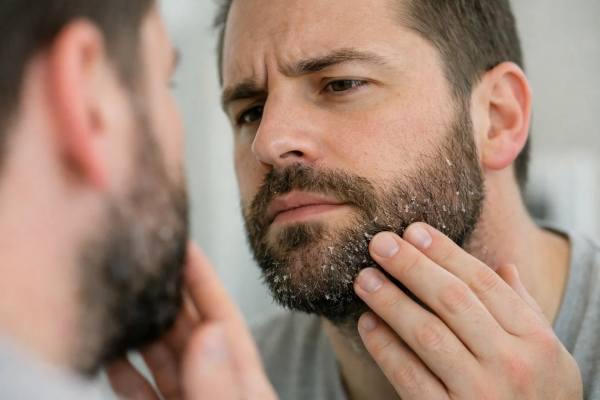
Beard “dandruff” can feel deceptively simple—flakes in facial hair should mean dry skin, right? In practice, beard flakes have several possible causes, and the right fix depends on which one you’re dealing with. A beard traps skin cells, oil, product residue, and moisture close to the skin. That makes flaking more visible, but it can also make irritation and inflammation easier to miss until itching, redness, or patchy roughness becomes hard to ignore.
The reassuring part is that most beard dandruff improves with a targeted routine. The key is to stop treating every flake the same. Dryness responds to barrier support. Seborrheic dermatitis (seb derm) responds best to antifungal strategies and flare control. Contact reactions improve when the trigger product is removed. And infections like tinea barbae require medical care rather than more oils and scrubbing.
This guide breaks down the common causes, the signs that point to seb derm, and a step-by-step plan you can use safely at home—plus clear reasons to see a clinician.
Key Takeaways
- Beard flakes are often caused by seb derm, dryness, or product irritation, and each responds to a different routine.
- Greasy scale with redness and recurring itch points more toward seb derm than simple dry skin.
- Antifungal washes used correctly (contact time and frequency) are the backbone of seb-derm beard care.
- Heavy beard oils and fragranced balms can worsen flaking by trapping irritants or feeding buildup in sensitive skin.
- If you have painful bumps, patchy hair loss, pus, or no improvement after 3–4 weeks, get evaluated for infection or other conditions.
Table of Contents
- Beard dandruff: what you are seeing
- Common causes and look-alikes
- When it is seb derm
- Treatments that actually work
- Safer beard habits between flares
- When to see a dermatologist
Beard dandruff: what you are seeing
“Dandruff” is not a diagnosis by itself. It is a description: visible flakes or scale that shed from the skin and collect in hair. In a beard, those flakes are more noticeable because facial hair acts like a net. A small amount of flaking that would vanish on a clean-shaven face can cling to coarse beard hairs and show up on collars, masks, and dark shirts.
Beard dandruff usually comes with one or more of these sensations:
- Itching that peaks later in the day or after sweating
- Tightness or stinging after washing
- Rough patches under the beard that feel thicker than surrounding skin
- A “dusty” look at the roots, especially along the jawline, chin, and mustache area
It helps to know what the flakes are made of. Most are a mix of dead skin cells, oil (sebum), and sometimes product residue. The ratio changes the appearance:
- Dry flakes are typically small, white, and powdery.
- Greasy scale tends to be larger, slightly yellow or off-white, and sticks to the skin or hair base.
- Thick plaques are more adherent and may come with redness or sharp borders.
The beard area is also a high-friction, high-occlusion zone. Shaving edges, mask straps, collars, and frequent touching can irritate the skin barrier. Add sweat from exercise or a warm climate, and you get the ideal conditions for flaking to become persistent.
A common mistake is “scrub harder and oil more.” Scrubbing can inflame the skin and create more scale. Heavy oils can temporarily make flakes less visible while quietly feeding buildup, trapping sweat, or worsening yeast-driven inflammation in susceptible people. The better approach is to identify the most likely driver and use a routine that addresses it directly.
If you take only one practical point from this section, let it be this: beard dandruff is often less about hygiene and more about skin ecology. Your goal is a calm, balanced surface—clean enough to remove scale and residue, but gentle enough to let the barrier recover.
Common causes and look-alikes
Most beard flaking falls into a few categories. The challenge is that the categories can overlap, and one problem (like dryness) can trigger another (like irritation from over-washing).
1) Dry skin and barrier disruption
This is common in winter, with hot showers, or when you use a harsh cleanser on the face. The skin feels tight, flakes are fine and powdery, and redness is mild or absent. Overcorrecting with frequent exfoliation or strong “deep-cleaning” washes often makes it worse.
2) Seborrheic dermatitis (seb derm)
Seb derm is one of the most frequent causes of persistent beard flaking. It favors oily areas and often produces itch plus greasy scale. Because it tends to recur, people may feel like it “never fully goes away,” only quiets down and flares again.
3) Irritant or allergic contact dermatitis
Beard products are a common trigger: fragranced oils, essential oils, balms, waxes, dyes, and even “natural” botanicals. Irritant reactions can feel like burning or tightness. Allergic reactions can appear as itchy rash, scaling, and sometimes swelling—often at the beard edge, mustache line, or neck where product spreads. If you need a clear way to tell these apart, how to distinguish allergy from irritation offers a practical symptom-based approach that also applies to facial hair products.
4) Psoriasis
Psoriasis can affect the beard area, especially if you also have scalp or eyebrow involvement. Scale tends to be thicker, more adherent, and the skin underneath may look sharply red. It can be itchy, but it is often more about soreness or tightness. Beard psoriasis may also coexist with seb derm, creating a “sebopsoriasis” pattern.
5) Tinea barbae (fungal infection of the beard)
This is less common but important. It can look like scaly patches, broken hairs, painful bumps, or a tender, swollen area. Some cases resemble bacterial folliculitis. If hairs come out easily and the area is inflamed or pustular, consider infection rather than dandruff.
6) Folliculitis and shaving-related irritation
Ingrown hairs, friction, and close shaving at the beard line can inflame follicles. That can cause flaking around follicles, tenderness, and small bumps.
A quick self-check can narrow the likely category:
- Mainly tight and flaky, worse after washing: dryness or irritant dermatitis.
- Greasy scale, recurring itch, worse with stress or cold weather: seb derm.
- Sharp rash after a new oil or balm, burning or swelling: contact dermatitis.
- Painful bumps, pus, broken hairs, tender swelling: infection or folliculitis.
If you’re unsure, treat the scalp and beard like sensitive facial skin: gentle cleansing, avoid heavy fragrance, and observe how symptoms respond over 10–14 days before escalating.
When it is seb derm
Seb derm is a chronic, relapsing inflammatory condition that tends to affect areas rich in oil glands: scalp, eyebrows, sides of the nose, behind the ears—and, for many people, the beard. It is strongly associated with a yeast called Malassezia, which lives on normal skin but can trigger inflammation in susceptible individuals. In a beard, seb derm often hides in plain sight because hair masks the redness while highlighting the scale.
Signs that lean toward seb derm
- Flakes look greasy, slightly yellow, or clump at the base of hairs
- Itch is a major feature, especially after sweating or wearing a mask
- Redness appears in patches under the beard or along the mustache line
- Symptoms improve with medicated washes, then return when you stop
- You also have scalp flaking, eyebrow flaking, or scaling around the nose
Seb derm often flares with predictable triggers:
- Cold, dry weather and indoor heating
- Stress and sleep disruption
- Illness, travel, or seasonal changes
- Increased sweat and occlusion (helmets, masks, high-collar clothing)
- Heavy oils, waxes, or products that trap residue at the skin surface
People sometimes try to “fix the pH” of their beard skin with acidic rinses or strong soaps. In reality, seb derm is not a simple pH problem, but the skin’s surface balance does matter. Over-cleansing can disrupt the barrier and invite more irritation, while over-oiling can increase buildup and make flares harder to control. If you want a deeper explanation of how oil, flakes, and surface balance interact, why pH and oil can influence flaking and itch offers a useful framework that translates well to the beard area.
What seb derm is not
Seb derm is not a sign you are “unclean.” It is not caused by poor hygiene, and it does not require harsh scrubbing. It also is not the same as a dermatophyte infection (tinea), even though both can scale. The treatments differ, and using the wrong approach can prolong symptoms.
A realistic expectation
Seb derm is usually managed, not “cured.” Many people achieve long stretches of comfort with a maintenance routine—meaning they treat more actively during flares and keep a lighter anti-flare routine between them. The goal is fewer flare days, less itch, and minimal visible scale, not a promise that it will never return.
Treatments that actually work
The best treatment plan depends on the cause, but you can build a smart routine by thinking in three steps: remove scale and residue, calm inflammation, and prevent relapse. For beard dandruff that is likely seb derm, antifungal strategies usually do the heavy lifting.
Step 1: Cleanse with purpose, not intensity
- Wash the beard area with lukewarm water and a gentle cleanser most days if you sweat or wear masks.
- Avoid very hot water, harsh soaps, and aggressive scrubbing, which worsen irritation and scaling.
Step 2: Use an antifungal wash correctly (for seb derm patterns)
Anti-yeast ingredients used for scalp seb derm can be used carefully on the beard skin too. Common options include ketoconazole, selenium sulfide, ciclopirox, and zinc pyrithione. Technique matters more than brand:
- Apply a small amount to the beard roots and the skin underneath.
- Massage lightly with fingertips to reach the skin.
- Leave it on for 2–5 minutes (shorter if sensitive).
- Rinse thoroughly and pat dry.
A typical flare routine is 2–3 times per week for 2–4 weeks, then taper to once weekly or every other week as maintenance. If your skin is easily irritated, start with once weekly and build up.
Step 3: Calm inflammation during flares
When redness and itch are strong, antifungal therapy alone may not feel fast enough. Short-term anti-inflammatory support can help:
- Over-the-counter low-strength hydrocortisone may be used briefly on the skin (not indefinitely), especially for intense itch.
- Prescription options like topical calcineurin inhibitors may be recommended for facial areas when longer-term control is needed.
Use caution: overusing topical steroids on the face can thin skin and cause rebound flares. Keep courses short and clinician-guided if symptoms persist.
Step 4: Manage scale without damaging the barrier
Thick scale responds to gentle softening and controlled exfoliation, not scraping. If you need help lifting scale, a mild keratolytic can be useful. Salicylic acid is a classic option, but it can irritate sensitive facial skin if overused. If you want to understand frequency and irritation thresholds, how to use salicylic acid for flakes safely provides principles you can adapt to lower-strength face products.
Step 5: Moisturize strategically
After medicated washing, apply a light, non-greasy moisturizer to the skin under the beard. This reduces rebound dryness and helps the barrier recover. Heavy oils can feel soothing, but in seb-derm-prone skin they may worsen buildup for some people, especially if applied daily at the roots.
If your symptoms are more consistent with dryness or irritation (powdery flakes, tightness, burning), start with barrier support and remove fragranced products before using stronger medicated approaches.
Safer beard habits between flares
Once you get flaking under control, the next challenge is keeping it from returning. Maintenance is not about constant medicated washing. It is about reducing the conditions that allow scale, irritation, and yeast-driven inflammation to build again.
1) Keep the beard skin clean enough to breathe
- If you use styling waxes, heavy balms, or sunscreen that collects in the beard, wash daily with a gentle cleanser and do a more thorough cleanse a few times per week.
- After workouts, rinse promptly and dry the beard well. Leaving sweat in the beard increases irritation and itch.
2) Dry thoroughly, especially in dense beards
Moisture trapped near the skin can worsen itching and scaling. Pat dry with a towel and consider a low-heat dryer setting if your beard stays damp for a long time. The goal is comfort, not heat styling.
3) Be cautious with beard oils and essential oils
Many beard oils contain fragrance compounds and essential oils that can irritate or trigger allergy. Even “clean” formulas can be problematic if you are sensitive. If you want to use an oil, apply a small amount to the hair shafts rather than saturating the skin, and pause use during flares.
4) Reduce friction and micro-irritation
- Avoid frequent scratching or “flake picking,” which creates micro-injury and prolongs inflammation.
- Clean brushes and combs so you are not reapplying oil-and-scale residue onto freshly washed hair.
5) Support the barrier with the right moisturizer
A barrier-supportive moisturizer reduces tightness and helps skin tolerate necessary cleansing. Ingredients like ceramides, glycerin, and niacinamide can be helpful for dry, flaky skin under a beard. If you want a practical explanation of barrier support strategies, how ceramides support a dry, flaky barrier covers the core concept in a way that also applies to facial hair skin.
6) Use a simple maintenance schedule
For seb derm patterns, many people do well with:
- A gentle daily cleanser most days
- An antifungal wash once weekly (or every other week) for prevention
- Short flare protocol (2–3 times weekly) only when itch and scale rise again
The biggest maintenance mistake is bouncing between extremes: doing nothing until a flare is severe, then over-scrubbing and over-treating. A steady, moderate routine tends to keep the skin calmer and the beard more comfortable.
When to see a dermatologist
Most beard dandruff improves with a thoughtful routine. The reason to seek care is not “because you have flakes,” but because certain patterns suggest infection, inflammatory disease, or a reaction that needs targeted treatment.
Get evaluated promptly if you have:
- Painful, swollen areas or deep tender nodules in the beard
- Pus-filled bumps, crusting, or draining lesions
- Patchy hair loss within the beard, especially if hairs break easily
- Fever, swollen lymph nodes, or systemic symptoms
- Thick, sharply bordered plaques that do not respond to antifungal washing
- Significant facial swelling, oozing, or a rapidly spreading rash after a new product
These signs raise concern for conditions like tinea barbae, bacterial folliculitis, severe contact dermatitis, or psoriasis. Tinea barbae is particularly important because it often requires oral antifungal treatment and can scar if diagnosis is delayed.
Seek care if home treatment is not working
If you have tried a consistent plan for 3–4 weeks—gentle cleansing, a properly used antifungal wash, and avoiding trigger products—without meaningful improvement, it is time to reassess the diagnosis rather than intensify the same approach.
What a clinician may do
A dermatologist may:
- Examine the beard skin closely and check other seb derm zones (scalp, eyebrows, nose folds)
- Perform a quick scraping or test to look for fungal elements in suspected tinea
- Consider bacterial culture if pustules are present
- Recommend patch testing if allergic contact dermatitis is suspected
- Prescribe a structured regimen, such as topical antifungal creams, short-course anti-inflammatory therapy, or oral antifungals when appropriate
If itching is a major symptom, it can help to review broader itch red flags so you know when symptoms suggest more than “just dryness.” when itch signals a condition that needs evaluation provides a useful checklist that can be applied to facial hair skin as well.
How to prepare for your appointment
Bring:
- A list (or photos) of all beard products used in the last 2–3 months
- Notes on what improves or worsens symptoms (weather, stress, mask use, workouts)
- Photos of the beard area during a flare, taken in natural light
When you get the diagnosis right, treatment becomes simpler, not more complicated. The goal is durable control with the least irritation—not an endless cycle of scrubbing, oiling, and guessing.
References
- An Overview of the Diagnosis and Management of Seborrheic Dermatitis – PMC 2022 (Review)
- Seborrheic Dermatitis Revisited: Pathophysiology, Diagnosis, and Emerging Therapies—A Narrative Review – PMC 2025 (Narrative Review)
- Seborrheic Dermatitis: Exploring the Complex Interplay with Malassezia – PMC 2025 (Review)
- Tinea Barbae – StatPearls – NCBI Bookshelf 2024 (Clinical Overview)
Disclaimer
This article is for educational purposes and does not provide medical advice, diagnosis, or treatment. Beard flaking and itching can be caused by dryness, seborrheic dermatitis, contact reactions, psoriasis, or infections that may require prescription therapy. Do not start or continue potent topical steroids on facial skin without medical guidance, and avoid delaying care if you have painful swelling, pus, fever, patchy hair loss, or symptoms that worsen despite appropriate home treatment. If you are immunocompromised, have diabetes, or take medications that affect immunity, seek prompt evaluation for new or severe beard-area rashes.
If this guide helped you understand beard dandruff more clearly, consider sharing it on Facebook, X (formerly Twitter), or your preferred platforms so others can manage flaking safely and know when to seek care.