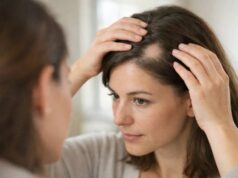
Creatine is one of the most studied performance supplements, and it has a well-earned reputation for helping with strength, power, and training volume. Yet for years, a persistent worry has followed it: “Does creatine cause hair loss?” The fear usually centers on DHT, a more potent form of testosterone that can accelerate pattern thinning in genetically susceptible follicles. Because hair changes can feel personal and irreversible, even a small rumor can shape decisions for years.
This article unpacks what “DHT-related hair loss” actually means, where the creatine rumor started, and what newer human research suggests today. You’ll learn how to separate normal shedding from true pattern thinning, how training changes and diet shifts can quietly affect hair, and how to make a practical decision if you are concerned—without panic, and without ignoring real warning signs. The goal is clarity: keep the benefits of training support while protecting long-term hair and scalp health.
Key Insights
- Current human evidence does not strongly support creatine as a direct cause of measurable hair loss in most users.
- DHT matters mainly for genetically sensitive follicles, so family history and pattern changes deserve more attention than drain hair alone.
- Rapid shedding after starting creatine often overlaps with training stress, diet changes, illness, or weight shifts rather than the supplement itself.
- If you are worried, use a simple 8–12 week plan: document baseline, adjust one variable, and track pattern and shedding separately.
- Standard creatine dosing (consistent and conservative) is usually easier on the body than repeated loading cycles and frequent product switching.
Table of Contents
- Where the creatine hair loss myth started
- DHT biology and follicle sensitivity
- What newer studies show and do not show
- Who should be cautious and how to monitor
- What to do if shedding begins
- Safe creatine use without hair panic
Where the creatine hair loss myth started
The creatine-hair loss concern did not come from decades of dermatology research. It largely grew from a narrow hormonal question that got translated into a much bigger promise—“this will make you bald”—and then amplified through gyms, forums, and social media. Understanding that origin matters, because it reveals why the rumor feels convincing even when your lived experience is more complicated.
Why the story spreads so easily
Hair shedding is naturally variable. People notice more hair in the shower after starting a new routine because they are looking for it. Creatine is also often started at the same time as other big changes: heavier training blocks, increased protein intake, altered sleep, caloric deficits, cutting phases, or new supplements stacked together. When hair looks or feels different during that window, it’s tempting to assign the cause to the one “new” thing you can name.
Wash-day and “new routine” shedding can be misleading
Shedding is part of the normal hair cycle. Hairs that are already in a resting phase can be dislodged by washing, brushing, or simply changing styling habits. If you wash less often or you style in a way that holds shed hairs in place, wash day can look dramatic without representing a true increase in daily loss. If you want a clearer mental model for timing and why hair changes often lag behind triggers, the hair growth cycle overview can help you interpret what you see without spiraling.
The DHT leap: from “possible shift” to “guaranteed baldness”
DHT is a real driver of androgen-sensitive pattern thinning in people with genetic susceptibility. The leap happens when “DHT can contribute to pattern hair loss in predisposed follicles” turns into “anything that touches DHT causes hair loss for everyone.” That is not how biology works. Hormones operate in ranges, effects vary by tissue, and follicles respond differently based on genetics, age, and local scalp factors.
Why anecdotes can feel persuasive but still mislead
Anecdotes matter because they reflect real experiences. They just do not isolate variables well. Someone may start creatine and begin shedding; someone else may start creatine and notice no change; another may have pattern thinning progress over time and blame the supplement. Without baseline photos, timing notes, and a plan to test one variable at a time, it is hard to distinguish coincidence from causality.
The best response to the myth is not dismissal. It is a structured way to look at risk, patterns, and timelines—so you can make a confident choice either way.
DHT biology and follicle sensitivity
DHT is often treated like a villain hormone, but it is more accurate to see it as a “signal” that certain follicles interpret differently. DHT is created when the enzyme 5-alpha-reductase converts testosterone into dihydrotestosterone. DHT binds strongly to androgen receptors. In genetically susceptible scalp regions, this signaling can shorten the growth phase of hair and gradually miniaturize follicles—turning thicker terminal hairs into finer, shorter hairs over time.
Why DHT matters for some people and not others
Two people can have similar hormone levels and very different hair outcomes. The key variable is follicle sensitivity, which is influenced by genetics and local scalp biology. That is why pattern thinning runs in families and often follows predictable distributions (temples, hairline, and crown in many men; diffuse crown thinning with preserved frontal hairline in many women).
This matters for creatine anxiety: even if a supplement caused a small hormonal fluctuation, it would not automatically translate into visible hair loss in someone whose follicles are not sensitive to androgen signaling.
Pattern thinning is slow and patterned, not sudden and uniform
Androgenetic changes usually progress gradually. You may notice:
- A widening part or scalp show-through at the crown
- Temple recession or a thinning hairline
- Shorter, finer hairs replacing longer, stronger hairs in specific zones
- A slower return of density after shedding episodes
By contrast, sudden, diffuse shedding tends to be a different process, often tied to physiologic stress, illness, or major lifestyle change rather than androgen-driven miniaturization.
What DHT-targeted hair care is actually about
DHT-focused therapies do not “fix” hair overnight. They reduce the androgen signal’s impact on sensitive follicles, buying time and preserving density. If you want a broad overview of what treatment pathways exist for pattern thinning (and where they fit in real-life routines), male pattern baldness treatment options offers useful context without requiring you to jump into medication decisions immediately.
A more realistic way to think about the creatine question
The practical question is not “Can creatine change hormones at all?” It is “Is creatine likely to cause a meaningful hormonal change that translates into visible follicle miniaturization in me?” That depends on your genetics, your baseline risk for pattern thinning, and whether what you are noticing is true pattern change versus temporary shedding or breakage.
What newer studies show and do not show
The most helpful shift in this conversation is moving away from “internet certainty” and toward what human evidence can actually support. The newer research landscape includes two important pieces: broader summaries of creatine’s effects on hormones and safety, and more direct testing of hair-related outcomes in controlled settings.
What the best human data tends to agree on
Across controlled research, creatine is consistently associated with performance benefits in high-intensity exercise contexts. When it comes to sex hormones, the overall picture is more restrained than the rumor suggests: large, consistent increases in testosterone or DHT are not a reliable finding across studies. Some studies report small shifts, but “small and inconsistent” is very different from “causes hair loss.”
Why a single study cannot carry the whole claim
Hair loss claims require more than a hormone measurement at one time point. You need outcomes that matter to hair: changes in density, shaft thickness, follicle units, or a clear pattern progression that outpaces normal expectations. You also need enough participants, enough time, and a design that reduces noise. Without those elements, a finding can be interesting but not definitive.
What direct hair-outcome research adds
Newer controlled work that measures hair-related parameters is particularly valuable because it tests the claim more directly. Instead of assuming “DHT change equals hair loss,” it looks at whether supplementation corresponds to measurable hair changes over a defined period. This kind of research is not perfect—hair changes can be slow—but it is closer to the real question most people are asking.
What research still cannot promise
Even strong studies do not prove creatine is “hair-neutral for everyone forever.” They suggest that a dramatic, consistent hair-loss effect is unlikely for most users. Individual variability remains. Someone with active, progressing androgenetic thinning may notice changes around the same time they start creatine simply because that is when they began paying attention—or because training and diet changes shifted stress physiology.
If you are experiencing diffuse shedding, it is worth remembering that training intensity, caloric deficits, and high stress are common triggers. The mechanism and timing often resemble telogen effluvium more than pattern miniaturization. If you want a practical framework for stress-related shedding and recovery expectations, telogen effluvium and stress shedding can help you interpret timing and what “normalizing” looks like.
Who should be cautious and how to monitor
Most people do not need to treat creatine like a hair emergency. But there are groups who benefit from a more deliberate approach—especially if hair changes would cause high distress or if they are already seeing early signs of pattern thinning. “Caution” here does not mean avoidance; it means monitoring with enough structure that you can make a decision based on evidence, not fear.
You may want extra caution if you are already seeing pattern change
Consider a more careful baseline if any of the following apply:
- Strong family history of androgenetic thinning
- A widening part, crown thinning, or progressive temple recession
- A known diagnosis of androgenetic alopecia
- You are postpartum or perimenopausal and already navigating hair-cycle changes
- You have recently started or stopped other hormones or medications
In these cases, hair changes can happen regardless of creatine. The goal is to prevent “false attribution” that distracts from early, effective interventions.
A simple monitoring setup that takes 10 minutes
Before starting (or restarting) creatine, document:
- Hairline and temples (front and both sides)
- Part line and crown (top-down)
- A consistent photo distance, lighting, and hair state (dry, similar styling)
Then repeat every 4 weeks. Photos are not vanity here—they are data. They help you distinguish “I feel thinner” from “my density is changing in a patterned way.”
Pay attention to pattern, not just shedding
A key insight: shedding can be temporary and reversible; follicle miniaturization is slower and patterned. If you notice more hair in the shower but your part and crown look stable, the issue is more likely a shedding episode, breakage, or routine friction. If your crown is progressively more visible, that deserves a different strategy.
If you are considering DHT-focused treatments
Some people use creatine and also pursue medical hair-loss treatments. If you are exploring options that affect androgen signaling, it helps to understand how topical and oral approaches differ in systemic exposure, monitoring, and side effect profiles. topical versus oral finasteride can provide a structured overview so conversations with a clinician are more productive.
When to seek professional input early
If hair loss is patchy, painful, rapidly progressive, or paired with thick scale, don’t troubleshoot alone for months. Those patterns can signal inflammatory or autoimmune processes where early treatment helps protect follicles.
What to do if shedding begins
If you start creatine and then notice more shedding, the most effective response is calm and methodical. The worst response is rapid-fire changes—stopping creatine, starting multiple supplements, changing shampoos, adding oils, and shifting diets all at once. That creates noise, not clarity. A structured plan can help you identify whether creatine is relevant, or whether something else is driving the change.
Step 1: Identify what you are actually seeing
Use two quick checks:
- Root-shed hair often looks like a full-length strand with a tiny club-shaped bulb.
- Breakage looks like short fragments or uneven pieces without a bulb.
Breakage often comes from detangling friction, tight styles, bleach damage, or heat—not from creatine. If you are seeing mostly short pieces, focus on fiber protection first.
Step 2: Look at timing and concurrent changes
Ask what changed in the last 6–12 weeks, not just the last few days:
- Intensified training or new programming
- Calorie deficit, rapid weight loss, or diet restriction
- Poor sleep, high stress, or illness
- Travel, major life change, or surgery
- Starting other supplements (especially multiple at once)
Many shedding episodes start after a delay, which can make the “cause” feel mysterious. If you want a practical checklist for when shedding should be watched versus evaluated, sudden shedding triggers and when to see a doctor can help you decide without guessing.
Step 3: Run a clean, time-limited experiment
If you strongly suspect creatine:
- Hold dose steady (don’t keep changing brands or dosing).
- If anxiety is high, consider a pause for 8–12 weeks while keeping training, diet, and sleep as stable as possible.
- Track photos monthly and note whether shedding declines.
If shedding continues unchanged during a pause, creatine becomes a less likely driver. If shedding decreases dramatically and reliably, you have stronger personal evidence—though you should still consider other variables (training block shifts, seasonal shedding, stress changes).
Step 4: Support the basics that protect follicles
Regardless of creatine, these steps help most shedding patterns:
- Maintain adequate calories and protein (especially during cutting phases)
- Avoid aggressive new hair routines while shedding is active
- Reduce scalp irritation and avoid heavy buildup cycles
- Prioritize sleep consistency for recovery
If shedding is persistent beyond a few months, or if you see clear patterned progression, bring the timeline and photos to a clinician. It makes evaluation faster and more accurate.
Safe creatine use without hair panic
If you want creatine’s training benefits while minimizing worry, the best strategy is consistency and conservative dosing—paired with habits that protect both recovery and hair biology. The goal is not perfection; it’s reducing the number of variables that can masquerade as “supplement-caused hair loss.”
Choose the simplest form and a steady routine
Creatine monohydrate is the most studied form. For most adults, a steady daily approach is easier to tolerate and easier to evaluate than frequent cycling. If you use a loading phase, be aware that it can increase short-term water retention and sometimes gastrointestinal discomfort, which can indirectly affect sleep and stress—two variables that matter for hair.
Hydration and labs: what to know without overreacting
Creatine can raise serum creatinine on lab work because creatinine is part of creatine metabolism. That does not automatically mean kidney damage, but it can confuse interpretation if your clinician is not expecting it. If you have known kidney disease, are on nephrotoxic medications, or have complex medical issues, talk to a clinician before supplementing.
Don’t let a supplement replace fundamentals
Hair is metabolically expensive tissue. When training increases, your nutrition needs often increase too. If creatine helps you train harder, it can indirectly raise the importance of:
- Adequate total calories (especially when you are trying to lean out)
- Adequate protein distributed across the day
- Micronutrients that support recovery and growth
If you want a practical target for protein that supports both training and hair fiber integrity, how much protein supports hair growth can help you set a baseline without extremes.
A balanced decision rule
Creatine may be worth continuing if:
- Your photos show stable hairline and crown
- Shedding is mild or fluctuates without clear progression
- Training benefits are meaningful and the rest of your routine is stable
A pause may be reasonable if:
- Anxiety is high and you want a clean baseline
- You are in the middle of multiple stressors and shedding is intense
- You are noticing patterned change and want to remove “unknowns” while you evaluate
In most cases, the biggest hair risks are not creatine itself but the cluster of changes that often arrives with it: harder training, stricter dieting, less sleep, and more stress. Solve the cluster, and the fear often fades.
References
- Does creatine cause hair loss? A 12-week randomized controlled trial 2025 (RCT)
- Common questions and misconceptions about creatine supplementation: what does the scientific evidence really show? 2021 (Review)
- Safety of creatine supplementation: analysis of the prevalence of reported side effects in clinical trials and adverse event reports 2025
- Effect of creatine supplementation on kidney function: a systematic review and meta-analysis 2025 (Systematic Review)
- Updates in Treatment for Androgenetic Alopecia 2025 (Review)
Disclaimer
This article is for educational purposes only and does not provide medical advice, diagnosis, or treatment. Hair shedding and thinning can have many causes, including genetic pattern thinning, scalp inflammation, hormonal changes, nutrient deficiencies, illness, and medication effects. If you have sudden patchy hair loss, scalp pain, thick scaling, oozing, or rapidly progressive thinning, consult a qualified healthcare professional or dermatologist promptly. If you have kidney disease, are pregnant, are under 18, or take medications that affect kidney function, discuss creatine supplementation with a clinician before use.
If you found this article helpful, consider sharing it on Facebook, X (formerly Twitter), or your preferred platforms so others can separate DHT myths from practical, evidence-informed decisions.