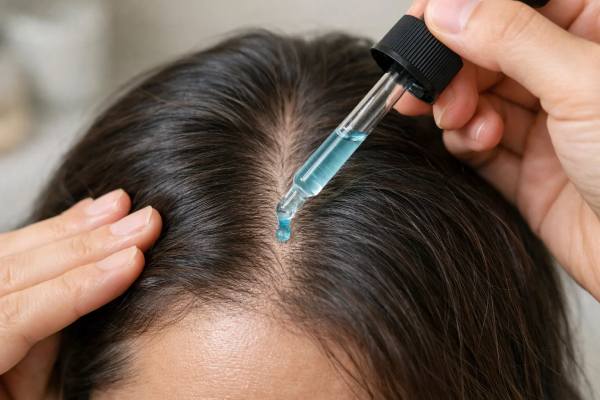
Copper peptides sit in an interesting middle ground between skincare science and hair-care hope. The best-known form, GHK-Cu (a copper-bound tripeptide), is studied for supporting skin repair signals such as collagen organization, barrier recovery, and calmer inflammation—processes that matter on the scalp, too. That overlap is why copper peptide serums are often marketed for thinning hair and “follicle support.”
But copper peptides are not a direct substitute for proven hair-loss treatments, and they are not guaranteed to regrow hair. Their most realistic role is as a supportive scalp treatment: improving how the scalp skin behaves, reducing irritation from harsh routines, and potentially creating a healthier environment for follicles that are already capable of producing hair. If you are considering a copper peptide serum, the key is to choose a stable formula, use it consistently, and judge results with the slow timelines hair requires. This guide explains how GHK-Cu works, how to use it safely, and what outcomes are reasonable to expect.
Top Highlights
- Copper peptide serums may support scalp skin quality and help reduce “stressed scalp” signals that can worsen shedding and fragility.
- Evidence for meaningful regrowth is limited; copper peptides are better viewed as supportive care than a stand-alone hair-loss solution.
- Results, if they happen, are gradual and best evaluated over 12–16 weeks with consistent photos and routine tracking.
- Irritation is the main risk; avoid layering copper peptides with very acidic actives in the same routine and patch test first.
- Apply to the scalp (not the hair lengths) 3–7 nights per week, and simplify other actives until you know your tolerance.
Table of Contents
- What copper peptides are and why GHK-Cu matters
- What the evidence suggests for hair
- How to choose a copper peptide serum
- How to use copper peptides in a routine
- Side effects and who should avoid
- What to expect and how to measure results
What copper peptides are and why GHK-Cu matters
Copper peptides are small protein fragments (peptides) bound to copper ions. The combination is not just a marketing twist: copper is a trace mineral involved in enzymes that help manage oxidative stress and connective tissue structure, while peptides can act as biological “signals” that influence how skin cells behave. The best-known copper peptide is GHK-Cu, short for glycyl-L-histidyl-L-lysine complexed with copper. In skin research, GHK-Cu is discussed for its potential to support a healthier repair response—meaning improved barrier recovery, smoother collagen organization, and more balanced inflammatory signaling.
Why does this matter for hair? Because hair follicles do not live in isolation. They sit inside scalp skin that can be calm and resilient, or irritated and reactive. When the scalp is persistently inflamed—whether from harsh products, friction, buildup, dandruff-type conditions, or allergic reactions—follicles can cycle less predictably. That does not mean every itchy scalp causes hair loss, but scalp stress can become an amplifier: shedding feels worse, new growth feels weaker, and styling becomes harder.
Copper peptides are often positioned as “growth stimulators,” but their most defensible role is scalp environment support:
- Barrier support: A stronger barrier tends to sting less, itch less, and tolerate styling and cleansing better.
- Calmer inflammatory tone: If the scalp is chronically reactive, bringing it back to baseline can reduce the background noise that makes shedding feel relentless.
- Better conditions for follicles: Follicles still need the right hormonal and nutritional conditions to grow hair, but they do best in scalp skin that is not constantly irritated.
It helps to compare copper peptides with other peptide marketing. Many peptide hair products focus on conditioning the fiber or temporarily thickening the hair shaft. Copper peptides are usually aimed at the scalp, closer to skincare than traditional haircare. If you want a broader map of how peptides show up in modern hair products—and which ones act more like cosmetic conditioners versus scalp actives—this overview of peptides used for density and scalp support can help you interpret labels more realistically.
One important nuance: copper peptides are not the same as copper supplements. Topical GHK-Cu is used in very small quantities on the skin. That is why the most common issues are local (irritation, redness) rather than systemic “too much copper.” The goal is not to flood the scalp with copper; it is to apply a stable formula that can support healthy skin behavior over time.
What the evidence suggests for hair
If you are searching for copper peptides “for hair growth,” you will quickly notice a gap between confident marketing and cautious science. The best evidence for GHK-Cu is in skin biology: wound repair signaling, collagen organization, and anti-inflammatory patterns in laboratory or dermatology contexts. Translating that into scalp hair regrowth is not automatic. Hair follicles are complex mini-organs influenced by hormones, genetics, immune signals, nutrition, and local scalp conditions.
A practical way to interpret the evidence is to separate three levels of support:
1) Stronger support: scalp skin quality
Copper peptides are most plausibly helpful when your goal is improving scalp comfort and resilience. If your scalp is reactive—tight, itchy, prone to product sting, or easily inflamed—improving barrier and inflammatory balance may make your overall hair routine easier and less disruptive. This is indirect support: hair improves because the environment is less hostile, not because follicles are being forced into a new growth cycle overnight.
2) Moderate support: shedding reduction in “stressed scalp” patterns
Some people notice less shedding after removing triggers (irritants, aggressive actives, heavy buildup) and then adding a calming, consistent scalp routine. Copper peptide serums may fit here as part of a simplified approach. That said, shedding is often multi-factorial. If the trigger is hormonal change, illness, iron deficiency, or a medication shift, a topical serum alone rarely solves it.
3) Limited support: true regrowth in androgen-driven thinning
If you have pattern thinning (widening part, reduced density at the crown), the primary issue is often follicle miniaturization driven by genetics and androgens. Copper peptides may support scalp quality, but they are not a proven substitute for treatments designed to change follicle cycling or androgen signaling. In practice, copper peptides are more likely to serve as an “adjunct” than a primary therapy.
Another reason expectations can get distorted is hair timing. Hair changes lag behind changes in routine. If you start a copper peptide serum and also switch shampoos, stop irritating styling, or begin a healthier scalp routine, you might attribute improvements to the serum alone. That is not a bad outcome—hair does not care which change helped—but it matters when deciding whether to keep investing.
To judge progress fairly, anchor your expectations to the hair cycle. Follicles move through growth, transition, and rest phases, and any meaningful shift takes months. If you want a quick refresher on how long follicles take to show change at the scalp surface, this guide to the hair growth cycle and timelines is useful for setting a realistic evaluation window.
Bottom line: copper peptides may be worth trying if your scalp is irritated, your routine is heavy on actives, or you want supportive care alongside proven treatments. If your goal is significant regrowth from established pattern thinning, copper peptides alone are unlikely to meet that expectation.
How to choose a copper peptide serum
The most important part of using copper peptides is not the “idea” of copper peptides—it is the formula. Peptides are sensitive ingredients, and copper complexes add another layer of stability considerations. A well-made serum can feel soothing and consistent. A poorly matched formula can pill, sting, or quietly do nothing.
Here is what to look for when choosing a copper peptide serum for the scalp:
1) Clear ingredient disclosure
You should be able to identify the copper peptide on the label (often listed as copper tripeptide-1 or a GHK-Cu complex). Be cautious of vague phrases like “copper peptides blend” without clarity. If you cannot tell what the active is, you cannot compare products or troubleshoot irritation.
2) A scalp-friendly base
The best scalp serums feel like skincare: light, fast-drying, and designed to sit on the scalp without greasiness. Helpful supporting ingredients often include humectants (for hydration), gentle soothing agents, and barrier-supportive components. Be wary of heavy oils if you are prone to follicle clogging or if your scalp gets greasy quickly.
3) Compatibility with pH and other actives
Copper peptides can be less stable when layered directly with very acidic products. If your routine includes strong exfoliating acids or low-pH vitamin C products, you may need to separate them by time of day or alternate nights. A good serum should also avoid harsh alcohol levels and aggressive fragrance, both of which can turn a “supportive” product into an irritant.
4) Sensible concentration and usage claims
Higher concentration is not always better—especially on the scalp, where irritation can trigger more scratching and inflammation. Look for realistic claims about support and scalp health rather than guaranteed regrowth. If a product promises dramatic regrowth in weeks, treat that as a marketing signal, not a scientific one.
5) Packaging and stability cues
Light and air exposure can degrade sensitive ingredients. Opaque, air-reducing packaging is generally preferable. That does not guarantee quality, but it often signals that the brand considered stability.
If you find yourself overwhelmed by ingredient lists, it helps to use a skincare-style lens: what is the active, what is the delivery vehicle, and what are the likely irritants? This framework is part of the broader trend toward “scalp skincare,” and how scalp skinification ingredients are used can help you understand why some serums feel calming while others trigger itching.
One more practical point: copper peptides are frequently included in multi-active scalp serums that also contain peptides, botanical extracts, caffeine, niacinamide, or mild exfoliants. Multi-active formulas can work well, but they make it harder to identify what caused irritation or what contributed to improvement. If you have a sensitive scalp or are already using actives like minoxidil, choose a simpler copper peptide serum first.
How to use copper peptides in a routine
Copper peptide serums are most effective when they are used like a steady, low-drama scalp habit. The biggest wins come from consistency and compatibility—not from applying more and more product.
A simple starting protocol
- Frequency: 3 nights per week for 2 weeks, then increase to 5–7 nights per week if your scalp stays calm.
- Placement: Apply to the scalp in thinning or irritated areas, then gently massage with fingertips for 20–30 seconds.
- Amount: Enough to lightly coat the scalp skin, not soak the hair. If your hair looks wet or greasy afterward, you are probably using too much.
- Timing: Nighttime is often easiest because you can avoid styling and sun exposure immediately after application.
How to layer with other common scalp products
- With gentle shampoos and conditioners: No special changes needed, but avoid applying heavy conditioners to the scalp if you are prone to buildup.
- With minoxidil: Many people can use both, but it is wise to avoid stacking multiple leave-on actives at the same time when you are still learning your scalp’s tolerance. If you already use minoxidil, consider using copper peptides on alternate nights at first, then adjust.
- With exfoliating acids: Separate them. If you use acids for flakes or buildup, use acids on one night and copper peptides on another, or split morning and night if your scalp tolerates it.
- With anti-dandruff treatments: If you are using medicated shampoos, prioritize the medical treatment schedule first, then add copper peptides only if your scalp feels stable.
Patch testing matters more on the scalp than people expect
The scalp can be reactive, and irritation often shows up as itching rather than obvious redness (because hair hides the skin). Patch test behind the ear or along a small scalp section near the hairline for several days before full use.
Copper peptides and microneedling
If you microneedle the scalp, be careful with what you apply immediately after. Fresh microneedling increases penetration and can increase the sting of ingredients that are otherwise tolerable. Many people do best keeping post-needling care very simple. If microneedling is part of your plan, follow a conservative schedule and consider waiting 12–24 hours before applying copper peptides unless a clinician recommends otherwise. This guide on microneedling frequency and routine timing can help you avoid the common mistake of doing too much too soon.
A smart “first month” routine
- Keep your shampoo routine stable.
- Introduce copper peptides alone (no new actives at the same time).
- Track scalp comfort: itch level, flaking changes, and any burning or tenderness.
- Only after two calm weeks, consider increasing frequency or reintroducing other actives.
Copper peptides should feel like supportive care. If application becomes a daily battle with itching, the routine is not working—either the formula is too irritating, or you are layering it with incompatible products.
Side effects and who should avoid
Topical copper peptide serums are generally used in small amounts, but “natural” does not mean non-reactive. The main risks are local: irritation, contact allergy, and worsening of an already inflamed scalp.
Common side effects
- Itching or tingling: Mild tingling can occur with many scalp serums, but persistent itch is a warning sign.
- Redness or tenderness: Often shows up around the hairline, temples, or behind the ears first.
- Dryness or increased flaking: Sometimes happens if the serum base includes drying solvents or if you over-cleanse in response.
- Breakouts along the hairline: More likely if the serum is oil-heavy or if you apply too much.
Who should be cautious or avoid
- People with active dermatitis or scalp inflammation flares: If your scalp is already burning, weeping, or severely inflamed, prioritize calming and diagnosis first. Adding new actives during a flare can prolong it.
- Those with known fragrance allergy or multiple product sensitivities: Many scalp serums include fragrance or botanical extracts that can be more allergenic than the peptide itself.
- Anyone using multiple strong scalp actives: The risk is not copper peptides alone; it is the combined irritant load.
Copper overload concerns
For topical copper peptides used as directed, systemic copper overload is not the typical concern. The more relevant issue is that people sometimes react to the serum base or develop irritation from overuse. If you are also taking high-dose mineral supplements, the broader copper-zinc balance question belongs in a clinician-guided conversation, but it is separate from the typical topical serum use case.
Irritation versus allergy: why it matters
Irritation is a dose and exposure problem: you can often fix it by reducing frequency, separating actives, or switching to a gentler base. Allergy is different: even small amounts can trigger a rash, and repeated exposure often worsens the reaction. If your scalp gets persistently itchy, scaly, or tender after starting a serum, it helps to distinguish which pattern you might be dealing with. This guide on product allergy versus irritation clues can help you decide whether to adjust the routine or stop entirely.
When to stop and seek evaluation
- Burning or pain rather than mild tingling
- Oozing, crusting, or open skin
- Rapidly worsening flakes with redness
- Patchy hair loss or scalp tenderness that persists
- Symptoms that continue for more than a week after stopping the product
The scalp is skin, and it deserves the same respect you would give facial skincare: introduce one new product at a time, patch test, and stop quickly if the skin is clearly unhappy.
What to expect and how to measure results
Copper peptide marketing often suggests you will “see new growth” quickly. In reality, the most common early changes are subtler and scalp-centered. The most useful question is not “Did I get instant regrowth?” but “Did my scalp environment improve enough to support better hair over time?”
A realistic timeline
- First 1–2 weeks: You are mainly assessing tolerance. A good sign is reduced itch, less tightness after washing, and fewer “stingy” moments with your routine. A bad sign is persistent itch, burning, or increased sensitivity.
- Weeks 3–8: You may notice hair behaves better—less greasy-coating at the roots, easier styling, or fewer broken hairs around the hairline if you also improved handling. If shedding was driven partly by scalp stress, some people see a gradual reduction in excessive shedding.
- Weeks 12–16: This is the earliest window to evaluate whether the routine is contributing to visible improvement. Even then, expect small changes: slightly improved density appearance, better quality of new growth, or fewer “bad scalp days.”
- Months 4–6: If meaningful changes occur, they are more likely to become obvious here, especially if copper peptides are paired with proven treatments and a stable routine.
How to measure without guesswork
- Monthly photos: Same lighting, same part, same distance.
- A simple shedding log: Rate wash-day shedding on a consistent scale (for example, low, medium, high) instead of counting hairs.
- Scalp comfort score: Itch and tenderness are useful metrics because they change faster than density.
What copper peptides can and cannot replace
Copper peptides may support a healthier scalp environment, but they do not replace evidence-based treatments for common hair-loss patterns. If you have pattern thinning, the most effective plans often include scalp-directed therapies that directly influence follicle cycling. If you are considering adding minoxidil or you have started it recently, it is worth avoiding common routine mistakes that make people quit too early—irritation from stacking, inconsistent use, or expecting results in weeks. This guide on starting minoxidil and avoiding early mistakes can help you decide how copper peptides might fit as supportive care rather than a competing active.
When copper peptides are most likely to feel worthwhile
- Your scalp is sensitive and you need a supportive, calming step
- Your routine is heavy and you want a “skin-first” approach
- You are using proven treatments and want an adjunct that may improve comfort and adherence
- You are recovering from a phase of irritation, over-exfoliation, or product overload
When to reassess
If you have used a copper peptide serum consistently for 16 weeks, with stable routine factors, and you see no meaningful improvement in scalp comfort, shedding, or hair appearance, it is reasonable to stop and redirect your effort. Often the next best step is not another serum—it is clarifying the diagnosis and matching treatment to the true driver.
References
- Copper Tripeptide-1: Properties and Therapeutic Potential in Skin Repair and Regeneration 2022 (Review)
- Peptides in Cosmetics: A Review of Their Safety and Efficacy 2023 (Review)
- Scalp dermatitis and hair care practices: an updated review 2021 (Review)
- Topical peptides as cosmeceuticals: mechanisms and clinical considerations 2023 (Review)
Disclaimer
This article is for educational purposes only and does not provide medical advice, diagnosis, or treatment. Hair thinning and shedding can have many causes, including androgen-related follicle sensitivity, thyroid disorders, iron deficiency, inflammatory scalp conditions, autoimmune disease, infections, medication effects, and stress-related shedding. Copper peptide serums are active topical products that may cause irritation or allergic reactions, and they can worsen symptoms in people with sensitive or inflamed scalps. If you have persistent burning, rash, scalp pain, patchy hair loss, open skin, signs of infection, or heavy shedding that does not improve, seek evaluation from a qualified healthcare professional. Patch test new scalp products, introduce one new product at a time, and consider medical guidance before combining multiple scalp actives.
If you found this guide useful, consider sharing it on Facebook, X (formerly Twitter), or your preferred platform so others can make safer, more informed choices about copper peptides and scalp serums.